What the study found
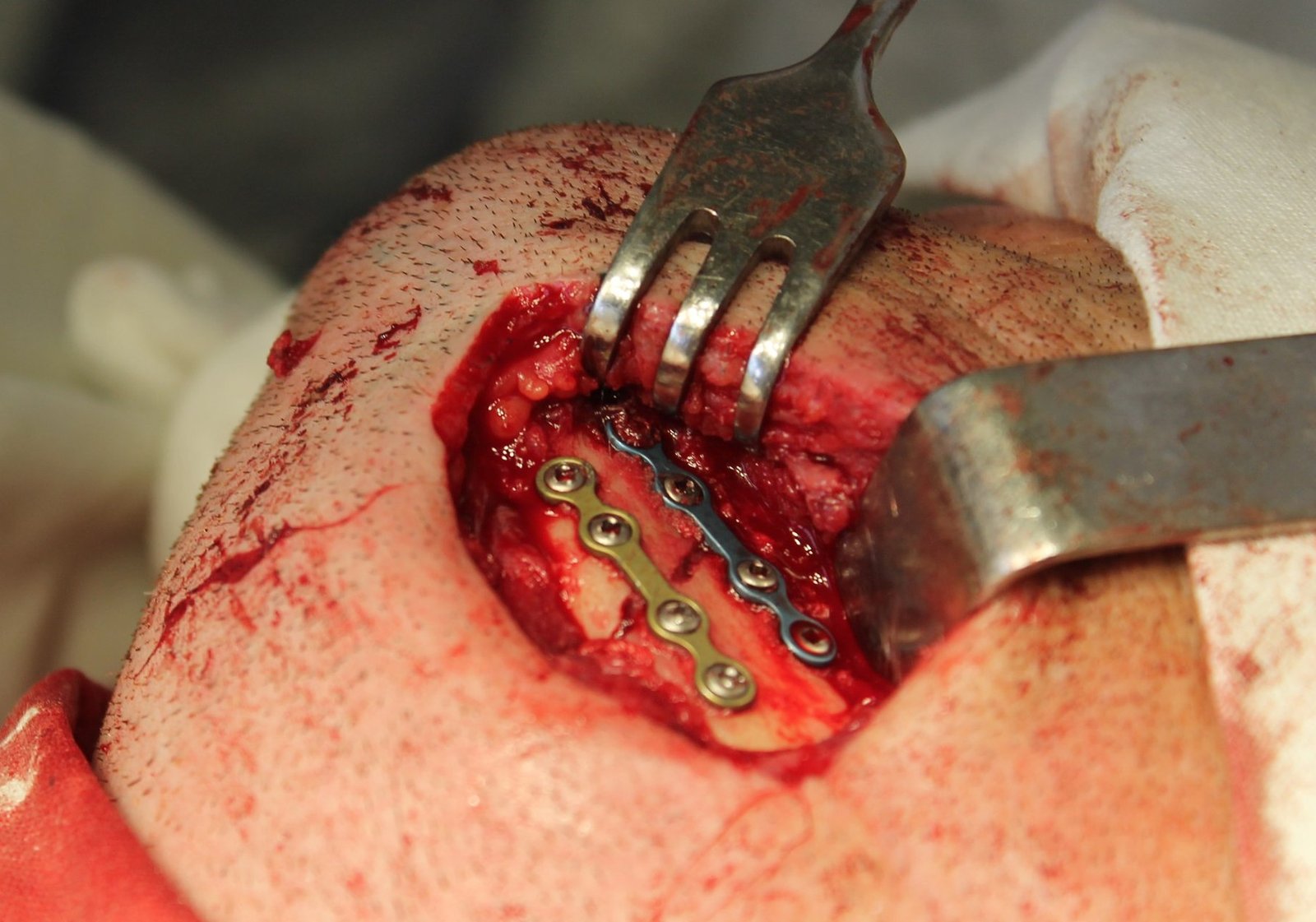
Three-dimensional interlocking miniplates (a plate design that locks across a fracture) performed as an effective alternative to conventional miniplates for mandibular parasymphyseal fractures near the mental foramen. The study reported better bone healing and neurosensory outcomes on the 3D-interlocking side.
Why the authors say this matters
The authors conclude that 3D interlocking miniplates may be a useful alternative to conventional miniplates for fractures near the mental foramen. They describe the findings as showing enhanced bone healing and better neurosensory outcomes.
What the researchers tested
The researchers ran a split-mouth randomized clinical trial in 12 patients with recent bilateral mandibular fractures in the mental foramen zone. One side was fixed with a 3D-interlocking miniplate and the other with conventional miniplates, and patients were followed for 6 weeks clinically and 12 weeks radiographically.
What worked and what didn't
By the end of follow-up, all cases had no intra-fragmentary mobility, proper occlusion, reduced pain, and proper wound healing. Objective nerve testing improved on both sides, but one patient had Level C sensation on the conventional miniplate side at 6 weeks; both sides increased in mean bone density, and the 3D-interlocking side was higher than the conventional side (1107.4 ± 142.2 HU vs 960.9 ± 97.58 HU).
What to keep in mind
The study included only 12 patients, so the available summary describes a small trial. It was retrospectively registered, and the abstract does not provide additional limitations beyond the short follow-up periods.
Key points
- Twelve patients with bilateral mandibular fractures near the mental foramen were treated on both sides with different fixation methods.
- The 3D-interlocking side showed higher mean bone density at 12 weeks than the conventional miniplate side.
- Both treatment sides improved in pain, occlusion, wound healing, and nerve testing over follow-up.
- One patient had Level C sensation on the conventional miniplate side at 6 weeks.
- The abstract states that 3D interlocking miniplates were an effective alternative to conventional miniplates.
Disclosure
- Research title:
- Interlocking miniplates showed higher bone density near the mental foramen
- Authors:
- Ibrahim Mohamed Abdelhamed, Ahmed Sweedan, Reem M. Ismail, Yehia El-Mahallawy
- Institutions:
- Alexandria University, Alexandria University, Alexandria University, Alexandria University
- Publication date:
- 2026-03-29
- OpenAlex record:
- View
- Image credit:
- Katia&Lena, Wikimedia Commons, CC BY-SA 4.0
Get the weekly research newsletter
Stay current with scholarly research without reading academic papers — one filtered digest, every Friday.