What the study found
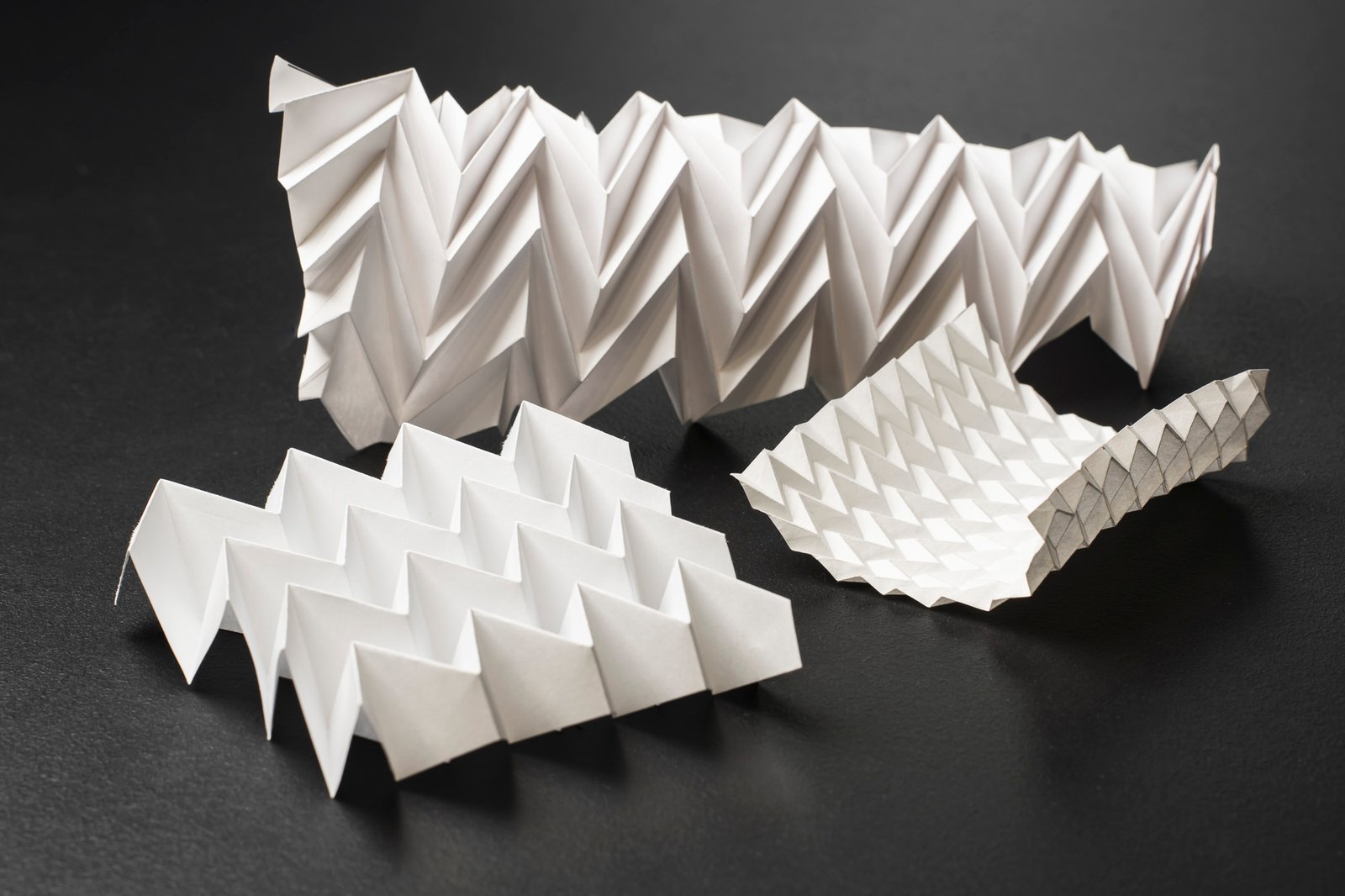
The study found that the rigidity of a wide range of origami structures can be controlled by enforcing or relaxing the planarity of selected facets, meaning the flatness of chosen surface panels. The authors also report a unified model linking critical percolation density, facet geometry, and selection rules.
Why the authors say this matters
The authors conclude that these findings highlight similarities and differences in how rigidity can be controlled across general origami structures. They say this sheds light on the design of flexible mechanical metamaterials for practical applications.
What the researchers tested
The researchers used numerical simulations on origami structures with different facet selection rules. They analyzed how geometry and topology affect the number of degrees of freedom, studied probabilistic properties of rigidity change, and identified structural variables related to a critical rigidity percolation transition.
What worked and what didn't
The approach showed that changing whether selected facets must remain planar can alter rigidity across many origami structures, not only the well-studied Miura-ori pattern. The study also found key structural variables governing the critical rigidity percolation transition and developed a unified model for the relationship among percolation density, facet geometry, and selection rules.
What to keep in mind
The abstract does not describe experimental validation outside numerical simulations. It also does not provide detailed limitations, only noting that the study focuses on general origami structures beyond Miura-ori.
Key points
- Rigidity in many origami structures can be controlled by changing the planarity of selected facets.
- The study examined origami structures with different facet selection rules using numerical simulations.
- Geometry and topology were analyzed for their effects on degrees of freedom.
- The authors identified structural variables linked to a critical rigidity percolation transition.
- A unified model was developed relating percolation density, facet geometry, and selection rules.
Disclosure
- Research title:
- Origami rigidity can be controlled by facet planarity
- Authors:
- Rongxuan Li, Gary P. T. Choi
- Institutions:
- Chinese University of Hong Kong, Chinese University of Hong Kong
- Publication date:
- 2026-04-25
- OpenAlex record:
- View
- Image credit:
- Origamicke, Wikimedia Commons, CC BY-SA 4.0
Get the weekly research newsletter
Stay current with scholarly research without reading academic papers — one filtered digest, every Friday.