

What the study found
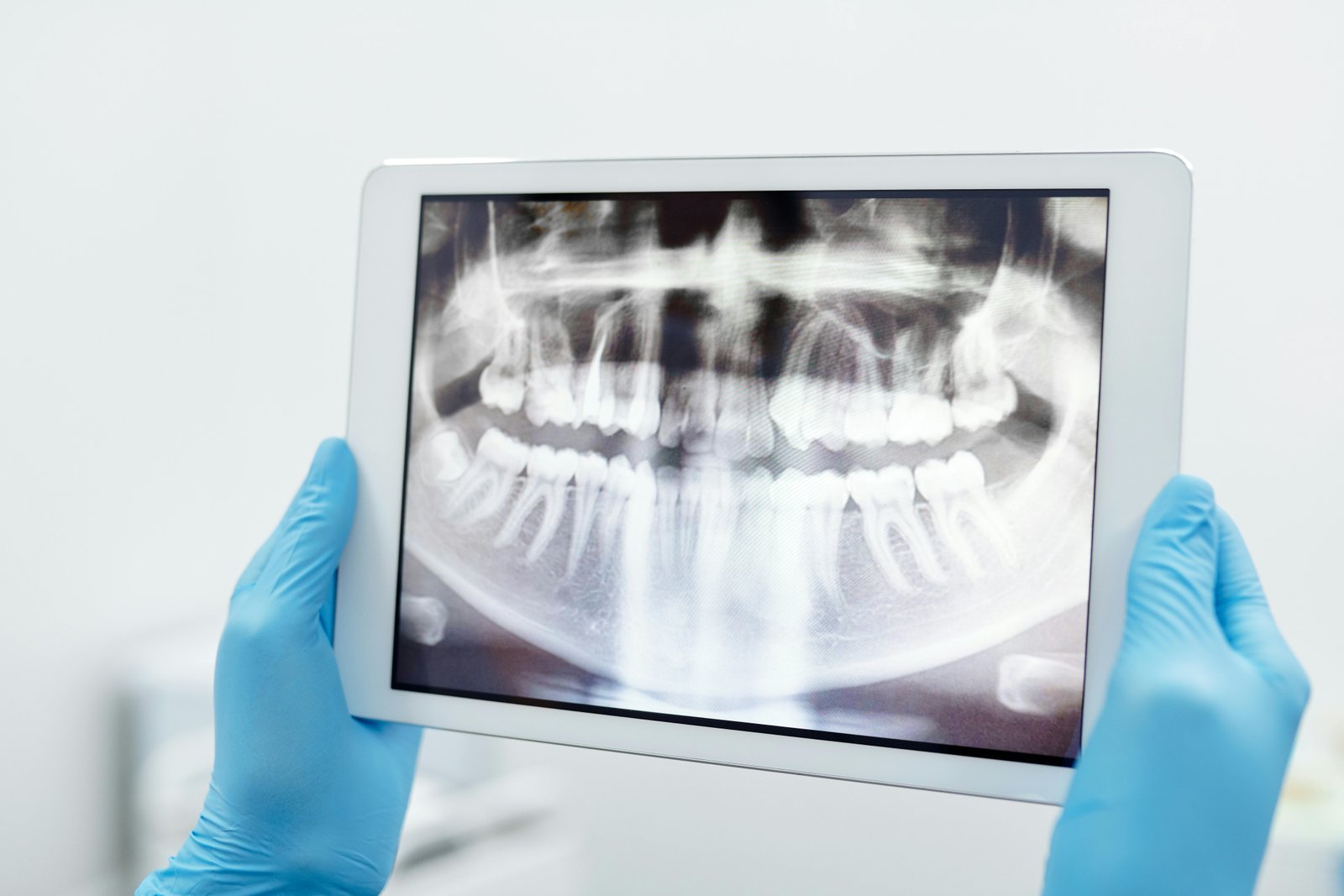
The study found that a deep learning vision-language model could distinguish caries from periapical infections in pediatric panoramic radiographs, and that it performed better than image-only convolutional neural networks and text-only approaches in the dataset used.
Why the authors say this matters
The authors suggest that integrating visual and textual representations may improve diagnostic performance and interpretability in pediatric dental radiology. They also conclude that the approach could be useful for pediatric dental diagnostics, although they describe the findings as preliminary.
What the researchers tested
The researchers developed a multimodal framework that combined visual features from panoramic radiographs, extracted using non-linear dynamics and textural encoding, with textual descriptions generated by a large language model. These fused representations were used to train a one-dimensional convolutional neural network classifier, and performance was evaluated with accuracy, sensitivity, specificity, precision, F1 score, and area under the receiver operating characteristic curve (AUC).
What worked and what didn't
On a small, single-center dataset, the proposed model achieved 90% accuracy, 92% sensitivity, 83% specificity, 92% precision, an F1 score of 0.90, and an AUC of 0.96. The abstract says it outperformed conventional image-only convolutional neural networks and standalone language-based approaches within this dataset.
What to keep in mind
The sample size was limited, and there was no external or prospective clinical validation. The abstract states that these constraints limit generalizability and immediate clinical applicability, and that the findings should be regarded as preliminary and hypothesis-generating.
Key points
- The model was designed to classify caries versus periapical infections in pediatric panoramic radiographs.
- It combined visual features from radiographs with textual descriptions generated by a large language model.
- Within a small single-center dataset, it achieved 90% accuracy and 0.96 AUC.
- The abstract says it outperformed image-only convolutional neural networks and text-only approaches in that dataset.
- The authors note that limited sample size and lack of external validation restrict generalizability.
Disclosure
- Research title:
- Vision–language model improved pediatric dental disease classification
- Authors:
- Tuan D. Pham
- Institutions:
- Queen Mary University of London
- Publication date:
- 2026-02-24
- OpenAlex record:
- View
Get the weekly research newsletter
Stay current with peer-reviewed research without reading academic papers — one filtered digest, every Friday.