Author: editor@focalinterest.com

  • Gaseous organic nitrogen makes a substantial share of nitrogen deposition

    Gaseous organic nitrogen makes a substantial share of nitrogen deposition

    What the study found

    The study found that gaseous organic nitrogen, meaning organic nitrogen in the air rather than in particles, contributed substantially to both wet and dry nitrogen deposition at a coastal Hong Kong site. It also found that water-soluble organic nitrogen was a major part of total nitrogen deposition over the year.

    Why the authors say this matters

    The authors say the findings help address gaps in nitrogen budgets because organic nitrogen is still under-monitored compared with inorganic nitrogen. They also conclude that coordinated measurements of gaseous and particulate organic and inorganic nitrogen are needed to better constrain nitrogen deposition budgets and ecological impacts.

    What the researchers tested

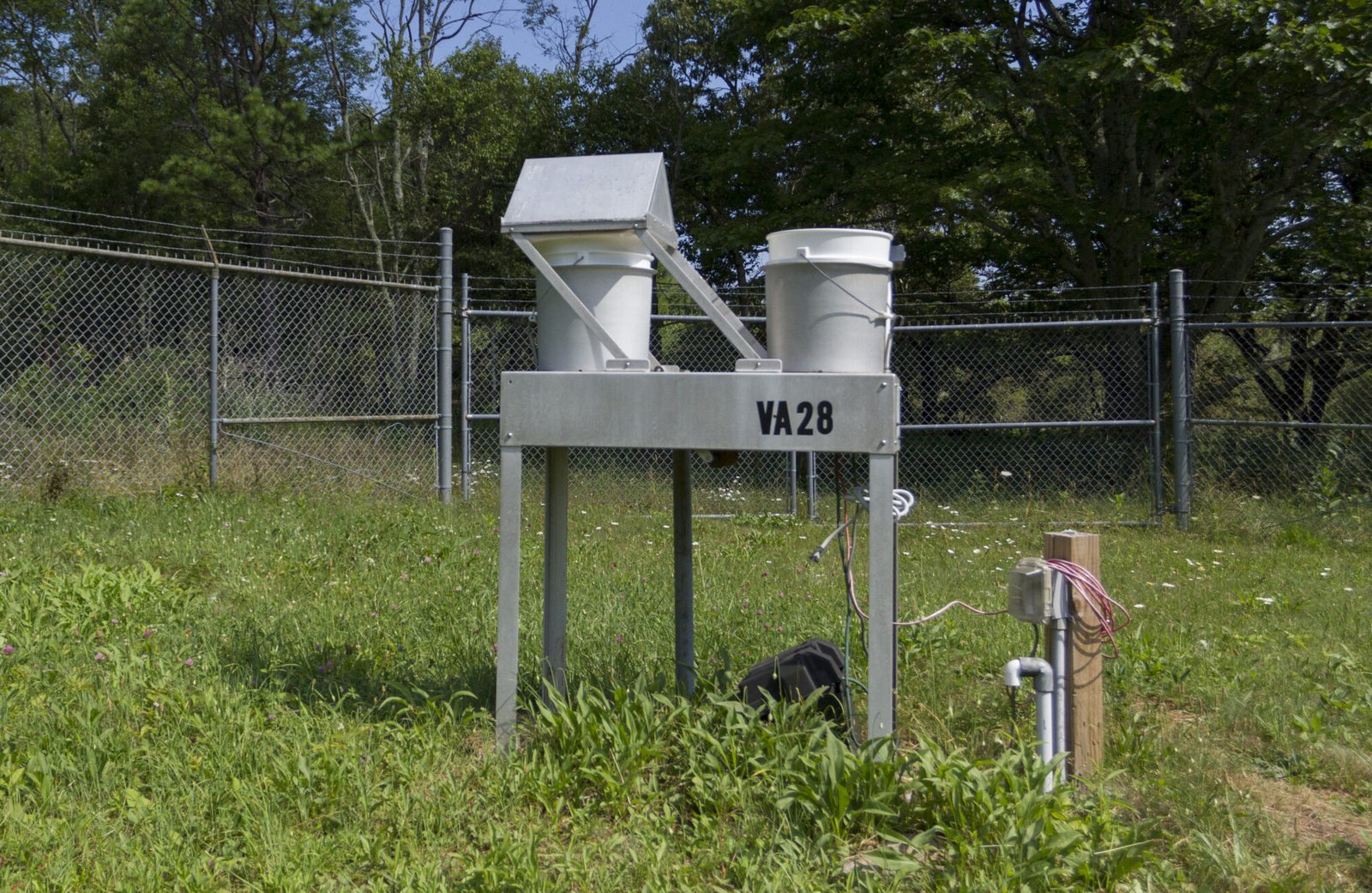
    The researchers carried out year-long measurements of dry and wet deposition at a coastal Hong Kong site. They used a dual-surface collector that allowed simultaneous dry deposition to pure water and to a quartz filter, which let them compare water-soluble organic nitrogen and inorganic nitrogen in different deposition pathways.

    What worked and what didn't

    Dry deposition to water exceeded dry deposition to the filter by 26.6 times for ammonium-nitrogen, 1.6 times for nitrate-nitrogen, and 4.3 times for water-soluble organic nitrogen. The study reports that the gaseous contribution to dry organic nitrogen reached up to about 80% of the total flux, and that the fraction of water-soluble organic nitrogen was higher in wet deposition than in atmospheric particles.

    What to keep in mind

    The study was conducted at a single coastal site in Hong Kong, so the abstract does not say how broadly the results apply elsewhere. The abstract also does not describe specific limitations beyond noting that organic nitrogen is under-monitored and that more coordinated measurements are needed.

    • Year-long measurements were made at a coastal Hong Kong site using a dual-surface collector.
    • Dry deposition to water was much higher than dry deposition to a quartz filter for ammonium-nitrogen, nitrate-nitrogen, and water-soluble organic nitrogen.
    • Gaseous organic nitrogen was reported to make up as much as about 80% of total dry organic nitrogen flux.
    • Annual total nitrogen deposition was 39.2 ± 5.2 kg N ha−1 yr−1.
    • Water-soluble organic nitrogen accounted for 28.7 ± 3.6% of annual total nitrogen deposition.
  • Ultrathin chiral nanosheets improved gas chromatography separation

    What the study found

    The study found that ultrathin chiral two-dimensional nanosheets made from BPDS-PBIM showed exceptional separation performance in high-resolution gas chromatography. The reported material was a chiral ionic organic single crystal built from 4,4′-biphenyldisulfonic acid and a chiral ionic liquid.

    Why the authors say this matters

    The authors conclude that BPDS-PBIM has strong potential as a chiral stationary phase, meaning a chromatography material used to separate left- and right-handed forms of molecules. They also suggest broad application prospects in pharmaceutical analysis, flavor and fragrance quality control, and chemical reaction monitoring.

    What the researchers tested

    The researchers created BPDS-PBIM by ionic self-assembly of 4,4′-biphenyldisulfonic acid and the chiral ionic liquid PBIM. They confirmed its supramolecular environment and molecular packing with single-crystal X-ray diffraction, then exfoliated it into two-dimensional nanosheets and tested it as a stationary phase in gas chromatography.

    What worked and what didn't

    The exfoliated BPDS-PBIM nanosheets performed exceptionally well for separating several complex pharmaceutical molecules, including ibuprofen, ketoprofen, flurbiprofen, fenoprofen, and mexiletine hydrochloride. The abstract also says they separated chiral compounds with different polarity, but it does not give comparison data or describe any cases where the material did not work well.

    What to keep in mind

    The available summary does not provide numerical performance values, experimental conditions, or direct comparisons with other stationary phases. It also does not describe specific limitations beyond noting that developing chiral stationary phases with both structural stability and high enantioselectivity remains a challenge in this field.

    • BPDS-PBIM nanosheets showed exceptional separation performance in gas chromatography.
    • The material was made by ionic self-assembly of 4,4′-biphenyldisulfonic acid and a chiral ionic liquid.
    • Single-crystal X-ray diffraction confirmed a distinct supramolecular environment and molecular packing pattern.
    • The nanosheets separated several pharmaceutical compounds, including ibuprofen and ketoprofen.
    • The authors suggest potential use in pharmaceutical analysis, flavor and fragrance quality control, and reaction monitoring.
  • Donation after circulatory death could increase transplants in Germany

    What the study found

    The study found that introducing donation after circulatory death (DCD, organ donation after cardiac arrest) could increase liver and kidney transplant numbers in Germany. The size of the increase varied by the country-based scenario modeled, and the authors say DCD alone would probably not solve organ scarcity.

    Why the authors say this matters

    The authors conclude that DCD could help make more organs available. They also state that its effect would depend on accompanying structural measures and societal factors.

    What the researchers tested

    The researchers analyzed trends in organ donations in nine European countries after DCD was introduced and projected those trends onto Germany's documented organ donation numbers from 2011 to 2023. They then modeled the effect on liver and kidney transplantation using the Eurotransplant simulators ELAS and ETKidney.

    What worked and what didn't

    Compared with a control scenario without DCD, the largest modeled increase in liver transplantation in 2023 was in the Spain scenario, followed by Switzerland, Belgium, Italy, the United Kingdom, the Netherlands, the Czech Republic, and France. For kidney transplantation, the largest increases were also in the Spain scenario, followed by Switzerland, the Netherlands, the United Kingdom, Italy, Belgium, the Czech Republic, and France; the Austrian scenario did not increase either liver or kidney transplantation.

    What to keep in mind

    These are modeled scenarios, not a direct test of a DCD program in Germany. The abstract says the effect would depend on structural and societal factors, but it does not provide further detail on limitations in the available summary.

    • Donation after circulatory death (DCD) was modeled as an added organ-donation indication for Germany.
    • The largest projected gains in both liver and kidney transplantation came from the Spain scenario.
    • The Austrian scenario showed no increase in either liver or kidney transplantation.
    • In many scenarios, waiting lists, MELD scores, and dialysis time at transplantation were reduced alongside more transplants.
    • The authors conclude DCD alone would probably not solve organ scarcity.
  • Heterogeneous graph model improves representation learning

    What the study found

    The study reports that HMMC, a self-supervised heterogeneous graph neural network, outperformed state-of-the-art baselines on multiple public heterogeneous graph datasets. The abstract says the method achieved gains of 0.5% to 4.1% across benchmarks.

    Why the authors say this matters

    The authors conclude that HMMC improves representation power, robustness, and generalization capability for heterogeneous graph learning tasks. They also say the method helps balance local structural detail and global semantic consistency.

    What the researchers tested

    The researchers introduced HMMC, which combines multi-scale meta-path embedding with cross-view self-supervised contrastive learning. A meta-path is a sequence of node types used to capture relationships in a heterogeneous graph, and the model also uses a star-shaped contrastive loss.

    What worked and what didn't

    The abstract says multi-scale meta-path embedding was designed to capture both local and global structural information, avoiding the limits of overly short meta-paths and the noise from overly long ones. It also says the cross-view contrastive framework and star-shaped loss were proposed to address noisy negative samples and over-smoothing; the reported experiments showed improved performance over baselines.

    What to keep in mind

    The summary does not provide dataset names, task details, or implementation settings. It also does not describe specific failure cases, statistical tests, or limitations beyond the problem statements motivating the method.

    • HMMC is a self-supervised heterogeneous graph neural network.
    • It uses multi-scale meta-path embedding to capture local and global structure.
    • It adds cross-view contrastive learning and a star-shaped contrastive loss.
    • The method outperformed state-of-the-art baselines on multiple public datasets.
    • The abstract reports gains of 0.5% to 4.1% across benchmarks.
  • DeepDiscover autonomously infers bucket-type hydrological models

    What the study found

    The study found that DeepDiscover can autonomously discover bucket-type conceptual hydrological models from data. The authors also report that the framework’s learned processes and states are consistent with EXP-HYDRO, a conceptual hydrological model.

    Why the authors say this matters

    The authors conclude that this work is a step toward reducing dependence on expert-defined model formulations. The study suggests that a physics-embedded machine learning framework can support data-driven process discovery in hydrology.

    What the researchers tested

    The researchers developed DeepDiscover, a modular neural architecture whose elementary units are intended to represent reservoirs in bucket-type conceptual hydrological models. They evaluated it on the CAMELS-US dataset in streamflow prediction using three experiments: benchmark comparison, recovery of EXP-HYDRO-like internal dynamics, and perturbation tests.

    What worked and what didn't

    The DeepDiscover-based model, called DD-PeML, outperformed EXP-HYDRO, EXP-PeML, a 1D-CNN, and an LSTM on the test set, with median NSE of 0.68 and median KGE of 0.70. When trained to mirror EXP-HYDRO, the inferred processes and states closely matched EXP-HYDRO, with median R2 of about 70% for processes and 80% for states, and perturbation experiments showed physically coherent responses to precipitation and temperature changes.

    What to keep in mind

    The abstract describes this as a proof of concept, so the findings are presented within that scope. Limitations beyond the use of CAMELS-US and the stated experiments are not described in the available summary.

    • DeepDiscover autonomously infers bucket-type conceptual hydrological models from data.
    • DD-PeML outperformed EXP-HYDRO, EXP-PeML, a 1D-CNN, and an LSTM on the CAMELS-US test set.
    • The model achieved median test NSE of 0.68 and median KGE of 0.70.
    • Inferred processes and states closely matched EXP-HYDRO when trained to mirror it.
    • Perturbation experiments produced physically coherent responses to precipitation and temperature changes.
  • Foreign-born women remain underrepresented in Swedish politics

    Foreign-born women remain underrepresented in Swedish politics

    What the study found

    The study found that foreign-born men and women remain underrepresented in Sweden’s parliament, the Riksdag, and in municipality councils. It also found, in a complementary quantitative analysis, that higher-income municipalities have a higher percentage of elected foreign-born women.

    Why the authors say this matters

    The authors describe this underrepresentation as a democratic deficit. The study suggests that discrimination and labor market integration are linked to both barriers and possibilities for a more politically equal society.

    What the researchers tested

    The researchers conducted a literature review of studies published from 2000 to 2025 on the political representation of foreign-born men and women in Sweden. The review was based on 20 studies and also included a secondary quantitative analysis.

    What worked and what didn't

    The review highlighted several themes and factors associated with Sweden’s high overall political representation of female members of parliament, including some studies using an intersectional approach. The complementary analysis suggested a positive association between municipal income level and the share of elected foreign-born women.

    What to keep in mind

    The abstract does not provide details about the methods used in the secondary quantitative analysis. It also does not report effect sizes, statistical significance, or limitations beyond the scope of the reviewed studies.

    • Foreign-born men and women are still underrepresented in Sweden’s parliament and municipality councils.
    • The authors describe this underrepresentation as a democratic deficit.
    • The review covered 20 studies published between 2000 and 2025.
    • Discrimination and labor market integration were linked to barriers and possibilities for political equality.
    • Higher-income municipalities had a higher percentage of elected foreign-born women.
  • Dental education should build AI competencies throughout training

    What the study found

    The authors argue that dental education needs a competency framework for AI (artificial intelligence) because AI is increasingly affecting clinical workflows and processes. They propose that AI learning should be built into dental curricula from the early years through clinical training.

    Why the authors say this matters

    The study suggests that creating an AI-proficient dental workforce requires systematic educational planning. The authors conclude that AI teaching should be balanced with the core competencies required of dental professionals.

    What the researchers tested

    This article is a perspective piece rather than an experimental study. The authors discuss how AI education could be organized across preclinical and clinical years, what competencies different student levels should develop, and how assessments should be designed.

    What worked and what didn't

    The authors propose beginner-level AI knowledge and ethical considerations for early-stage students. They say senior learners should be able to use AI tools for clinical tasks and interpret AI-generated outputs, while advanced students should be able to innovate AI-driven studies and new applications for oral healthcare.

    What to keep in mind

    The abstract does not report an empirical test of the proposed framework or provide outcome data. It also does not describe specific limitations beyond noting that AI teaching must be carefully balanced with other required dental competencies.

    • The article calls for a competency framework for AI in dental education.
    • AI education should be integrated from preclinical to clinical years.
    • Early-stage students should learn basic AI knowledge and ethics.
    • Senior learners should be able to use AI tools and interpret AI outputs.
    • Advanced students should be prepared to innovate AI-driven studies and applications.
    • The authors say AI teaching must be balanced with core dental competencies.
  • Poetry and philosophy can overlap in cultural inquiry

    What the study found

    The article argues that poetry and philosophy are not the same, but that they can overlap in useful ways. It presents this overlap as a matter of cultural roles, intellectual tensions, and specific examples rather than as something that can be captured by abstract definitions.

    Why the authors say this matters

    The authors suggest that examining the overlap between poetry and philosophy can help explain how writers develop emotionally resonant experiences within a cultural and intellectual environment. They also suggest that this kind of inquiry can clarify how poetry and philosophy influence one another’s modes of thought and practice.

    What the researchers tested

    This is a theoretical article rather than an empirical study. It discusses philosophical and literary relationships by drawing on examples involving Humean skepticism, Romantic poetry, ordinary language philosophy, and Heidegger’s ideas of building and dwelling.

    What worked and what didn't

    The article says poetry is not philosophy, except on rare occasions, and that Wittgenstein is presented as unusually willing to treat philosophy as poetry. It also gives examples of how philosophy may shape poetry and how poetry may seek to affect philosophy, including Romantic responses to skepticism and contemporary poetry’s relation to ordinary language philosophy and Heideggerian themes.

    What to keep in mind

    The abstract does not describe experiments, data, or a formal evaluation of the examples it discusses. It also says that no abstract definitions for poetry or philosophy are expected to be secured from this inquiry.

    • The article argues that poetry and philosophy can overlap without being identical.
    • It uses examples from Hume, Romantic poetry, Wittgenstein, ordinary language philosophy, and Heidegger.
    • The authors suggest that this overlap can illuminate cultural and intellectual tensions.
    • The abstract does not report empirical findings or quantitative results.
    • The piece says abstract definitions of poetry and philosophy are not expected to be secured.
  • NIH commits to ending HIV in the United States by 2030

    What the study found

    The National Institutes of Health, or NIH, remain committed to ending HIV in the United States by 2030. The abstract says this commitment involves implementation science, partnerships, community engagement, federal collaboration, and basic science.

    Why the authors say this matters

    The authors state that this approach supports the NIH goal of ending HIV in the United States by 2030. They present the combination of research and collaboration as the way the NIH is pursuing that goal.

    What the researchers tested

    This article is described as a research article, but the abstract does not describe a specific study design, sample, or experiment. It only states the NIH commitment and the broad areas involved in the research portfolio.

    What worked and what didn't

    The abstract does not report testable outcomes, measurements, or comparisons. It does state that the NIH remains committed to a strategy combining implementation science, public and private partnerships, community engagement, federal agency collaborations, and basic science.

    What to keep in mind

    The available summary is very limited and does not include methods, data, or results beyond the stated commitment and strategy. No limitations are described in the abstract.

    • The NIH remains committed to ending HIV in the United States by 2030.
    • The stated strategy includes implementation science and basic science.
    • The abstract also names public and private partnerships, community engagement, and federal agency collaborations.
    • No specific study design, sample, or measurements are described in the abstract.
  • Regional transport contributed to ozone pollution in the Fen-Wei Plain

    What the study found

    The study found that cross-regional transport played an important role in ozone (O3) pollution in the Fenwei Plain. Measurements also showed ozone being carried downward from higher layers to the surface, and the authors reported links between transported pollution and changes in ozone precursor sensitivity.

    Why the authors say this matters

    The authors conclude that the impacts of regional transport on ozone precursor sensitivity from different source areas should be considered when formulating regional joint prevention and control strategies. They suggest this is important for understanding how ozone pollution develops in the Fenwei Plain.

    What the researchers tested

    The researchers used multi-source observations and model simulation in the Fenwei Plain. They examined ozone vertical profiles, ozone vertical flux, volatile organic compounds (VOCs, gases that can help form ozone), and ozone source apportionment to estimate contributions from potential source regions.

    What worked and what didn't

    Ozone lidar vertical profiles showed high-concentration layers exceeding 130 µg/m3, and ozone vertical flux showed high-concentration layers exceeding −50 µg/(m2⋅s), which the authors interpreted as downward transport to the surface. Source apportionment suggested that transport from Henan contributed 24.99% and transport from Hubei contributed 40.02% of surface ozone enhancement. The VOCs measured were dominated by oxygenated volatile organic compounds (>300 ppbv) and alkanes (>20 ppbv), and large contributions from Henan and Hubei were associated with a shift toward a VOC-limited regime and a drop in the HCHO/NO2 indicator to 1.73.

    What to keep in mind

    The abstract does not describe detailed limitations of the study. It also notes that a lack of observations and VOC component data has constrained understanding in this region, which provides context for why the study was conducted.

    • Cross-regional transport contributed to ozone pollution in the Fenwei Plain.
    • Henan and Hubei were estimated to contribute 24.99% and 40.02% of surface ozone enhancement.
    • Ozone lidar profiles showed high-concentration layers above 130 µg/m3.
    • The authors reported downward transport of ozone to the surface.
    • Large contributions from Henan and Hubei were linked to a VOC-limited regime and an HCHO/NO2 value of 1.73.