Category: Ecology & Biodiversity
-
Climate change may shift suitable ranges of four Taxus species northward
This research indicates that climate change may alter the suitable habitat ranges of four Taxus species in China, with some areas expanding or contracting and distribution centers shifting to higher latitudes.
AI-assisted summary
-
Dingo-exposed wombats investigated scent cues more often
This research indicates that southern hairy-nosed wombats from areas with dingo exposure were more likely to investigate scent cues, while both exposed and dingo-absent populations were more likely to investigate dingo scent than rabbit scent.
AI-assisted summary
-
Humidity strongly shaped fire intensity in the Cerrado
This research indicates that relative air humidity at burning time is a key predictor of fire behaviour in the Cerrado, with early dry season fires sometimes matching late dry season fire intensity under lower humidity.
AI-assisted summary
-
Low levels of ESBL E. coli found in rehabilitating howler monkeys
This research indicates that rehabilitating Bolivian red howler monkeys in a Peruvian rescue center carried Escherichia coli with low extended-spectrum beta-lactamase prevalence but some multidrug resistance.
AI-assisted summary
-
Temperature shaped activity more than diet in snub-nosed monkeys
This research indicates that temperature changes across the year were associated with greater shifts in activity patterns than in diet composition among age-sex classes of Rhinopithecus bieti.
AI-assisted summary
-
Climate warming and urban context shape European butterfly declines
This research indicates that climate warming and aridification are linked to butterfly population declines across Europe, and that urban context can amplify the negative impact of climate change.
AI-assisted summary
-
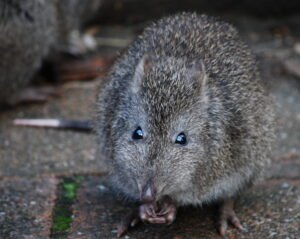
Long-nosed potoroo declines are linked to fire, predators, and habitat loss
This research indicates that long-nosed potoroo populations in Victoria vary across landscapes, with declines associated with fire regimes, invasive predators, habitat loss, and climate change.
AI-assisted summary
-
Human activity, snow cover, and precipitation shape Altai mammal and bird ranges
This research indicates that human activity, snow cover, and cold-season precipitation are important predictors of where 27 mammal and terrestrial bird species may occur in the Altai Mountains, with future habitat loss expected in the central region.
AI-assisted summary
-
Hierarchical eco-zonation identified five ecoregions in Uganda
This research indicates that a machine-learning framework using open-source global datasets can delineate five ecoregions and three finer bioregion levels in data-scarce Afrotropical river landscapes, with stronger ecological coherence at coarser tiers than at finer ones.
AI-assisted summary
-
Epicormic foliage chemistry varied after fire
This research indicates that post-fire epicormic foliage in eucalypt forests can differ chemically from mature foliage in ways that affect its nutritional suitability for arboreal folivores.
AI-assisted summary