Category: Water, Hydrology & Resources
-
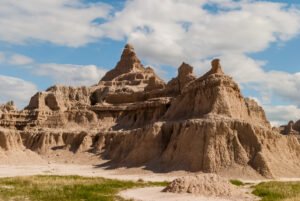
Stochastic particle method improves terrain erosion simulation
This research indicates that a novel stochastic particle-based approach can simulate transport and erosion over geological timescales while capturing multiscale geomorphological features.
AI-assisted summary
-
Data augmentation improved some river-flow models in scarce-data catchments
This research indicates that bootstrapping and physics-based data augmentation can improve Feed Forward Neural Network and Long Short-Term Memory model performance for river flow simulation when training data are limited, while the benefit is smaller or absent with longer datasets.
AI-assisted summary
-
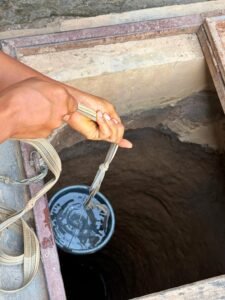
Participatory groundwater work raised awareness in Jaipur communities
This research indicates that participatory and interdisciplinary methods can generate useful insights and support groundwater awareness in peri-urban low-income communities and NGOs.
AI-assisted summary
-
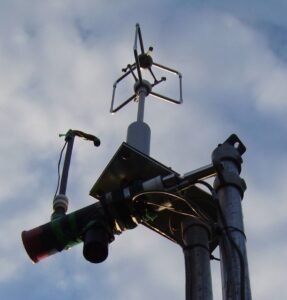
Global eddy covariance towers cluster in fertile soils
This research indicates that eddy covariance tower sites are not evenly distributed across the world’s soils and tend to occur in more fertile soil areas than average.
AI-assisted summary
-
Environmental provisions in peace agreements are rarely studied
This research indicates that peer-reviewed literature on environmental provisions in formal peace agreements is limited, and that the provisions discussed are often vague and poorly implemented.
AI-assisted summary
-
GNN model identifies flood-vulnerable river segments
This research indicates that graph neural networks can identify vulnerable river segments and flood-sensitive sub-basins in a river system with limited hydrological data.
AI-assisted summary
-
Projected land cover changes slightly increase flood discharge
This research indicates that projected land cover change in the Cijangkelok Watershed slightly increases flood discharge, with the largest conversion from dryland to rice fields, built-up areas, and forest plantations.
AI-assisted summary
-
Flood susceptibility is projected to rise in the Kabul River Basin
This research indicates that flood susceptibility in the Kabul River Basin is projected to increase over time under future precipitation variability, population growth, and land cover change.
AI-assisted summary
-
DeepDiscover autonomously infers bucket-type hydrological models
This research indicates that DeepDiscover can autonomously infer bucket-type conceptual hydrological models from data within a physically constrained learning framework.
AI-assisted summary
-
Land humidity trends differ across observations, reanalyses, and models
This research indicates that a simple index based on precipitation and modified potential evapotranspiration can explain distinct land relative humidity trends and help calibrate biased reanalyses.
AI-assisted summary