What the study found
The hybrid z*-isopycnal coordinate system (HYBRID) performed better than the z* coordinate system (ZSTAR) in simulations of the Yellow Sea. It more accurately represented sea surface temperatures, vertical temperature structure, and several aspects of barotropic and baroclinic tides, especially under strongly stratified summer conditions.
Why the authors say this matters
The authors conclude that vertical coordinate design critically affects tidal energetics and stratification-dependent processes in high-resolution regional ocean models. The study suggests that HYBRID's improved maintenance of stratification offers advantages for representing internal-tide dynamics and vertical energy pathways in the Yellow Sea.
What the researchers tested
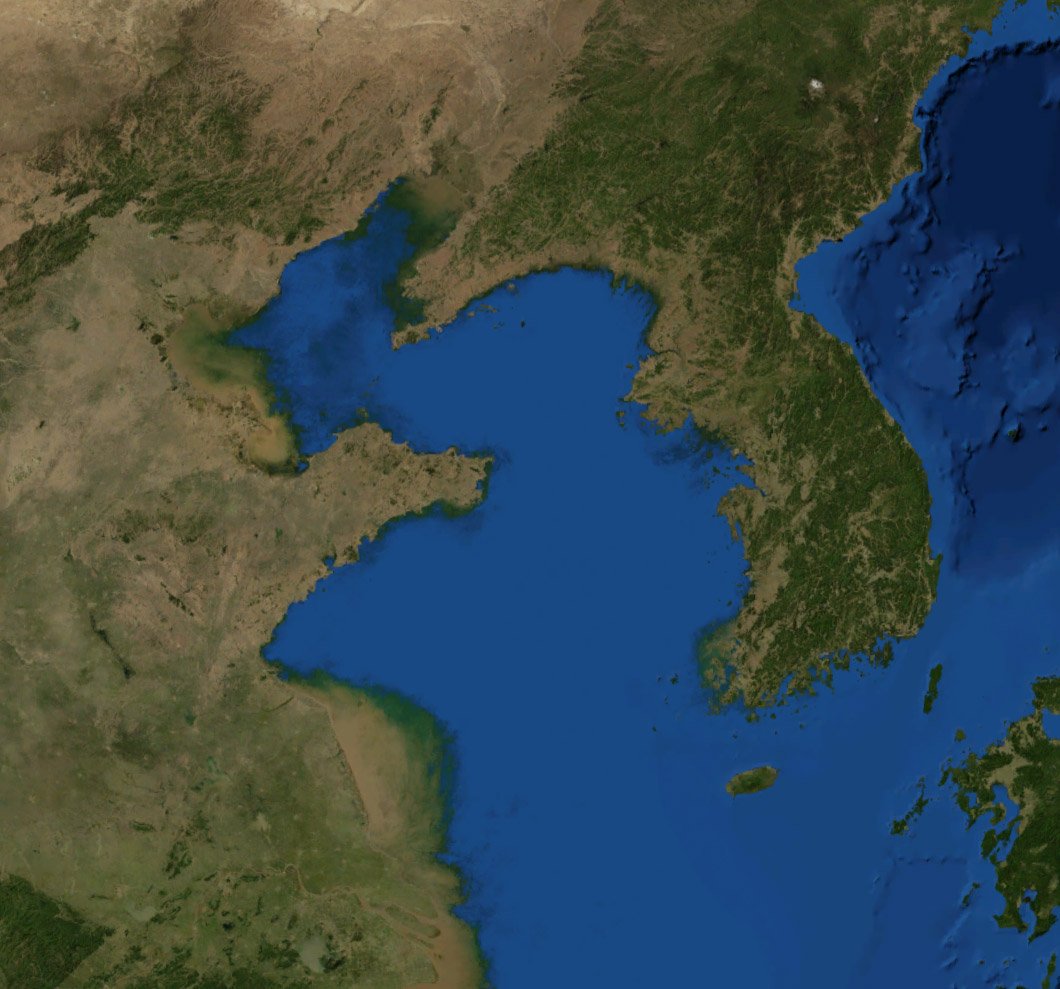
The researchers used the Modular Ocean Model version 6 (MOM6) in a regional Northwest Pacific configuration for the Yellow Sea. They compared two vertical coordinate systems, ZSTAR and HYBRID, and validated the model against satellite-derived sea surface temperatures, in situ temperature profiles, and TPXO tidal harmonics, with attention to winter and summer conditions.
What worked and what didn't
HYBRID better reproduced sea surface temperatures and kept a sharper, deeper thermocline, supported by long-term temperature diagnostics and age tracer experiments that indicated reduced vertical mixing. For barotropic tides, HYBRID agreed better with TPXO for the M2 and K1 constituents, and it produced stronger barotropic tidal energy fluxes than ZSTAR in both winter and summer. For baroclinic tides, ZSTAR showed greater kinetic energy in winter, but HYBRID produced stronger baroclinic kinetic energy in summer and preserved baroclinic tidal energy more effectively overall.
What to keep in mind
The findings come from one regional model setup for the Yellow Sea and compare only two vertical coordinate systems. The abstract does not describe broader geographic testing, and it does not provide detailed limitations beyond the differences observed between the two configurations.
Key points
- HYBRID reproduced sea surface temperatures and vertical thermal structure more accurately than ZSTAR.
- HYBRID matched TPXO better for the M2 and K1 tidal constituents.
- HYBRID produced stronger barotropic tidal energy fluxes than ZSTAR in winter and summer.
- ZSTAR showed greater baroclinic kinetic energy in winter, while HYBRID was stronger in summer.
- The authors report that ZSTAR had more residual dissipation, consistent with spurious diapycnal mixing.
Disclosure
- Research title:
- HYBRID better matched tides and stratification in the Yellow Sea
- Authors:
- Inseong Chang, Y Kim, Young‐Gyu Park, Hyunkeun Jin, Gyundo Pak, Andrew C. Ross, Robert Hallberg
- Institutions:
- Korea Institute of Ocean Science and Technology, Korea Institute of Ocean Science and Technology, Korea Institute of Ocean Science and Technology, Korea Institute of Ocean Science and Technology, NOAA Geophysical Fluid Dynamics Laboratory, NOAA Geophysical Fluid Dynamics Laboratory, Pukyong National University, Pukyong National University
- Publication date:
- 2026-04-21
- OpenAlex record:
- View
- Image credit:
- Serg!o, Wikimedia Commons, Public domain
Get the weekly research newsletter
Stay current with scholarly research without reading academic papers — one filtered digest, every Friday.