What the study found
The study found that mechanical noise squeezing, which means reducing fluctuations in a mechanical system below a normal level, can be transferred from one mechanical mode to another. The transfer was mediated by a single microwave cavity mode.
Why the authors say this matters
The authors say mechanical noise squeezing across multiple modes is important for precision measurements. The study suggests that this transfer method could be a viable option for enhancing precision measurements.
What the researchers tested
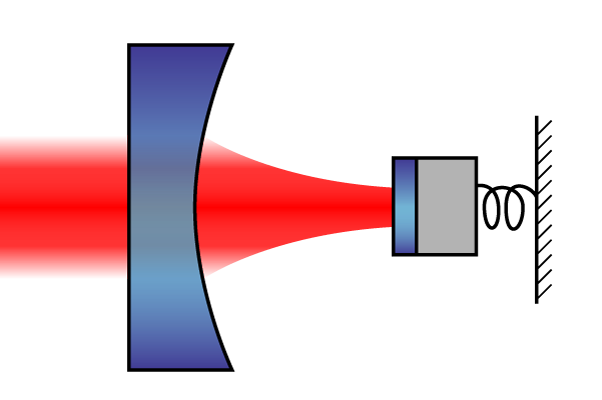
The researchers tested two mechanical modes coupled to a single microwave cavity mode. They created squeezing in one mode, called the control mode, by parametric modulation of its resonance frequency through the optical spring effect, then used an optomechanical beam-splitter interaction to transfer that squeezing to the target mode.
What worked and what didn't
The squeezing transfer was observed between the control and target mechanical modes. Strong correlations between the quadratures, meaning the paired fluctuation components of the two modes, supported the conclusion that the target-mode squeezing came from the control mode squeezing. The abstract does not describe a failed condition or a non-working comparison.
What to keep in mind
The available summary does not describe experimental limitations, boundary conditions, or performance numbers. It also does not state how widely the result applies beyond the two-mode system studied.
Key points
- Mechanical noise squeezing was transferred between two mechanical modes.
- A single microwave cavity mode mediated the transfer.
- Squeezing was first generated in a control mode by parametric modulation via the optical spring effect.
- An optomechanical beam-splitter interaction was used to move the squeezing to a target mode.
- Strong quadrature correlations supported the origin of the target-mode squeezing.
- The authors say the result may be useful for precision measurements.
Disclosure
- Research title:
- Mechanical noise squeezing was transferred between two mechanical modes
- Authors:
- Mungyeong Jeong, Hyojun Seok, Young-Sik Ra, Junho Suh
- Institutions:
- Korea Advanced Institute of Science and Technology, Pohang University of Science and Technology, Pohang University of Science and Technology, Seoul National University of Education
- Publication date:
- 2026-04-24
- OpenAlex record:
- View
- Image credit:
- Schmoele, Wikimedia Commons, CC BY-SA 3.0
Get the weekly research newsletter
Stay current with scholarly research without reading academic papers — one filtered digest, every Friday.