What the study found
The study found that the Neural Real-Time Telemetry Protocol (NRTP) provided more robust real-time telemetry for miniaturized neural implants than Bluetooth Low Energy (BLE), especially when signal conditions were poor. NRTP sustained zero data loss to a lower received signal strength than BLE and produced larger link-margin gains.
Why the authors say this matters
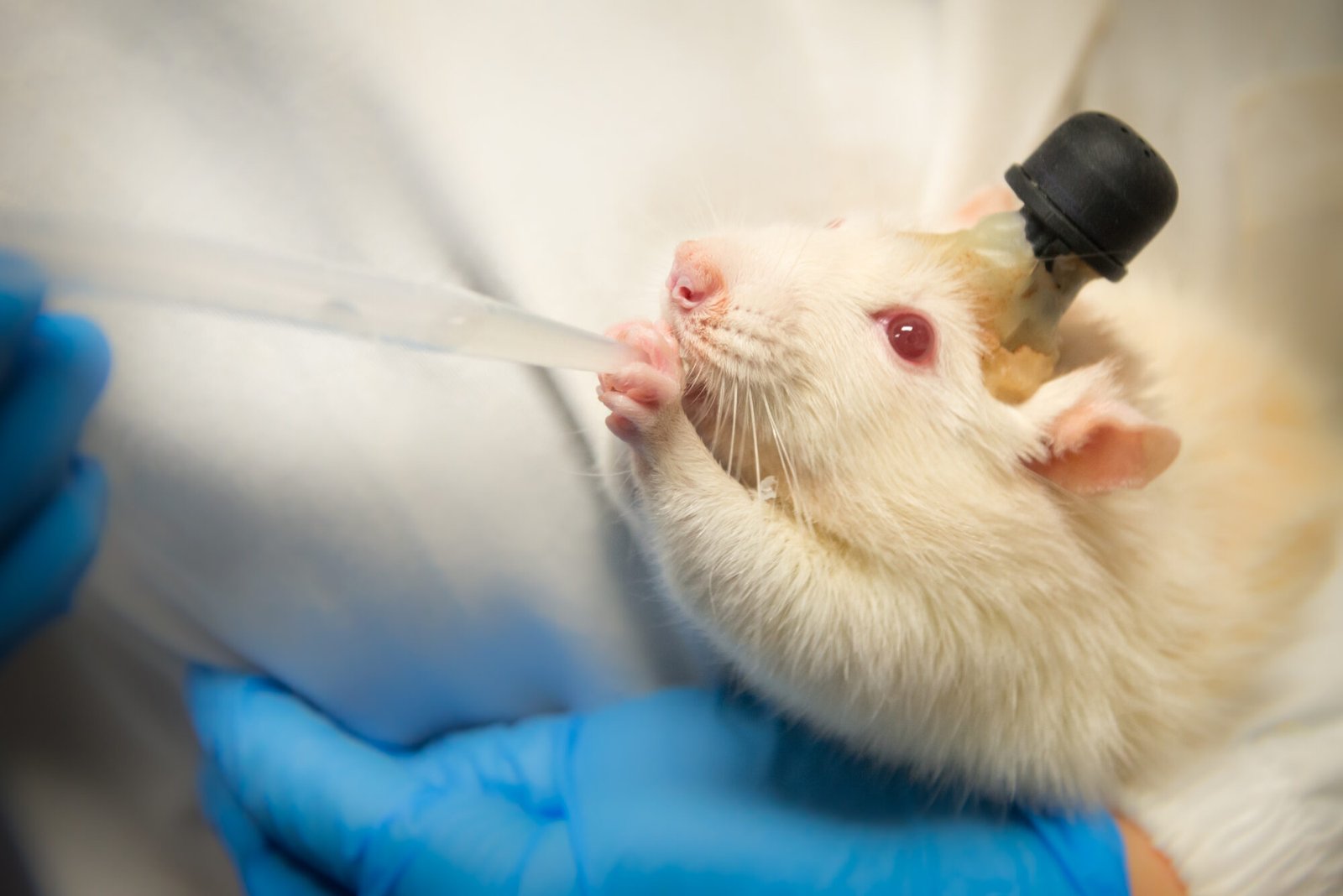
The authors conclude that NRTP could help make chronic, closed-loop studies with small-animal implants more practical. They also state that the link-margin gains may translate into better coverage, greater implant depth, or lower transmitter power for similar performance.
What the researchers tested
The researchers implemented NRTP on commercial 2.4 GHz hardware using static-length packets, immediate acknowledgments, bounded retransmissions, and a single RF channel. They compared NRTP with BLE using the same hardware, sweeping received signal strength and testing payload lengths, timing configurations, throughput, data loss, and current draw while evaluating retries, sample-level interleaving, and data overlapping alone and in combination.
What worked and what didn't
NRTP sustained zero data loss down to -75 dBm, while BLE performance degraded below -55 dBm because of throughput shortfalls under interference and deferred unlimited retries. Interleaving delayed score decline at lower signal strength by turning contiguous gaps into half-rate segments, and overlapping improved robustness but required twice the packet rate, which the authors say was too power-hungry for implant constraints. Across variants, NRTP gave higher scores and lower variability over a wider operating range than BLE, although BLE scored better at high signal strength because it used less current.
What to keep in mind
The abstract does not describe limitations beyond the tradeoff that overlapping was power-prohibitive for implant constraints. The reported link-margin and range values are stated for the tested setup and are presented as implications from the measured advantage, not as separate in vivo validation.
Key points
- NRTP was designed for 2.4 GHz wireless telemetry from fully implanted, millimeter-scale neural devices.
- The protocol used off-the-shelf hardware, not custom electronics or ASICs.
- NRTP sustained zero data loss down to -75 dBm, while BLE degraded below -55 dBm.
- Interleaving improved robustness by converting contiguous data gaps into half-rate segments.
- Overlapping improved robustness but was too power-intensive for implant constraints.
- The authors report link-margin gains of up to about 23 dB at first loss and about 11 dB at 0.5% loss.
Disclosure
- Research title:
- NRTP improved real-time telemetry robustness for miniaturized implants
- Authors:
- Mohamed Elgohary, Michael Recine, Jason Wong, Timir Datta
- Institutions:
- Donald & Barbara Zucker School of Medicine at Hofstra/Northwell, Feinstein Institute for Medical Research, Feinstein Institute for Medical Research, Feinstein Institute for Medical Research, Feinstein Institute for Medical Research
- Publication date:
- 2026-03-07
- OpenAlex record:
- View
- Image credit:
- Anna Marchenkova, Wikimedia Commons, CC BY 4.0
Get the weekly research newsletter
Stay current with scholarly research without reading academic papers — one filtered digest, every Friday.