Blog

  • Seagrass recovered in Mosquito Lagoon after 2022 hurricanes

    What the study found

    Seagrass in Mosquito Lagoon, Florida, was almost absent before the 2022 hurricanes, then declined further until March 2023 before recovering to pre-collapse levels in summer 2023 and afterward. The authors report that this recovery followed Hurricane Ian and Hurricane Nicole.

    Why the authors say this matters

    The authors conclude that constant seagrass monitoring is needed in Mosquito Lagoon to support conservation of the ecosystem. They also suggest the hurricane events may have helped spread seagrass fragments and changed water conditions, although they say more research is needed to explain the recovery.

    What the researchers tested

    The researchers used semi-monthly Harmonized Landsat Sentinel imagery from September 2022 to January 2024. They built a Random Forest Classification model for each date to estimate seagrass presence and density in Mosquito Lagoon.

    What worked and what didn't

    The method identified seagrass even when it was present in limited quantities, and the average model accuracy was 84%. Across dates, observed seagrass density ranged from 0% to 20.32%.

    What to keep in mind

    The abstract says the cause of the recovery is not yet known, and more research is needed to determine why seagrass recovered to this extent. The summary also notes that model accuracy varied depending on how much seagrass was present.

    • Seagrass in Mosquito Lagoon was almost non-existent before the 2022 hurricanes.
    • Seagrass kept declining until March 2023, then returned to pre-collapse levels in summer 2023 and later.
    • The study used a Random Forest Classification on semi-monthly Harmonized Landsat Sentinel imagery from September 2022 to January 2024.
    • Average model accuracy was 84%, and the method worked well for detecting small amounts of seagrass.
    • The authors say more research is needed to explain the recovery and that ongoing monitoring is important.
  • Cyclogeostrophic inversion improved ocean surface current estimates

    What the study found

    The study found that a minimization-based method for cyclogeostrophic inversion produced stable ocean surface current estimates and improved them in energetic regions. The authors report that the approach reduced errors by up to 20% compared with geostrophy alone.

    Why the authors say this matters

    The authors conclude that cyclogeostrophic inversion should be included more systematically when analyzing high-resolution sea surface height fields. They say this is relevant because submesoscale surface currents, which are currents at roughly 1–50 km scales, are important for operational applications and environmental monitoring.

    What the researchers tested

    The researchers developed a robust, efficient minimization-based method to invert the cyclogeostrophic balance equation and implemented it in the open-source Python library jaxparrow. They compared it with the traditional fixed-point approach using a submesoscale-permitting model simulation and two satellite sea surface height products: DUACS and the higher-resolution NeurOST product.

    What worked and what didn't

    The cyclogeostrophic corrections became more relevant at finer spatial scales. Validation against drifter-derived velocities showed that the method consistently improved current estimates in energetic regions, while the abstract also says it remains stable even where a cyclogeostrophic solution may not exist.

    What to keep in mind

    The abstract does not describe detailed limitations beyond noting that some regions may not admit a cyclogeostrophic solution. It also does not provide the full range of conditions under which the reported improvements apply.

    • A minimization-based cyclogeostrophic inversion method was developed for ocean surface currents.
    • The method was implemented in the open-source Python library jaxparrow.
    • It improved current estimates compared with geostrophy alone, with errors reduced by up to 20% in energetic regions.
    • Validation used drifter-derived velocities, a submesoscale-permitting model simulation, and DUACS and NeurOST sea surface height products.
    • The abstract says the method stays stable even where a cyclogeostrophic solution may not exist.
  • ZIF-8 growth shows nonclassical, concentration-dependent defects

    What the study found

    The study found that simulated growth of the metal–organic framework ZIF-8 can follow nonclassical mechanisms involving oligomer attachments. The grown layers can contain defective rings and, at higher concentrations, can become inhomogeneous amorphous phases.

    Why the authors say this matters

    The authors say this matters because MOF synthesis is still often guided by trial and error, and a molecular-level understanding of growth is lacking. The study suggests computer simulation can help clarify how these frameworks self-assemble.

    What the researchers tested

    The researchers used constant chemical potential simulations together with a particle insertion method to model ZIF-8 growth. They examined varying synthesis temperatures and reactant concentrations on the higher end of those used in the laboratory.

    What worked and what didn't

    At lower concentrations, the formed layers had a relatively structured density profile but also defective sites with 3-, 5-, and 7-membered rings. At higher concentrations, the system formed inhomogeneous amorphous phases, and larger-sized rings were more common in the grown layer; these features were favored by increasing concentration and temperature.

    What to keep in mind

    The abstract does not describe experimental validation, so the findings are based on simulation. The study also focuses on ZIF-8 and on reactant concentrations at the higher end of those used in the laboratory.

    • The study modeled ZIF-8 growth with computer simulations at constant chemical potential.
    • Oligomer attachments were identified as part of a nonclassical growth mechanism.
    • Lower concentrations produced structured layers with defective ring sites.
    • Higher concentrations led to inhomogeneous amorphous phases.
    • Growth rates changed nonlinearly with concentration, suggesting oligomer formation matters in growth.
  • Hypergravity was linked to measurable viscosity changes in HeLa cells

    What the study found

    The study found measurable changes in intracellular viscosity, which is the resistance of a cell's internal fluid to flow, in HeLa cells exposed to hypergravity. The authors also report that Single-Particle Tracking could be used to measure these changes.

    Why the authors say this matters

    The authors state that intracellular viscosity affects biochemical diffusion rates and note that changes in cellular viscosity have been observed in several human diseases. They suggest this pilot study is relevant for the European Space Agency's MechanoCell project and for understanding cell behavior in altered gravity.

    What the researchers tested

    The researchers used Single-Particle Tracking software to follow endogenous particles inside HeLa cells. The cells were exposed to hypergravity from 1 to 12 g in the Large Diameter Centrifuge at ESA ESTEC, and video frames from an EVOS microscope were used to calculate particle trajectories, mean square displacement, and then intracellular viscosity.

    What worked and what didn't

    The results indicate that viscosity changes were measurable under hypergravity conditions. The abstract does not provide detailed quantitative results, and it says further research is needed to confirm the findings and account for other influencing factors.

    What to keep in mind

    This was a pilot study in HeLa cells, so the abstract describes a limited initial test rather than a full validation. The summary also notes that other influencing factors were not fully addressed, and no additional limitations are described in the abstract.

    • Intracellular viscosity in HeLa cells changed under hypergravity.
    • Single-Particle Tracking was used to measure particle motion inside the cells.
    • The experiment covered hypergravity levels from 1 to 12 g.
    • Mean square displacement was used to estimate intracellular viscosity.
    • The authors say more research is needed to confirm the findings.
  • A right-truncated exponential Rayleigh model fit constrained lifespan data well

    What the study found

    The study introduced a right-truncated [0,1] exponential Rayleigh distribution for lifetime data. The authors report that the model often fit the tested data better than traditional continuous distributions.

    Why the authors say this matters

    The study suggests that truncated distributions are useful for representing constrained data more realistically and accurately than non-truncated distributions. The authors conclude that the new model provides a framework for handling data restricted to the interval [0,1].

    What the researchers tested

    The researchers presented a two-parameter distribution, with one scale parameter and one shape parameter. They derived its cumulative distribution function, probability density function, survival and hazard functions, and several mathematical properties, including moments, skewness, kurtosis, order statistics, moment generating function, Rényi entropy, and quantile function.

    What worked and what didn't

    According to the abstract, the model was compared with other continuous distributions using statistical information criteria. It was then applied to real datasets, and it frequently produced a better fit and greater modeling precision for lifespan and reliability data. The abstract does not report any specific cases where it performed worse.

    What to keep in mind

    The summary provided does not include numerical results, dataset details, or the exact information criteria used. Limitations are not described in the available abstract.

    • The paper introduces a right-truncated [0,1] exponential Rayleigh distribution for lifetime data.
    • The model has two parameters: one scale and one shape.
    • The authors derived standard distribution functions and several mathematical properties for the new model.
    • The model was compared with other continuous distributions using statistical information criteria.
    • In the abstract, the model frequently fit lifespan and reliability data better than traditional models.
  • Vibrations change lunar regolith flow in hopper discharge

    What the study found

    Vertical vibrations changed how a lunar regolith simulant moved through a hopper, which is a container that releases bulk material through an opening. The study found that vibrations made flow more regular and reduced clogging, but the average mass flow rate stayed lower than in purely gravitational flow.

    Why the authors say this matters

    The authors say hoppers are expected to be important for handling lunar regolith in future lunar exploration missions, from collection and storage to in situ resource utilization, meaning using local materials on the Moon. The study suggests that understanding vibration effects may help explain and manage regolith discharge behavior in such systems.

    What the researchers tested

    The researchers carried out a parametric experimental investigation using the LHS-1 regolith simulant. They varied vibration conditions and observed discharge dynamics from the hopper orifice, including mass flow rate, material displacement patterns, and jamming or arching behavior.

    What worked and what didn't

    Vibrations reduced the probability of arching, which is when grains form a stable blockage across the opening, and made the flow more spatially uniform. Four flow configurations were identified: funnel, mass, asymmetric, and ratholing; funnel flow was most common, while asymmetric and ratholing appeared only at relatively high shaking frequency and amplitude. Low frequencies promoted arching, and high frequencies could also lead to clogging again at some thresholds, especially at low acceleration amplitude.

    What to keep in mind

    The abstract does not describe the size of the experimental sample, measurement uncertainty, or how broadly the results generalize beyond the LHS-1 simulant and the tested hopper conditions. It also notes that increasing vibration amplitude becomes less effective as sample mass grows, suggesting other factors such as gravity-induced compaction and particle rearrangement may influence the results.

    • Vertical vibrations made hopper discharge of lunar regolith simulant more regular and spatially uniform.
    • The average mass flow rate under vibration was consistently lower than in gravity-only flow.
    • Vibrations reduced the probability of arching and other clogging events.
    • Four flow regimes were identified: funnel, mass, asymmetric, and ratholing.
    • Low frequencies promoted arching, while some high-frequency conditions also allowed clogging to reappear.
  • Analytic equivalence relations arise from loop homotopy in Polish spaces

    What the study found

    The study found that loop homotopy in a fixed path-connected Polish space can produce many analytic equivalence relations, but not all such relations appear in this setting. It also examined the free group over an equivalence relation.

    Why the authors say this matters

    The authors suggest this work connects homotopy of loops with descriptive set theory, a field that studies sets and equivalence relations using definability and classification tools. The findings indicate there is a broad but limited range of analytic equivalence relations that can be realized this way.

    What the researchers tested

    The researchers studied the homotopy of loops in a fixed path-connected Polish space, meaning a topological space with a countable basis that is complete and separable. They used a descriptive set-theoretic viewpoint and also investigated the free group over an equivalence relation.

    What worked and what didn't

    Many analytic equivalence relations were shown to arise from this homotopy setting. Many others were shown not to arise in this way, according to the abstract.

    What to keep in mind

    The abstract does not describe the specific examples of equivalence relations, the criteria used, or the details of the results. It also does not provide limitations beyond the statement that many relations arise and many do not.

    • The paper studies loop homotopy in a fixed path-connected Polish space.
    • It finds that many analytic equivalence relations arise from this setting.
    • It also finds that many analytic equivalence relations do not arise this way.
    • The article additionally examines the free group over an equivalence relation.
    • The abstract does not give specific examples or technical details.
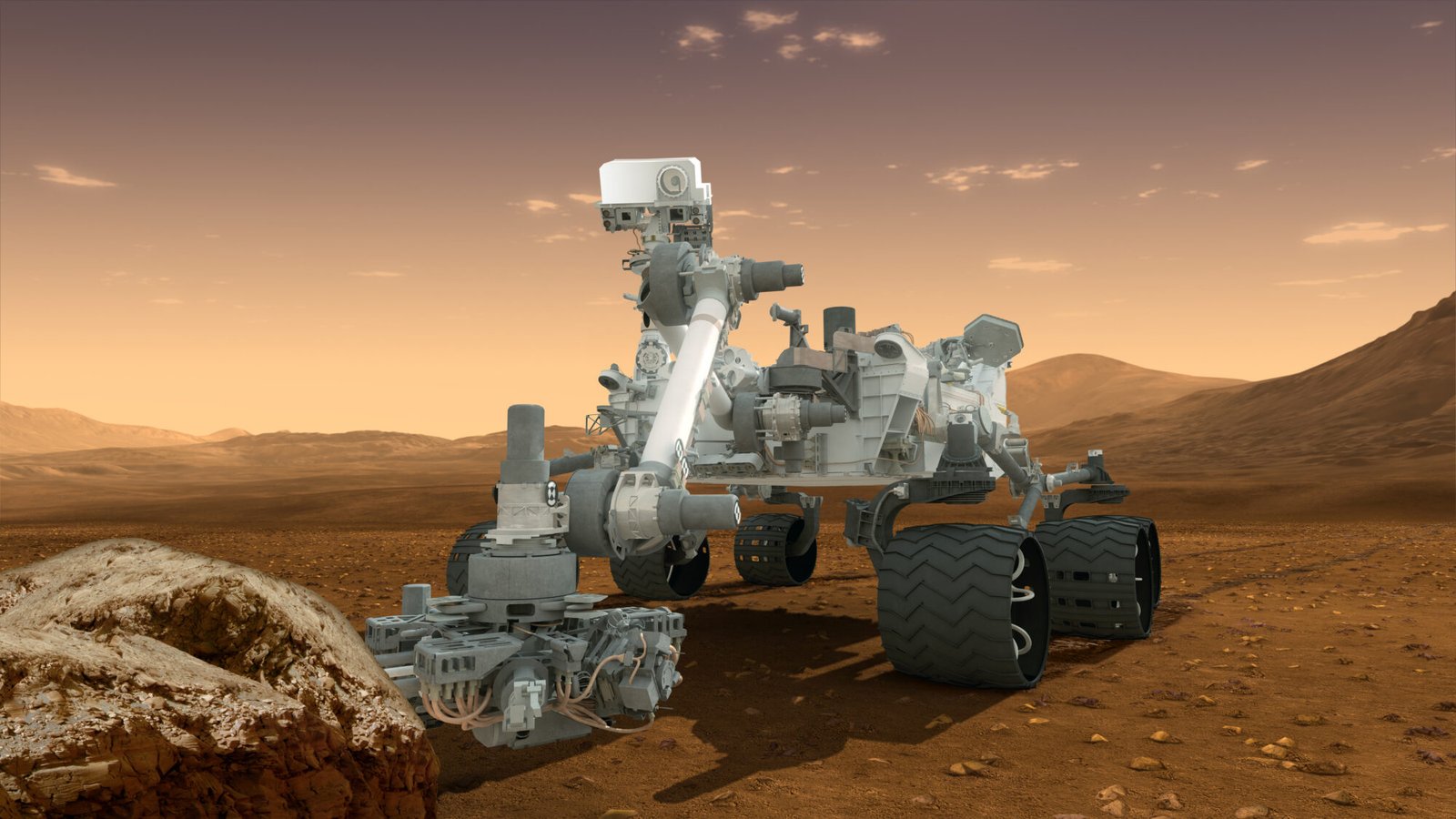
  • Curiosity detected over 20 organic molecules in ancient Martian rock

    Curiosity detected over 20 organic molecules in ancient Martian rock

    What the study found

    The study found that more than 20 organic molecules were detected in clay-bearing sandstones from Gale crater on Mars. These molecules included benzothiophene, methyl benzoate, and single and dicyclic aromatic molecules.

    Why the authors say this matters

    The authors conclude that the experiment successfully released molecules preserved in ancient macromolecular or free organic matter within Martian bedrock, despite about 3.5 billion years of diagenesis and radiation exposure. The study suggests this helps show that organic matter can still be detected in old Martian rocks.

    What the researchers tested

    The researchers used the Sample Analysis at Mars instrument suite on board the Curiosity rover to analyze clay-bearing sandstones in the ~3.5-billion-year-old Knockfarrill Hill member of Glen Torridon, Gale crater. They used the onboard tetramethylammonium hydroxide wet chemistry experiment, together with evolved gas analysis and gas chromatography-mass spectrometry.

    What worked and what didn't

    The wet chemistry experiment released diverse thermochemolysis products, and more than 20 organic molecules were detected. The abstract does not report any failed detections or negative outcomes beyond noting the long-term effects of diagenesis and radiation exposure.

    What to keep in mind

    The summary provided here is limited to the abstract, so detailed limitations are not described. The findings apply to the specific Martian rock unit and the instruments used in this study.

    • More than 20 organic molecules were detected in Martian clay-bearing sandstones.
    • The samples came from the ~3.5-billion-year-old Knockfarrill Hill member in Gale crater.
    • Tetramethylammonium hydroxide wet chemistry released diverse thermochemolysis products.
    • Detected molecules included benzothiophene, methyl benzoate, and aromatic molecules.
    • The authors say the results indicate preserved organic matter remained detectable despite long-term diagenesis and radiation exposure.
  • Review maps AIoT approaches for building energy optimization

    What the study found

    The review finds that building energy management is shifting toward Grid-Interactive Efficient Buildings, meaning buildings that can interact with the electricity grid while managing energy efficiently. It also identifies a move from traditional building energy management systems toward Artificial Intelligence of Things (AIoT), edge computing, and semantic interoperability.

    Why the authors say this matters

    The authors conclude that these approaches are relevant to the transition toward a net-zero economy and to handling stochastic energy flows and multi-objective optimization in buildings. They also suggest that the methods they review may support autonomous Cognitive Digital Twins and Human-Centric Personal Comfort Models.

    What the researchers tested

    The researchers conducted a Systematic Literature Review following PRISMA guidelines and analyzed 144 studies, including 135 primary technical papers and 9 review articles. Because the literature used diverse cyber-physical testbeds and Internet of Things architectures, they used a qualitative narrative and architectural synthesis rather than a quantitative meta-analysis.

    What worked and what didn't

    The review describes newer algorithmic approaches, including Deep Learning, Deep Reinforcement Learning, Agentic AI, and Physics-Informed Neural Networks, as methods intended to address the sim-to-real gap while maintaining thermodynamic consistency and safety in physical actuation. It also discusses applications in HVAC optimization, demand response, energy arbitrage, and predictive maintenance, and introduces Federated Learning, Transfer Learning, and TinyML for privacy, scaling, and lower computational demand; the abstract does not report comparative performance results among these methods.

    What to keep in mind

    This is a review article, so it summarizes prior studies rather than presenting a new experimental system or direct performance test. The abstract notes substantial methodological diversity across the reviewed literature, which is why the authors did not perform a quantitative meta-analysis.

    • The review covers 144 studies on building energy management and optimization.
    • It focuses on AIoT, edge computing, and semantic interoperability for buildings.
    • The authors discuss newer methods such as Agentic AI and Physics-Informed Neural Networks.
    • The review includes applications in HVAC optimization, demand response, energy arbitrage, and predictive maintenance.
    • The abstract says methodological diversity prevented a quantitative meta-analysis.
  • MERA diagnoses lung nodules with little annotation

    What the study found

    The study found that MERA, a multimodal and multiscale self-explanatory model for lung nodule diagnosis, can reach diagnostic accuracy comparable to or exceeding state-of-the-art methods while using only 1% of annotated samples. The authors also report that it provides multiple kinds of explanations, including global, case-based, visual, and concept-level explanations.

    Why the authors say this matters

    The authors say MERA addresses gaps in explainable artificial intelligence, or AI systems designed to make their decisions understandable, for lung nodule diagnosis. They conclude that unsupervised and weakly supervised learning may lower the barrier to deploying diagnostic AI systems in broader medical domains and may make healthcare AI more transparent, understandable, and trustworthy.

    What the researchers tested

    The researchers introduced MERA and evaluated it on the public LIDC dataset, a lung nodule dataset. The model combines unsupervised and weakly supervised learning, self-supervised learning, Vision Transformer-based feature extraction, and semi-supervised active learning in latent space, which is the learned internal representation used by the model.

    What worked and what didn't

    On the LIDC dataset, MERA was reported to have superior diagnostic accuracy and self-explainability. With only 1% of annotations, it performed comparably to or better than state-of-the-art methods that require full annotation, and its explanations were described as robust, comprehensive, and aligned with clinical practices.

    What to keep in mind

    The abstract reports results on a public dataset, so the summary does not describe performance beyond that setting. It does not provide detailed numerical comparisons in the text provided, and no specific limitations are described in the available abstract.

    • MERA is a self-explanatory model for lung nodule diagnosis.
    • The model uses only 1% annotated samples in the reported evaluation.
    • It was reported to match or exceed state-of-the-art methods on the LIDC dataset.
    • The model provides global, case-based, visual, and concept-level explanations.
    • The authors say unsupervised and weakly supervised learning may reduce the need for manual labeling.