Blog

  • Beta cell DNA methylation changes with age and in type 2 diabetes

    What the study found

    The study found that pancreatic beta cells, the insulin-producing cells in the pancreas, show progressive age-related DNA methylation changes in healthy donors. In type 2 diabetes, beta cells showed further DNA methylation loss compared with healthy controls, while alpha cells did not show the same pattern.

    Why the authors say this matters

    The authors conclude that these DNA methylation changes may reflect how beta cells adapt over time to metabolic demand. They suggest that, in type 2 diabetes, this adaptation is accelerated but eventually fails under sustained insulin resistance.

    What the researchers tested

    The researchers mapped genome-wide DNA methylation patterns using cell-type-specific methylome data from the Human Pancreas Analysis Program. They compared beta cells and alpha cells from healthy donors and from people with type 2 diabetes.

    What worked and what didn't

    In healthy donors, beta cells showed progressive age-related demethylation, especially in cis-regulatory elements near genes linked to beta cell identity and function. Alpha cells showed the opposite trend, with subtle age-related hypermethylation. In type 2 diabetes, beta cells showed additional demethylation compared with healthy controls, but alpha cells did not.

    What to keep in mind

    The summary does not describe experimental limitations in detail. The findings are based on DNA methylation patterns in donor pancreatic cells and do not by themselves show direct cause and effect.

    • Healthy beta cells showed progressive age-related DNA demethylation.
    • The demethylation was enriched near genes involved in beta cell identity and function.
    • Alpha cells showed the opposite age-related pattern, with subtle hypermethylation.
    • Type 2 diabetes beta cells showed additional demethylation compared with healthy controls.
    • The authors interpret the pattern as long-term adaptation that is accelerated in type 2 diabetes.
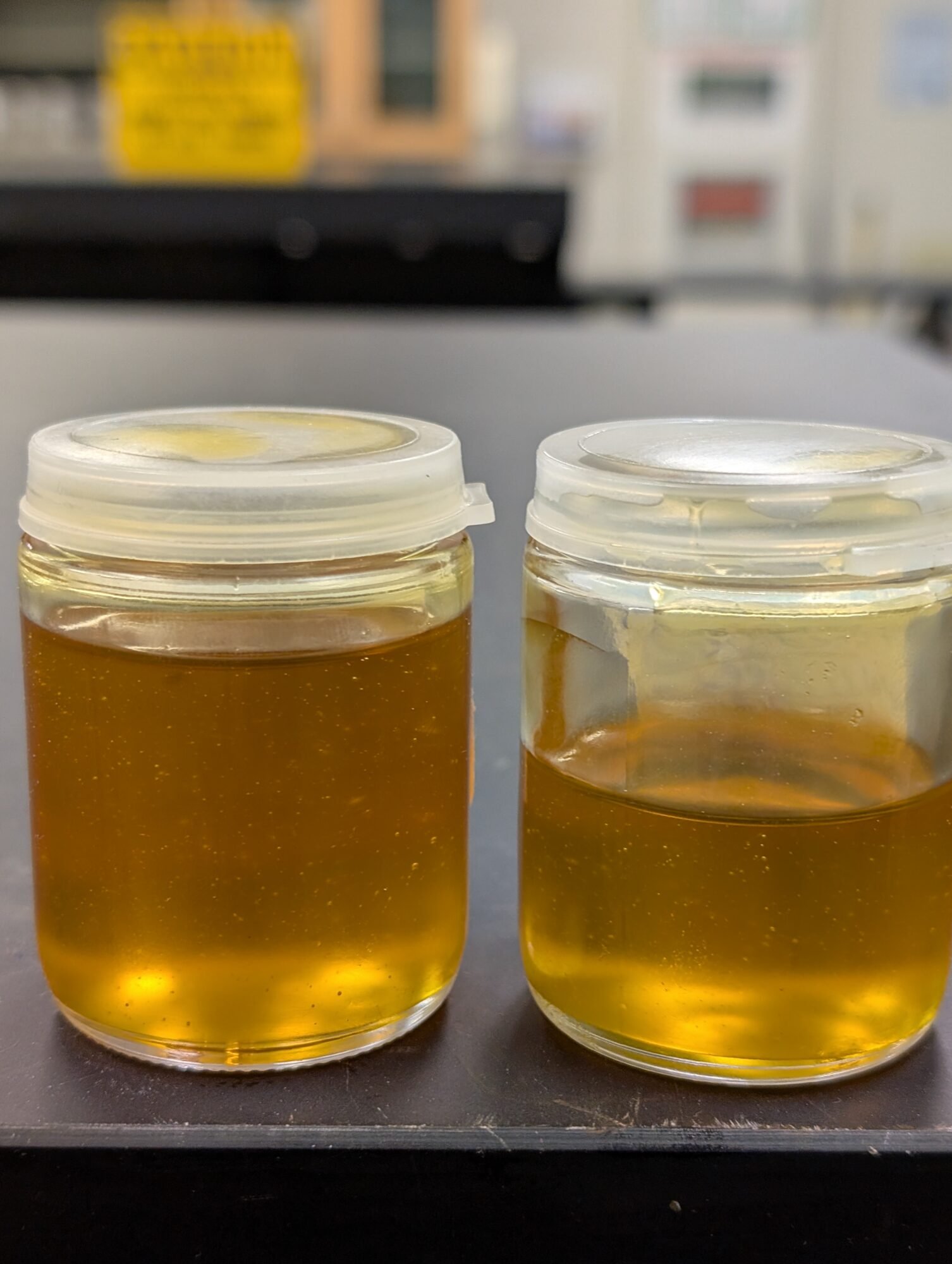
  • Structured lipid systems for plant-based meat are reviewed

    Structured lipid systems for plant-based meat are reviewed

    What the study found

    The review concludes that structured lipid systems can improve the sensory, nutritional, and functional properties of plant-based meat by mimicking natural animal fat. It focuses on oleogels, emulsion gels, Pickering emulsions, high-internal-phase emulsions, and hybrid lipid architectures.

    Why the authors say this matters

    The authors suggest these lipid systems provide a mechanistic framework for precision lipid engineering in scalable and realistic next-generation plant-based meat products. They also indicate that the approach offers design, processing, and nutritional opportunities.

    What the researchers tested

    This is a review article, not an experimental study. The authors examined the structure-property-processing-sensory relationships of several structured lipid systems used in plant-based meat.

    What worked and what didn't

    The abstract says the review highlights critical design targets, processing compatibility, and nutritional opportunities. It does not report direct experimental comparisons or identify specific systems that worked better or worse than others.

    What to keep in mind

    The available summary does not describe original experiments, numerical results, or specific limitations. The article is a review, so its conclusions are based on synthesis of prior work rather than a new test of a single product or method.

    • Structured lipid systems are described as improving the sensory, nutritional, and functional properties of plant-based meat.
    • The review covers oleogels, emulsion gels, Pickering emulsions, high-internal-phase emulsions, and hybrid lipid architectures.
    • The authors emphasize structure-property-processing-sensory relationships in these systems.
    • The abstract says the review highlights design targets, processing compatibility, and nutritional opportunities.
    • No direct experimental results or comparative performance claims are reported in the abstract.
  • LLMs showed low first-attempt deployability for IaC generation

    What the study found

    The study found that large language models (LLMs, AI systems trained on large text datasets) performed poorly when judged by whether their infrastructure-as-code (IaC, code used to provision cloud infrastructure) templates could actually be deployed. It also found that an iterative feedback framework and human guidance improved deployability.

    Why the authors say this matters

    The authors say deployability is the critical measure of whether IaC configuration files are useful, and that focusing only on syntax misses this point. The study suggests that continued research is needed because the generated templates showed low alignment with user intent and low security compliance.

    What the researchers tested

    The researchers built DPIaC-Eval, a deployability-focused IaC benchmark with 153 real-world scenarios across 58 services. They also proposed IaCGen, an LLM-based framework that uses iterative feedback through format verification, syntax checking, and live deployment stages, and they tested six state-of-the-art LLMs.

    What worked and what didn't

    On the first attempt, the six LLMs achieved only 20.8% to 30.2% deployment success. With IaCGen, 54.6% to 91.6% of generated IaC templates became deployable within the first 10 iterations, and human-in-the-loop feedback pushed performance to over 90% passItr@25 on all evaluated LLMs.

    What to keep in mind

    The abstract does not provide details about the exact systems used in deployment, the nature of the human feedback process, or how broadly the results generalize beyond the benchmark. It also reports poor user requirement coverage (25.2%) and security compliance (8.4%), but does not explain the causes of those outcomes in the available summary.

    • Six LLMs had only 20.8% to 30.2% first-attempt deployment success.
    • DPIaC-Eval includes 153 real-world scenarios across 58 unique services.
    • IaCGen uses format verification, syntax checking, and live deployment feedback.
    • IaCGen made 54.6% to 91.6% of templates deployable within 10 iterations.
    • Human-in-the-loop feedback raised performance to over 90% passItr@25 on all evaluated LLMs.
    • Reported user requirement coverage was 25.2% and security compliance was 8.4%.
  • Lactobacillus reuteri is linked to several beneficial host effects

    What the study found

    The article says Lactobacillus reuteri is a well-studied probiotic bacterium found in several human body sites, and that it is associated with beneficial effects. These include antimicrobial activity, effects on the immune system, and strengthening of the intestinal barrier.

    Why the authors say this matters

    The authors conclude that increasing the colonization of L. reuteri may be relevant for inflammatory diseases, including diseases in the gut and in remote tissues. They also suggest that direct supplementation or prebiotic modulation of L. reuteri may be an attractive preventive and/or therapeutic avenue against inflammatory diseases.

    What the researchers tested

    This is a research article that reviews what is known about L. reuteri in human health and disease. The abstract describes its presence in the gastrointestinal tract, urinary tract, skin, and breast milk, and summarizes reported biological effects.

    What worked and what didn't

    The abstract reports that L. reuteri can produce antimicrobial molecules such as organic acids, ethanol, and reuterin, which may inhibit pathogenic microbes and reshape commensal microbiota. It also says some strains can reduce pro-inflammatory cytokines and support regulatory T cell development and function, while strengthening the intestinal barrier may reduce microbial translocation from the gut lumen to tissues.

    What to keep in mind

    The abstract does not describe specific experiments, sample sizes, or the strength of evidence behind each claim. It also notes that L. reuteri abundance varies among individuals, and that its decrease over recent decades is correlated with increased inflammatory diseases, but it does not state this as proof of causation.

    • Lactobacillus reuteri is found in the human gastrointestinal tract, urinary tract, skin, and breast milk.
    • The bacterium can produce antimicrobial molecules including organic acids, ethanol, and reuterin.
    • Some L. reuteri strains may reduce pro-inflammatory cytokines and support regulatory T cells.
    • The abstract says L. reuteri may strengthen the intestinal barrier and reduce microbial translocation.
    • The authors suggest supplementation or prebiotic modulation could be a preventive or therapeutic option for inflammatory diseases.
  • Updated bed and bathymetry maps for Antarctic and Greenland ice sheets

    What the study found

    The study reports major improvements in the mapped bed topography under the Greenland and Antarctic Ice Sheets, as well as refinements to coastal bathymetry, which is the shape of the seafloor near the ice sheets. The authors say these updates improve the description of both ice sheets.

    Why the authors say this matters

    The authors indicate that these improvements address known limitations in BedMachine, a widely used high-resolution gridded bed map for ice-sheet modeling. They say the new information helps reduce uncertainty in ocean bathymetry and mapping artefacts in the ice-sheet interior.

    What the researchers tested

    The researchers combined several recent approaches to improve bed mapping. In Greenland, they used ICESat-2 surface elevation time series; in Antarctica, they used Ice-Flow Perturbation Analysis and the machine learning-based IceBoost approach; and over the continental shelf, they used a new gravity inversion product from the Antarctic Gravity Anomaly Grid.

    What worked and what didn't

    The abstract says the Greenland analysis captured finer bed details, and the Antarctic methods provided estimates of bed topography in the interior and finer details for periphery ice caps and the Antarctic Peninsula. The new gravity inversion product provided significant refinements to bathymetry around the entire ice sheet. The abstract also notes that earlier BedMachine versions still suffered from uncertainty in ocean bathymetry and artefacts in the ice-sheet interior.

    What to keep in mind

    The abstract does not provide quantitative comparisons, validation metrics, or specific uncertainty values for the new products. It also does not describe any remaining limitations after these updates.

    • The study reports major improvements to bed topography maps for Greenland and Antarctica.
    • The authors say the updates also refine coastal bathymetry around the ice sheets.
    • ICESat-2 data were used for Greenland to capture finer bed details.
    • Antarctic interior bed topography was estimated with Ice-Flow Perturbation Analysis.
    • IceBoost was used for Antarctic periphery ice caps and the Antarctic Peninsula.
    • A new gravity inversion product improved bathymetry over the continental shelf.
  • Place-based program sequencing shaped social capital

    What the study found

    The study found that participants developed both bonding social capital, meaning ties within a supportive group, and bridging social capital, meaning connections to outside resources. These processes were sequenced and interdependent: trust and safety came first, and that then supported later connections beyond the program.

    Why the authors say this matters

    The authors conclude that place-based programs may be more effective when they intentionally sequence bonding before bridging, provide identity-affirming supports, and align outside resources with community strengths. They also say shared staff identity can build trust and speed engagement, but structural barriers still affect whether new connections lead to tangible benefits.

    What the researchers tested

    The researchers studied a 12-month economic mobility intervention called the Mothers Mobility Program in Charlotte, North Carolina. Using Reflexive Thematic Analysis, they interviewed and analyzed a subgroup of 20 mothers, ages 19 to 44, from six cohorts out of 70 participants who completed the program between 2021 and 2024.

    What worked and what didn't

    Bonding ties were fostered through program offerings and identity-affirming spaces, and these helped create trust and safety. That trust then enabled bridging connections to external resources; however, the study says structural barriers limited how usable those new networks were, and shared staff-client identities influenced engagement.

    What to keep in mind

    The analysis is based on interviews with 20 mothers from one program in one city, so the findings are limited to that context. The abstract does not describe quantitative outcomes, and it does not provide additional limitations beyond the role of structural barriers.

    • The study found both bonding and bridging social capital among participating mothers.
    • Bonding ties appeared to come first and helped create trust and safety.
    • Trust then supported bridging connections to external resources.
    • Shared staff-client identities influenced participation and engagement.
    • Structural barriers limited whether new connections became usable benefits.
  • Exact residual finiteness growth for some two-step nilpotent groups

    What the study found

    The authors found an improved polylogarithmic upper bound for the residual finiteness growth of two-step nilpotent groups. They also show that this bound depends only on the complex Mal’cev completion of the group, and that it is exact when the commutator subgroup is one- or two-dimensional.

    Why the authors say this matters

    The authors note that exact asymptotics for residual finiteness growth are unknown for many groups, including general nilpotent groups. The findings suggest progress on that broader problem by giving a sharper bound in the two-step nilpotent case.

    What the researchers tested

    The researchers studied residual finiteness growth, a function that measures the size of a finite quotient needed to detect an element of bounded norm in a finitely generated residually finite group. They focused on two-step nilpotent groups and compared their results with bounds known in the literature.

    What worked and what didn't

    The improved polylogarithmic upper bound worked for all two-step nilpotent groups considered in the paper. The authors also proved exactness in the special cases where the commutator subgroup has dimension one or two. For the general nilpotent setting, the abstract says exact asymptotics are still unknown.

    What to keep in mind

    The abstract does not describe the proof details or the full range of assumptions beyond finitely generated residually finite groups. It also does not state whether the conjecture for the general case is proved, only that the authors conjecture their exactness result holds more broadly.

    • The paper gives an improved polylogarithmic upper bound for residual finiteness growth in two-step nilpotent groups.
    • The bound depends only on the complex Mal’cev completion of the group.
    • The bound is exact when the commutator subgroup is one- or two-dimensional.
    • The abstract says exact asymptotics remain unknown for many groups, including general nilpotent groups.
    • The authors conjecture that the exactness result extends beyond the special low-dimensional cases.
  • Schur multiplier norm and its dual norm are characterized

    What the study found

    The study shows that the Schur multiplier norm of a complex self-adjoint matrix can be determined by a minimization formula involving a diagonal matrix. It also gives a corresponding formula for the dual norm of the Schur multiplier norm.

    Why the authors say this matters

    The authors present these formulas as a way to study the dual norm as a formal linear program. In the abstract, they frame this as a mathematical characterization of the norm and its dual.

    What the researchers tested

    The paper studies complex self-adjoint n × n matrices and norms on matrices in M(m, n)(C). It defines the dual norm using a trace-based supremum and introduces diagonal matrices built from vectors in C^n and R^n.

    What worked and what didn't

    For a self-adjoint matrix A, the Schur multiplier norm is given by min{||diag(P)||∞ : -P ≤ A ≤ P}. For the dual norm, the abstract states the formula ||A||S* = min{Tr_n(Δ(λ)) : λ ∈ R^n, -Δ(λ) ≤ A ≤ Δ(λ)}.

    What to keep in mind

    The abstract only provides the formulas and says the minimization problem is studied as a formal linear program. It does not describe examples, numerical experiments, or broader applications in the available summary.

    • The Schur multiplier norm of a complex self-adjoint matrix has a minimization characterization.
    • The dual norm of the Schur multiplier norm is also given by a minimization formula.
    • Both formulas use diagonal matrices and inequalities bounding the matrix A.
    • The paper studies the minimization problem as a formal linear program.
    • The abstract does not describe examples or applications.
  • Mechanical load reduced cancer cell growth in heart tissue

    What the study found

    The study found that mechanical load reduced cancer cell proliferation in the myocardium, the heart muscle. It also found changes in chromatin structure in human cardiac metastases, including decreased histone methylation and chromatin compaction.

    Why the authors say this matters

    The authors conclude that mechanical forces help protect the heart from cancer. They also suggest that mechanical stimulation may offer potential strategies for cancer therapy.

    What the researchers tested

    The researchers used in vivo cancer models and ex vivo engineered heart tissues, meaning heart tissue studied outside the body. They also analyzed spatial transcriptomics, a method for measuring gene activity in specific tissue locations, in human cardiac metastases.

    What worked and what didn't

    Mechanical load was associated with lower cancer cell proliferation in the myocardium. Spatial transcriptomics of human cardiac metastases showed decreased histone methylation and chromatin compaction, and these changes affected chromatin accessibility at proliferation-related loci; Nesprin-2 was identified as a key mechanosensor.

    What to keep in mind

    The abstract does not provide detailed limitations. The summary is limited to the cardiac context described here and does not state how broadly the findings apply beyond the models and human metastasis samples studied.

    • Mechanical load reduced cancer cell proliferation in heart muscle.
    • Human cardiac metastases showed decreased histone methylation and chromatin compaction.
    • The changes affected chromatin accessibility at proliferation-related loci.
    • Nesprin-2 was identified as a key mechanosensor.
    • The authors suggest mechanical stimulation may have potential for cancer therapy.
  • Review links stellar mergers to diverse outcomes

    What the study found

    The review concludes that stellar mergers can lead to a wide range of outcomes, including blue straggler stars, spectacular transients, very massive stars, strong magnetic fields, and rapidly rotating merger products. It also notes that mergers of main sequence stars often fully rejuvenate, while mergers involving post-main sequence stars can create interior structures unlike those reachable through single-star evolution.

    Why the authors say this matters

    The authors suggest these merger products may help explain long-lived blue supergiants, SN 1987A-like events, interacting and superluminous supernovae, and the formation of very massive black holes. The study also suggests merged stars may be the origin of some magnetic OBA stars and their descendants, highly magnetic white dwarfs, and neutron stars.

    What the researchers tested

    This is a review article focused on mergers from binary evolution and stellar collisions, excluding mergers involving compact objects. The authors review how mergers form, the physics and outcomes of the merger process, the later evolution and final fates of merged stars, and how these ideas relate to observations.

    What worked and what didn't

    Mergers of main sequence stars often appear to fully rejuvenate and develop interior structures similar to genuine single stars. In contrast, post-main-sequence mergers can produce structures that single-star evolution cannot make, and these products may become long-lived blue supergiants or end as such stars. The abstract also states that merger products initially rotate rapidly, but several mechanisms can quickly spin them down, so they may be slow rotators for most of their evolution.

    What to keep in mind

    The article is a review, so the abstract summarizes themes and conclusions rather than reporting one new experiment. It does not provide detailed methods, sample sizes, or quantitative results in the available summary, and it does not cover mergers involving compact objects.

    • Main-sequence star mergers often fully rejuvenate and can resemble ordinary single stars internally.
    • Post-main-sequence mergers can create stellar structures that single-star evolution cannot produce.
    • Some merger products may become long-lived blue supergiants and may be linked to SN 1987A-like events and other supernova types.
    • Stellar mergers are described as a possible origin of strong magnetic fields in some stars and their remnants.
    • Merger products start off rotating rapidly, but they may spin down quickly and become slow rotators.