Blog

  • Perceived constraints were linked to later depression and anxiety through coping

    What the study found

    The study found that perceived control over daily stressors was linked to later depression and anxiety symptoms, but the pattern depended on the type of perceived control, the coping strategy, and the disorder. In particular, perceived constraints were more consistently tied to later symptoms through coping, while mastery showed a more specific link to generalized anxiety disorder (GAD).

    Why the authors say this matters

    The authors conclude that these disorder-specific patterns highlight the importance of tailoring prevention strategies for major depressive disorder (MDD) and GAD. The study suggests that different forms of coping may help explain how perceived control relates to later mental health outcomes.

    What the researchers tested

    The researchers analyzed three-wave data from 3,294 participants in the Midlife Development in the United States (MIDUS) study, with waves about nine years apart. They used longitudinal structural equation modeling to test whether coping strategies at the second wave, divided into approach coping and avoidance coping, mediated the relationship between perceived control at the first wave and MDD and GAD symptoms at the third wave, while controlling for baseline symptom severity.

    What worked and what didn't

    Avoidance coping significantly mediated the pathway from perceived constraints to later MDD severity, while approach coping did not mediate that pathway. For GAD symptoms, both approach and avoidance coping mediated the link from perceived constraints, and approach coping fully mediated the link from mastery to later GAD severity; avoidance coping did not mediate the mastery pathway.

    What to keep in mind

    The summary does not describe limitations beyond the study design and the measured variables. The findings come from one cohort, use self-reported constructs of perceived control and coping, and describe associations over time rather than direct causal proof.

    • Perceived constraints were linked to later MDD symptoms through avoidance coping.
    • For GAD symptoms, both approach and avoidance coping mediated the constraints pathway.
    • Approach coping fully mediated the mastery-to-GAD pathway.
    • Neither coping strategy mediated the mastery-to-MDD pathway.
    • The authors say the patterns support tailoring prevention strategies for MDD and GAD.
  • LLM consensus pipeline reduced manual effort in literature screening

    What the study found

    The study found that a human-supervised pipeline using multiple large language models (LLMs) and a consensus scheme can reduce the manual effort needed to filter papers for systematic literature reviews. The authors report that it also achieved lower error rates than single human annotators.

    Why the authors say this matters

    The authors say this matters because systematic literature reviews are important for understanding a research field and guiding future research, but the literature screening step is time-consuming and labor-intensive. They conclude that responsible human-AI collaboration can accelerate and improve this workflow.

    What the researchers tested

    The researchers proposed a pipeline that classifies papers using descriptive prompts across multiple LLMs, then combines the model outputs with a consensus scheme. The process was human-supervised and controlled through an open-source visual analytics web interface called LLMSurver, which allowed real-time inspection and modification of outputs.

    What worked and what didn't

    Using ground-truth data from a recent systematic literature review with 8,323 candidate papers, the pipeline reduced manual effort and showed lower error rates than single human annotators. The abstract says that modern open-source models were sufficient for the task and that the approach was cost-effective and accessible.

    What to keep in mind

    The abstract does not describe detailed failure cases, specific error measurements, or how performance varied across individual models. It also does not provide limitations beyond noting that the process remains human-supervised and interactively controlled.

    • The study proposes a semi-automatic pipeline for filtering papers in systematic literature reviews.
    • Multiple LLMs classify papers, and their outputs are combined using a consensus scheme.
    • A visual analytics interface, LLMSurver, lets users inspect and modify model outputs in real time.
    • The evaluation used ground-truth data from 8,323 candidate papers from a recent systematic literature review.
    • The abstract reports lower error rates than single human annotators and lower manual effort.
  • Community-based program identified health priorities in Salvador slums

    Community-based program identified health priorities in Salvador slums

    What the study found

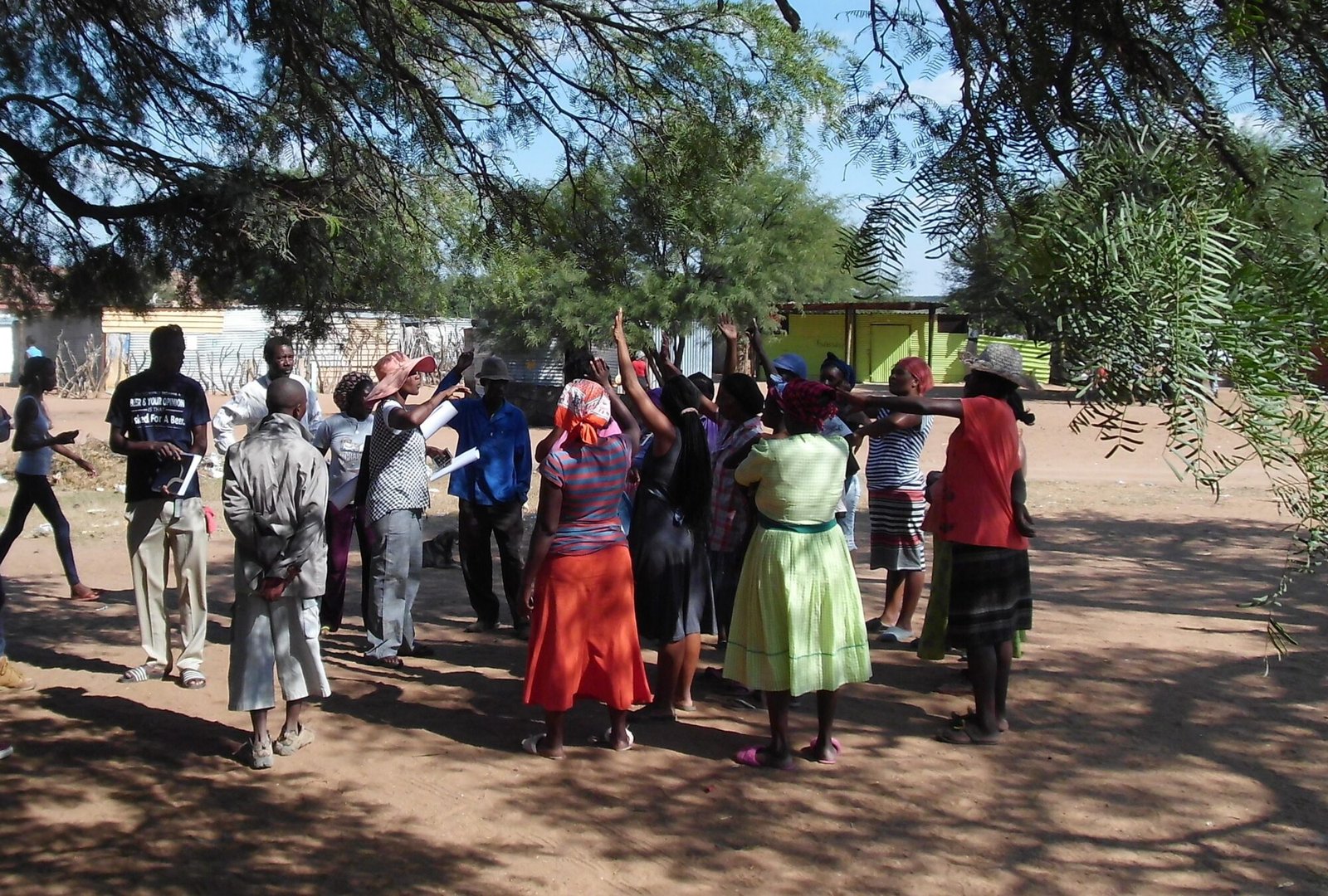
    The study describes an ongoing community-based participatory research program in three urban informal settlements of Salvador, Brazil. It reports that the program identified local priorities and developed thirteen interventions focused on citizenship rights, social cohesion, environmental restoration, waste management, and unemployment.

    Why the authors say this matters

    The authors conclude that their interdisciplinary approach helped empower marginalized urban communities to address health and environmental challenges through sustainable, locally tailored solutions. They also say the program strengthened community trust, supported partnerships, and produced environmental improvements.

    What the researchers tested

    Using a social justice framework, the researchers developed a community program based on participatory research methods and popular health education. They worked in Alto do Cabrito, Pau da Lima, and Marechal Rondon and used ethnographic, eco-epidemiological, and collaborative mapping surveys, along with consultative and socialization events with community groups.

    What worked and what didn't

    The program identified diverse health and well-being challenges and led to thirteen planned interventions. The abstract says the program strengthened community trust, facilitated partnerships, and achieved notable environmental improvements.

    What to keep in mind

    This article describes an ongoing project, so it does not report long-term outcomes. The authors say further evaluation is needed to assess the long-term effects of the interventions on broader social determinants of health.

    • The program was carried out in three urban informal settlements in Salvador, Brazil.
    • It used participatory research methods, popular health education, and mapping surveys.
    • Researchers identified local priorities and designed 13 interventions.
    • The interventions targeted citizenship rights, social cohesion, environmental restoration, waste management, and unemployment.
    • The authors say the program strengthened trust and partnerships, but long-term effects still need evaluation.
  • Homochiral nanochannel membrane separated amino acid enantiomers

    What the study found

    The study found that a homochiral hydrogen-bonded biohybrid framework built inside poly(ethylene terephthalate) nanochannels enabled highly selective separation of amino acid enantiomers. It achieved near-complete resolution of racemic histidine, with d-histidine transported preferentially.

    Why the authors say this matters

    The authors conclude that this work offers a scalable platform for high-efficiency chiral separations, especially for pharmaceutical applications. They also present it as a way to address the challenge of combining strong enantioselectivity with robust flux in nanochannel membranes.

    What the researchers tested

    The researchers used a voltage-driven in situ assembly strategy to construct a homochiral hydrogen-bonded biohybrid framework, called HBF, within poly(ethylene terephthalate) nanochannels, forming HBF@PET membranes. The framework was built using directional hydrogen bonding between bovine serum albumin, a protein, and 1,3,6,8-tetra(terephthalic acid) pyrene.

    What worked and what didn't

    The HBF@PET membrane separated racemic histidine with enantiomeric excess above 99% and a d-histidine flux of 4.52 ± 0.04 mmol m–2 h–1, which the abstract says surpasses state-of-the-art nanochannel systems. Mechanistic studies indicated stronger binding of the framework to l-histidine, which hindered its diffusion while helping d-histidine pass more readily; the membrane also showed applicability to tryptophan and arginine enantiomers.

    What to keep in mind

    The limitations described in the available abstract are limited. The report states that the membrane was tested for histidine and also for tryptophan and arginine enantiomers, but it does not provide broader performance limits, long-term durability data, or details beyond the summary provided.

    • A homochiral hydrogen-bonded biohybrid framework was assembled inside PET nanochannels.
    • The membrane resolved racemic histidine with enantiomeric excess above 99%.
    • d-Histidine was transported at 4.52 ± 0.04 mmol m–2 h–1.
    • Mechanistic studies found stronger binding to l-histidine than to d-histidine.
    • The membrane also showed applicability to tryptophan and arginine enantiomers.
  • Adaptive cloud orchestration improved resilience under correlated faults

    What the study found

    The study reports that a fuzzy hybrid reptile–mamba optimisation framework for cloud orchestration performed better under correlated faults and bursty workloads. It treats resource allocation as a risk-constrained problem using a conditional value-at-risk (CVaR) penalty, which is a way to account for adverse outcomes in optimization.

    Why the authors say this matters

    The authors suggest the work matters because cloud platforms face reliability threats from correlated hardware faults, workload surges, and competing performance goals. The study suggests their framework can address these risks through fault-aware orchestration and self-healing control.

    What the researchers tested

    The researchers developed the fuzzy hybrid reptile–mamba optimisation (FHRMO) framework, combining a CVaR-penalised multi-objective model, a new black mamba local search operator, and an event-triggered self-healing policy. They tested it in CloudSim Plus using Google Cluster Trace data, and they evaluated it with Friedman and Wilcoxon tests over 30 independent runs across five stress scenarios.

    What worked and what didn't

    The abstract says the framework produced statistically significant gains across five stress scenarios, including correlated faults and bursty workloads. It also states that the self-healing policy had a local sufficient-decrease guarantee for repair cost and a hysteresis-based bounded-switching guarantee for the controller. The abstract does not identify any failed cases or specific metrics that did not improve.

    What to keep in mind

    The summary is based only on the abstract, so details of effect size, baseline comparisons, and scenario-specific numbers are not provided. Limitations are not described in the available abstract.

    • The paper presents a fuzzy hybrid reptile–mamba optimisation framework for cloud orchestration.
    • It uses a CVaR-penalised multi-objective model to balance fault tolerance, response latency, and recovery overhead.
    • A new black mamba local search operator and an event-triggered self-healing policy are part of the framework.
    • Tests in CloudSim Plus with Google Cluster Trace data showed statistically significant gains in five stress scenarios.
    • The abstract does not report specific negative results or detailed limitations.
  • São João monument installation brought local economic benefits

    What the study found

    The study found that the installation of the São João monument was linked to benefits for the surrounding community. These included income and job generation, tourism development, and reported compliance with Sustainable Development Goal 8, target 8.9.

    Why the authors say this matters

    The authors say this matters because they view the monument in relation to sustainable development, the 2030 Agenda, and SDG 8, which concerns decent work and economic growth. The study suggests the installation may have relevance for community quality of life and family development around the monument.

    What the researchers tested

    The researchers conducted a single case study in a city in the interior of Brazil. They used qualitative data collection to examine impacts on residents living around the São João monument.

    What worked and what didn't

    The reported benefits were income generation, job creation, and tourism development. The abstract also says improvements in local planning and development are still needed.

    What to keep in mind

    The summary does not describe sample size, specific participants, or detailed data collection procedures. It also does not provide quantitative measures of impact, and the findings are limited to one case study.

    • The monument installation was associated with income and job generation.
    • The study reports tourism development in the surrounding community.
    • The authors say the case relates to Sustainable Development Goal 8 and target 8.9.
    • Improvements in local planning and development were still needed.
    • The research was a qualitative single case study in Brazil.
  • Cyclometalated platinum compounds formed through competing bond-activation pathways

    What the study found

    The study found that competing carbon-hydrogen bond activation and carbon-halogen bond oxidative addition pathways can lead to different cyclometalated platinum compounds. When X = Br, the product was a six-coordinate platinum(IV) compound containing an anionic C^N^N ligand, and when X = Cl, both platinum(IV) and platinum(II) products were formed.

    Why the authors say this matters

    The authors suggest that comparing these pathways helps explain how platinum compounds form under different conditions. The findings also connect the observed products with photophysical behavior and with calculations of the competition between carbon-hydrogen activation and carbon-halogen oxidative addition.

    What the researchers tested

    The researchers studied cyclometalated platinum compounds formed from competing carbon-hydrogen bond activation and carbon-halogen bond oxidative addition pathways. They characterized the products with multinuclear nuclear magnetic resonance spectroscopy and single-crystal X-ray diffraction, and they examined photophysical properties using ultraviolet/visible, emission, and transient absorption spectroscopies. They also used density functional theory and time-dependent density functional theory calculations and compared those calculations with experiment.

    What worked and what didn't

    For X = Br, the pathway gave a six-coordinate platinum(IV) compound containing an anionic C^N^N ligand. For X = Cl, both a platinum(IV) product and a platinum(II) product were obtained; the platinum(II) species was formed by carbon-hydrogen activation followed by reductive elimination of methane.

    What to keep in mind

    The abstract does not describe broader limitations or practical applications. It also does not provide quantitative performance data for the photophysical measurements or detailed outcomes of the calculations beyond their comparison with experiment.

    • Competing carbon-hydrogen activation and carbon-halogen oxidative addition pathways produced different platinum compounds.
    • With bromine, the product was a six-coordinate platinum(IV) compound containing an anionic C^N^N ligand.
    • With chlorine, both platinum(IV) and platinum(II) products were formed.
    • The platinum(II) species came from carbon-hydrogen activation followed by methane elimination.
    • The products were characterized by multinuclear NMR and single-crystal X-ray diffraction.
  • Bank diversification shows mixed effects on performance

    What the study found

    The review found that the effects of bank diversification on performance are heterogeneous and depend on context. The authors report that diversification in commercial banks can sometimes improve profitability and valuations, but in other settings it can increase earnings volatility and lower risk-adjusted performance.

    Why the authors say this matters

    The study suggests that bank managers can use these findings to align diversification strategies with changing economic conditions. The authors also conclude that policymakers may use the results to design regulations that adapt to macroeconomic fluctuations.

    What the researchers tested

    The researchers conducted a PRISMA 2020-based systematic literature review using Scopus data from 2006 to 2025. They also used bibliometric analysis with VOSviewer 1.6.20 and RStudio 4.4.3 to identify themes and citation patterns.

    What worked and what didn't

    The findings indicate that diversification can work in some contexts by improving profitability and valuations. However, the review also found cases where diversification was associated with higher earnings volatility and weaker risk-adjusted performance, and the impact of monetary policy was described as significant but mediated by broader macroeconomic factors.

    What to keep in mind

    The review covers commercial banks and is based on studies indexed in Scopus from 2006 to 2025. The abstract does not provide a single uniform effect, and it does not describe detailed study-level limitations beyond noting that results are context-dependent.

    • Diversification in commercial banks has mixed effects on performance.
    • The review found context-dependent links to profitability, valuations, earnings volatility, and risk-adjusted performance.
    • Monetary policy was identified as important, but its effects were mediated by broader macroeconomic conditions.
    • The study used a PRISMA 2020-based systematic review of Scopus literature from 2006 to 2025.
    • Bibliometric tools were used to map themes and citation patterns.
  • Clean energy use has grown, but major access gaps remain

    Clean energy use has grown, but major access gaps remain

    What the study found

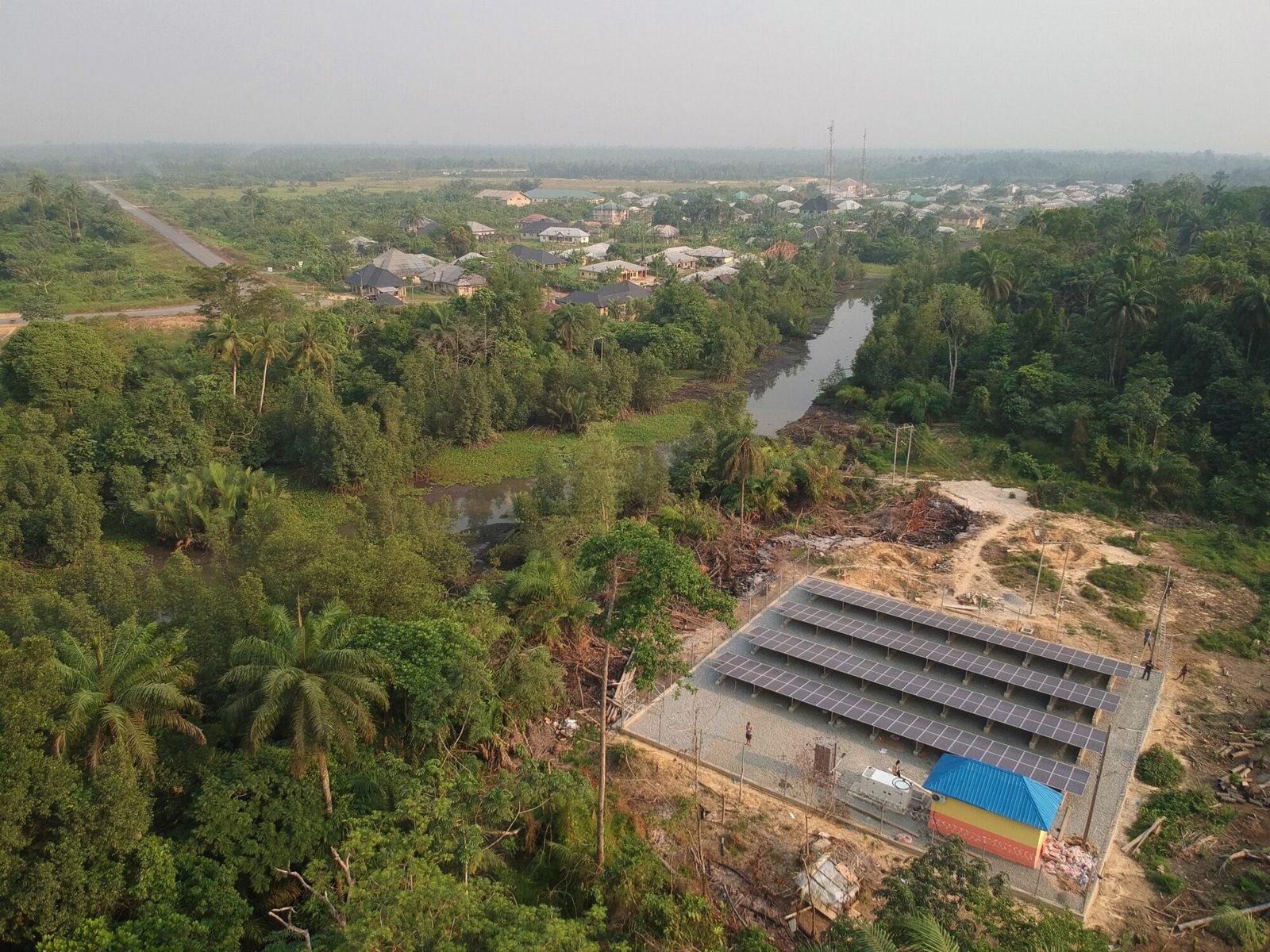
    The paper says access to clean energy has risen substantially in low-income and middle-income countries over the past three decades, but millions still do not have reliable and affordable electricity or clean cooking fuels. It also says simple access measures can overstate progress because they miss fuel stacking, changing patterns of use, and unequal burdens, especially for women.

    Why the authors say this matters

    The authors conclude that moving beyond technical fixes toward inclusive, evidence-based strategies is needed to address inequities, improve affordability and reliability, and deliver lasting health benefits. The study suggests that more complete tracking of energy use is important because binary indicators can overstate the health and equity effects of energy transitions.

    What the researchers tested

    This Series paper explores the drivers of clean energy adoption, assesses tools for tracking progress, and examines persistent barriers. It draws from historical trends and national policies, and it defines clean energy here as electricity, liquefied petroleum gas, biogas, and ethanol.

    What worked and what didn't

    The paper reports that targeted subsidies, robust supply chains, and coordinated investments have helped spur increased clean fuel use. It also identifies persistent barriers, including high costs, unreliable supply, and insufficient availability, and says that simplistic Sustainable Development Goal 7 indicators can miss important aspects of energy use.

    What to keep in mind

    The abstract does not describe a single experiment or provide detailed quantitative results. It also does not list specific country-by-country findings in the available summary.

    • Clean energy access has increased in low-income and middle-income countries over the past three decades.
    • Millions still lack reliable and affordable electricity and clean cooking fuels.
    • Binary access indicators can miss fuel stacking, changing consumption patterns, and gendered burdens.
    • Targeted subsidies, robust supply chains, and coordinated investments are described as drivers of increased clean fuel use.
    • Persistent barriers include high costs, unreliable supply, and insufficient availability.
  • HKEN improved influential-node identification accuracy

    What the study found

    The study found that HKEN, an algorithm for identifying influential nodes in complex networks, performed better than the comparison methods tested. It showed higher consistency with SIR model outcomes, where SIR means susceptible-infected-recovered, a common way to simulate spreading processes, and improved the propagation capability of top-ranked nodes.

    Why the authors say this matters

    The authors say the work matters because identifying influential nodes has extensive applications in complex network research. The study suggests HKEN may help balance accuracy and computational efficiency in this kind of analysis.

    What the researchers tested

    The researchers proposed an algorithm called HKEN that combines hierarchical k-shell decomposition with extended neighborhood information. They optimized the hierarchical k-shell mechanism, used degree and k-shell values to compute node weights, extended the neighborhood range, added a local clustering coefficient to set a transmission-distance threshold, and used Jaccard similarity for influence aggregation.

    What worked and what didn't

    In comparative experiments on 10 real-world networks against 12 benchmark methods, HKEN performed better than the other methods tested. The abstract says it achieved higher consistency with SIR model outcomes and improved the propagation capability of top-ranked nodes.

    What to keep in mind

    The summary does not provide detailed limitations, runtime results, or failure cases. The reported evidence is limited to comparisons on 10 real-world networks and the specific benchmark methods named in the abstract.

    • HKEN is an algorithm for identifying influential nodes in complex networks.
    • The method combines hierarchical k-shell decomposition with extended neighborhood information.
    • Comparative experiments were run on 10 real-world networks against 12 benchmark methods.
    • HKEN showed higher consistency with SIR model outcomes.
    • The abstract reports improved propagation capability for top-ranked nodes.