Tag: Ecosystem & Forest Ecology

  • Low levels of ESBL E. coli found in rehabilitating howler monkeys

    Low levels of ESBL E. coli found in rehabilitating howler monkeys

    What the study found

    The study found that Escherichia coli was common in fecal samples from rehabilitating Bolivian red howler monkeys, and that most isolates were not extended-spectrum beta-lactamase (ESBL) producers. A small number of isolates showed multidrug resistance (resistance to several antibiotic classes).

    Why the authors say this matters

    The authors say the findings matter because releasing rehabilitated wildlife can introduce antimicrobial resistance into wild ecosystems. They conclude that surveillance in primate rehabilitation programs is important, using a One Health approach, to help prevent potential spread during wildlife release.

    What the researchers tested

    The researchers examined 44 Bolivian red howler monkeys at a rescue center in Madre de Dios, Peru. They collected fecal samples noninvasively, isolated E. coli, tested susceptibility against 12 antibiotics, confirmed ESBL production phenotypically, and calculated multidrug resistance and the multiple antibiotic resistance (MAR) index.

    What worked and what didn't

    E. coli was isolated from 43 of 44 monkeys. Only 1 of 85 isolates was an ESBL producer, and that isolate was multidrug resistant to eight antibiotics across five classes. Among the non-ESBL isolates, resistance was highest to tetracycline, sulfamethoxazole-trimethoprim, and chloramphenicol; five isolates were multidrug resistant, and seven had a MAR index of 0.2 or higher.

    What to keep in mind

    The abstract does not describe follow-up after release, so it does not show whether resistant bacteria spread into wild populations. The findings are limited to one rescue center, one monkey species, and the isolates sampled in this study.

    • E. coli was found in 43 of 44 rehabilitating Bolivian red howler monkeys.
    • Only 1 of 85 E. coli isolates was an ESBL producer.
    • That ESBL-producing isolate was multidrug resistant to eight antibiotics across five classes.
    • Non-ESBL isolates showed the highest resistance to tetracycline, sulfamethoxazole-trimethoprim, and chloramphenicol.
    • Five isolates were multidrug resistant, and seven had a MAR index of at least 0.2.

  • Temperature shaped activity more than diet in snub-nosed monkeys

    Temperature shaped activity more than diet in snub-nosed monkeys

    What the study found

    The study found that monthly temperature was associated with differences in activity budgets among age-sex classes of Rhinopithecus bieti, a black-and-white snub-nosed monkey. Differences in diet across age-sex classes were not significant, and the authors report that activity changed more than diet across colder and warmer months.

    Why the authors say this matters

    The authors suggest that intra-annual variation in temperature may amplify the different physiological demands of age-sex classes, leading to larger changes in activity patterns than in diet composition. The study indicates this may help explain how Asian colobines respond to climate shifts within a year.

    What the researchers tested

    The researchers studied an isolated population of black-and-white snub-nosed monkeys at Mount Lasha in the Yunling Provincial Nature Reserve, Yunnan, China. They used instantaneous and scan sampling over 32 months, from May 2008 to August 2016, to examine associations between temperature, activity budgets, and diets among and within age-sex classes.

    What worked and what didn't

    Adult females spent more time feeding, juveniles spent more time moving and less time resting, and adult males spent less time moving and more time resting than other age-sex classes. The population as a whole spent more time feeding and less time moving and resting in colder months than in warmer months, but the temperature-related effects within age-sex classes were detected for moving and resting, not feeding. The population also spent more time feeding on lichen in colder months than in warmer months, while diet remained stable across age-sex classes.

    What to keep in mind

    The abstract does not describe specific limitations beyond focusing on one isolated population at one site. It also does not provide effect sizes, statistical details, or information about whether the findings apply to other populations or species.

    • Monthly temperature was associated with changes in activity patterns in Rhinopithecus bieti.
    • Diet did not vary significantly across age-sex classes.
    • Adult females fed more, juveniles moved more and rested less, and adult males moved less and rested more than others.
    • Colder months were linked to more feeding and less moving and resting at the population level.
    • Feeding on lichen increased in colder months, even though diet stayed stable across age-sex classes.
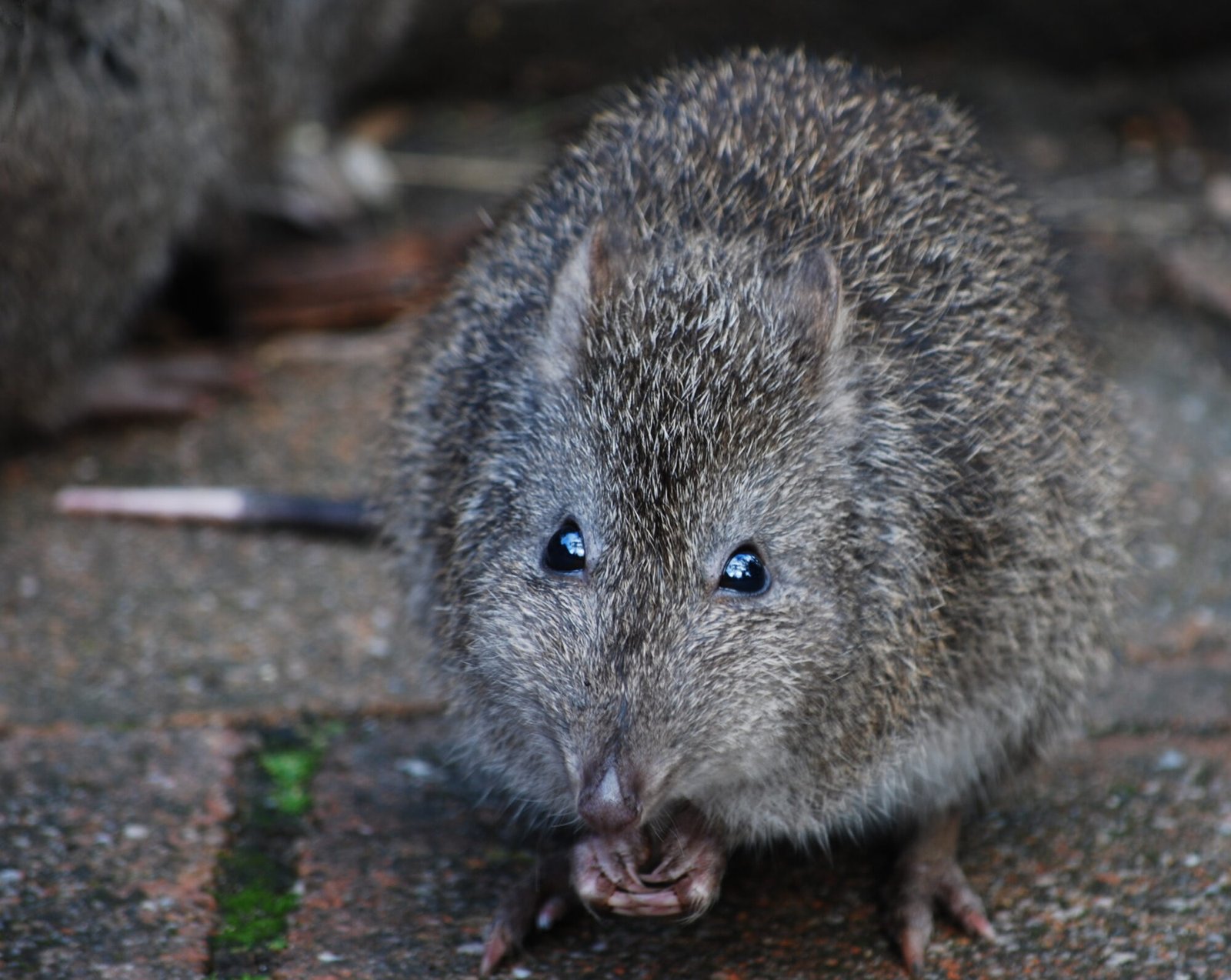
  • Long-nosed potoroo declines are linked to fire, predators, and habitat loss

    Long-nosed potoroo declines are linked to fire, predators, and habitat loss

    What the study found

    The study found that the long-nosed potoroo in Victoria has contrasting status in different landscapes, with some populations flourishing and others close to local extinction. The authors report that declines are linked to interactive effects of fire regimes, invasive predators, habitat loss, and climate change.

    Why the authors say this matters

    The authors say this matters because digging mammals play key roles in ecosystem processes such as soil turnover, seed germination, and dispersal of fungal spores linked with forest health and productivity. They conclude that protecting suitable habitat and using more strategic conservation actions are important for species persistence and resilience in the face of climate change.

    What the researchers tested

    The researchers used evidence across different bioregions in Victoria to compare long-nosed potoroo populations in flourishing areas with those near local extinction. They focused on the species' contrasting status, conservation value, and the challenges involved in managing it across diverse landscapes.

    What worked and what didn't

    The abstract says that suitable habitat can help the species evade invasive predators, suggesting habitat protection is important. It also identifies predator management, short-range translocations, and improved fire management and prevention strategies as future directions, but it does not provide detailed outcome data for these approaches in the abstract.

    What to keep in mind

    The summary is broad and does not give detailed methods, sample sizes, or quantitative results. It also does not describe specific limitations beyond noting that the species faces interacting pressures across changing landscapes.

    • Long-nosed potoroo populations in Victoria differ sharply by landscape, from flourishing to near local extinction.
    • The abstract links declines to fire regimes, invasive predators, habitat loss, and climate change.
    • Digging mammals are described as important for soil turnover, seed germination, and fungal spore dispersal.
    • Protecting suitable habitat is described as helping the species evade invasive predators.
    • The authors call for predator management, short-range translocations, and improved fire management and prevention.
  • Howler monkey females adjusted flower intake across lactation stages

    What the study found

    Howler monkey females changed how much flower material they ate depending on season and lactation stage. Early lactating females ate more flowers than non-lactating and late lactating females, while floral tannin intake was highest in late lactation and lowest in early lactation.

    Why the authors say this matters

    The authors conclude that flower use may be important in howler monkey females’ diets because flowers contain polyphenols such as tannins and flavonoids, which they describe as beneficial due to antioxidant and anti-inflammatory properties. They suggest dietary choices are influenced by seasonal flower availability and may reflect physiological and behavioral adaptations to reproductive demands.

    What the researchers tested

    The researchers observed feeding behavior in 20 wild female black howler monkeys, Alouatta palliata mexicana, on Agaltepec Island, Mexico, between 2021 and 2023. They compared non-lactation, early lactation, and late lactation periods, recorded feeding sessions during 670 contact hours, and analyzed collected feeding items for tannin and flavonoid content.

    What worked and what didn't

    The study recorded 1,471 feeding sessions and 29 feeding items, including five flower species. Annual weight-based flower consumption was 12.5% and rose to 30.3% during blooming months; flower tannin levels varied widely, from 0 to 2,038.0 µg/g, and flavanones were present in all five flower species while flavones were found in three.

    What to keep in mind

    The abstract does not describe experimental manipulation, so the findings are observational. Limitations are not described in the available summary, and the study is specific to one island population of 20 females.

    • Early lactating females consumed more flowers than non-lactating and late lactating females.
    • Floral tannin intake was highest in late lactation and lowest in early lactation.
    • Flower consumption increased to 30.3% during blooming months, compared with 12.5% across the year.
    • Five flower species were documented among 29 feeding items.
    • Flower tannin content varied widely, and flavanones were found in all five flower species.
  • Woodland dormice selected denser, better-connected forest microhabitats

    What the study found

    Woodland dormice (Graphiurus murinus) were more often found in microhabitats with denser, better-connected vegetation, and they used trunks and canopies more frequently. The species also mainly used Combretum caffrum, Rhus spp., and Gymnosporia heterophylla, with preference for the latter two tree species.

    Why the authors say this matters

    The authors state that the significance of riverine Combretum forest structure for dormouse microhabitat use and selection was evident. They suggest management practices may help maintain dormouse populations, including preventing vegetation gaps larger than 50% per 100 m2 while balancing possible changes in forest density and structure, such as those linked to climate change.

    What the researchers tested

    The researchers studied microhabitat use and selection by woodland dormice in a riverine Combretum forest in South Africa. They collected capture–mark–recapture data across four seasons and used a grid of 192 traps set at different heights to assess microhabitat features, then analyzed the data with generalized linear models, generalized mixed models, and comparative tests.

    What worked and what didn't

    Dormice were less often captured in winter and in areas where only same-sex individuals were present. Microhabitats with more dormouse neighbours and with animals that had longer residency times were used more frequently, and dormice used more well-connected areas, trunks, canopies, and higher and denser vegetation cover.

    What to keep in mind

    The abstract does not describe specific study limitations beyond the single forest context and species studied. The findings are based on one riverine forest in South Africa, so the summary does not show whether they apply to other habitats or dormouse populations.

    • Dormice were more often found in denser, better-connected vegetation.
    • They used trunks and canopies more frequently than less connected microhabitats.
    • Winter and same-sex-only areas had fewer captures.
    • Combretum caffrum, Rhus spp., and Gymnosporia heterophylla were the main tree species used.
    • The authors suggest avoiding large vegetation gaps to help maintain populations.
  • Cats are not yet supported as rodent control on Australian dairy farms

    What the study found

    The authors conclude that using working cats to control rodents on Australian dairy farms is not yet supported by enough evidence. They say the idea may seem attractive, but it remains unsubstantiated and premature.

    Why the authors say this matters

    The authors suggest that far stronger evidence is needed before this solution should be taken seriously. They also note that, even if evidence were available, broader ethical and regulatory reasons may make the approach inappropriate.

    What the researchers tested

    This article is a critique of a proposed rodent-control strategy rather than a new field experiment. The authors discuss the kind of evidence they believe would be needed, including direct monitoring of rodent populations, monitoring bait removal, studying cat diets, tracking cat population size, and comparing costs with other rodent-control options.

    What worked and what didn't

    The abstract does not report direct evidence that cats suppressed rodents on farms. It says that enthusiastic endorsement from 15 dairy farmers on nine properties in Queensland and New South Wales is only superficially attractive, and that without supporting data the proposal remains unsubstantiated.

    What to keep in mind

    The available summary does not describe any completed tests of cat-based rodent control, so no effectiveness results are provided. The authors also raise possible concerns about wildlife predation and unwanted immigration of cats into farm cat populations, but do not report measured outcomes for these issues.

    • The authors say farm cats are not yet a supported solution for rodent control on Australian farms.
    • They describe the proposal as superficially attractive but premature.
    • They call for evidence of rodent suppression, cat diet, cat numbers, and costs before promotion.
    • They note possible ethical and regulatory concerns even if supporting evidence were found.
    • The abstract does not present direct experimental results showing effectiveness.
  • Forest degradation changes scavenger diversity and carrion removal

    What the study found

    Forest degradation changed which vertebrate scavengers were present in a seasonally dry tropical forest in southern Ecuador. Semi-natural forests had the richest and most diverse scavenger assemblages, while degraded habitats were dominated by generalist species and carcasses were removed more quickly.

    Why the authors say this matters

    The authors say the findings provide the first empirical evidence that forest degradation reshapes vertebrate scavenger dynamics in the Tumbesian dry forests. They conclude that conserving well-preserved forests is essential to sustain biodiversity and long-term food web stability in this threatened tropical ecosystem.

    What the researchers tested

    The researchers monitored 60 chicken carcasses with camera traps during the dry season from December 2021 to February 2022. They compared scavenging across three forest degradation states: Semi-natural, Shrub-dominated, and Arid land.

    What worked and what didn't

    The study recorded 13 vertebrate scavenger species, with estimated richness reaching 17 species. Semi-natural forests supported the highest richness and diversity, including the king vulture and white-tailed jay, which were absent from degraded habitats. Degraded habitats were dominated by generalists, especially the Sechuran fox, which scavenged nearly half of all carcasses and significantly accelerated carrion removal; carcasses persisted for 1.2–1.8 days in degraded habitats versus 3.8 days in semi-natural forests.

    What to keep in mind

    The study was conducted in one region, during one dry season, and with chicken carcasses as the carrion source. The abstract does not describe longer-term, wet-season, or broader regional limitations beyond this scope.

    • Semi-natural forests had the highest vertebrate scavenger richness and diversity.
    • Degraded habitats were dominated by generalist scavengers, especially the Sechuran fox.
    • The Sechuran fox scavenged nearly half of all carcasses and sped up carrion removal.
    • Carcasses persisted longer in semi-natural forests than in degraded habitats.
    • The study recorded 13 scavenger species and estimated richness at 17 species.