Tag: Elections & Participation

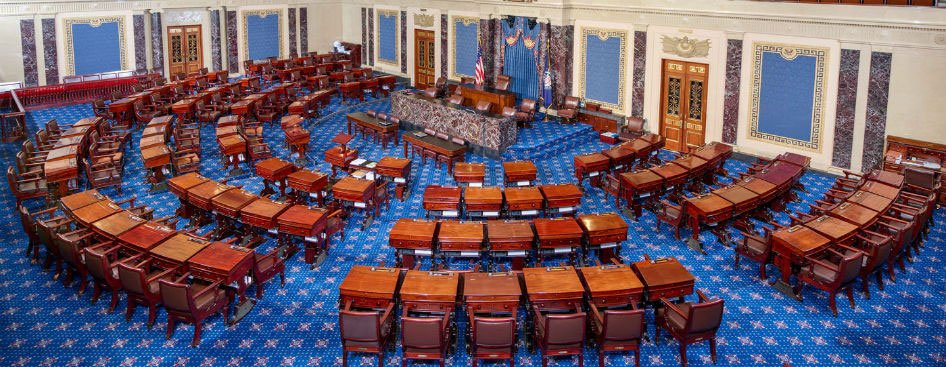
  • Ending the filibuster would likely have limited effects on gridlock

    Ending the filibuster would likely have limited effects on gridlock

    What the study found

    The study finds that ending the filibuster would likely change gridlock only in a limited number of cases. The authors describe the practical effects as more muted than some supporters of elimination expect.

    Why the authors say this matters

    The authors suggest this matters because political and media elites have called for ending the filibuster in response to gridlock in Washington. The findings indicate that eliminating it is not a general solution, but the abstract does not give further policy guidance.

    What the researchers tested

    The researchers derived a series of legislative bargaining models, which are formal models of how lawmakers negotiate and make decisions. They then used gridlock data from Binder (2015) to run simulations of what might happen if the filibuster were removed.

    What worked and what didn't

    The simulations suggest that removing the filibuster would affect gridlock only under narrow conditions. The abstract says the results are less dramatic than the view that getting rid of the filibuster would be a panacea, or a cure-all.

    What to keep in mind

    The abstract does not describe the specific circumstances in which effects would appear, beyond saying they are narrow. It also does not provide details on the full model assumptions or any limitations of the simulation design.

    • Eliminating the filibuster would likely affect gridlock only in a narrow set of circumstances.
    • The study uses legislative bargaining models and simulations based on gridlock data from Binder (2015).
    • The abstract says the practical effects of ending the filibuster are more muted than some people believe.
    • The paper frames the filibuster debate in response to perennial gridlock in Washington.
  • Educational network differences linked to right-wing populist voting

    What the study found

    The study found that network embeddings, which are numerical representations of a person's position in a network, could predict right-wing populist voting above chance, but they were less accurate than individual characteristics. After making the embeddings more sparse and orthogonal, one embedding dimension was strongly associated with the voting outcome.

    Why the authors say this matters

    The authors conclude that the study shows how population-scale network embeddings can be made interpretable. They also say the findings link structural differences in education to right-wing populist voting.

    What the researchers tested

    The researchers created embeddings for all people in the Dutch population using a population-scale network built from five shared social contexts: neighborhood, work, family, household, and school. They then used these embeddings to predict right-wing populist voting and compared their performance with individual characteristics.

    What worked and what didn't

    Embeddings alone predicted right-wing populist voting above chance level. They performed worse than individual characteristics, and combining the best subset of embeddings with individual characteristics only slightly improved prediction. After transformation, one embedding dimension was strongly associated with the outcome, and mapping it back to the network showed differences in educational ties and attainment aligned with distinct network structures.

    What to keep in mind

    The abstract does not describe detailed limitations. The reported findings are based on the Dutch population and on prediction of right-wing populist voting using the specific network contexts and methods described.

    • Population-scale network embeddings predicted right-wing populist voting above chance.
    • Individual characteristics were more predictive than embeddings alone.
    • Combining embeddings with individual characteristics only slightly improved prediction.
    • One transformed embedding dimension was strongly associated with the voting outcome.
    • Educational ties and attainment corresponded to distinct network structures linked to the outcome.
  • RCV showed simpler dynamics and limited ballot exhaustion

    What the study found

    The study found that ranked choice voting (RCV, a voting system where voters rank candidates) often works in practice in ways that are simple and transparent. Across the elections studied, it was associated with greater competitiveness and only limited effects from ballot exhaustion, which is when no remaining ranked candidate is left on a ballot.

    Why the authors say this matters

    The authors conclude that these findings show RCV can deliver measurable democratic benefits while remaining resilient to ballot-addition manipulation and maintaining transparent competitive dynamics in practice. They also say the computational framework may help election administrators and researchers with immediate election-night analysis and clearer discussion of election dynamics.

    What the researchers tested

    The researchers empirically tested common criticisms of RCV using real election data from three contexts: New York City’s 2021 Democratic primaries, Alaska’s 2024 primary-infused statewide elections, and Portland’s 2024 multi-winner City Council elections. They used an algorithmic approach that reduced election instance sizes by eliminating candidates to avoid computational complexity barriers.

    What worked and what didn't

    Following RCV adoption, competitiveness increased compared with prior plurality elections, with average margins of victory declining by 9.2 percentage points in New York City and 11.4 points in Alaska. The study says complex ballot-addition strategies were not more efficient than simple ones, and ballot exhaustion altered outcomes in only 3 of 110 elections.

    What to keep in mind

    The summary reports results from 110 elections across three specific settings, so the findings are limited to those cases. The abstract does not describe additional limitations beyond the stated scope and the use of reduced election instances for analysis.

    • RCV was found to have simple and transparent dynamics in practice.
    • Competitiveness increased after RCV adoption in the studied elections.
    • Average margins of victory declined by 9.2 points in New York City and 11.4 points in Alaska.
    • Complex ballot-addition strategies were not more efficient than simple ones.
    • Ballot exhaustion changed outcomes in only 3 of 110 elections.
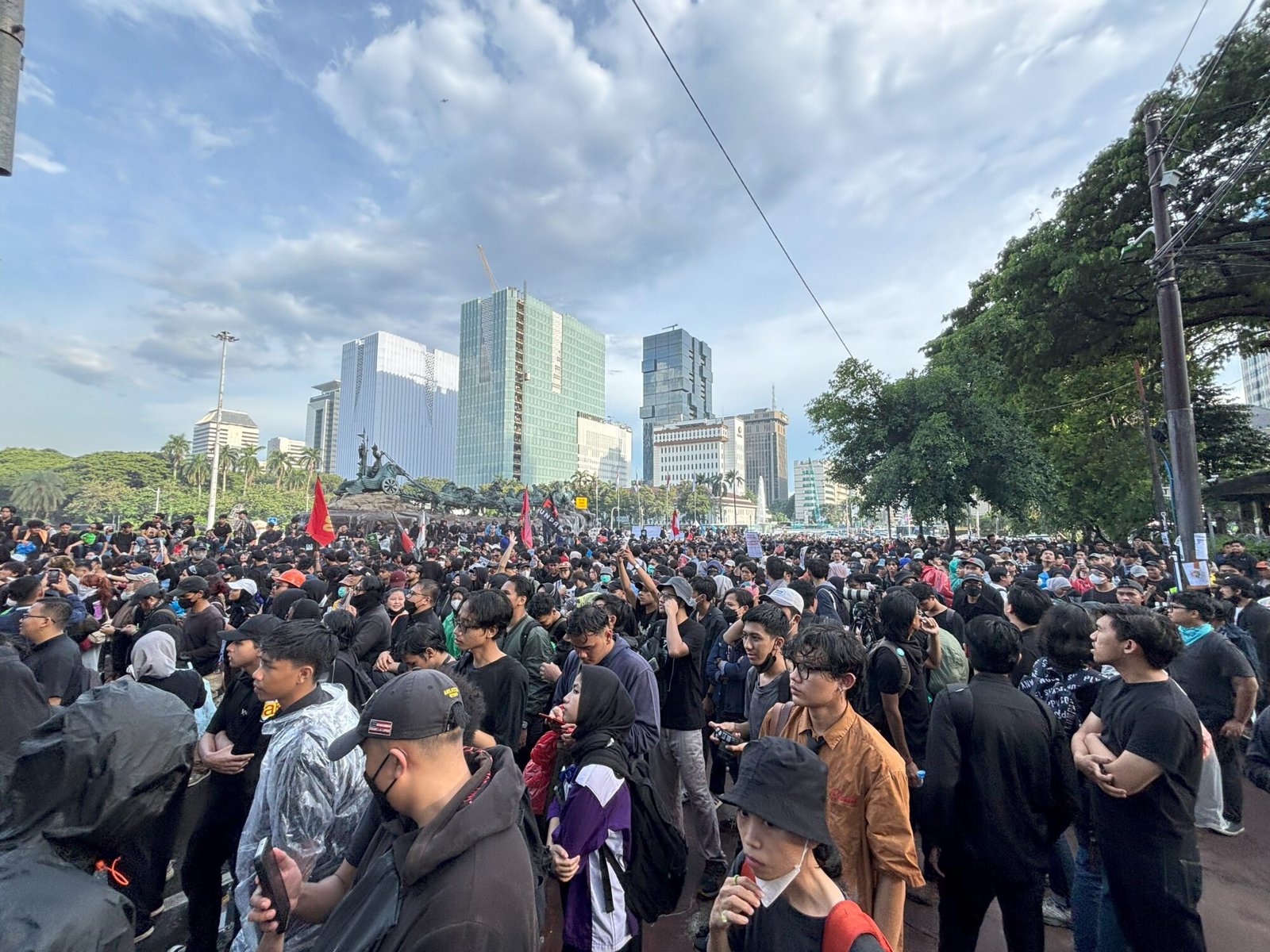
  • Social media helped unify Indonesian protest grievances

    Social media helped unify Indonesian protest grievances

    What the study found

    The study found that social media facilitated decentralized mobilization during the Indonesian demonstrations of August 2025. It also helped turn fragmented grievances into more cohesive reform agendas and pushed mainstream media and government institutions to respond.

    Why the authors say this matters

    The authors conclude that the study offers a novel theoretical lens for understanding how framing and agenda-setting interact within hybrid media ecologies, meaning the combined online and offline media environment. They also say it helps explain the interplay between digital platforms and political contention in emerging democracies.

    What the researchers tested

    The researchers used content analysis and cross-media comparison. They examined how activists, labor unions, religious organizations, and citizens used diagnostic, prognostic, and motivational frames, and how hashtags such as #BubarkanDPR, #PotongPrivilege, #JusticeForAffan, and #SaveDemocracy functioned as agenda-setting devices.

    What worked and what didn't

    According to the findings, social media worked as a tool for decentralized mobilization and for turning separate grievances into a shared reform agenda. The study also reports that it pressured mainstream media and government institutions to respond, while the abstract does not describe any counterexamples or failed cases.

    What to keep in mind

    The abstract does not provide detailed limitations beyond the study’s focus on the August 2025 Indonesian demonstrations. It also does not give information about sample size, platform coverage, or how broadly the findings can be generalized.

    • Social media facilitated decentralized mobilization during the August 2025 Indonesian demonstrations.
    • Online activity helped transform fragmented grievances into cohesive reform agendas.
    • Hashtags were used as agenda-setting devices in the protests.
    • Mainstream media and government institutions were pressured to respond.
    • The authors present the study as a novel way to combine framing theory and agenda-setting theory.
  • Voters use ideological labels to infer candidates’ policy positions

    What the study found

    The study found that voters do use left-right ideological labels as a way to infer candidates’ policy positions. It also found that voters’ own ideological self-placement is often not aligned with their policy positions, especially among right-leaning individuals.

    Why the authors say this matters

    The authors conclude that these findings matter for theories of political decision-making beyond the United States. They also suggest the results have implications for substantive representation, which refers to whether elected officials reflect voters’ policy preferences, in systems with centrist or ideologically flexible parties.

    What the researchers tested

    The researchers used original experimental data from Canada, with 1,087 participants. Canada is described as a multiparty system with a fluid ideological landscape, and the study examined how voters use left-right ideological labels as shortcuts when evaluating electoral candidates.

    What worked and what didn't

    The findings supported the Minimal Theory: voters used ideological proximity to infer candidates’ policy stances when policy information was absent. The study did not find that voters’ ideological self-placement was always aligned with their policy positions, which speaks against a stronger form of ideological thinking described by the authors as maximal thinking.

    What to keep in mind

    The abstract describes one study in Canada, so the scope is limited to that context. The abstract does not describe additional limitations beyond the note that ideological self-placement and policy positions were often misaligned.

    • Voters used left-right labels to infer candidates’ policy positions.
    • Voters’ ideological self-placement was often misaligned with their policy preferences.
    • This misalignment was especially common among right-leaning individuals.
    • The results supported the authors’ Minimal Theory of ideological thinking.
    • The study draws on experimental data from Canada with 1,087 participants.
  • Prospective homeowners are more right-wing than satisfied renters

    What the study found

    The study found that renters are not all the same politically. Renters who would like to own a home, which the authors call prospective homeowners, are more right-wing in their preferences than satisfied renters, meaning renters who prefer to keep renting.

    Why the authors say this matters

    The authors conclude that some effects often linked to homeownership may actually appear before people buy a home. They suggest this matters because renters are usually treated as one group, even though their political preferences differ.

    What the researchers tested

    The researchers used a nationally representative survey of Canadian renters. They compared renters who wanted to buy a home with renters who preferred renting, and examined political preferences and voting behavior.

    What worked and what didn't

    The survey showed that prospective homeowners were more right-wing than satisfied renters. However, they were not more likely to vote for right-wing parties.

    What to keep in mind

    The abstract does not describe detailed limitations. The findings are based on Canadian renters, so the scope described in the summary is limited to that context.

    • The study distinguishes between prospective homeowners and satisfied renters.
    • Prospective homeowners were more right-wing in their preferences than satisfied renters.
    • Prospective homeowners were not more likely to vote for right-wing parties.
    • The authors suggest some homeownership-related political effects may begin before purchase.
    • The evidence comes from a nationally representative survey of Canadian renters.
  • Party archive types shape comparative research obstacles

    What the study found

    The study finds that party archives are useful for comparing political parties, but that comparative work is difficult because the archive landscape is heterogeneous. It also finds that different archive types are established for distinct motivations, and that common research obstacles vary in severity across archive types.

    Why the authors say this matters

    The authors conclude that understanding these archive differences can help scholars gain deeper, broader, and more comparable insights about political parties. The study suggests this is important for historians and political scientists using party archives for comparative analysis.

    What the researchers tested

    The article examines party archives in comparative archival research. It links the motivations behind different archive types to common obstacles in this work: location, content, searchability, and usage.

    What worked and what didn't

    The findings indicate that the severity of obstacles such as location, content, searchability, and usage is often connected to archive type. Personal and scholarly archives appear to mark the extremes, while other archive types fall somewhere in between.

    What to keep in mind

    The abstract does not describe detailed data, specific cases, or the full comparative design. It also does not provide more precise results for each archive type beyond noting that personal and scholarly archives represent opposite ends of the pattern.

    • Party archives offer real-time insights into party structures, actors, motivations, and discourses.
    • Comparative analysis is difficult because party archives differ widely.
    • Different archive types are established for distinct motivations.
    • Common obstacles in archival research include location, content, searchability, and usage.
    • The severity of these obstacles often varies by archive type, with personal and scholarly archives at opposite extremes.
  • Polish party manifestos criticized elites and enemies in varied ways

    Polish party manifestos criticized elites and enemies in varied ways

    What the study found

    The study found that Polish party manifestos between 2001 and 2023 criticized both elites and enemies, using several distinct categories of each. The abstract also says these patterns were examined in relation to parties' positions in the political system and their ideological orientation.

    Why the authors say this matters

    The authors suggest that anti-elitism and enemy construction should be understood as variable, gradable dimensions rather than as fixed labels. They also conclude that these features are not limited to parties usually described as populist.

    What the researchers tested

    The researcher analyzed 42 political party manifestos from Polish parties that passed the 3% threshold in parliamentary elections between 2001 and 2023. The study classified criticism into five types of elites — political, international, state, symbolic, and economic — and five types of enemies — geographical, legal, political, economic, and cultural.

    What worked and what didn't

    The abstract reports that the study examined whether there was a relationship between the degree of anti-elitism or enemy discreditation and a party's position in the political system or its ideological orientation. It does not provide the detailed outcomes of those tests in the text available here.

    What to keep in mind

    The available summary does not state the detailed results of the relationship tests, so only the study's scope and framework can be summarized here. The abstract also does not describe limitations beyond the manifesto sample and the 3% electoral threshold.

    • The study analyzed Polish party manifestos from 2001 to 2023.
    • It identified five types of elites and five types of enemies in the texts.
    • The authors treated anti-elitism and enemy construction as gradable dimensions, not binary traits.
    • The abstract says these patterns were assessed against party position and ideological orientation.
    • The available summary does not report the detailed test outcomes.
  • Presidential approval co-moves with broad macroeconomic conditions

    What the study found

    The study found that U.S. presidential approval is persistent over time and is linked to macroeconomic conditions in several ways. The strongest and most lasting associations were with public and private sector activity, while monetary and labor market conditions were related in more varied ways.

    Why the authors say this matters

    The authors conclude that the findings provide a descriptive characterization of how presidential approval co-moves with a broad set of macroeconomic conditions. The study suggests that high-dimensional screening combined with dynamic analysis can complement simpler approaches in the approval literature.

    What the researchers tested

    The researchers examined economic correlates of U.S. presidential approval from 1953 to 2023 using a large macro-financial dataset. They used penalized variable-selection methods, Elastic Net and Smoothly Clipped Absolute Deviation (SCAD), to identify economically relevant predictors, then grouped the selected predictors into six economic categories and analyzed them in a Structural Vector Autoregression (SVAR) framework.

    What worked and what didn't

    Three descriptive patterns emerged. Presidential approval showed strong persistence and retrospective dynamics, with economically relevant information appearing most clearly at short horizons and around one year; public and private sector activity had the strongest and most persistent associations; and housing and mortgage indicators tended to show delayed responses, while recession indicators showed short-run dynamics consistent with temporary rally-type patterns.

    What to keep in mind

    The abstract presents the findings as descriptive rather than causal. It also does not describe the full set of limitations, so scope constraints beyond the 1953 to 2023 period and the use of macro-financial data are not detailed in the available summary.

    • U.S. presidential approval from 1953 to 2023 co-moved with a broad set of macroeconomic conditions.
    • Public and private sector activity showed the strongest and most persistent associations with approval.
    • Monetary and labor market conditions were related to approval in systematic but heterogeneous ways.
    • Housing and mortgage indicators were associated with delayed responses.
    • Recession indicators showed short-run dynamics consistent with temporary rally-type patterns.
  • Article highlights gaps between party aid and party research

    What the study found

    The article argues that efforts to support political parties and academic research on party organization have not converged much because they are based on different ideas about how political parties function and what they are for. It also says that, in two areas of party operations, there is little research support for some major assumptions behind specific party aid prescriptions.

    Why the authors say this matters

    The authors conclude that understanding the gap between practitioners and researchers could help bridge that divide in this field of study. They suggest that comparing assumptions about party finance and intra-party democracy, meaning decision-making within a party, can clarify where party aid ideas are better or less well supported.

    What the researchers tested

    The article examines why international party support efforts and comparative academic studies have remained only modestly connected. It illustrates the mismatch by looking at two areas of party operations: political party finance and intra-party democracy.

    What worked and what didn't

    The article says there is a scarcity of research support for some major assumptions used to justify specific party aid prescriptions. It presents this as evidence that some commonly used policy ideas in party support are not well backed by the available research.

    What to keep in mind

    The abstract does not provide detailed empirical findings, sample information, or methods beyond the two illustrative areas it discusses. It also does not describe specific party aid prescriptions in detail, only that some assumptions behind them lack strong research support.

    • The article says party support efforts and party research have overlapped only modestly.
    • It attributes that gap to different conceptions of what political parties are for.
    • The paper uses party finance and intra-party democracy as examples.
    • It reports scarce research support for some assumptions behind party aid prescriptions.
    • The authors propose bridging the practitioner-researcher gap as a next step.