Tag: Sustainability & Systems

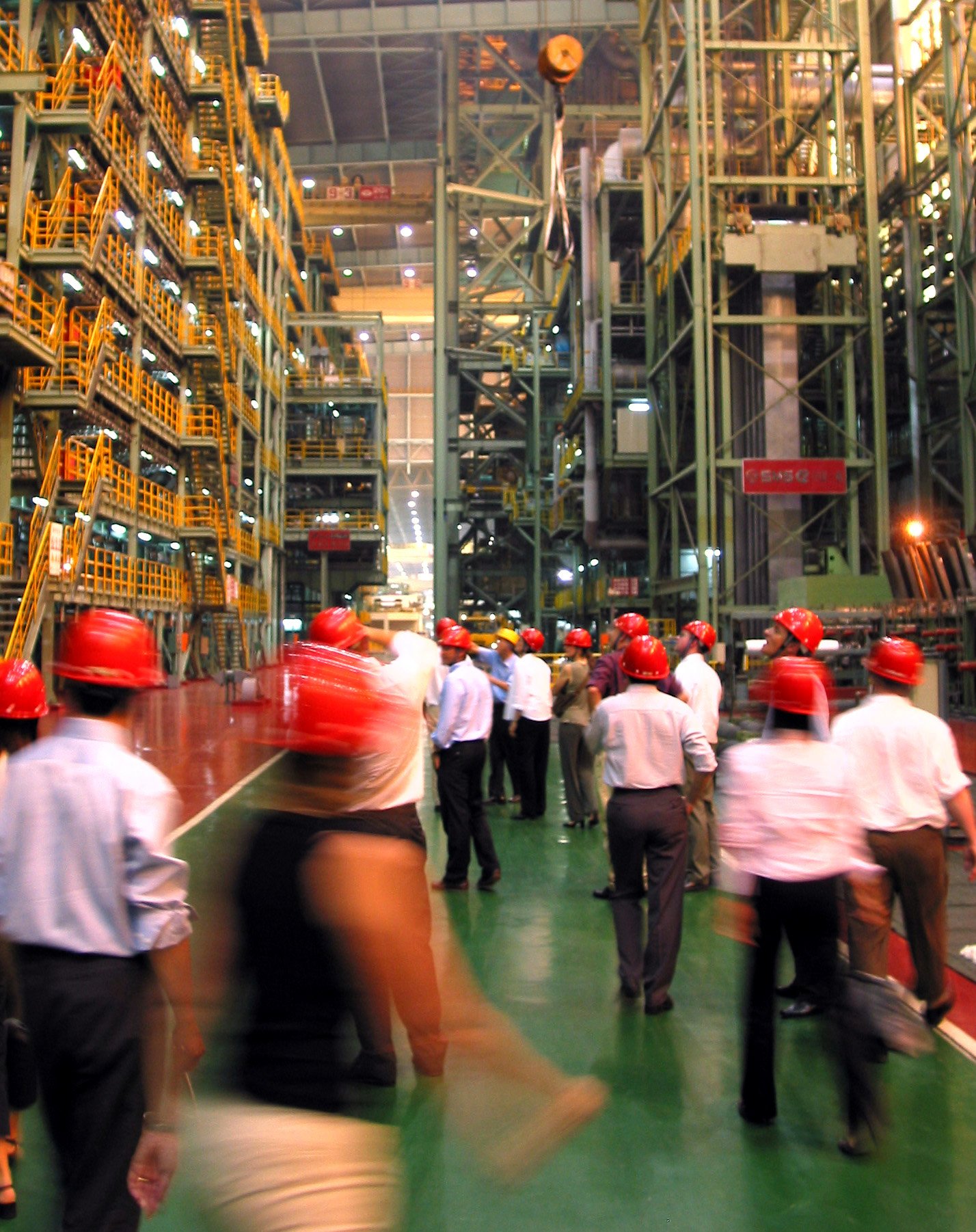
  • China steel exporters showed lagged responses to expected CBAM costs

    China steel exporters showed lagged responses to expected CBAM costs

    What the study found

    The study found that China’s steel exporters responded to anticipated EU Carbon Border Adjustment Mechanism (CBAM) costs, and that prices appeared to be the main channel through which those expected costs showed up. The authors report that the policy effects had lagged impacts.

    Why the authors say this matters

    The authors say this matters because steel is a high-emission industry, and understanding how exporters respond to expected carbon regulation is relevant to low-carbon transition in manufacturing. The study suggests this can help explain how China’s exports adapt to external climate policy shocks in support of Sustainable Development Goal 13 (Climate Action).

    What the researchers tested

    The researchers used product-level data on Chinese steel exports. They applied a Difference-in-Differences (DID) approach, which compares changes over time between affected and less affected groups, using a two-way fixed effects model and a dynamic event study within the DID framework.

    What worked and what didn't

    The results indicate that, during the transition period, prices appear to be the primary way anticipated carbon costs were reflected. The study also reports that policy effects were delayed, or lagged, regardless of the transmission route. The abstract does not report any result that clearly did not work beyond noting these lagged effects.

    What to keep in mind

    The abstract does not describe specific limitations or caveats. The summary is limited to China’s steel exports and the expected EU CBAM policy context, so the findings are presented within that scope.

    • China’s steel exporters responded to anticipated EU CBAM carbon costs.
    • Prices appeared to be the main channel for those expected carbon costs.
    • Policy effects were reported as lagged rather than immediate.
    • The study used product-level data and a DID framework with two-way fixed effects.
    • The abstract links the study to low-carbon transition and SDG 13.
  • Nature-inclusive urban development showed mixed social effects

    What the study found

    The study found that nature-inclusive urban development (urban development designed to include ecological features) had mixed social effects in Qunli New Town, Harbin. Original residents’ well-being changes were tied to how they adapted to the new setting, and fairness perceptions differed sharply between original residents and newcomers.

    Why the authors say this matters

    The authors conclude that social impact assessments should explicitly manage the trade-off between new green infrastructure and the loss of cultural landscapes. They suggest this is needed to promote justice for different waves of settlement.

    What the researchers tested

    The researchers used a sequential mixed-methods design, combining semi-structured interviews with a representative survey. They examined social impacts of nature-inclusive urban development in Qunli New Town, Harbin, China, a case involving landscape-level ecological mitigation and compensation.

    What worked and what didn't

    Among original residents, former agriculturalists reported a sharper happiness decline than non-agriculturalists, relative to the pre-urbanization era. Original residents who perceived increases in social and esthetic values of green spaces reported happiness gains. Original residents perceived ecological fairness as lower than newcomers did, but economic fairness as higher.

    What to keep in mind

    The abstract does not provide detailed limitations beyond the specific case studied in Qunli New Town. The findings are based on one urban development context and may not describe other settings.

    • The study examined social impacts of nature-inclusive urban development in Qunli New Town, Harbin, China.
    • Original residents’ well-being changes were linked to adaptation to the new urban context.
    • Former agriculturalists reported a sharper happiness decline than non-agriculturalists.
    • Original residents who perceived more social and esthetic value in green spaces reported happiness gains.
    • Original residents rated ecological fairness lower than newcomers but economic fairness higher.
  • UK climate policy, carbon standards, and climate action to 2050

    What the study found

    The article says the United Kingdom has a Climate Change Act, a net-zero greenhouse gas emissions target for 2050, and an independent Climate Change Committee that advises the government. It also states that the UK is not on track to meet its 2030 emissions-reduction commitment, and it discusses carbon leakage, greenhouse gas accounting, carbon footprints, standards, mitigation, and adaptation.

    Why the authors say this matters

    The authors conclude that climate change standards, including those approved by the International Standards Organisation and adopted in the UK via the British Standards Institution, play a pivotal role in accelerating climate action through sustainable practices. The study suggests that understanding mitigation, adaptation, and standards is important for progress toward the UK's climate targets.

    What the researchers tested

    This is a research article that describes the UK's climate policy framework and related concepts. It outlines carbon leakage, greenhouse gas accounting methods, carbon footprints, and standards based on life-cycle thinking, then reviews examples of potential UK climate change options.

    What worked and what didn't

    The article presents low-carbon energy technologies and circular economy interventions as mitigation options, but says they face challenges. It also discusses adaptation issues and climate-respecting engineering design, without claiming that these solve the problem.

    What to keep in mind

    The abstract is a broad overview and does not report original experiments, quantitative results, or a detailed comparison of specific options. It also does not describe study limitations beyond the scope of the topics covered.

    • The UK has a Climate Change Act and a 2050 net-zero greenhouse gas target.
    • The Climate Change Committee advises the government on progress toward emissions targets.
    • The abstract says the UK is not on track for its 2030 emissions-reduction commitment.
    • The article discusses carbon leakage, greenhouse gas accounting, carbon footprints, and standards.
    • Low-carbon energy technologies and circular economy interventions are described as mitigation options with challenges.
  • Perceived environmental quality linked to restoration outcome in greenspaces

    What the study found

    The study found that perceived environmental quality was related to restoration outcome in urban greenspaces. Perceived beauty and perceived diversity were especially important, and greenspace size showed a partial mediation through these perceptions.

    Why the authors say this matters

    The authors conclude that perceived environmental quality is important for restoration outcome. They also frame human-nature interactions as potentially relevant for the prevention and salutogenesis of adverse mental health conditions related to urban stressors; salutogenesis means the factors that support health.

    What the researchers tested

    The researchers analyzed greenspace and survey data from 728 observations in 48 plots within 31 greenspaces in inner-city Munich, Germany. They tested mediation models with objectively measured greenspace characteristics as predictors, perceived beauty, diversity, and naturalness as mediators, and restoration outcome as the outcome.

    What worked and what didn't

    There was a partial mediation between restoration outcome and greenspace size through perceived beauty and perceived diversity. Vegetation density of the subcanopy was positively associated with restoration outcome, but no mediation was found for that relationship. Perceived beauty, diversity, naturalness, time spent in the greenspace, and nature connectedness were all positively related to restoration outcome.

    What to keep in mind

    The abstract does not describe experimental intervention or causal testing, so the results are based on observed associations and mediation models. The summary is limited to greenspaces in inner-city Munich, Germany, and no other limitations are stated in the available text.

    • Perceived beauty and diversity were linked to restoration outcome.
    • Greenspace size showed partial mediation through perceived beauty and perceived diversity.
    • Subcanopy vegetation density was positively associated with restoration outcome.
    • Perceived naturalness, time in the greenspace, and nature connectedness were also positively related to restoration outcome.
    • The data came from 728 observations across 31 greenspaces in inner-city Munich.
  • Hungary showed mixed sectoral decoupling of growth and emissions

    What the study found

    The study found mixed decoupling patterns between economic growth and greenhouse gas emissions in Hungary from 1995 to 2022. Some sectors showed strong or weak decoupling, while sector T showed expansive negative decoupling. At the national level, recent years showed a trend toward absolute decoupling, meaning gross value added grew while emissions stabilized or declined.

    Why the authors say this matters

    The authors suggest the findings matter because they show how economic growth and environmental impact have moved differently across sectors in Hungary. The study indicates that some sectors may be changing in ways consistent with lower emissions growth, while others are not.

    What the researchers tested

    The researchers examined the relationship between economic growth and greenhouse gas emissions in Hungary from 1995 to 2022. They used the Tapio decoupling model, which measures how emissions change relative to economic activity through a decoupling elasticity coefficient, and the Mann-Kendall trend test to detect trends in gross value added and emissions.

    What worked and what didn't

    Strong decoupling was reported in sectors B, C, D, and E, where emissions decreased as economic growth continued. Weak decoupling was observed in sectors A, F, G, and Q, where emissions rose more slowly than gross value added. Sector T showed expansive negative decoupling, and the Mann-Kendall test found consistent economic growth across all sectors but different emission trends, including significant reductions in B and E and increases in A and T.

    What to keep in mind

    The summary available here does not describe the paper's limitations in detail. The results are specific to Hungary, the 1995–2022 period, and the sectors named in the abstract.

    • Hungary showed mixed decoupling between economic growth and greenhouse gas emissions from 1995 to 2022.
    • Strong decoupling was found in sectors B, C, D, and E.
    • Weak decoupling was found in sectors A, F, G, and Q.
    • Sector T showed expansive negative decoupling.
    • Recent national data showed a trend toward absolute decoupling.
    • The Mann-Kendall test found consistent economic growth across all sectors but different emission trends.