Tag: Water Management & Governance

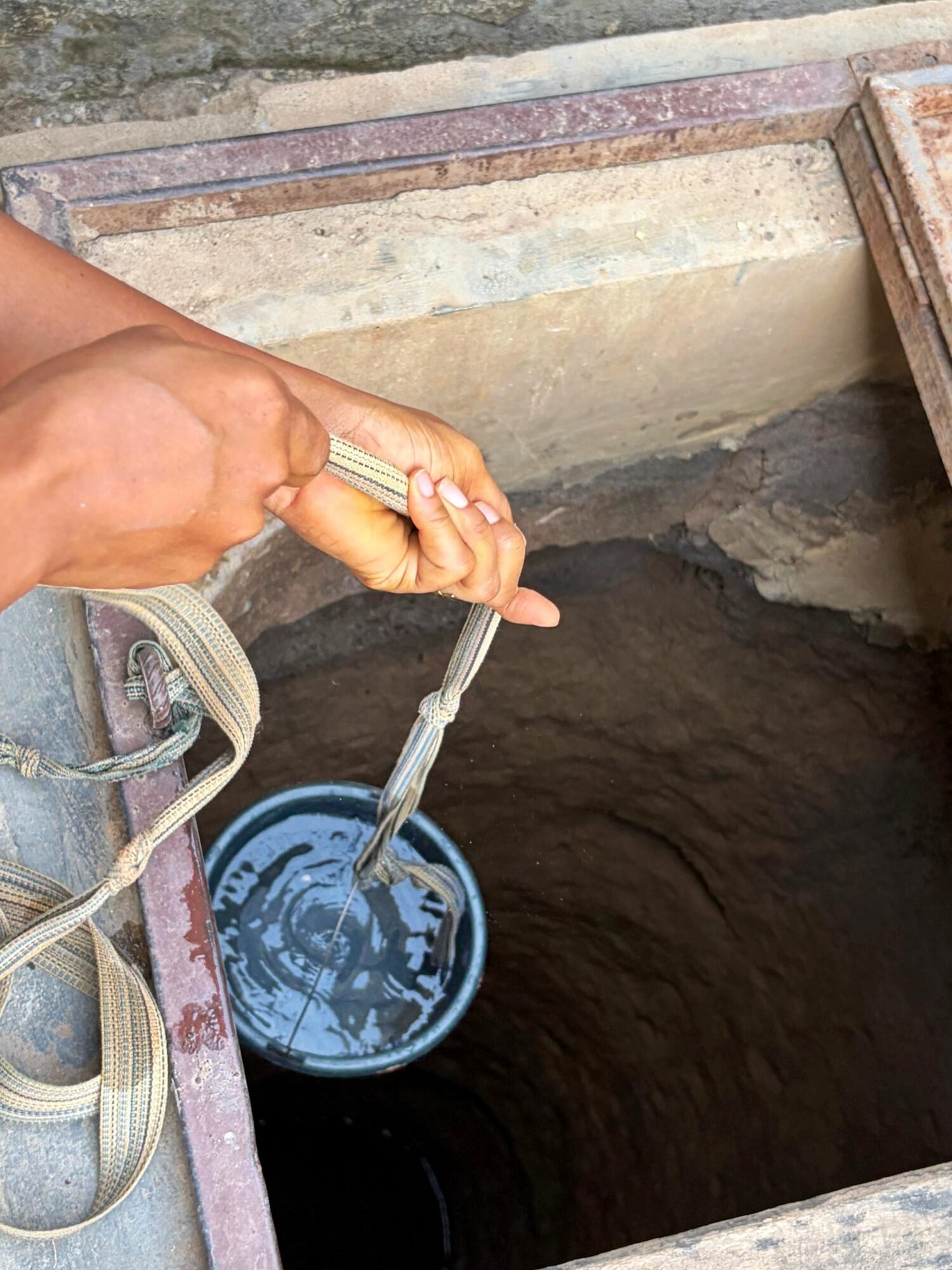
  • Participatory groundwater work raised awareness in Jaipur communities

    Participatory groundwater work raised awareness in Jaipur communities

    What the study found

    The study found that the participatory methods used in two low-income peri-urban communities in Jaipur generated relevant insights and could be implemented successfully. It also found that these approaches can help increase groundwater awareness among local communities and nongovernmental organizations (NGOs) and sensitize hydrogeologists to inter- and transdisciplinary work.

    Why the authors say this matters

    The authors say the work can help hydrogeologists learn how to carry out participatory management and can support NGOs in planning more comprehensive water projects by including hydrogeological considerations. They also conclude that the study contributes to the growing field of participatory and socio-hydrogeological research.

    What the researchers tested

    The researchers used a socio-hydrogeological case study in two low-income peri-urban communities in Jaipur, India, selected with a local NGO. The study included initial socio-hydrogeological assessments, water workshops, recruitment and training of women assistants, and the production of films to share results.

    What worked and what didn't

    The applied methods generated relevant insights and enabled a participatory approach. However, the authors say future studies should engage more thoroughly with the participatory-methods literature, ideally with social scientists experienced in those approaches.

    What to keep in mind

    The study was limited to two low-income communities in peri-urban Jaipur, so its findings are based on a small case study. The abstract does not describe any other limitations.

    • Two low-income peri-urban communities in Jaipur were studied with a local NGO.
    • The study combined assessments, workshops, training of women assistants, and film production.
    • The methods generated relevant insights and supported a participatory approach.
    • The authors say the work can help NGOs plan water projects with hydrogeological considerations.
    • The authors recommend closer engagement with participatory-methods literature and social scientists.
  • Environmental provisions in peace agreements are rarely studied

    What the study found

    The review found that there has been little peer-reviewed research in the last decade on environmental provisions in formal peace agreements. Where these provisions are discussed in the scholarly literature, they are often described as vague and poorly implemented.

    Why the authors say this matters

    The authors say peace agreements may be a useful place to address both conflict and environmental risk. The study suggests that formalizing multi-level management structures for these risks in peace agreements may help mitigate them, and the authors conclude that this role deserves further investigation.

    What the researchers tested

    The researchers conducted a systematic review of peer-reviewed articles published over the last decade. They looked for direct and tangentially related journal articles on environmental provisions in peace agreements and used the patterns they identified to develop recommendations for future research.

    What worked and what didn't

    The review identified key trends in the available literature, but the abstract does not give numerical results. It reports that environmental provisions are rarely studied and that, when mentioned, they are often vague and poorly implemented.

    What to keep in mind

    This summary is based only on the abstract, so detailed methods, article counts, and specific examples are not provided. The abstract also does not describe limitations of the review itself, beyond noting that the evidence base is still limited.

    • A systematic review found little peer-reviewed research on environmental provisions in peace agreements over the last decade.
    • The literature often describes these provisions as vague and poorly implemented.
    • The authors say peace agreements may help address both conflict and environmental risk.
    • The review examined direct and tangentially related journal articles and identified key trends.
    • The authors call for further investigation to build evidence and best practices.
  • Nairobi Expressway highlights tensions with matatu mobility

    What the study found

    The study found new tensions between Nairobi’s matatu system, a formal transport system meaning indigenous informal minibuses, and the Nairobi Expressway, Kenya’s first major transport public-private partnership (PPP). It describes the expressway as foreign, privatized, and monopolized infrastructure that contrasts with the matatu system’s self-organization and local transport role.

    Why the authors say this matters

    The authors conclude that the findings enrich accounts of decolonizing African urbanism and contribute to broader discussions of Global South urbanization and infrastructural politics. The study also suggests that these interactions extend post-colonial discussion into South-South contexts.

    What the researchers tested

    The researchers examined the relationship between Nairobi’s matatu system and Chinese-backed infrastructure investment in Kenya, focusing on the Nairobi Expressway. They used field observations, surveys, mappings, and interviews conducted between 2022 and 2024 to study socio-economic structures and spatial implications.

    What worked and what didn't

    The study reports that Chinese contractors, mainly engineering-focused state-owned enterprises, export domestic experiences and visions of modern infrastructure development abroad. It also reports distinct funding structures, operational patterns, development paths, and institutional agents in Chinese infrastructure, and it documents the matatu system’s struggle for access to formal transport infrastructure.

    What to keep in mind

    The abstract does not provide detailed numerical results or specific survey findings. It also does not describe the full limits of the study beyond its focus on Nairobi’s transport infrastructure and the period from 2022 to 2024.

    • The study focuses on tensions between Nairobi’s matatu system and the Nairobi Expressway.
    • The Nairobi Expressway is described as Kenya’s first major transport PPP funded, built, and operated by a Chinese contractor.
    • Field observations, surveys, mappings, and interviews were used from 2022 to 2024.
    • Chinese contractors are described as exporting domestic visions of modern infrastructure development.
    • The study says matatus face struggles for access to formal transport infrastructure.
  • Women-led movements linked river protection with culture, science, and law

    What the study found

    The study found that women-led movements in Quito, Ecuador used a mix of cultural, scientific, political, and legal strategies to address severe river contamination. The authors describe these efforts as aiming to protect rivers as living entities under the Rights of Nature paradigm.

    Why the authors say this matters

    The authors conclude that restoring rivers requires integrating culture, science, political advocacy, and law. They also suggest that recognizing rivers as living entities is part of breaking the polluter/victim cycle.

    What the researchers tested

    The paper draws on data from the RIOS25 workshop, which was designed to extract and systematize the narratives and strategies of activists seeking legal personhood for highly polluted rivers. Participatory methods included personal storytelling, visual timelines, strategy mapping, and collective visioning with women leaders from four civil society organizations: Women for Water, River Spirit, San Pedro River Collective, and the Ravines Collective.

    What worked and what didn't

    Participants emphasized personal connection, memory, resistance, and hope. The abstract reports different approaches across groups: River Spirit used photography and symbolic weaving; the San Pedro Collective used social media, art, and local ordinances; Women for Water pursued constitutional reforms and litigation; and the Ravines Collective focused on education and legal action to turn victims into activists.

    What to keep in mind

    The summary provided here is limited to the abstract, so detailed evidence, outcomes, and comparisons are not available. The abstract does not describe measured effectiveness for each strategy or note specific study limitations.

    • Women-led movements in Quito combined cultural, scientific, and legal strategies to respond to river contamination.
    • The study focused on activists seeking legal personhood for polluted rivers under the Rights of Nature paradigm.
    • Four civil society organizations took part: Women for Water, River Spirit, San Pedro River Collective, and the Ravines Collective.
    • Reported strategies included photography, symbolic weaving, social media, art, local ordinances, constitutional reform, litigation, and education.
    • The authors conclude that river restoration requires integrating culture, science, political advocacy, and law.
  • Socio-natural resilience shapes hydrosocial territory changes in the Yangtze program

    What the study found

    The study finds that socio-natural resilience can be used to understand how hydrosocial territories are reconfigured in China's Great Yangtze River Protection Programme. It describes this reconfiguration as a political process shaped by power relations, commodification of nature, and the tension between state control and market mechanisms.

    Why the authors say this matters

    The authors suggest this integrated perspective helps explain complex governance transformations in water governance. They also conclude that resilience is deeply embedded in power dynamics and hegemonic struggles, including upstream-downstream asymmetries shaped by hydro-hegemonic configurations.

    What the researchers tested

    The researchers analyzed field data from the Great Yangtze River Protection Programme. They combined the concept of socio-natural resilience with the analysis of hydrosocial territories to interpret changes in water governance and the roles of absorptive, adaptive, and transformative capacities.

    What worked and what didn't

    The study reports that hydrosocial territories with socio-natural resilience integrate technological, physical, social, and natural spaces and relations. It also states that actors navigate these spaces in different ways, such as local river chiefs facing bureaucratic pressure and provinces negotiating the price of clean water.

    What to keep in mind

    The abstract does not describe specific limitations or compare this approach with alternatives in detail. Its findings are presented in the context of the Great Yangtze River Protection Programme, so the scope described is limited to that case.

    • The study links socio-natural resilience to changes in hydrosocial territories in China's Great Yangtze River Protection Programme.
    • It describes reconfiguration of water governance as a political process, not only a technical adjustment.
    • The authors say absorptive, adaptive, and transformative capacities help explain how resilience operates in this setting.
    • The abstract highlights power asymmetries, including upstream-downstream relations and hydro-hegemonic configurations.
    • The study notes that actors such as local river chiefs and provinces navigate bureaucratic and pricing pressures.
  • Peru’s water stress reflects uneven basin distribution and governance gaps

    What the study found

    The study found that Peru has abundant national water overall, but this masks severe regional imbalance between basins. The Pacific basin, where most people live, has far less renewable water than the Amazon basin, and the authors describe this as a case of hydrological asymmetry.

    Why the authors say this matters

    The authors conclude that Peru’s water problem is not just about climate or total supply, but about the mismatch between water availability, population, and governance. The study suggests that without institutional changes, coastal scarcity may deepen while Amazonian water remains underused.

    What the researchers tested

    The paper presents an integrated assessment across three drainage basins in Peru. It examines resource distribution, human pressure, governance under Law 29338 (the 2009 water law), economic compensation mechanisms, groundwater extraction, and climate projections for glacier-fed Pacific basins.

    What worked and what didn't

    The abstract reports that the Pacific basin holds 1.9% of renewable water resources while supporting 66.4% of the population, and that the Amazon basin holds 97.8% of resources for 30.4% of the population. It also states that groundwater extraction in coastal regions is at 100% of renewable recharge limits, and that runoff in glacier-fed Pacific basins may fall by 30% by 2100. The authors say current governance and compensation systems have not resolved these imbalances.

    What to keep in mind

    The abstract does not describe the underlying dataset, sample size, or analytical methods in detail. It also presents policy recommendations, but the summary available here does not show testing of those recommendations.

    • Peru’s national water abundance masks strong regional inequality in basin-level water availability.
    • The Pacific basin has 66.4% of the population but only 1.9% of renewable water resources.
    • The Amazon basin contains 97.8% of resources for 30.4% of the population.
    • The authors say current governance under Law 29338 has not corrected the mismatch between supply, demand, and institutional capacity.
    • Coastal groundwater extraction is reported to be at 100% of renewable recharge limits.
    • The abstract projects a 30% runoff reduction in glacier-fed Pacific basins by 2100.
  • Arts-based research may broaden hydrogeology’s engagement

    What the study found

    The article argues that adding arts-based research to hydrogeology could help groundwater science connect more strongly with people, places, and other disciplines. It introduces “groundwater-connected art” as a concept for representing and understanding groundwater through artistic and collaborative practices.

    Why the authors say this matters

    The authors suggest that scientific methods alone may be insufficient to build the emotional, cultural, and community connections needed for real change around groundwater. They conclude that creative processes could make hydrogeology more human, equitable, and impactful, and could change how people engage with, value, and care for groundwater.

    What the researchers tested

    This is a perspective article rather than an experiment. The author presents a set of invitations and examples drawn from art, community engagement, and related disciplines that already use arts-based research, and discusses collaboration among hydrogeologists, social scientists, artists, and communities.

    What worked and what didn't

    The article says arts-based research offers methods to bridge gaps across disciplines, strengthen participatory and community-engaged approaches, and elevate cultural and relational dimensions of groundwater. It also notes possible challenges, including questions about role, rigor, ethics, and positionality.

    What to keep in mind

    The available summary does not describe a study with measured outcomes, so the claims are presented as an invitation and argument rather than tested findings. The abstract does not provide specific case results, limits from a dataset, or direct evidence of effectiveness.

    • The article proposes integrating arts-based research into hydrogeology.
    • It introduces “groundwater-connected art” as a way to represent and understand groundwater.
    • The authors say arts-based approaches could strengthen community engagement and cross-disciplinary work.
    • The abstract notes challenges involving role, rigor, ethics, and positionality.
    • The piece is a perspective article, not an experimental study.