What the study found
The study found that barley grain quality traits varied by genotype, environment, and genotype-by-environment interaction. Classical pedigree-derived lines showed the highest overall stability across most traits, while advanced lines were generally more stable than the local population.
Why the authors say this matters
The authors conclude that the findings identify barley material that may be suitable for further breeding under Mediterranean conditions. They also note that traits with stronger environmental influence need multi-environment testing, and that the observed trait relationships may help guide breeding choices.
What the researchers tested
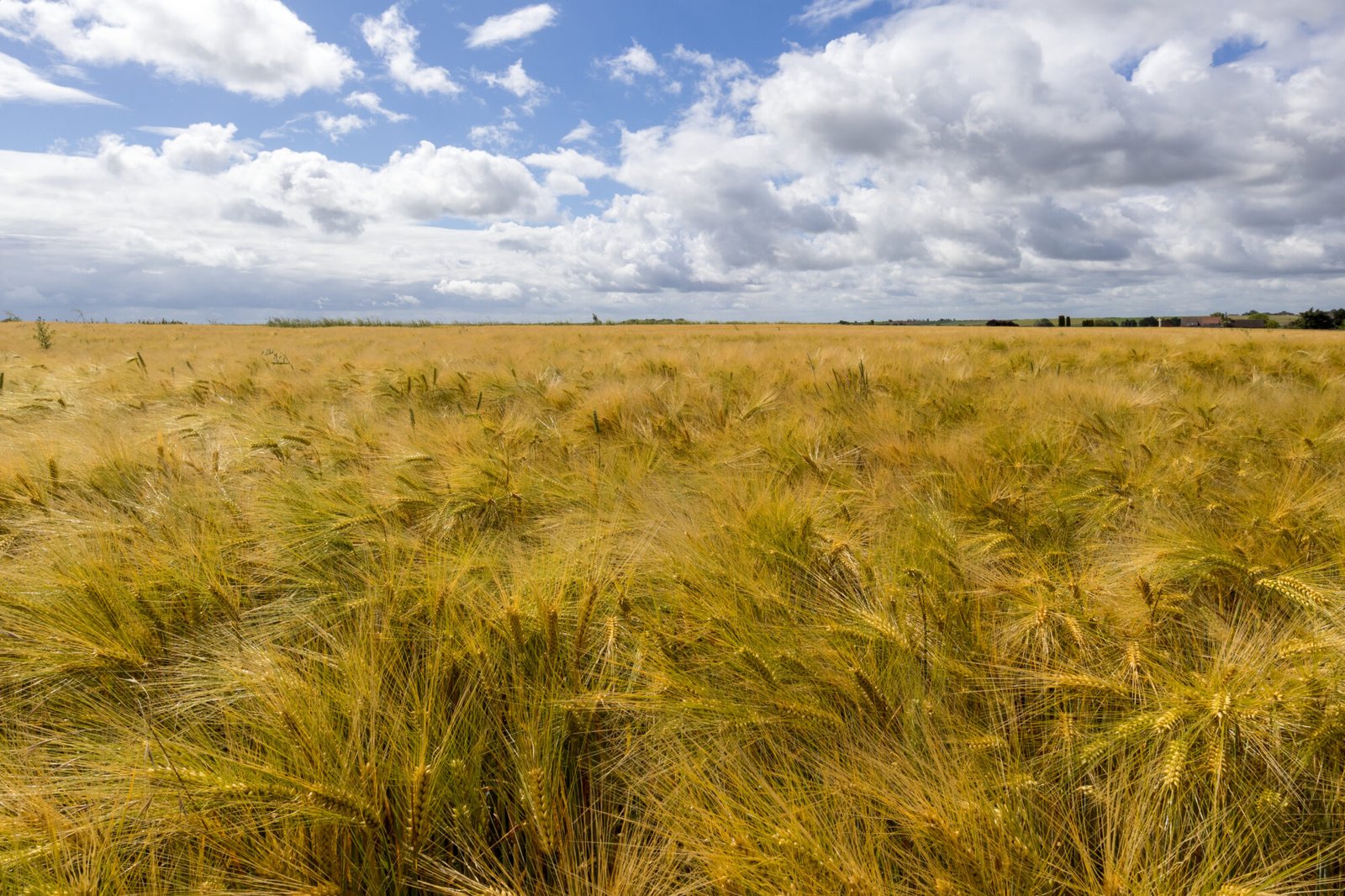
The researchers evaluated 15 barley genotypes, including pedigree-derived lines, Plant Yield Index-selected lines, Yielding Coefficient-selected lines, cultivars, and a local population. They measured crude protein, fat, ash, starch, crude fiber, carbohydrate, soluble fraction, and non-starch fraction across six environments using a randomized complete block design with four replications per environment.
What worked and what didn't
Combined analysis of variance showed significant genotype differences for all traits, and environmental effects and genotype-by-environment interactions were also significant. Stability analysis showed the classical pedigree lines were most stable overall; Plant Yield Index- and Yielding Coefficient-selected lines were more stable than the local population, and cultivars showed intermediate, trait-dependent stability. Broad-sense heritability was high for all traits, especially crude protein, fat, ash, and crude fiber, while starch, carbohydrate, soluble fraction, and non-starch fraction were more influenced by the environment.
What to keep in mind
The abstract does not describe specific trial-site details beyond six environments, and it does not provide numerical values for the stability comparisons or correlations. The summary also does not state any limitations beyond the need for multi-environment testing for traits strongly affected by environmental variation.
Key points
- Classical pedigree-derived barley lines had the highest overall stability across most measured traits.
- Genotype, environment, and genotype-by-environment interaction all significantly affected grain quality traits.
- Broad-sense heritability was high for all traits, above 92%.
- Protein and fiber traits showed favorable expected response to selection.
- Starch-related traits were more strongly influenced by environmental variation.
Disclosure
- Research title:
- Barley line stability varied across traits and environments
- Authors:
- Vasileios Greveniotis, Elisavet Bouloumpasi, Adriana Skendi, Stylianos Zotis, Dimitrios Kantas, Constantinos G. Ipsilandis
- Institutions:
- ANKO (Greece), Democritus University of Thrace, Democritus University of Thrace, Forest Research Institute, University of Thessaly
- Publication date:
- 2026-02-04
- OpenAlex record:
- View
- Image credit:
- JackyM59, Wikimedia Commons, CC BY-SA 4.0
Get the weekly research newsletter
Stay current with scholarly research without reading academic papers — one filtered digest, every Friday.