What the study found
The study found evidence that interbreeding between Neanderthals and anatomically modern humans was strongly sex biased. The authors characterize this pattern as predominantly male Neanderthals with female anatomically modern humans.
Why the authors say this matters
The authors say the findings help explain the relative lack of Neanderthal ancestry in modern human X chromosomes compared with autosomes, which are the non-sex chromosomes. They also conclude that mate preference may be a more parsimonious explanation than purely demographic processes with different male and female migration patterns.
What the researchers tested
The researchers examined Neanderthal and anatomically modern human ancestry patterns, including a comparison between X chromosomes and autosomes. They used analytic and numerical modeling to evaluate possible explanations for the observed sex bias.
What worked and what didn't
They observed a 62% relative excess of anatomically modern human ancestry in Neanderthal X chromosomes. Based on this pattern, they inferred a sex bias in interbreeding, and their modeling pointed to mate preference as a more parsimonious explanation than purely demographic processes with differential male and female migration.
What to keep in mind
The abstract does not describe specific limitations, and the summary provided here is limited to the stated ancestry patterns and modeling results. No additional scope or caveats are given in the abstract.
Key points
- The study reports strongly sex-biased interbreeding between Neanderthals and anatomically modern humans.
- The pattern is described as predominantly male Neanderthals and female anatomically modern humans.
- A 62% relative excess of anatomically modern human ancestry was observed in Neanderthal X chromosomes.
- The authors say this pattern may help explain the lower Neanderthal ancestry in modern human X chromosomes than in autosomes.
- Analytic and numerical modeling suggests mate preference may fit the pattern better than demographic migration differences.
Disclosure
- Research title:
- Neanderthal and modern human interbreeding was sex biased
- Authors:
- Alexander Platt, Daniel Harris, Sarah A. Tishkoff
- Institutions:
- University of Pennsylvania, University of Pennsylvania, University of Pennsylvania
- Publication date:
- 2026-02-26
- OpenAlex record:
- View
- Image credit:
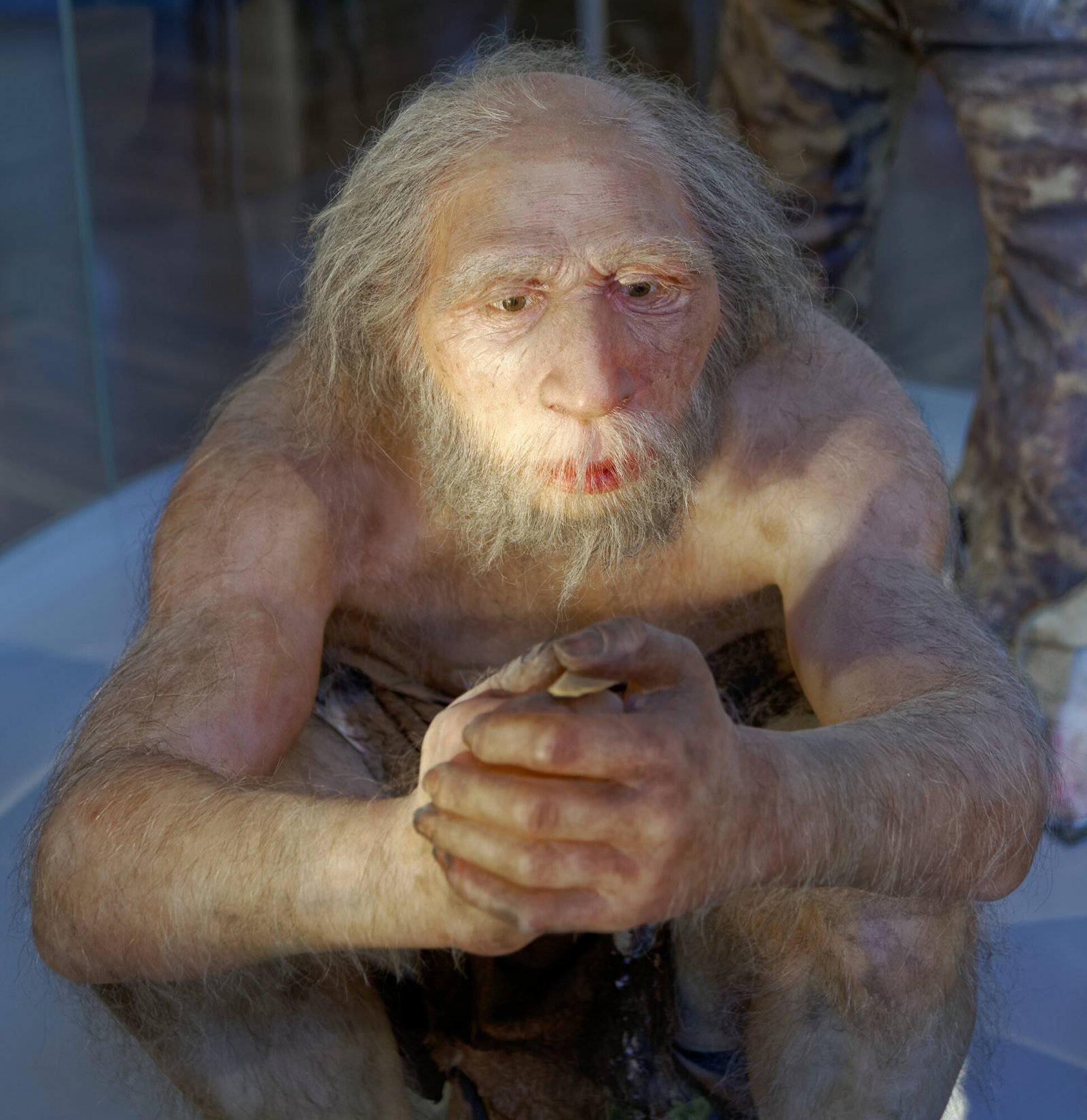
- Jakub Hałun, Wikimedia Commons, CC BY-SA 4.0
Get the weekly research newsletter
Stay current with scholarly research without reading academic papers — one filtered digest, every Friday.