Tag: Biological & Physical Anthropology

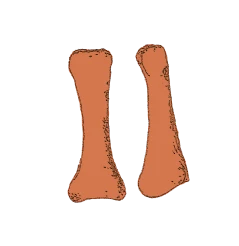
  • Khamis-Roche estimates agreed well with biological maturity status

    What the study found

    The study found that the Khamis-Roche method, which estimates predicted adult height and percentage of predicted adult height, showed good agreement with bone-age-based estimates of maturity status in this sample. The authors conclude that it may be a valid estimate of biological maturity status in average maturing children and adolescents.

    Why the authors say this matters

    The study suggests that a simpler estimate based on percentage of predicted adult height can be used to assess biological maturity status relative to skeletal age, with agreement shown in Portuguese children and adolescents. The authors conclude this may be useful for average maturing youths.

    What the researchers tested

    The researchers studied 371 Portuguese children and adolescents, including 171 girls, aged 11 to 15 years. Bone age was measured with the Tanner-Whitehouse-3 method, and predicted adult height and percentage of predicted adult height were estimated using both the Tanner-Whitehouse-3-based approach and the Khamis-Roche method. They compared the methods using intraclass correlation coefficients, Bland-Altman plots, and two-way analysis of variance.

    What worked and what didn't

    The average differences between bone-age-based and Khamis-Roche predicted adult height were small and not statistically significant: 0.2 ± 4.2 cm in boys and 0.6 ± 3.1 cm in girls. For percentage of predicted adult height, the differences were also small and not statistically significant: -0.1 ± 2.1% in boys and 0.4 ± 1.8% in girls. The intraclass correlation coefficient for percentage of predicted adult height was above 0.91, and early maturity status was associated with negative differences between bone-age-based and Khamis-Roche predicted adult height.

    What to keep in mind

    The abstract describes agreement in this sample, but it does not report broader validation beyond Portuguese children and adolescents aged 11 to 15 years. It also notes that early maturity status affected the differences, and the conclusion is limited to average maturing children and adolescents.

    • Khamis-Roche percentage of predicted adult height showed good agreement with bone-age-based estimates.
    • The study included 371 Portuguese children and adolescents aged 11 to 15 years.
    • Differences between methods were small and not statistically significant for boys and girls.
    • Intraclass correlation for percentage of predicted adult height was higher than 0.91.
    • Early maturity status was linked to negative differences between the two predicted adult height methods.
  • Aurignacian signs formed conventional, structured sequences

    What the study found

    The study found that geometric sign sequences on Aurignacian artifacts were deliberate, systematic, and conventional rather than random. The authors also report that these sign sequences were comparable in statistical structure to those on the earliest protocuneiform tablets, which are early writing-like tablets.

    Why the authors say this matters

    The authors conclude that the first hunter-gatherers arriving in Europe were already using sign sequences of comparable complexity many thousands of years before genuine writing appeared. They suggest this adds to understanding of how humans stored and shared information in the Paleolithic period.

    What the researchers tested

    The researchers analyzed more than 200 mobile objects from the Aurignacian culture, dated to 43,000 to 34,000 years ago, and cataloged several thousand geometric signs on them. They used classification algorithms and statistical models to measure quantitative properties of the sign sequences and compare them with modern writing and early protocuneiform tablets.

    What worked and what didn't

    The analyses showed that the Paleolithic sign sequences were clearly distinguishable from modern writing. They also showed statistical similarity to the earliest protocuneiform tablets and that signs were applied more densely on some object types, such as ivory figurines compared with tools. The authors state that these results do not strictly prove that the Aurignacian signs encoded numero-ideographic information, meaning number-and-idea-based writing-like content.

    What to keep in mind

    The abstract says the findings do not prove that the Aurignacian sign sequences had the same meaning as protocuneiform tablets. The analysis is based on a corpus of mobile objects from one archaeological culture and period, so the claims are limited to that available sample.

    • More than 200 Aurignacian artifacts with several thousand geometric signs were analyzed.
    • The sign sequences were distinguishable from modern writing.
    • Their statistical properties were comparable to the earliest protocuneiform tablets.
    • Signs were applied more densely on some objects, such as ivory figurines, than on tools.
    • The authors say the results do not prove the signs encoded numero-ideographic information.
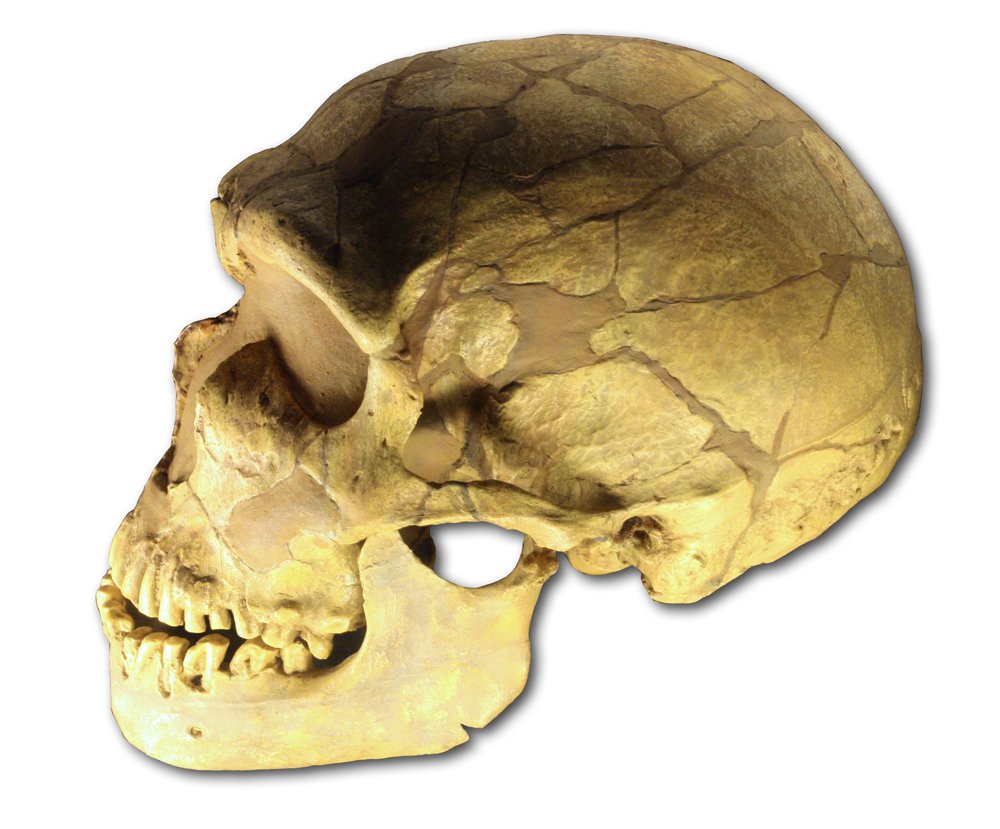
  • LF1 Neanderthal skeleton is dated more precisely to 42.6–39.8 ka cal BP

    LF1 Neanderthal skeleton is dated more precisely to 42.6–39.8 ka cal BP

    What the study found

    The study found that the La Ferrassie 1 Homo neanderthalensis skeleton can be placed in a tighter chronological window than previously available. The authors report that the associated fauna and the skeleton’s context are compatible with an intrusive depositional event, but the new dates do not directly prove deliberate burial.

    Why the authors say this matters

    The authors conclude that the new chronology refines the framework for evaluating possible Neandertal mortuary practices during the Middle-to-Upper Paleolithic transition. They also say it reinforces La Ferrassie’s importance in discussions of this period.

    What the researchers tested

    The researchers combined archival research, paleoproteomics, and radiocarbon dating to reassess the age and depositional context of LF1. Paleoproteomics is the identification of ancient animal remains through preserved proteins. They examined 64 faunal bone fragments stored with LF1, identified them taxonomically, and then selected six for radiocarbon dating. They also used Bayesian modeling to estimate the deposition timing.

    What worked and what didn't

    Most of the bone fragments were identified as Bovidae, with smaller numbers of Cervidae and Elephantidae. The modeled start and end boundaries for the LF1-associated fauna were 43,270–39,060 cal BP, and the modeled deposition event was 42,610–39,830 cal BP, both at 95.4% probability. These estimates refine earlier broader optical stimulated luminescence (OSL) age estimates and overlap with the Châtelperronian time range at the site and in western Europe. The study did not provide direct evidence for intentional burial.

    What to keep in mind

    The abstract says the LF1 chronological placement remains an interpretation based on associated fauna, archival evidence, and previous taphonomic observations, not a direct dating of the skeleton itself. It also states that the new radiocarbon dates refine the context but do not by themselves demonstrate deliberate burial. No other limitations are described in the available summary.

    • LF1 is placed within a narrower date range of 42,610–39,830 cal BP for deposition.
    • Paleoproteomic analysis identified 50 of 64 associated bone fragments as Bovidae.
    • Archival evidence indicates the dated faunal fragments were directly under the LF1 skeleton.
    • The new dates overlap with the Châtelperronian time range at La Ferrassie and in western Europe.
    • The study refines LF1’s context but does not directly show intentional burial.
  • Neanderthal and modern human interbreeding was sex biased

    Neanderthal and modern human interbreeding was sex biased

    What the study found

    The study found evidence that interbreeding between Neanderthals and anatomically modern humans was strongly sex biased. The authors characterize this pattern as predominantly male Neanderthals with female anatomically modern humans.

    Why the authors say this matters

    The authors say the findings help explain the relative lack of Neanderthal ancestry in modern human X chromosomes compared with autosomes, which are the non-sex chromosomes. They also conclude that mate preference may be a more parsimonious explanation than purely demographic processes with different male and female migration patterns.

    What the researchers tested

    The researchers examined Neanderthal and anatomically modern human ancestry patterns, including a comparison between X chromosomes and autosomes. They used analytic and numerical modeling to evaluate possible explanations for the observed sex bias.

    What worked and what didn't

    They observed a 62% relative excess of anatomically modern human ancestry in Neanderthal X chromosomes. Based on this pattern, they inferred a sex bias in interbreeding, and their modeling pointed to mate preference as a more parsimonious explanation than purely demographic processes with differential male and female migration.

    What to keep in mind

    The abstract does not describe specific limitations, and the summary provided here is limited to the stated ancestry patterns and modeling results. No additional scope or caveats are given in the abstract.

    • The study reports strongly sex-biased interbreeding between Neanderthals and anatomically modern humans.
    • The pattern is described as predominantly male Neanderthals and female anatomically modern humans.
    • A 62% relative excess of anatomically modern human ancestry was observed in Neanderthal X chromosomes.
    • The authors say this pattern may help explain the lower Neanderthal ancestry in modern human X chromosomes than in autosomes.
    • Analytic and numerical modeling suggests mate preference may fit the pattern better than demographic migration differences.
  • Carbon black cave art dated in Font-de-Gaume

    Carbon black cave art dated in Font-de-Gaume

    What the study found

    The study found carbon black-based figures in the Font-de-Gaume cave and directly dated them. The dates include Paleolithic ages for most of the sampled lines, with one result that does not match that pattern.

    Why the authors say this matters

    The authors say these findings confirm the Paleolithic age of cave art in Font-de-Gaume, except for one date. They also conclude that the study opens new possibilities for more systematic dating of cave wall art in the cavern and encourages further research on carbon black-based Paleolithic parietal art in the Dordogne region.

    What the researchers tested

    The researchers used reflectance imaging spectroscopy, a noninvasive imaging method that measures how surfaces reflect light, to distinguish manganese-based black from carbon-based black. They then sampled two figures identified as carbon black-based for radiocarbon dating: the Bison figure and the Mask.

    What worked and what didn't

    Reflectance imaging spectroscopy allowed a precise noninvasive distinction between manganese- and carbon-based blacks. The radiocarbon dates obtained for the Bison and for parts of the Mask were 13461–13162 calBP, 8993–8590 calBP, 15981–15121 calBP, and 15297–14246 calBP; the authors describe these as slightly more recent than expected, and say that all but one date support a Paleolithic age.

    What to keep in mind

    The abstract notes that dating parietal representations is difficult because very little material is available and because of possible contamination from other carbon sources. Only two figures were sampled, so the results are limited to those selected figures and the available dates described in the abstract.

    • Carbon black-based figures were identified in the Font-de-Gaume cave in Dordogne, France.
    • Reflectance imaging spectroscopy was used to separate manganese-based blacks from carbon-based blacks without damage.
    • Two carbon black-based figures were radiocarbon dated: the Bison and the Mask.
    • Most of the obtained dates support a Paleolithic age for the cave art.
    • The authors say the study could enable more systematic dating of cave wall art in the cavern.
  • Nubian cores form one end of a Levallois reduction continuum

    What the study found

    The study found that Nubian Levallois cores at Tweefontein, South Africa, are not separate from other prepared core forms but sit at one extreme of a continuum of preferential Levallois reduction. The authors also report that these cores occur alongside distinct radial and opposed-platform reduction strategies.

    Why the authors say this matters

    The authors conclude that 3D analysis can help move beyond typological categories and better capture local technological adaptations. They also say this is especially relevant because heterogeneous terminology for prepared cores in southern Africa makes comparison between assemblages difficult.

    What the researchers tested

    The researchers studied a large assemblage of Nubian cores and other prepared core forms from the open-air site of Tweefontein. They used 3D geometric morphometrics, which is a method for measuring shape in three dimensions, along with other quantitative methods to examine core morphology, technology, and the distinctiveness of core types.

    What worked and what didn't

    Their results indicate that Nubian Levallois at Tweefontein represents one extreme of a continuum of preferential Levallois reduction. The study also found that this occurs alongside radial and opposed-platform reduction strategies, and that 3D analysis can reveal variation beyond simple typological categories.

    What to keep in mind

    The abstract says the southern African Nubian cores are geographically, temporally, and culturally separated from other instances of this technology. It also notes that the available terminology for prepared cores in southern Africa is heterogeneous, but it does not provide further limitations beyond this scope.

    • Nubian Levallois cores at Tweefontein are described as one extreme of a continuum of preferential Levallois reduction.
    • The assemblage also includes distinct radial and opposed-platform reduction strategies.
    • The researchers used 3D geometric morphometrics and other quantitative methods to study core shape and technology.
    • The authors say 3D analysis can help move beyond typological categories.
    • They note that heterogeneous terminology makes comparison between southern African assemblages difficult.
  • Mesolithic ornamentation changed non-linearly over time

    What the study found

    The study found non-linear changes in South Scandinavian Mesolithic portable art, including a notable Middle Mesolithic peak in visual complexity and a slight, gradual increase in information content over time. The authors interpret these shifts as reflecting different societal functions of the ornamentations.

    Why the authors say this matters

    The authors say the findings help index the emergence of fundamentally different societal functions of these ornamentations. The study suggests these shifts broadly correlate with, and are likely driven by, environmental and demographic changes.

    What the researchers tested

    The researchers analyzed anthropogenic ornamentation on archaeological artefacts from Mesolithic South Scandinavia. They used Shannon information entropy to measure information content and perimetric complexity to measure visual complexity, then mapped changes in motif morphology over time within a cognitive affordance framework.

    What worked and what didn't

    The combined measures were able to identify diachronic developments in motif morphology. The results showed a Middle Mesolithic peak in visual complexity and a gradual increase in information content, but the abstract does not report any measures that failed or any negative findings beyond this pattern.

    What to keep in mind

    The abstract does not describe detailed limitations, sample size, or uncertainty estimates. The findings are limited to the South Scandinavian Mesolithic portable art corpus described in the study.

    • Shannon information entropy and perimetric complexity were used to quantify decorated artefacts.
    • The study found a Middle Mesolithic peak in visual complexity.
    • Information content increased slightly and gradually over time.
    • The authors interpret the pattern as non-linear development in ornamentation practices.
    • The abstract says the shifts likely relate to environmental and demographic changes.
  • Fresh bone methylation estimated age more reliably than treated samples

    Fresh bone methylation estimated age more reliably than treated samples

    What the study found

    The study found that DNA methylation, a chemical mark on DNA used for age estimation, can generally be used to estimate age-at-death from fresh bone material. However, the authors concluded that reliability is poorer when the bone has been exposed to conditions relevant to forensic casework.

    Why the authors say this matters

    The authors say this matters because methylation-based forensic donor age estimation is an emerging field, and tools have been developed for bone samples. The study suggests that understanding how bone type and environmental exposure affect these estimates is important for using such tools in forensic practice.

    What the researchers tested

    The researchers used the VISAGE enhanced age estimation tool for bones on freshly collected bone samples from 30 individuals. They compared five bone types: rib, femur, clavicle, iliac crest, and petrous bone. They also exposed femur samples to burying, submersion in water, or burning to mimic casework, and they analyzed two actual casework samples.

    What worked and what didn't

    With fresh bone samples, the tool produced high overall age estimation errors, with a mean absolute error (MAE) of 9.79 years and a mean error of -7.25 years. Only petrous bone showed statistically significantly different age estimation errors compared with at least one of the other four bone types. After applying a linear transformation to calibrate estimates to the cohort, the overall MAE improved to 7.03 years. For the mock casework samples, only 12 produced a result with an MAE of about 10-15 years using the transformation model, and the two actual casework samples differed from chronological age by 10 and 29 years.

    What to keep in mind

    The abstract does not describe details such as confidence intervals or the full statistical analysis. The findings are based on a cohort of 30 individuals and on specific bone types and simulated or limited real casework conditions, so the scope is narrow. The authors also note that, under forensically relevant conditions, reliable age estimation may be difficult.

    • Fresh bone material allowed age-at-death estimation through DNA methylation analysis.
    • Age estimation errors were high overall before calibration, with MAE 9.79 years.
    • Petrous bone was the only bone type with statistically different errors from at least one other bone type.
    • A linear transformation improved overall MAE to 7.03 years.
    • Mock casework and two real casework samples showed much weaker accuracy.
  • Daasanach tool users favored mass and edge length

    What the study found

    The study found that stone cutting tool selection and cutting efficiency were influenced by edge angle, mass, and grip. In this setting, Daasanach tool users from East Turkana, Kenya, provided evidence linking traditional knowledge with measurable stone-tool attributes.

    Why the authors say this matters

    The authors conclude that these findings provide new perspectives on the functional relevance of informal cutting tools, which are mostly understood through experimentation. They also say the study can help interpret lithic variability, meaning differences in stone artifacts, in ancient contexts from the perspective of traditional expert users.

    What the researchers tested

    The researchers studied the Daasanach of East Turkana, Kenya, who maintain a tradition of stone tool production and use. They used interviews and video documentation of eight expert toolmakers as they carried out butchery tasks, then related their choices to measurable lithic attributes, meaning stone-tool characteristics.

    What worked and what didn't

    The findings indicate that edge angle, mass, and grip were important in tool selection and cutting efficiency. The abstract does not describe any factors that were unimportant or any results that failed to appear.

    What to keep in mind

    The study observed only eight expert toolmakers, so its scope is limited. The abstract does not describe additional limitations beyond the fact that this was a traditional, specific local setting.

    • Edge angle, mass, and grip influenced cutting tool selection and cutting efficiency.
    • The study focused on Daasanach toolmakers in East Turkana, Kenya.
    • Researchers used interviews and video documentation during butchery tasks.
    • The authors say the findings help interpret ancient stone-tool variability.
    • The abstract does not report any factors that did not matter.
  • Third molar agenesis differs strongly between South African population groups

    What the study found

    The study found that third molar agenesis, meaning the absence of one or more wisdom teeth, was significantly more common in White South Africans than in Black South Africans. It also found that missing third molars can affect dental age estimation, which uses tooth development to estimate age.

    Why the authors say this matters

    The authors conclude that population-specific reference data are needed to improve the accuracy and reliability of forensic dental age estimation. They also suggest that relying only on third molar development may lead to inaccurate age estimates in multi-ethnic populations.

    What the researchers tested

    The researchers did a retrospective analysis of orthopantomograms, which are panoramic dental X-rays, from 2,536 people: 1,688 Black South Africans and 848 White South Africans. They examined third molar agenesis by tooth position, sex, population group, and birth cohort, and used statistical analyses to look for differences within and between groups.

    What worked and what didn't

    Third molar agenesis was reported in 28.42% of White South Africans and 6.81% of Black South Africans. At least one missing third molar was found in 14.92% of males and 13.33% of females, with slightly higher prevalence in the maxillary arch than in the mandibular arch; the abstract reports no consistent sex- or side-related differences. The birth cohort analysis showed a declining trend in agenesis over time.

    What to keep in mind

    The summary does not provide details on how age estimation accuracy changed in specific cases, only that agenesis can compromise reliability. It is also limited to the South African groups studied and to the retrospective sample of dental X-rays described in the abstract.

    • Third molar agenesis was much more common in White South Africans than in Black South Africans.
    • At least one missing third molar was found in 14.92% of males and 13.33% of females.
    • Agenesis was slightly more frequent in the maxillary arch than in the mandibular arch.
    • The study reports no consistent sex-related or side-related differences.
    • The authors say population-specific reference data are needed for more accurate forensic dental age estimation.