What the study found
The study found that both autoclaved aerated concrete (AAC) blocks and traditional clay masonry infill increased the lateral strength of reinforced concrete (RC) frames by about 60%. AAC infill, however, was better than clay infill at improving ductility, meaning the frames could deform more before failing.
Why the authors say this matters
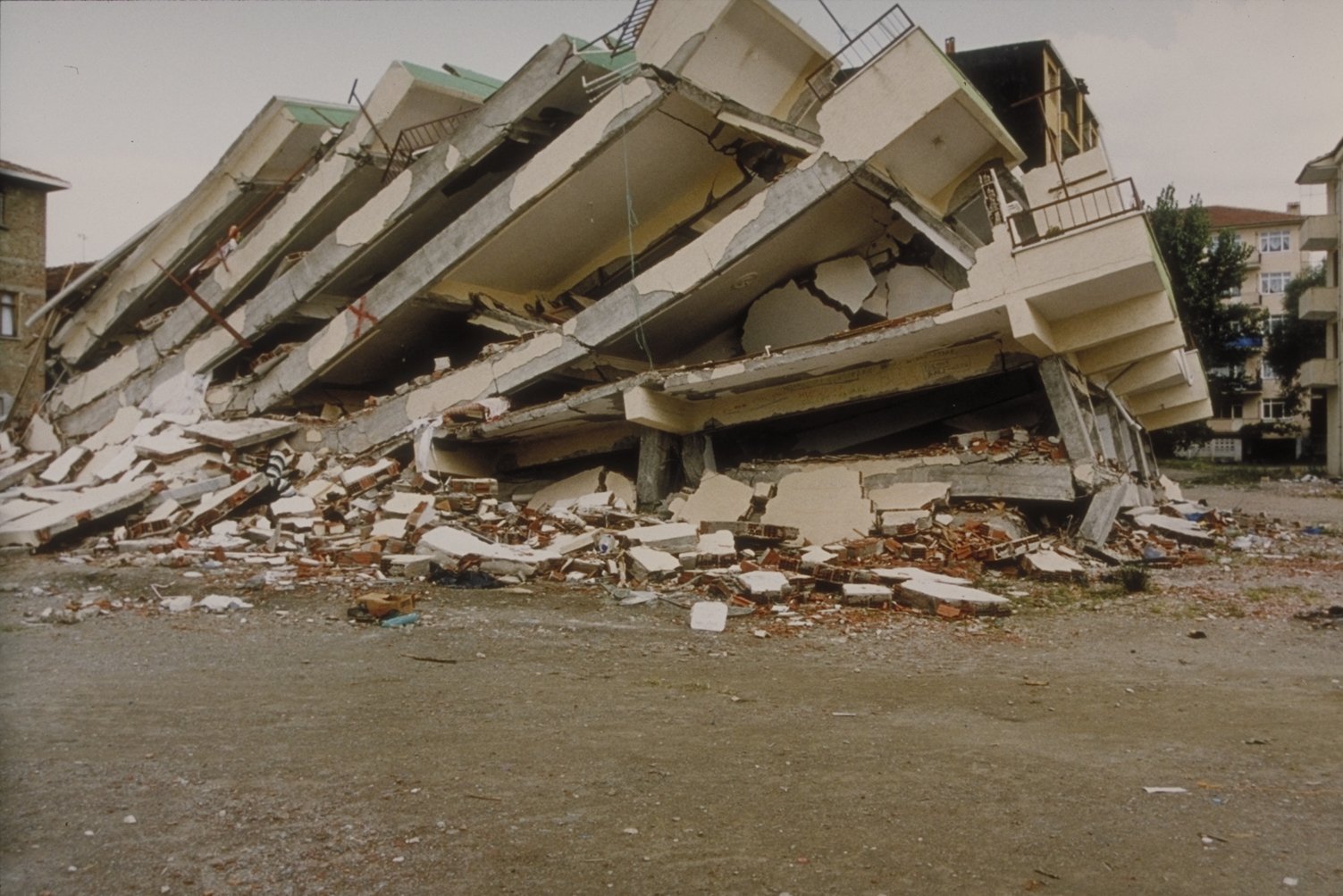
The authors describe AAC as a novel and environmentally friendly material, and they conclude that it performed better than clay infill in ductility enhancement. They also indicate that the reinforced steel used in the frames was intended to enhance seismic resistance.
What the researchers tested
The researchers experimentally tested three two-thirds-scale RC frames under cyclic lateral loading, comparing frames infilled with clay bricks and with AAC blocks. They also developed trilinear and quadlinear backbone curves for the clay and AAC infills, respectively, and used numerical macromodels in SeismoStruct and SAP2000 with concentrated and distributed plasticity approaches.
What worked and what didn't
Both infill types contributed approximately equally to increasing lateral strength, with about a 60% improvement. AAC infill significantly outperformed brittle clay infill in ductility enhancement. For the numerical work, the multi-strut macromodel captured the hysteresis behavior of the infilled RC frames more accurately than the single-strut model.
What to keep in mind
The abstract describes tests on only three two-thirds-scale frames, so the results are based on a small experimental set. It also notes that the accuracy of the more complex multi-strut model depended on parameters such as strut width, post-cracking degradation rate, shear-to-axial stiffness ratio, and strain at peak stress.
Key points
- Both AAC and clay infills increased RC frame lateral strength by about 60%.
- AAC infill improved ductility more than traditional clay infill.
- Three two-thirds-scale RC frames were tested under cyclic lateral loading.
- The multi-strut macromodel matched hysteresis behavior better than the single-strut model.
- Model accuracy depended on strut width, degradation rate, stiffness ratio, and peak-stress strain.
Disclosure
- Research title:
- AAC infill improved ductility more than clay infill in RC frames
- Authors:
- Ahmed M. El-Kholy, Huda Sayed, Ibrahim M. Metwally, Ayman A. Shaheen
- Institutions:
- Fayoum University, Fayoum University, Fayoum University, Housing and Building National Research Center, Misr University for Science and Technology
- Publication date:
- 2026-02-10
- OpenAlex record:
- View
- Image credit:
- NOAA National Geophysical Data Center, Wikimedia Commons, Public domain
Get the weekly research newsletter
Stay current with scholarly research without reading academic papers — one filtered digest, every Friday.