
Tag: Civil & Construction Engineering

  • Dry stack Himalayan masonry shows settlement-dependent stability changes

    Dry stack Himalayan masonry shows settlement-dependent stability changes

    What the study found

    The study found that dry stack corbelled masonry structures, including arches and wall assemblies, respond to settlement in ways that affect overall stability and deformation. It also found that higher friction reduces settlement-induced displacements.

    Why the authors say this matters

    The authors conclude that understanding the stability mechanisms of these dry stack masonry structures may help preserve culturally and historically significant Himalayan temples. The study suggests this knowledge is relevant for assessing how such structures behave under settlement.

    What the researchers tested

    The researchers used laboratory experiments and the Discrete Element Method (DEM), a computational approach for simulating how separate particles or blocks move and interact. They studied dry stack structures under controlled settlement conditions and also analyzed a full-scale, typical Himalayan-style dry-jointed temple with localized differential settlement applied to one wall or corner at a time.

    What worked and what didn't

    The experimental and DEM studies were used to investigate load transfer mechanisms and settlement behavior in dry stack corbelled systems. The friction sensitivity analysis showed that increasing friction reduced settlement-induced displacements. The abstract does not report any specific failed configurations or numerical performance values.

    What to keep in mind

    The summary provided does not include detailed quantitative results, and it does not state specific limitations of the study. The findings are based on controlled settlement conditions and the analyzed temple model described in the abstract.

    • Dry stack corbelled Himalayan masonry structures were studied under settlement conditions.
    • Laboratory experiments and Discrete Element Method simulations were both used.
    • Localized differential settlement was applied to one wall or corner at a time in the temple model.
    • Higher friction was associated with reduced settlement-induced displacements.
    • The authors say the work may help with preservation of these historic structures.
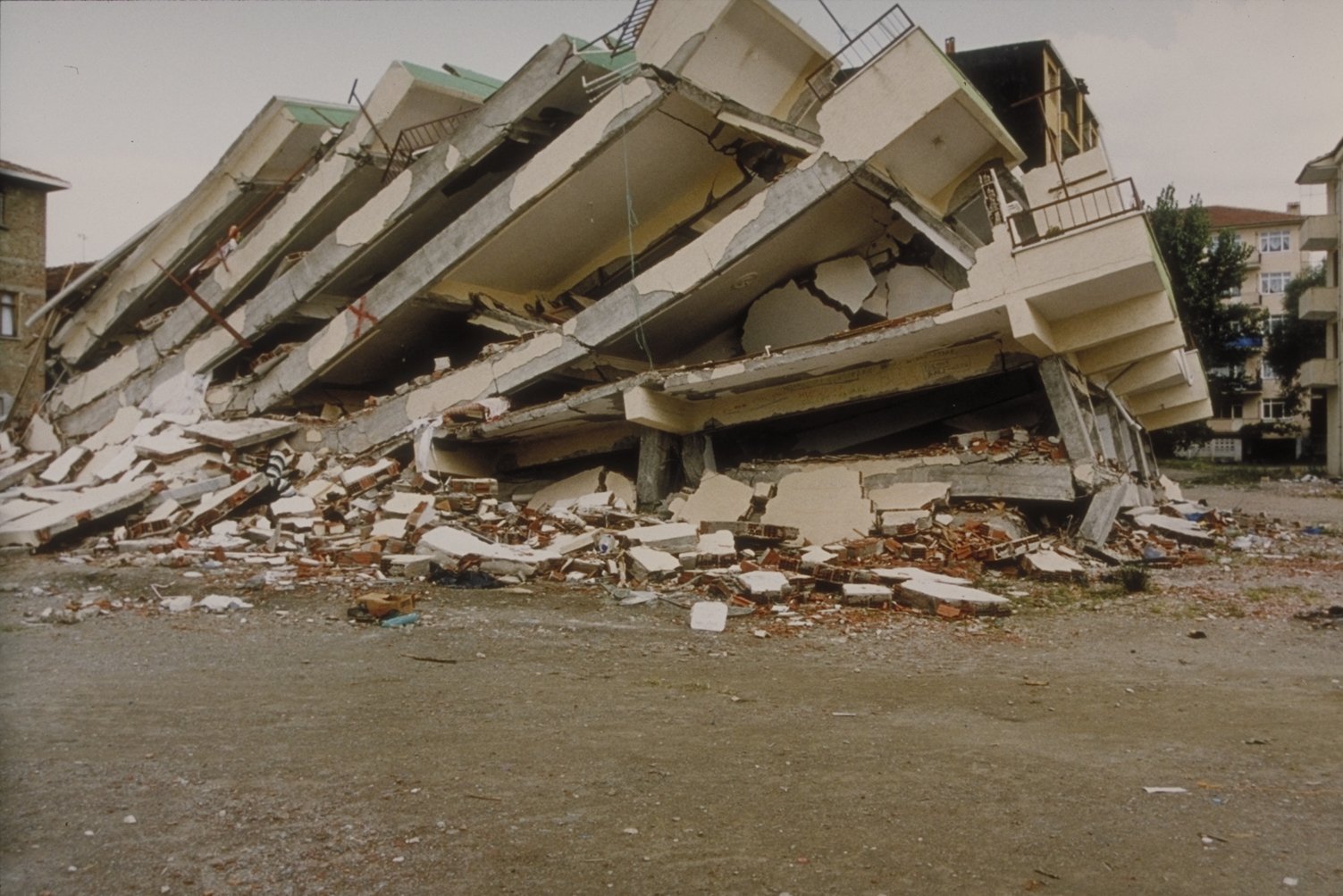
  • Single-strut model predicts seismic behavior of lightweight infilled RC frames

    What the study found

    The study found that an advanced single-strut macro-model could reproduce the nonlinear behavior of reinforced concrete frames with lightweight infills. The model was calibrated for hollow clay brick, gypsum block, and autoclaved lightweight concrete systems and showed errors below 10% in lateral capacity and initial stiffness.

    Why the authors say this matters

    The authors conclude that the proposed modeling strategy is a reliable tool for performance-based design and analysis. They also say it can help engineers run parametric studies and assess the seismic suitability of different infill systems with less time and cost than full-scale testing.

    What the researchers tested

    The researchers implemented a single-strut macro-model in SAP2000, a structural analysis program, and added material-specific nonlinear axial hinges. These hinges were calibrated against full-scale experimental data from Cai et al. to represent crushing, shear-sliding, and slip-hardening behavior in the three infill types.

    What worked and what didn't

    The calibrated model showed high predictive accuracy, with lateral capacity and initial stiffness errors below 10% for all three systems. In the seismic comparison, hollow clay brick infills increased initial stiffness by 471% but failed in a brittle way, autoclaved lightweight concrete panels showed ductility of μ = 5.39 and stable energy dissipation up to 4.06% drift, and the gypsum system showed abrupt strength degradation and was considered seismically inadequate.

    What to keep in mind

    The study is based on a specific experimental dataset and on the modeling assumptions used in SAP2000. The abstract does not describe other limitations beyond this scope.

    • A single-strut macro-model was developed for lightweight masonry-infilled reinforced concrete frames.
    • The model was calibrated to full-scale tests for hollow clay brick, gypsum block, and autoclaved lightweight concrete infills.
    • Predicted lateral capacity and initial stiffness were both within 10% error for all systems.
    • Hollow clay brick infills greatly increased stiffness but showed brittle failure.
    • Autoclaved lightweight concrete panels had the best ductility and stable energy dissipation among the three systems.
  • AAC infill improved ductility more than clay infill in RC frames

    AAC infill improved ductility more than clay infill in RC frames

    What the study found

    The study found that both autoclaved aerated concrete (AAC) blocks and traditional clay masonry infill increased the lateral strength of reinforced concrete (RC) frames by about 60%. AAC infill, however, was better than clay infill at improving ductility, meaning the frames could deform more before failing.

    Why the authors say this matters

    The authors describe AAC as a novel and environmentally friendly material, and they conclude that it performed better than clay infill in ductility enhancement. They also indicate that the reinforced steel used in the frames was intended to enhance seismic resistance.

    What the researchers tested

    The researchers experimentally tested three two-thirds-scale RC frames under cyclic lateral loading, comparing frames infilled with clay bricks and with AAC blocks. They also developed trilinear and quadlinear backbone curves for the clay and AAC infills, respectively, and used numerical macromodels in SeismoStruct and SAP2000 with concentrated and distributed plasticity approaches.

    What worked and what didn't

    Both infill types contributed approximately equally to increasing lateral strength, with about a 60% improvement. AAC infill significantly outperformed brittle clay infill in ductility enhancement. For the numerical work, the multi-strut macromodel captured the hysteresis behavior of the infilled RC frames more accurately than the single-strut model.

    What to keep in mind

    The abstract describes tests on only three two-thirds-scale frames, so the results are based on a small experimental set. It also notes that the accuracy of the more complex multi-strut model depended on parameters such as strut width, post-cracking degradation rate, shear-to-axial stiffness ratio, and strain at peak stress.

    • Both AAC and clay infills increased RC frame lateral strength by about 60%.
    • AAC infill improved ductility more than traditional clay infill.
    • Three two-thirds-scale RC frames were tested under cyclic lateral loading.
    • The multi-strut macromodel matched hysteresis behavior better than the single-strut model.
    • Model accuracy depended on strut width, degradation rate, stiffness ratio, and peak-stress strain.
  • Carbon textile reinforcement improved an aged cracked bridge slab-beam

    What the study found

    The study found that carbon textile-reinforced concrete (TRC, a concrete layer reinforced with carbon textile) improved the flexural performance of an aged, pre-cracked reinforced concrete bridge slab-beam. The strengthened beam showed higher flexural capacity and better crack control than the unstrengthened specimen.

    Why the authors say this matters

    The authors suggest the findings are relevant because they show TRC can be used to rehabilitate deteriorated bridge members under sustained service load, which is a repair condition intended to reflect in-service use. They conclude that the results support TRC as a way to restore and enhance flexural performance in aged bridge elements.

    What the researchers tested

    The researchers studied a 30-year-old reinforced concrete slab-beam taken from the Ben Cho Bridge that already had flexural cracks. They used both experiments and finite element simulations with ATENA to assess strengthening with carbon TRC while keeping the beam under sustained load during repair.

    What worked and what didn't

    TRC strengthened the beam, with a 24.8% increase in flexural capacity compared with the unstrengthened specimen. Crack widths and spacing were reduced to about one-third to one-half of those in the control beam, and the simulations closely matched the load-deflection response and predicted ultimate loads within 2.5% to 3.5% deviation. The abstract does not report any major strengthening failure, but it does note that carbon textiles exceeded the 12‰ design limit specified in ACI 549.4 R-20.

    What to keep in mind

    The summary describes one extracted bridge slab-beam, so the findings may be limited to this specific aged member and test setup. The abstract does not describe broader field validation, durability over time, or additional limitations beyond the single case studied.

    • A 30-year-old pre-cracked bridge slab-beam was strengthened with carbon textile-reinforced concrete.
    • The strengthened beam achieved a 24.8% increase in flexural capacity versus the unstrengthened specimen.
    • Crack widths and spacing were reduced to roughly one-third to one-half of the control beam's values.
    • Finite element simulations in ATENA predicted ultimate loads within 2.5% to 3.5% of the experiments.
    • Carbon textiles exceeded the 12‰ design limit stated in ACI 549.4 R-20.
  • Mortise-tenon grouted masonry showed improved compressive performance

    What the study found

    The study found that mortise-and-tenon grouted masonry can improve the mechanical performance of masonry under compression. It also found that steel fiber-reinforced concrete (SFRC) as the core filling material improved ductility and toughness, while higher eccentricity reduced load-bearing capacity.

    Why the authors say this matters

    The authors conclude that the study provides a reliable theoretical foundation and practical computational tools for the structural design and application of mortise-and-tenon grouted masonry. They suggest this may improve the engineering applicability of masonry.

    What the researchers tested

    The researchers examined axial and eccentric compressive behavior through experiments and numerical simulation. They built a refined three-dimensional finite element model in DIANA, and used 52 numerical models to study the effects of block strength, core material type, wall thickness, steel fiber content, and geometric ratios.

    What worked and what didn't

    The finite element model was reported to match the experimental results closely and to account for material nonlinearity and interfacial contact effectively. SFRC core filling improved ductility and toughness, and 1.6% SFRC increased ultimate strain by about 37%; by contrast, increasing eccentricity from 0.1 to 0.3 reduced load-bearing capacity by an average of 40%. The study also derived calculation formulae for key axial compression parameters, established a stress-strain relationship with a parabolic ascending branch and linear descending branch (R2 = 0.992), and developed an eccentric-compression design method that was more accurate than existing code provisions.

    What to keep in mind

    The abstract does not describe specific experimental sample sizes, test configurations, or limitations beyond the modeled variables. The findings are presented for the mortise-and-tenon grouted masonry system studied here, so the scope is limited to the conditions reported in the abstract.

    • Mortise-and-tenon grouted masonry was studied for axial and eccentric compressive behavior.
    • A refined three-dimensional finite element model in DIANA matched experimental results closely.
    • SFRC core filling improved ductility and toughness; 1.6% SFRC increased ultimate strain by about 37%.
    • Increasing eccentricity from 0.1 to 0.3 reduced load-bearing capacity by an average of 40%.
    • The study derived axial compression formulae and an eccentric-compression design method.
  • Wire mesh confinement increased brick pillar strength

    What the study found

    The study found that wire mesh confined fly ash brick pillars were stronger than unconfined brick pillars and did not fail suddenly. In contrast, both unconfined and axially reinforced unconfined masonry pillars failed suddenly by crushing.

    Why the authors say this matters

    The authors say the work is aimed at preventing sudden brittle collapse of fly ash brick pillars used in load-bearing structures. The findings suggest a possible way to improve the behavior of brick pillars that support loads in masonry construction.

    What the researchers tested

    The researchers experimentally tested a series of fly ash brick pillars with different slenderness ratios, meaning different height-to-width proportions. The program included unconfined, axially reinforced unconfined, and wire mesh confined brick pillars, all loaded axially until failure.

    What worked and what didn't

    Wire mesh confinement worked better than the other tested conditions: the confined pillars had higher strength than the unconfined brick pillars and showed no sudden failure. Unconfined pillars and axially reinforced unconfined pillars both experienced sudden crushing failure.

    What to keep in mind

    The abstract does not describe the number of specimens, detailed test conditions, or the exact amount of strength increase. The summary only covers fly ash brick pillars tested under axial loading, so the results are limited to that setup.

    • Wire mesh confined fly ash brick pillars were stronger than unconfined pillars.
    • Unconfined and axially reinforced unconfined pillars failed suddenly by crushing.
    • All specimen types were tested under axial loading until failure.
    • The test program covered pillars with various slenderness ratios.
    • The study aimed to reduce sudden brittle collapse in load-bearing brick pillars.
  • Full-length tie-rods improve out-of-plane masonry wall capacity

    What the study found

    The study found that full-length injected tie-rods (FIT), a strengthening method for unreinforced masonry walls, improved out-of-plane performance in the walls examined. The main gains were higher out-of-plane capacity and better post-peak stiffness, while initial stiffness changed little.

    Why the authors say this matters

    The authors say FIT is promising because it is feasible and has minimal visual impact on heritage masonry structures. The study suggests the method may offer a practical way to strengthen walls against out-of-plane seismic vulnerability.

    What the researchers tested

    The researchers studied U-shaped unreinforced masonry walls retrofitted with FIT using validated finite element modeling, parametric analyses, and a design-oriented kinematic approach. They compared two modeling strategies, solid-element and truss-element representations, and also ran dynamic simulations under different excitations.

    What worked and what didn't

    The finite element models matched published experimental data well, including the wall response and the bond behavior of injected rods. Parametric analyses showed that multiple tie-rods at two heights and larger rod diameters were most effective, although the benefit decreased beyond a certain diameter. Dynamic simulations showed improved drift control and delayed failure, and the modified kinematic method matched finite element predictions with an average error of about 7%.

    What to keep in mind

    The abstract describes U-shaped unreinforced masonry walls, so the results are specific to that configuration. It also notes that the modified kinematic method for strengthened walls relied only on the front-wall rods because the finite element evidence showed preserved corner integrity and negligible use of transverse-wall rods.

    • FIT strengthening improved out-of-plane capacity and post-peak stiffness in the studied masonry walls.
    • Initial stiffness was not markedly changed by the retrofitting.
    • Multiple tie-rods at two heights and larger diameters were the most effective configurations, up to a threshold.
    • Dynamic simulations showed better drift control and delayed failure across excitations.
    • A modified kinematic analysis matched finite element predictions with about 7% average error.