What the study found
The article says that automating future Antarctic Bedmaps, which are gridded maps of ice thickness, surface and bed topography, is possible in principle but faces several technical challenges. It highlights problems such as survey disagreements, large data gaps, changing ice thickness, and interpolation methods that do not work equally well in all landscapes.
Why the authors say this matters
The author says these Bedmaps are fundamental to improving predictions of Antarctica's future, and that the ice-sheet modelling community needs new datasets quickly. The article suggests that reducing errors and speeding up dataset production would help meet that need.
What the researchers tested
The article examines the challenges involved in generating new Bedmaps from expanding airborne survey datasets. It considers not only ice thickness, surface and bed mapping, but also related components such as the coastline, grounding line, rock outcrops, ice shelves, and bathymetry, which is the mapping of the seafloor.
What worked and what didn't
The article says that interpolation, a method for estimating values between measured points, can work well in some cases but not others. It also reports that merging mapped ice sheets, shelves, grounded bed, and seafloor can introduce spurious cliffs and bumps in the grounding zone, and that these errors often require careful checking, correction, or local bespoke approaches.
What to keep in mind
This is a perspective article highlighting challenges rather than reporting a single new dataset or experiment. The abstract does not describe a specific automated solution, quantitative test, or formal comparison of methods.
Key points
- Future Antarctic Bedmaps face challenges from survey disagreement and large data gaps.
- Interpolation can work for one landscape but not another.
- Merging ice-sheet and seafloor grids can create spurious cliffs and bumps in the grounding zone.
- The article says Bedmaps need to be produced more quickly for the ice-sheet modelling community.
- No specific automated method or quantitative result is described in the abstract.
Disclosure
- Research title:
- Article discusses automation challenges in future Antarctic Bedmaps
- Authors:
- Hamish D. Pritchard
- Institutions:
- British Antarctic Survey
- Publication date:
- 2026-04-23
- OpenAlex record:
- View
- Image credit:
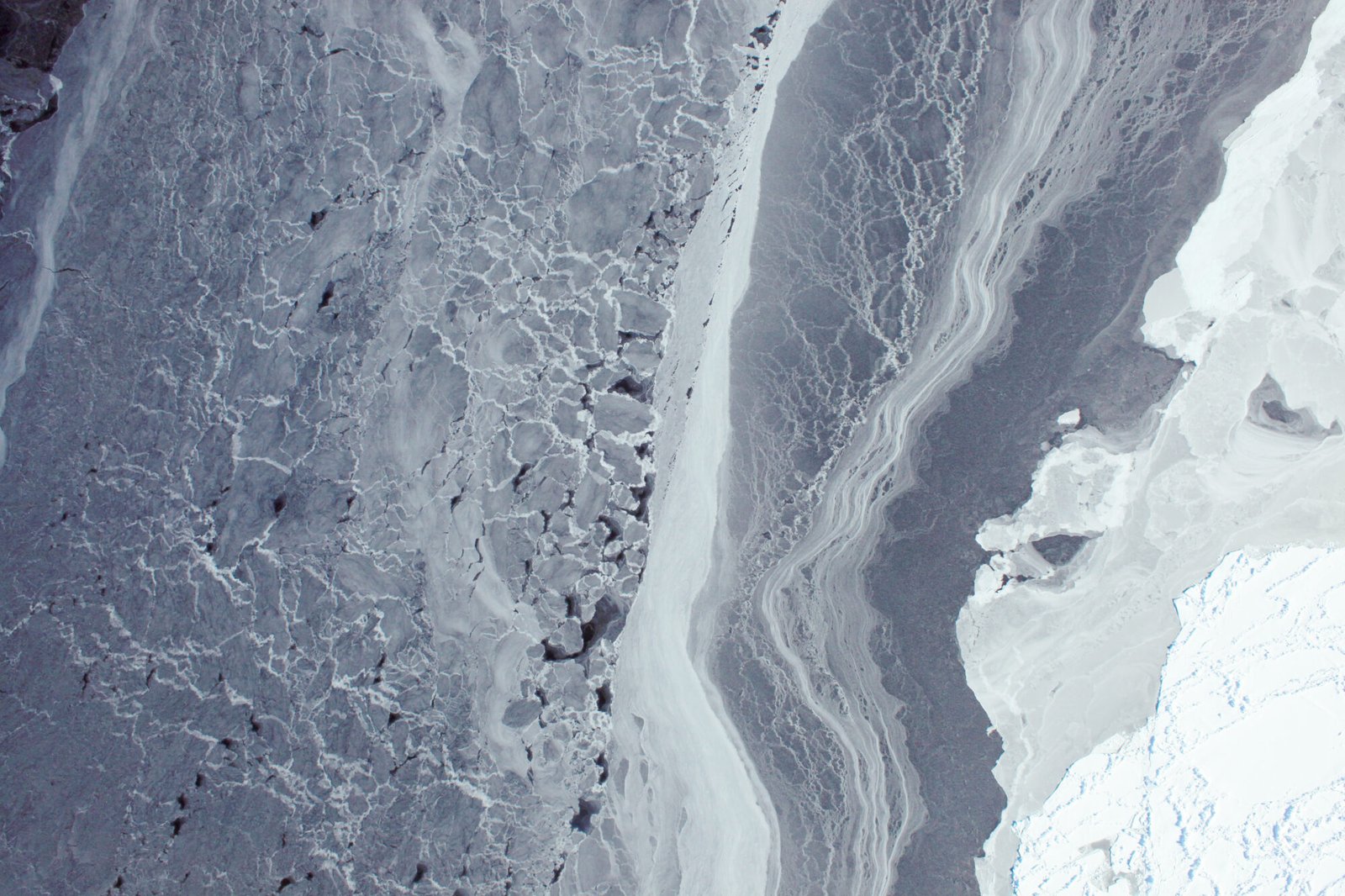
- NASA Goddard Space Flight Center from Greenbelt, MD, USA, Wikimedia Commons, Public domain
Get the weekly research newsletter
Stay current with scholarly research without reading academic papers — one filtered digest, every Friday.