What the study found
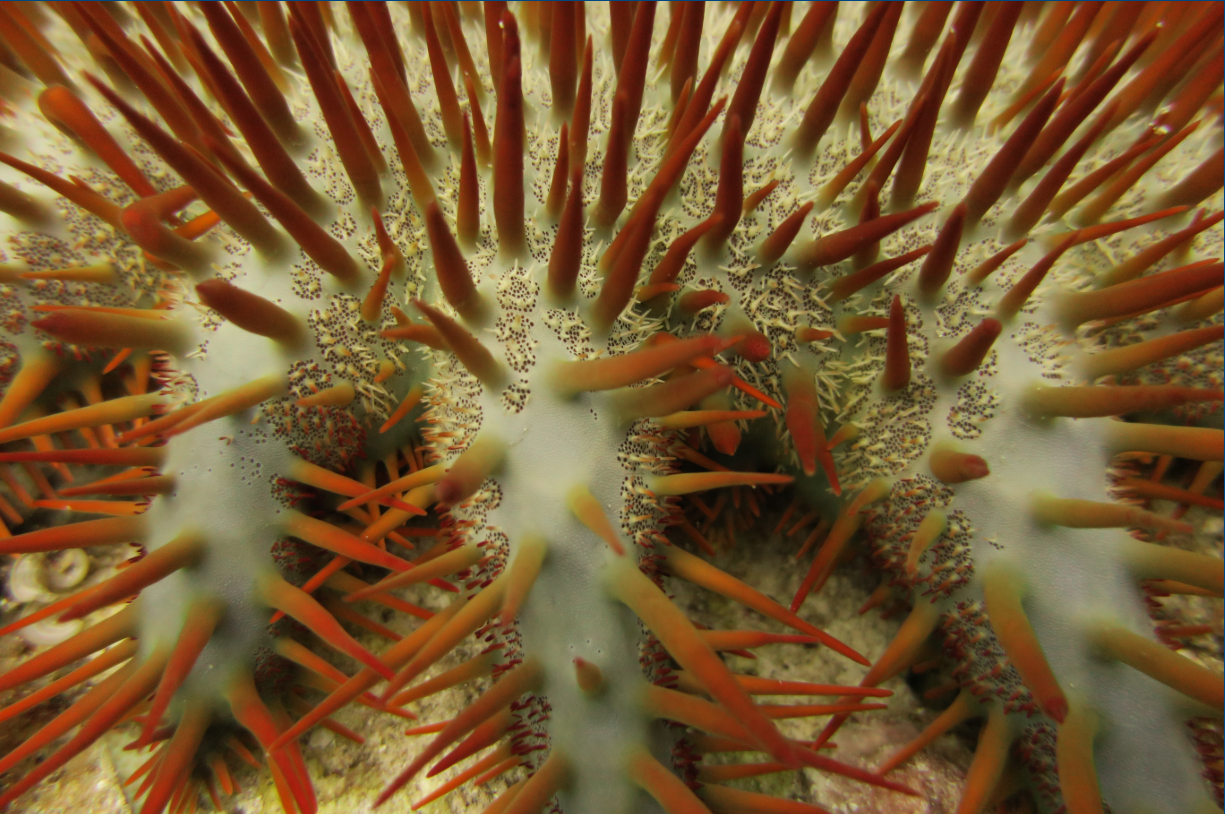
The study found that two overabundant echinoderms, crown-of-thorns starfish and long-spined sea urchins, affect Australian reefs in different ways. Crown-of-thorns starfish show recurrent boom-and-bust outbreaks, while long-spined sea urchins can form high-density populations that create long-lasting urchin barrens.
Why the authors say this matters
The authors conclude that bridging research and sharing knowledge across tropical and temperate reef systems could improve understanding of these parallel problems. They also state that spatially structured management aimed at prevention is more efficient and cost effective than reactive control efforts.
What the researchers tested
The researchers synthesized and compared the ecology and management of crown-of-thorns starfish and Centrostephanus rodgersii, focusing on the Great Barrier Reef and the eastern Great Southern Reef. The comparison covered population dynamics, nutritional ecology, regeneration of nutritional resources, and management by culling or harvesting.
What worked and what didn't
For both species, the abstract reports evidence that local top-down active management by culling or harvesting can be effective. It also reports large funding differences, with funding for Great Barrier Reef crown-of-thorns starfish management being more than 40 times higher than funding for Tasmanian urchin management.
What to keep in mind
This is a comparative review, so the abstract does not present new experimental results. The summary also does not describe detailed limitations beyond noting that management approaches and funding levels differ across regions.
Key points
- Crown-of-thorns starfish have recurrent boom-and-bust outbreaks on the Great Barrier Reef.
- Long-spined sea urchins can form stable, high-density populations that create urchin barrens lasting decades or more.
- The two species differ in nutritional ecology: crown-of-thorns starfish are obligate corallivores, while long-spined sea urchins are omnivores.
- The abstract reports evidence that local culling or harvesting can be effective for both species.
- Funding for Great Barrier Reef crown-of-thorns starfish management is reported to be more than 40-fold higher than funding for Tasmanian urchin management.
Disclosure
- Research title:
- Australia reefs face different prickly population patterns
- Authors:
- Sterling B. Tebbett, SD Ling, Peter C. Doll, JP Keane, Kelsey I. Miller, Morgan S. Pratchett
- Institutions:
- Australian Antarctic Division, Australian Antarctic Division, Australian Antarctic Division, Istituto di Scienze Marine del Consiglio Nazionale delle Ricerche, James Cook University, James Cook University, James Cook University, University of Tasmania, University of Tasmania, University of Tasmania
- Publication date:
- 2026-06-30
- DOI:
- 10.1071/mf25249
- OpenAlex record:
- View
- Image credit:
- NOAA (uncredited), Wikimedia Commons, Public domain
Get the weekly research newsletter
Stay current with scholarly research without reading academic papers — one filtered digest, every Friday.