Author: editor@focalinterest.com

  • Bed topography strongly affects Thwaites Glacier mass loss

    What the study found

    The study found that the shape of the bed beneath Thwaites Glacier has a first-order control on accumulated mass loss. It also found that final sea-level rise does not simply increase with finer bed resolution.

    Why the authors say this matters

    The authors conclude that continued high-resolution mapping of bed topography is important. The findings indicate that current projections may underestimate uncertainty linked to unresolved bed features.

    What the researchers tested

    The researchers used a coupled model of subglacial hydrology, meaning the movement of water beneath the glacier, and ice dynamics, meaning glacier motion and change. They ran projections of Thwaites Glacier evolution from several different bed topographies.

    What worked and what didn't

    Different bed topographies produced different amounts of accumulated mass loss, showing a strong effect of the underlying bed. Coupling subglacial hydrology and ice dynamics resulted in faster mass loss. However, final sea-level rise did not scale with bed resolution.

    What to keep in mind

    The abstract does not describe specific numerical values, confidence ranges, or detailed limitations beyond the issue of unresolved bed features. The study focuses on Thwaites Glacier in West Antarctica, so its findings are specific to that setting and model setup.

    • Bed topography had a first-order control on accumulated mass loss.
    • Final sea-level rise did not scale with bed resolution.
    • Coupling subglacial hydrology with ice dynamics led to faster mass loss.
    • The authors say current projections may underestimate uncertainty from unresolved bed features.
    • The study used several different bed topographies in a coupled glacier model.
  • f-URS matched stone clearance with better short-term safety than mPCNL

    f-URS matched stone clearance with better short-term safety than mPCNL

    What the study found

    The study found that flexible ureteroscopy (f-URS, a scope-based procedure through the urinary tract) and mini-percutaneous nephrolithotomy (mPCNL, a small-keyhole kidney stone procedure) had comparable stone clearance in patients with a solitary kidney and 1.0–2.0 cm renal stones. The authors report that f-URS also had a better early safety profile and better short-term preservation of renal function.

    Why the authors say this matters

    The authors conclude that f-URS may be a viable nephron-sparing option, meaning a treatment intended to preserve kidney tissue, for this high-risk population. They also say the findings are hypothesis-generating and that more prospective, long-term studies are needed to test whether the functional benefits last.

    What the researchers tested

    This was a retrospective study of 50 solitary-kidney patients treated between June 2018 and April 2024. The researchers compared 26 patients who received mPCNL with 24 who received f-URS, using 3-month stone-free rate, Clavien–Dindo complication grading, hemoglobin change, hospital stay, serum creatinine, and estimated glomerular filtration rate (eGFR, a measure of kidney filtering function) at baseline, 72 hours, and 1 month.

    What worked and what didn't

    Stone-free rates were similar between groups: 96.2% for mPCNL and 91.7% for f-URS, with no statistically significant difference reported. f-URS showed less hemoglobin decline, shorter hospitalization, no Grade II complications, and greater improvement in short-term kidney function measures; all Grade II complications, which required transfusion, occurred in the mPCNL group.

    What to keep in mind

    The study was retrospective and included only 50 patients, so the authors treat the findings as preliminary. The abstract also states that longer-term durability of the renal function differences was not established and needs prospective follow-up.

    • Both procedures achieved high stone-free rates in solitary-kidney patients with 1.0–2.0 cm renal stones.
    • f-URS had less hemoglobin decline than mPCNL.
    • Hospital stay was shorter with f-URS than with mPCNL.
    • All Grade II complications, requiring transfusion, occurred in the mPCNL group.
    • At 1 month, f-URS showed greater improvement in serum creatinine and eGFR.
  • Extended lymph node dissection may improve bladder cancer-specific survival

    What the study found

    Extended pelvic lymph node dissection, which removes more lymph nodes around the pelvis during radical cystectomy, likely improves bladder cancer-specific survival compared with standard dissection. It may make little or no difference to overall survival or recurrence-free survival, and it likely increases severe complications.

    Why the authors say this matters

    The authors conclude that the findings show a trade-off between possible cancer-specific benefit and a higher risk of serious complications for people undergoing radical cystectomy, which is surgery to remove the bladder. The study suggests this difference may matter when choosing between extended and standard pelvic lymph node dissection.

    What the researchers tested

    The researchers updated a systematic review of randomized controlled trials comparing extended versus standard pelvic lymph node dissection in people undergoing radical cystectomy for muscle-invasive or treatment-refractory non-muscle-invasive urothelial carcinoma of the bladder. They searched multiple databases, trial registries, and conference proceedings through 24 September 2025, then combined study results with meta-analysis and assessed certainty using GRADE.

    What worked and what didn't

    Two randomized trials with 993 participants were included. Extended dissection likely improved time to death from bladder cancer, with moderate-certainty evidence, but may have made little or no difference to time to death from any cause or time to recurrence, with low-certainty evidence for those outcomes. It likely increased grade III-V complications and likely had similar rates of grade I-II complications; no studies reported disease-specific quality of life.

    What to keep in mind

    The evidence came from only two randomized trials, and the certainty was moderate to low for most outcomes, mainly because of imprecision. The available summary does not describe disease-specific quality of life results because none were reported, and the findings apply to the types of bladder cancer and surgery studied here.

    • Two randomized trials with 993 participants compared extended and standard pelvic lymph node dissection during radical cystectomy.
    • Extended dissection likely improved bladder cancer-specific survival.
    • It may have little or no effect on overall survival or recurrence-free survival.
    • Extended dissection likely increased severe postoperative complications.
    • Minor complications were likely similar between the two approaches.
    • No studies reported disease-specific quality of life.
  • Kerr-de Sitter black holes show stronger repetitive Penrose energy performance

    What the study found

    The study found that repetitive Penrose process behavior in Kerr-de Sitter black holes differs from that in Kerr black holes in several ways. In particular, Kerr-de Sitter black holes can show higher energy return on investment and higher single-extraction energy capability, and these outcomes vary with the cosmological parameter and decay radius.

    Why the authors say this matters

    The authors say the work extends earlier findings on repetitive Penrose processes in black holes to the Kerr-de Sitter case. The study suggests that the cosmological parameter influences how much energy can be extracted and how efficiently the process works.

    What the researchers tested

    The researchers studied the repetitive Penrose process in Kerr-de Sitter black holes and examined how the cosmological parameter affects it. They compared the results with Kerr black holes and looked at energy return on investment, single-extraction energy capability, energy utilization efficiency, and extracted energy across different decay radii.

    What worked and what didn't

    The results show that Kerr-de Sitter black holes have higher energy return on investment and higher single-extraction energy capability than Kerr black holes. The larger the cosmological parameter, the stronger these two measures became. At lower decay radius, Kerr black holes had higher energy utilization efficiency and more extracted energy after the repetitive Penrose process finished, but at higher decay radius the Kerr-de Sitter black hole showed higher values because of the stopping condition of the iteration.

    What to keep in mind

    The abstract does not describe experimental limitations or observational data. The comparison is limited to the repetitive Penrose process, Kerr and Kerr-de Sitter black holes, and the variables named in the abstract.

    • Kerr-de Sitter black holes can have higher energy return on investment than Kerr black holes in the repetitive Penrose process.
    • A larger cosmological parameter strengthens the energy return on investment and single-extraction energy capability.
    • At lower decay radius, Kerr black holes show higher energy utilization efficiency and more extracted energy after completion.
    • At higher decay radius, Kerr-de Sitter black holes show higher energy utilization efficiency and more extracted energy.
    • The differences are linked in the abstract to the stopping condition of the iteration.
  • Variable-stiffness anchors performed better at high and room temperatures

    What the study found

    The study found that a three-segment bonded anchorage system with variable stiffness performed well across temperatures from -20°C to 70°C. The best-performing configuration in the reported tests was LTC3, which showed higher equivalent shear stiffness and more uniform stress distribution than the other stiffness distributions.

    Why the authors say this matters

    The authors say variable-stiffness load transfer components, or LTCs, can reduce stress concentration in bonded carbon fiber-reinforced polymer anchors, and their results address how these systems behave across a wide temperature range. The study suggests this is relevant for improving anchorage efficiency and reducing damage in ribbed carbon fiber-reinforced polymer bar systems.

    What the researchers tested

    The researchers tested a three-segment bonded anchorage system using high-performance epoxy adhesive modified with 200-mesh quartz sand to adjust stiffness distribution. They carried out monotonic tensile tests on 62 specimens across three stiffness-ratio distributions (LTC1 to LTC3), three bond lengths (200 to 300 mm), and four temperatures (-20°C, 0°C, 20°C, and 70°C).

    What worked and what didn't

    At 20°C, LTC3 reached an average equivalent shear stiffness of 410.95 kN/mm, which was 1.84 times LTC1 and 1.68 times LTC2. At 70°C, stiffness dropped markedly, but LTC3 with a 250 mm bond length still maintained K = 60.00 kN/mm, kept shear stress more uniform, and showed anchorage efficiency above 95% across the tested temperatures. An optimized configuration with an outer diameter of 45 mm and a 1:2:3 segment ratio reduced stress concentration and lowered the matrix damage index by 16.6% at room temperature.

    What to keep in mind

    The abstract reports tests on a specific anchorage design, specimen set, and temperature range, so the findings are limited to those conditions. The available summary does not describe other limitations beyond the tested ranges and the need for finite element validation before parametric investigation.

    • A three-segment variable-stiffness bonded anchorage was tested for ribbed CFRP bars.
    • LTC3 had the highest reported equivalent shear stiffness at 20°C.
    • Performance declined at 70°C, but LTC3 still kept anchorage efficiency above 95%.
    • The optimized 45 mm outer diameter and 1:2:3 segment ratio reduced stress concentration.
    • The matrix damage index fell by 16.6% at room temperature in the optimized case.
  • Genetic testing choices in pediatric endocrine disorders

    What the study found

    The review says genetic testing is important in pediatric endocrine disorders because it can help establish the cause, guide targeted therapy, refine prognosis, and support genetic counseling. It also says test selection should be based on the child’s clinical features, biochemical findings, and the suspected genetic mechanism.

    Why the authors say this matters

    The authors state that genetic testing can improve diagnosis and management in pediatric endocrine disorders. They also suggest that understanding the strengths and limitations of each test is necessary to choose the most appropriate one.

    What the researchers tested

    This is a review article that presents an overview of commonly available genetic tests used in pediatric endocrine disorders. It groups testing methods into classical cytogenetics, molecular cytogenetic techniques, and sequencing-based approaches, and it includes case scenarios plus guidance on handling variants of uncertain significance in next-generation sequencing.

    What worked and what didn't

    The abstract does not report new experimental results. It states that test choice should match the clinical question and that each method has strengths and limitations; it also notes that variants of uncertain significance require careful handling in the next-generation sequencing era.

    What to keep in mind

    This summary is based only on the abstract, so detailed limitations are not described. The article appears to be a practical review rather than a study reporting original data.

    • Genetic testing is described as important for diagnosing pediatric endocrine disorders.
    • The authors say test selection should be driven by phenotype, biochemical findings, and suspected genetic mechanism.
    • The review covers three broad testing categories: classical cytogenetics, molecular cytogenetic techniques, and sequencing-based approaches.
    • The article includes case scenarios and guidance on variants of uncertain significance in next-generation sequencing.
  • Uncertain neutron-capture data affect r-process abundance estimates

    What the study found

    The study found that uncertainties in s-process isotopic abundances can make some r-process residuals significantly uncertain. It also identified a short list of isotopes that are good candidates for improved neutron-capture measurements.

    Why the authors say this matters

    The authors conclude that refining key neutron-capture cross sections could improve the r-process isotopic abundance pattern used as a benchmark in stellar models of explosive nucleosynthesis. They also say the work provides a practical way to prioritize future experiments at CERN n_TOF, a neutron time-of-flight facility used for measuring neutron-capture reactions.

    What the researchers tested

    The researchers revisited how r-process residuals are derived by using updated solar abundances, s-process contributions, and a simplified approach to estimate uncertainty. They assumed that relative uncertainty in s-process isotopic abundances scales linearly with Maxwellian Averaged Cross Section (MACS) uncertainties from the KADoNiS data library.

    What worked and what didn't

    Using this approach, they identified a subset of isotopes for which the r-process residuals remain significantly uncertain. They also produced a short list of isotopes that they say are prime candidates for future (n,γ) measurements, where (n,γ) means neutron-capture reactions that emit gamma rays.

    What to keep in mind

    The abstract describes a simplified uncertainty treatment, so the results are framed as a practical prioritization rather than a full reanalysis. The available summary does not give the specific isotope list or detail any experimental outcomes.

    • Uncertainties in s-process abundance estimates propagate into r-process residuals.
    • The authors used updated solar abundances and published s-process contributions.
    • They linked abundance uncertainty to MACS uncertainties from KADoNiS.
    • A subset of isotopes was identified as having significantly uncertain r-process residuals.
    • The study proposes targets for future neutron-capture measurements at CERN n_TOF.
  • Affine model gives explicit valuation formulas for insured contracts

    What the study found

    The study proposes a general affine approach for valuing insurance contracts with guarantees, and it yields explicit valuation formulas for variable annuities and related products. The authors report that the framework can model financial markets, mortality, and policyholder behaviour together, while allowing dependence between mortality and equity dynamics.

    Why the authors say this matters

    The authors say medium- and long-term insurance products need participation in equity market returns to stay competitive, but guarantees are needed to remove downside risk. The study suggests that a unified insurance-finance framework with analytical tractability may help value these contracts in a flexible way.

    What the researchers tested

    The researchers studied a general setup for jointly modelling financial markets, mortality, and policyholder behaviour. They used affine processes, a class of stochastic processes that often allows explicit formulas, and modelled surrender intensities as functions of the driving affine process.

    What worked and what didn't

    The affine framework produced explicit valuation formulas for variable annuities and related contracts. It also permitted flexible dependence between mortality and equity dynamics, and it introduced endogenous market dependence into lapse behaviour through surrender intensities. The abstract does not report a comparison with other models or any failed cases.

    What to keep in mind

    The abstract does not describe empirical data, numerical tests, or limitations of the approach. It also does not state which contract types beyond variable annuities were evaluated in detail.

    • The paper proposes an affine framework for valuing insurance products with guarantees.
    • It gives explicit valuation formulas for variable annuities and related contracts.
    • The model jointly handles financial markets, mortality, and policyholder behaviour.
    • Surrender intensities are linked to the driving affine process, creating market-dependent lapse behaviour.
    • The abstract does not report empirical validation or specific limitations.
  • Multimodal dataset improves land cover and crop mapping benchmarks

    What the study found

    The study introduces FLAIR-HUB, a large-scale multimodal land cover dataset with 20 cm annotations covering 2528 km² of France. The authors report that using nearly all available modalities gave the best land cover performance, and that multimodal fusion and fine-grained classification are complex.

    Why the authors say this matters

    The authors conclude that FLAIR-HUB provides a valuable foundation for supervised, self-supervised, and transfer learning in Earth Observation research. They also say the dataset and benchmarks can support progress in land cover and crop mapping.

    What the researchers tested

    The researchers built a benchmark using six aligned data sources: aerial imagery, Sentinel-2 optical multi-spectral time series, Sentinel-1 synthetic aperture radar (SAR) time series, high-resolution SPOT satellite images, topographic data, and historical aerial images. They evaluated multimodal fusion and deep learning models, including convolutional neural networks and transformers, and also explored multi-task learning.

    What worked and what didn't

    The best land cover result reported was 78.2% accuracy and 65.8% mean Intersection over Union, achieved using nearly all modalities. The abstract says the benchmarks underscore the complexity of multimodal fusion and fine-grained classification, but it does not provide detailed per-model comparisons in the summary.

    What to keep in mind

    The available summary does not describe detailed limitations beyond noting the complexity of multimodal fusion and fine-grained classification. It also does not give full results for every tested model, task, or modality combination.

    • FLAIR-HUB is a large-scale multimodal land cover dataset covering 2528 km² of France.
    • The dataset includes six aligned modalities, from aerial imagery to satellite time series and historical aerial images.
    • Annotations are very high resolution, at 20 cm, supporting fine-grained land cover description.
    • The best land cover performance reported was 78.2% accuracy and 65.8% mean Intersection over Union.
    • The strongest result used nearly all modalities rather than a single source.
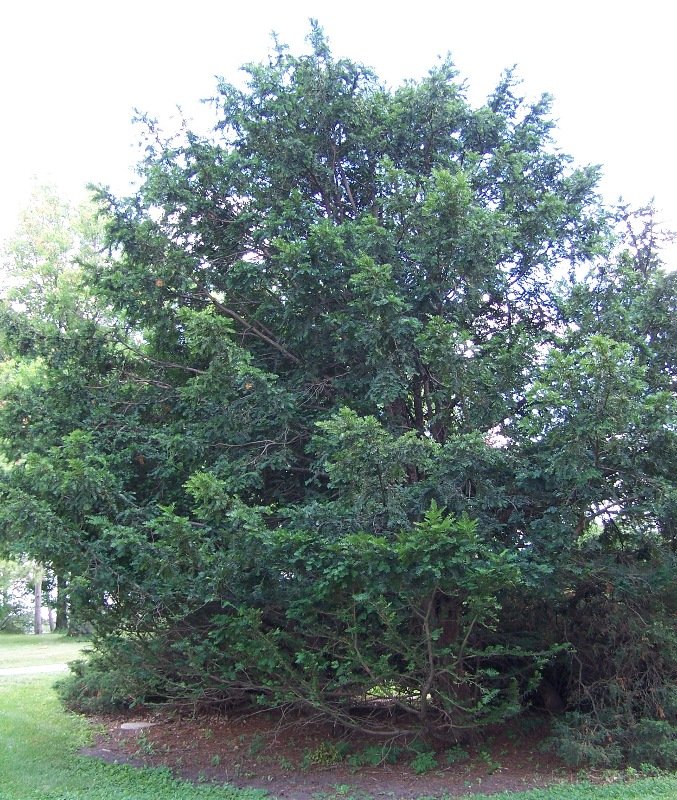
  • Climate change may shift suitable ranges of four Taxus species northward

    Climate change may shift suitable ranges of four Taxus species northward

    What the study found

    The study found that the four Taxus species examined have different current suitable habitats in China, and that future climate scenarios may change those habitats in different ways. The authors report that the distribution centers are predicted to move toward higher latitudes over time.

    Why the authors say this matters

    The authors say this is important for conserving wild Taxus resources, supporting artificial propagation, and guiding sustainable development. They conclude that the results provide a reference for conservation strategies and introduction and cultivation initiatives.

    What the researchers tested

    The researchers used the MaxEnt model, a species distribution modeling approach, to estimate where four Taxus species could grow under current climate conditions and under four future shared socioeconomic pathways (SSP126, SSP245, SSP370, and SSP585). They examined three future time periods: the 2050s, 2070s, and 2090s, and assessed environmental factors linked to distribution.

    What worked and what didn't

    The models performed well, with area under the curve values above 0.9. The coldest monthly minimum temperature was the main environmental factor affecting distribution for most species, while human footprint was the main factor for Taxus cuspidata. Suitable area was predicted to expand for Taxus wallichiana and Taxus wallichiana var. chinensis, but to both expand and contract for Taxus wallichiana var. mairei and Taxus cuspidata.

    What to keep in mind

    The summary provided does not describe experimental field validation beyond the modeling approach. The abstract also does not give detailed uncertainty estimates for the future projections or explain how strongly each future scenario differed from the others.

    • Four Taxus species in China were modeled under current and future climate scenarios.
    • The coldest monthly minimum temperature was the main driver for most species.
    • Taxus cuspidata was most influenced by human footprint rather than temperature.
    • Suitable habitat was predicted to expand for Taxus wallichiana and Taxus wallichiana var. chinensis.
    • Distribution centroids were predicted to shift toward higher latitudes over time.