Author: editor@focalinterest.com

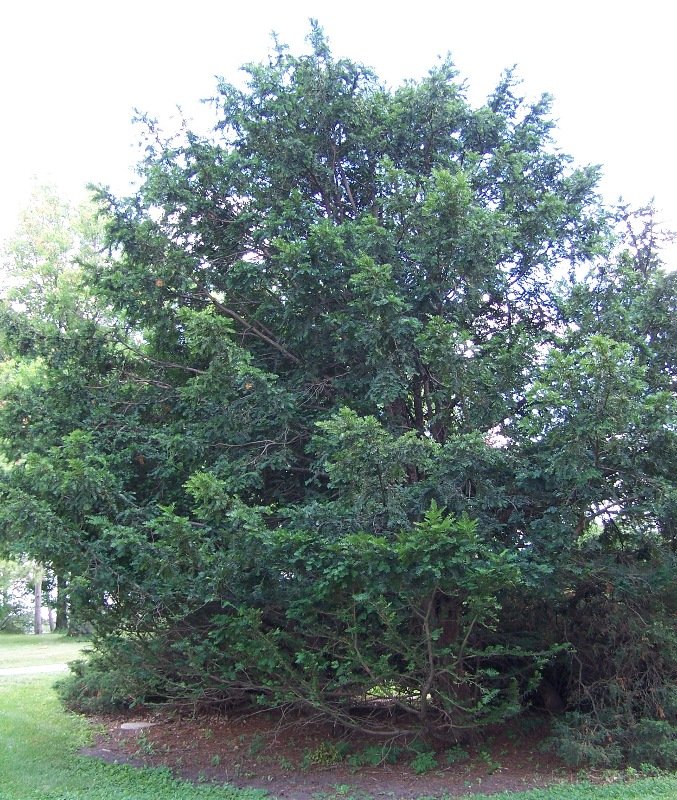
  • Climate change may shift suitable ranges of four Taxus species northward

    Climate change may shift suitable ranges of four Taxus species northward

    What the study found

    The study found that the four Taxus species examined have different current suitable habitats in China, and that future climate scenarios may change those habitats in different ways. The authors report that the distribution centers are predicted to move toward higher latitudes over time.

    Why the authors say this matters

    The authors say this is important for conserving wild Taxus resources, supporting artificial propagation, and guiding sustainable development. They conclude that the results provide a reference for conservation strategies and introduction and cultivation initiatives.

    What the researchers tested

    The researchers used the MaxEnt model, a species distribution modeling approach, to estimate where four Taxus species could grow under current climate conditions and under four future shared socioeconomic pathways (SSP126, SSP245, SSP370, and SSP585). They examined three future time periods: the 2050s, 2070s, and 2090s, and assessed environmental factors linked to distribution.

    What worked and what didn't

    The models performed well, with area under the curve values above 0.9. The coldest monthly minimum temperature was the main environmental factor affecting distribution for most species, while human footprint was the main factor for Taxus cuspidata. Suitable area was predicted to expand for Taxus wallichiana and Taxus wallichiana var. chinensis, but to both expand and contract for Taxus wallichiana var. mairei and Taxus cuspidata.

    What to keep in mind

    The summary provided does not describe experimental field validation beyond the modeling approach. The abstract also does not give detailed uncertainty estimates for the future projections or explain how strongly each future scenario differed from the others.

    • Four Taxus species in China were modeled under current and future climate scenarios.
    • The coldest monthly minimum temperature was the main driver for most species.
    • Taxus cuspidata was most influenced by human footprint rather than temperature.
    • Suitable habitat was predicted to expand for Taxus wallichiana and Taxus wallichiana var. chinensis.
    • Distribution centroids were predicted to shift toward higher latitudes over time.
  • Performance expectancy, trust, compatibility, and information quality shaped blockchain intention

    What the study found

    The study found that accountants’ intentions to use blockchain technology were significantly influenced by performance expectancy, compatibility, trust, and accounting information quality. Performance expectancy means the expectation that a technology will improve job performance.

    Why the authors say this matters

    The authors suggest these findings matter because blockchain technology in accounting information systems is described as offering benefits for data integrity, transparency, and the productivity of the accounting profession. They also conclude that Indonesian accountants place strong emphasis on expected performance improvements and the reliability of information when considering adoption.

    What the researchers tested

    The researchers examined factors affecting accountants’ intention to adopt blockchain technology in financial accounting systems. They tested core UTAUT (Unified Theory of Acceptance and Use of Technology) constructs—performance expectancy, effort expectancy, and social influence—along with knowledge, job relevance, accounting information quality, trust, and compatibility.

    What worked and what didn't

    Using purposive sampling, the study collected data from 137 accountants in Indonesia and analyzed them with SEM-PLS (structural equation modeling with partial least squares) using SmartPLS 3.0. The significant influences reported were performance expectancy, compatibility, trust, and accounting information quality; effort expectancy, social influence, knowledge, and job relevance were included in the model, but the abstract does not report them as significant.

    What to keep in mind

    The abstract does not describe detailed limitations. The findings are based on 137 accountants in Indonesia, so the available summary does not state whether the results apply beyond this group.

    • Accountants’ intention to use blockchain technology was significantly linked to performance expectancy, compatibility, trust, and accounting information quality.
    • The study also tested effort expectancy, social influence, knowledge, and job relevance, but the abstract does not report these as significant.
    • Data came from 137 accountants in Indonesia and were analyzed with SEM-PLS using SmartPLS 3.0.
    • The authors note blockchain technology in accounting information systems is associated with data integrity, transparency, and productivity benefits.
    • The authors conclude Indonesian accountants emphasize expected performance improvements and reliable information when considering adoption.
  • Earliest octopuses were giant Cretaceous marine predators

    What the study found

    The study found evidence that the earliest finned octopuses, called Cirrata, were invertebrate top predators in Late Cretaceous oceans. The authors report that these animals may have reached about 7 to 19 meters in total length and could have rivaled giant marine reptiles.

    Why the authors say this matters

    The authors conclude that their findings show cephalopods, a group that includes octopuses, and marine vertebrates independently evolved powerful jaws and the loss of external skeletons to become large, intelligent predators. They suggest this changes the picture of who occupied the top of marine food chains during the so-called age of vertebrates.

    What the researchers tested

    The researchers examined exceptionally well-preserved fossil jaws from Late Cretaceous sediments, dated to about 100 to 72 million years ago. They used the jaws' size and wear patterns to identify the animals as early finned octopuses and to infer aspects of feeding behavior.

    What worked and what didn't

    The fossil jaws were large enough to support a calculated total length of about 7 to 19 meters. Extensive wear suggests the animals crushed hard skeletons, and asymmetric wear patterns indicate lateralized behavior, which the authors interpret as a sign of advanced intelligence.

    What to keep in mind

    The conclusions are based on fossil jaws and their wear, not on complete animals, so the rest of the body form is inferred rather than directly observed. The abstract does not describe other limitations.

    • The earliest finned octopuses are identified as top predators from the Late Cretaceous.
    • Fossil jaws show extensive wear consistent with crushing hard skeletons.
    • Asymmetric wear patterns are reported as evidence of lateralized behavior.
    • The animals are estimated to have been about 7 to 19 meters long.
    • The authors say cephalopods and marine vertebrates convergently evolved powerful jaws and loss of superficial skeletons.
  • JPEG texture compression performs well for real-time rendering

    What the study found

    The study found that JPEG, a variable-rate compressed image format, can be used for real-time texture rendering on modern graphics processing units (GPUs). In the reported setup, it produced better quality and compression rates than BC1 and sometimes matched or exceeded ASTC, another texture compression format.

    Why the authors say this matters

    The authors conclude that sophisticated variable-rate compression schemes may be feasible on modern GPUs, even in virtual reality (VR). They frame this as relevant because JPEG is widely used for efficient image encoding but has not previously been used for real-time rendering because of the need for random access to individual texels, the small picture elements in a texture.

    What the researchers tested

    The researchers investigated the feasibility of using JPEG for variable-rate texture compression on modern GPUs and compared it with the GPU-friendly fixed-rate compression approaches BC1 and ASTC. They used a deferred rendering pipeline to identify the needed blocks for a frame, decode those blocks, and colorize the framebuffer's pixels.

    What worked and what didn't

    JPEG maintained significantly better quality and compression rates than BC1 in the reported comparison. Depending on the image type, it outperformed or competed with ASTC, and the JPEG rendering pipeline increased rendering duration by less than 0.3 ms on an NVIDIA RTX 4090.

    What to keep in mind

    The abstract does not describe detailed limitations beyond the need for an additional approximately 0.17 bit per pixel in the authors' approach. The findings are reported for the tested GPU pipeline and comparison formats named in the abstract.

    • JPEG was tested as a variable-rate texture compression format for real-time rendering.
    • The approach used a deferred rendering pipeline to decode only the needed blocks for each frame.
    • JPEG had better quality and compression rates than BC1 in the reported results.
    • JPEG sometimes outperformed or matched ASTC, depending on image type.
    • Rendering time increased by less than 0.3 ms on an NVIDIA RTX 4090.
  • Leveling during airship ascent reduces climbing speed and supercooling

    What the study found

    The study found that including a leveling process in models of an airship’s non-forming ascent changes the predicted climb behavior. It shows that leveling increases the vertical projection area, lowers climbing velocity, and is associated with step-like changes in velocity and supercooling.

    Why the authors say this matters

    The authors conclude that their model offers insight into lateral control and pressure differential control of airships. They also say it may help with preventing cold adhesion during ascent.

    What the researchers tested

    The researchers proposed a leveling model based on the relationship between leveling and volume expansion, and integrated it into a thermal-flight dynamic coupled prediction model. They analyzed changes in temperature, velocity, and altitude during ascent, compared their results with those of other scholars, and examined different trigger volumes and leveling rates.

    What worked and what didn't

    For an airship with a volume of 8,578 m³ and a ceiling height of 19.5 km, the preformed minimum vertical velocity was 18.7% to 40% lower than in the nonleveling case, and the forming velocity was 20% lower. The leveling process also reduced volume expansion, delayed the start of super-pressure, and lessened the supercooling phenomenon; the helium gas supercooling temperature during forming was 16% higher. The velocity peak became a step-like pattern, and this effect was stronger when leveling happened earlier and more quickly.

    What to keep in mind

    The abstract does not describe limitations in detail. The reported percentages and behaviors are tied to the modeled airship conditions and the specific case of an 8,578 m³ airship with a 19.5 km ceiling height.

    • The study adds a leveling model to a thermal-flight dynamic coupled prediction model for airship ascent.
    • Leveling increases vertical projection area and reduces climbing velocity.
    • In the tested case, minimum vertical velocity was 18.7% to 40% lower than in the nonleveling case.
    • The forming velocity was 20% lower, and the velocity peak showed a step-like pattern.
    • Leveling reduced volume expansion, delayed super-pressure, and alleviated supercooling.
  • GaAs/GeSn-MQW/Ge photodiode shows low dark current

    What the study found

    The study reports a lattice-mismatched GaAs/GeSn-multi-quantum well (MQW)/Ge n-i-p heterojunction photodiode made by semiconductor grafting. It found an atomically clean interface, no observable interdiffusion, and strong optoelectronic performance.

    Why the authors say this matters

    The authors conclude that this provides a new strategy for building lattice-mismatched optoelectronic heterojunctions. They also say the approach may be a broadly applicable platform for high-performance device integration without the usual strict lattice-matching requirement.

    What the researchers tested

    The researchers used semiconductor grafting to create a single-crystalline GaAs/GeSn-MQW/Ge n-i-p heterojunction photodiode. They also used STEM, or scanning transmission electron microscopy, to examine the GaAs/GeSn-MQW interface.

    What worked and what didn't

    The device showed a dark current density of 1.22 × 10^-7 A/cm^2 and spectral response from about 0.5 to 2 µm. It also showed photo responsivities of 0.85 A/W at 520 nm and 0.40 A/W at 1570 nm. Compared with an epitaxial reference device, dark current was reduced by more than five orders of magnitude, and responsivity increased by about 7× in the visible range and about 3× in the near-infrared.

    What to keep in mind

    The abstract does not describe detailed experimental limits, failure modes, or long-term stability. The reported findings are specific to the GaAs/GeSn-MQW/Ge system described here.

    • A GaAs/GeSn-multi-quantum well/Ge n-i-p photodiode was created through semiconductor grafting.
    • STEM showed an atomically clean GaAs/GeSn-MQW interface with no observable interdiffusion.
    • The device had a record-low dark current density of 1.22 × 10^-7 A/cm^2.
    • The spectral response extended from about 0.5 to 2 µm.
    • Responsivity reached 0.85 A/W at 520 nm and 0.40 A/W at 1570 nm.
    • Compared with an epitaxial reference device, dark current dropped by over five orders of magnitude.
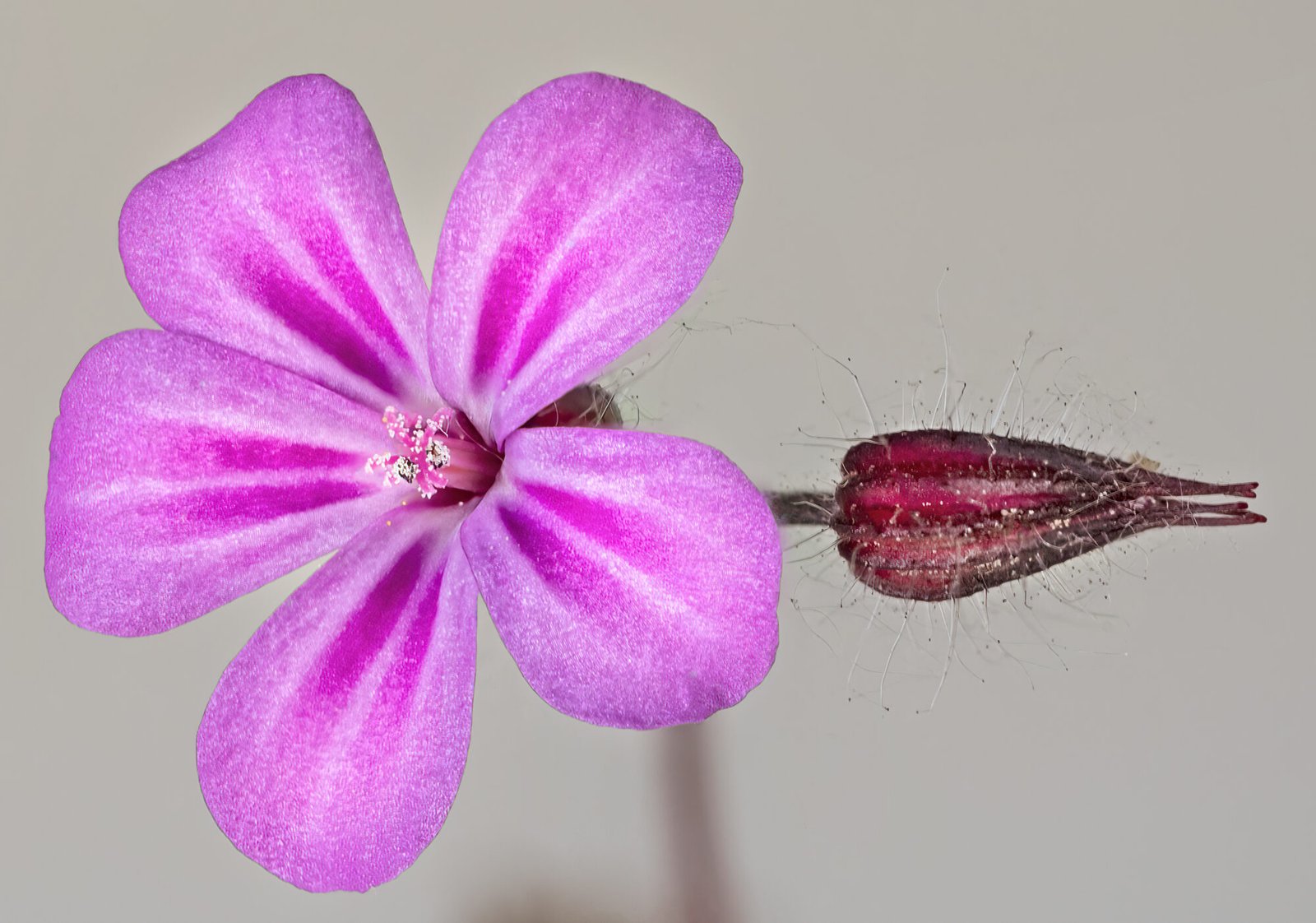
  • Geranium robertianum extract showed antioxidant, antibacterial, and antiproliferative activity

    Geranium robertianum extract showed antioxidant, antibacterial, and antiproliferative activity

    What the study found

    The study found that an ethanolic extract from the aerial parts of Geranium robertianum L. contained high levels of phenolic compounds and flavonoids, showed antioxidant and antibacterial activity, and reduced the growth of human salivary gland carcinoma cells. It also increased markers associated with oxidative stress and apoptosis, which is programmed cell death.

    Why the authors say this matters

    The authors say the plant remains understudied despite its use in traditional medicine and that it holds therapeutic potential. The study suggests the extract may be relevant because of its measured bioactivity against bacteria and A253 human salivary gland carcinoma cells.

    What the researchers tested

    The researchers analyzed an ethanolic extract made from the aerial parts of Geranium robertianum L. They measured phytochemical composition, antioxidant activity with DPPH, ABTS, and FRAP colorimetric assays, metal content, antibacterial activity, and effects on A253 human salivary gland carcinoma cells.

    What worked and what didn't

    The extract showed high phenolic and flavonoid content, and the ABTS assay indicated the highest antioxidant capacity among the tests used. It had moderate antibacterial activity against both Gram-positive and Gram-negative bacteria, with inhibition zones generally comparable to levofloxacin, but it was significantly less effective against P. aeruginosa. On A253 cells, it produced a dose-dependent antiproliferative effect, morphological changes, and increased ROS and caspase-3/7 and caspase-9 levels.

    What to keep in mind

    The abstract does not describe study limitations, and the findings are based on an extract tested in assays and on one cancer cell line. The summary also does not provide in vivo results or clinical testing.

    • The extract contained high levels of phenolic compounds and flavonoids.
    • ABTS showed the highest antioxidant capacity among the assays used.
    • The extract had moderate antibacterial activity, but it was less effective against P. aeruginosa.
    • In A253 human salivary gland carcinoma cells, the extract reduced cell growth in a dose-dependent way.
    • The extract increased ROS and caspase-3/7 and caspase-9 levels.
  • Machine learning improves ice sheet bed mapping

    What the study found

    The study found that machine learning can enhance the analysis of airborne radio-echo sounding data used to measure ice sheet thickness and map subglacial topography. The authors highlight uses in denoising, automated radar return picking, spatial interpolation, and uncertainty quantification.

    Why the authors say this matters

    The authors say this matters because subglacial topography supports modelling efforts aimed at improving sea-level rise projections. They also conclude that integrating ML throughout the workflow may help maximize the value of observations and guide future survey planning in the Polar Regions.

    What the researchers tested

    This is an overview article that summarizes recent advances in machine learning relevant to ice sheet radio-echo sounding research. The authors present examples from the Antarctic and Greenland Ice Sheets and discuss ML use in data analysis and possible roles in planning future surveys.

    What worked and what didn't

    The article reports that ML-driven approaches can outperform traditional methods for interpolation of basal topography in the examples discussed. It also says that progress has been made in ML-based automated extraction of reflecting horizons from radargrams, but it does not provide a full comparative performance breakdown in the abstract.

    What to keep in mind

    The abstract does not describe detailed experimental settings, datasets, or limitations. It also presents this as an overview of recent advances rather than a single new algorithm or a direct test of one method.

    • Airborne radio-echo sounding is the main method for measuring ice sheet thickness and deriving subglacial topography.
    • The authors identify ML use in denoising, automated radar return picking, interpolation, and uncertainty quantification.
    • Examples from Antarctica and Greenland suggest ML-driven interpolation can outperform traditional methods.
    • The abstract says progress has been made in automated extraction of reflecting horizons from radargrams.
    • The authors suggest integrating ML across the workflow may help maximize observational value and guide future surveys.
  • Periodic solutions can continue under small electromagnetic perturbations

    What the study found

    The authors study when non-circular periodic solutions of a central force problem in three-dimensional space can be continued after small electromagnetic perturbations are added. They consider both fixed-period problems and, when the perturbation does not depend on time, fixed-energy problems.

    Why the authors say this matters

    The study suggests the results can be applied to physically relevant problems in classical mechanics and to the Kepler problem in special relativity. The authors present the work as relevant to understanding periodic behavior in these central-force settings.

    What the researchers tested

    The paper examines an electromagnetic perturbation of a central force equation in three-dimensional space, with smooth, time-periodic electric and magnetic fields and a small parameter measuring perturbation size. The model includes both the classical operator and a special-relativistic operator, and the proof uses a variational bifurcation theorem applied to Hamiltonian action functionals, together with partial action-angle coordinates from the Mishchenko–Fomenko theorem.

    What worked and what didn't

    The abstract states that the authors investigate whether non-circular periodic solutions of the unperturbed problem can be continued for small nonzero perturbations. It does not give the detailed conditions or enumerate specific examples of when continuation succeeds or fails, beyond saying that non-degeneracy conditions are checked using partial action-angle coordinates.

    What to keep in mind

    The abstract does not provide the full technical assumptions, proofs, or precise criteria used in the continuation results. It also does not describe numerical tests or experimental validation, and it does not state any limitations beyond the scope of the perturbation models considered.

    • The paper studies small electromagnetic perturbations of a three-dimensional central force problem.
    • It asks whether non-circular periodic solutions of the unperturbed system can be continued when the perturbation is small.
    • Both fixed-period and, for time-independent perturbations, fixed-energy problems are considered.
    • The proof uses a variational bifurcation theorem and Hamiltonian action functionals.
    • The authors say the results apply to classical homogeneous central force problems and the Kepler problem in special relativity.
  • Lateral extra-articular tenodesis improved stability after ACL reconstruction

    What the study found

    The study found that anterior cruciate ligament reconstruction (ACL reconstruction, a surgical repair of the main knee ligament) alone did not fully restore knee stability in cadaveric knees. Adding lateral extra-articular tenodesis (a procedure that reinforces the outer side of the knee) restored several stability measures to levels comparable with the intact knee, and lateral meniscus posterior root repair was especially important for valgus rotation during pivot shift.

    Why the authors say this matters

    The authors conclude that both lateral meniscus posterior root repair and anterolateral corner reconstruction are needed to restore stability in knees with anterior cruciate ligament, Kaplan fiber, and lateral meniscus posterior root injuries. The study suggests these structures play secondary stabilizing roles in internal rotation and pivot shift loading.

    What the researchers tested

    The researchers studied ten paired cadaveric knees in a six degrees of freedom robotic system. They sequentially sectioned the anterior cruciate ligament, lateral meniscus posterior root, and Kaplan fibers, then tested the knees after anterior cruciate ligament reconstruction, lateral meniscus posterior root repair, modified Lemaire lateral extra-articular tenodesis, or combinations of these procedures. Tibial displacement and rotation were measured under internal rotation torque and a simulated pivot shift from 0° to 90° of knee flexion.

    What worked and what didn't

    Anterior cruciate ligament reconstruction alone left significant residual increases in isolated internal rotation, coupled internal rotation, coupled anterior tibial translation, and coupled valgus rotation during pivot shift. Adding modified Lemaire lateral extra-articular tenodesis, with or without lateral meniscus posterior root repair, restored isolated internal rotation, coupled internal rotation, and coupled anterior tibial translation to values comparable with the intact knee. Lateral meniscus posterior root repair in the setting of anterior cruciate ligament reconstruction and Kaplan fiber injury restored valgus rotation stability at most flexion angles.

    What to keep in mind

    This was a cadaveric biomechanical study, so the findings describe mechanical behavior rather than patient outcomes. The abstract does not describe clinical follow-up, and it does not provide limitations beyond the study setting.

    • ACL reconstruction alone did not fully restore knee stability in the cadaveric knees.
    • Adding modified Lemaire lateral extra-articular tenodesis restored several stability measures to levels comparable with the intact knee.
    • Lateral meniscus posterior root repair was most important for valgus rotation stability during pivot shift.
    • Kaplan fibers contributed additively to internal rotation and pivot shift loading in the ACL-deficient knee.
    • The study used ten paired cadaveric knees tested in a robotic system across 0° to 90° of knee flexion.