Author: editor@focalinterest.com

  • Dental prescribing can affect health beyond the mouth

    Dental prescribing can affect health beyond the mouth

    What the study found

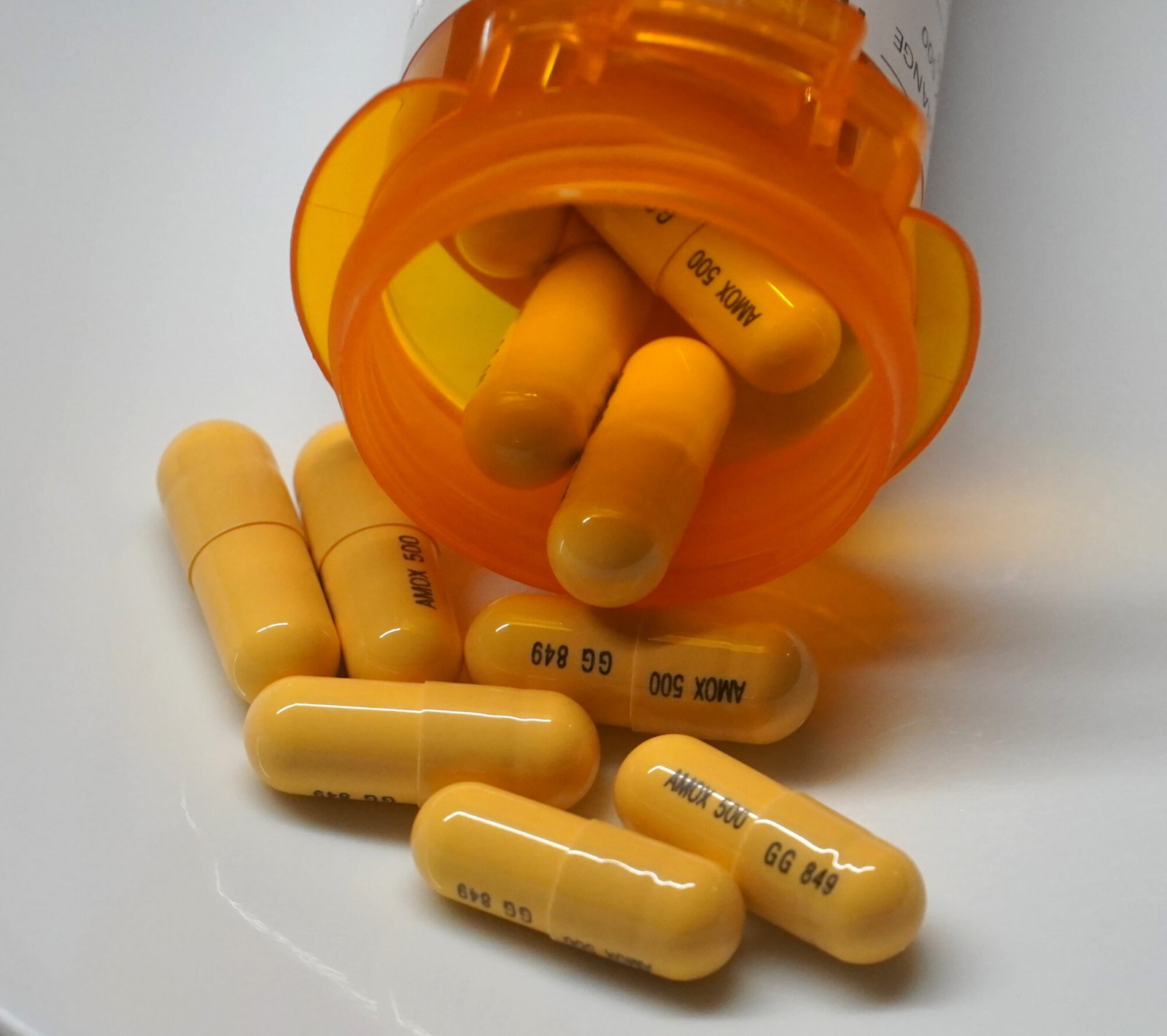
    The review found that medications commonly used in dental care can affect health beyond the mouth. These include pain medicines, antibiotics, and antiseptic mouth rinses, each with different potential effects on the body.

    Why the authors say this matters

    The authors conclude that general dental practitioners should consider systemic health when prescribing these medications. The study suggests this is important for safety and for antimicrobial and pharmacologic stewardship, meaning careful and responsible use of these drugs.

    What the researchers tested

    The paper was a review that summarized the systemic health effects of three medication classes frequently prescribed by general dental practitioners. It discussed their mechanisms, clinical implications, and stewardship opportunities.

    What worked and what didn't

    Nonsteroidal anti-inflammatory drugs, or NSAIDs, are described as first-line treatment for dental pain, but even brief use can affect renal function, blood pressure, and gastrointestinal integrity in susceptible patients. Acetaminophen may help with mild to moderate dental pain, but cumulative dosing may raise the risk of hepatotoxicity, and opioids offer no advantage over non-opioid analgesics while contributing to opioid misuse. Antibiotics may be prescribed when not clinically indicated, which can increase antimicrobial resistance, gut microbiome dysbiosis, and Clostridioides difficile infection; chlorhexidine mouth rinses can reduce oral microbial load but may disrupt nitrate-reducing oral bacteria and alter nitric oxide-mediated vascular function.

    What to keep in mind

    This summary is limited to what is stated in the abstract, which is a narrative review rather than a primary clinical study. The abstract does not describe specific search methods, study selection criteria, or the strength of evidence behind each point.

    • The review says dental medications can affect cardiovascular, renal, hepatic, metabolic, and microbiome-related health beyond the oral cavity.
    • NSAIDs may affect renal function, blood pressure, and gastrointestinal integrity in susceptible patients, even with short use.
    • Opioids are described as offering no advantage over non-opioid analgesics after some dental procedures and as contributing to misuse.
    • Antibiotics prescribed without clear indication may increase antimicrobial resistance, microbiome dysbiosis, and Clostridioides difficile infection.
    • Chlorhexidine mouth rinses can reduce oral microbial load but may also alter nitrate-reducing bacteria and nitric oxide-related vascular function.

  • Autonomous robot competes with elite table tennis players

    What the study found

    The study found that Ace, an autonomous robot system, was competitive with elite human table tennis players. The authors describe it as, to their knowledge, the first real-world autonomous system to reach that level in table tennis.

    Why the authors say this matters

    The study suggests that physical AI agents can perform complex, real-time interactive tasks. The authors say this points to broader applications in areas that require fast, precise human-robot interaction.

    What the researchers tested

    The researchers tested Ace in matches against elite and professional table tennis players under official competition rules. Ace used event-based vision sensors, which detect changes in a scene rather than full images, model-free reinforcement learning, a method that learns control through trial and reward, and high-speed robot hardware.

    What worked and what didn't

    Ace achieved several victories in matches against elite and professional players. It also showed consistent returns of high-speed, high-spin shots.

    What to keep in mind

    The abstract does not provide detailed match statistics, the number of games played, or a full description of failure cases. It also limits the claim to the reported table tennis setting and the competition conditions described.

    • Ace is described as an autonomous robot system competitive with elite human table tennis players.
    • The system combines event-based vision, model-free reinforcement learning, and high-speed robot hardware.
    • It was evaluated in matches against elite and professional players under official competition rules.
    • The abstract says Ace won several matches and returned high-speed, high-spin shots consistently.
    • The authors suggest the work points to broader applications for fast human-robot interaction.
  • Microgravity release-recapture of silica nanoparticles is demonstrated

    What the study found

    The study found that it is feasible to perform release and recapture experiments with optically trapped silica nanoparticles in microgravity, meaning very low-gravity conditions. The authors report this as the first demonstration of such setups in that environment.

    Why the authors say this matters

    The authors say levitated optomechanics, a field that studies particles held aloft by light, can greatly benefit from use in weightlessness. They also suggest the demonstration is relevant to preparing space missions on levitated optomechanics.

    What the researchers tested

    The researchers used the GraviTower Bremen, which provides up to 2.5 seconds of free fall, to operate their experiment in microgravity. They examined system performance and carried out first release-recapture experiments in which the particle was no longer trapped.

    What worked and what didn't

    The experiment was successfully operated in microgravity, and the release-recapture demonstrations were performed there. The abstract does not report detailed performance metrics, comparisons, or specific failures.

    What to keep in mind

    The abstract provides limited detail about the experimental results beyond feasibility and first demonstrations. It does not describe specific measurements, uncertainties, or limitations of the setup.

    • The paper reports the first demonstration of this type of setup in microgravity.
    • Optically trapped silica nanoparticles were used for release-recapture experiments.
    • The experiment ran in the GraviTower Bremen during up to 2.5 seconds of free fall.
    • The authors say levitated optomechanics may benefit from weightlessness.
    • The abstract does not give detailed quantitative results or failure cases.
  • Log-Sobolev inequality holds for some focusing Schrödinger Gibbs measures

    What the study found

    The authors show that the Gibbs measure for the focusing Schrödinger equation satisfies a log-Sobolev inequality when 2 ≤ p ≤ 4. For p > 4, they do not prove such an inequality; instead, they show a lower bound for the Hessian of the effective potential.

    Why the authors say this matters

    The authors conclude that, for p > 4, the known convexity-based multiscale techniques for proving log-Sobolev inequalities cannot be applied to this measure. In this setting, a log-Sobolev inequality is a functional inequality used to study the measure's behavior.

    What the researchers tested

    The study examines the Gibbs measure built by Lebowitz, Rose, and Speer for the focusing Schrödinger equation on the torus, with a cutoff on the L2 norm. The analysis considers the parameter p in the nonlinear term and checks whether the measure satisfies a log-Sobolev inequality.

    What worked and what didn't

    For 2 ≤ p ≤ 4, the measure does satisfy a log-Sobolev inequality. For p > 4, the authors establish a lower bound for the Hessian of the effective potential, but this does not allow the known convexity-based multiscale methods to be used.

    What to keep in mind

    The abstract does not describe any limitations beyond the parameter range. It also does not state whether the results extend beyond the specific Gibbs measure, torus setting, and L2 cutoff considered here.

    • The Gibbs measure for the focusing Schrödinger equation satisfies a log-Sobolev inequality when 2 ≤ p ≤ 4.
    • For p > 4, the authors establish a lower bound for the Hessian of the effective potential.
    • The authors say known convexity-based multiscale techniques cannot be applied when p > 4.
    • The measure studied is the Gibbs measure built by Lebowitz, Rose, and Speer with an L2-norm cutoff on the torus.
  • Fuzzing detects unsafe outputs in ML neurostimulation models

    What the study found

    The study found that a coverage-guided fuzzing approach, a type of automated stress testing, can detect and describe unsafe stimulation patterns in machine learning-driven neurostimulation systems. Applied to deep stimulus encoders for the retina and cortex, it revealed stimulation outputs that exceeded established safety limits.

    Why the authors say this matters

    The authors conclude that violation-focused fuzzing can make safety assessment more empirical and reproducible. They say this creates a foundation for evidence-based benchmarking, regulatory readiness, and ethical assurance in neural interfaces.

    What the researchers tested

    The researchers adapted coverage-guided fuzzing from software testing to neural stimulation. They perturbed model inputs, treated the encoders as black boxes, and tracked whether the resulting stimulation violated limits on charge density, instantaneous current, or electrode co-activation.

    What worked and what didn't

    The method systematically found diverse stimulation regimes that violated safety limits in models for the retina and cortex. Two violation-output coverage metrics identified the highest number and diversity of unsafe outputs, and they allowed comparisons across architectures and training strategies.

    What to keep in mind

    The abstract describes testing on deep stimulus encoders for the retina and cortex, so the reported findings are limited to those systems. The summary does not provide numerical results, and it does not describe limitations beyond the scope of the tested models.

    • Coverage-guided fuzzing was adapted to test ML-driven neurostimulation systems.
    • The approach checked outputs against limits on charge density, instantaneous current, and electrode co-activation.
    • Applied to retinal and cortical stimulus encoders, it found outputs that exceeded safety limits.
    • Two violation-output coverage metrics identified the most unsafe outputs and the widest range of unsafe outputs.
    • The authors say this makes safety assessment more reproducible and measurable.
  • Donation pledge reduced smartphone use and increased donations

    What the study found

    The Ulysses Donation Pledge, a low-friction digital self-control tool that lets users pledge donations for exceeding self-set screen time limits, reduced smartphone use in this pilot study. It also increased donations and raised satisfaction compared with baseline.

    Why the authors say this matters

    The authors suggest the approach may support digital well-being while better preserving user autonomy and self-regulation than more restrictive tools. They also say the findings call for further investigation of low-friction interventions as ways to empower users.

    What the researchers tested

    The researchers tested the Ulysses Donation Pledge over three weeks in a mixed experimental design with 45 participants. The intervention asked users to set their own smartphone screen time limits and pledge charity donations if they went over those limits.

    What worked and what didn't

    UDP significantly reduced smartphone usage compared with simple screen time restriction and control. It also produced a substantial increase in donations, and satisfaction increased significantly compared with baseline. The abstract does not report which parts did not work beyond noting that more restrictive tools are often abandoned.

    What to keep in mind

    This was a pilot study with a small sample and a three-week period, so the abstract does not establish long-term effects. The summary does not describe other limitations beyond the scope of the study.

    • The Ulysses Donation Pledge links smartphone overuse to donations to charity.
    • In a three-week pilot study with 45 participants, it significantly reduced smartphone use.
    • It led to a substantial increase in donations compared with restriction and control.
    • User satisfaction increased significantly compared with baseline.
    • The authors say the approach may preserve autonomy better than more restrictive digital self-control tools.
  • Pornography use problems show similar patterns across countries and groups

    What the study found

    The study found that the Moral Incongruence Model of Pornography Use appeared to apply across countries, genders, and religious affiliations. It also found weak positive links between religiosity and problematic pornography use or self-perceived addiction, and stronger links between pornography use frequency and those outcomes.

    Why the authors say this matters

    The authors conclude that the findings support the model's generalizability and its relevance to current international diagnostic guidelines. The study suggests that, regardless of cultural background, gender, or religion, similar mechanisms may underlie these pornography-related problems.

    What the researchers tested

    The researchers analyzed data from the International Sex Survey, which included 66,994 people from 34 countries, with 50.8% women. They used multi-group structural equation models to examine associations among religiosity, pornography use frequency, problematic pornography use, self-perceived addiction, and moral incongruence, across three genders and seven religious affiliations.

    What worked and what didn't

    The model was invariant across all countries, genders, and religious affiliations. Religiosity showed weak positive associations with problematic pornography use and self-perceived addiction, while pornography use frequency showed moderate-to-strong associations with both outcomes; moral incongruence strengthened the relationship between pornography use frequency and these outcomes at higher levels of moral disapproval.

    What to keep in mind

    The abstract does not describe limitations in detail. The findings are based on survey data and the specific measures and groups included in this study.

    • The model tested was invariant across countries, genders, and religious affiliations.
    • Religiosity had weak positive associations with problematic pornography use and self-perceived addiction.
    • Pornography use frequency had moderate-to-strong associations with both outcomes.
    • Moral incongruence moderated the link between pornography use frequency and the two outcomes.
    • The study used data from 66,994 participants in 34 countries.
  • Seagrass recovered in Mosquito Lagoon after 2022 hurricanes

    What the study found

    Seagrass in Mosquito Lagoon, Florida, was almost absent before the 2022 hurricanes, then declined further until March 2023 before recovering to pre-collapse levels in summer 2023 and afterward. The authors report that this recovery followed Hurricane Ian and Hurricane Nicole.

    Why the authors say this matters

    The authors conclude that constant seagrass monitoring is needed in Mosquito Lagoon to support conservation of the ecosystem. They also suggest the hurricane events may have helped spread seagrass fragments and changed water conditions, although they say more research is needed to explain the recovery.

    What the researchers tested

    The researchers used semi-monthly Harmonized Landsat Sentinel imagery from September 2022 to January 2024. They built a Random Forest Classification model for each date to estimate seagrass presence and density in Mosquito Lagoon.

    What worked and what didn't

    The method identified seagrass even when it was present in limited quantities, and the average model accuracy was 84%. Across dates, observed seagrass density ranged from 0% to 20.32%.

    What to keep in mind

    The abstract says the cause of the recovery is not yet known, and more research is needed to determine why seagrass recovered to this extent. The summary also notes that model accuracy varied depending on how much seagrass was present.

    • Seagrass in Mosquito Lagoon was almost non-existent before the 2022 hurricanes.
    • Seagrass kept declining until March 2023, then returned to pre-collapse levels in summer 2023 and later.
    • The study used a Random Forest Classification on semi-monthly Harmonized Landsat Sentinel imagery from September 2022 to January 2024.
    • Average model accuracy was 84%, and the method worked well for detecting small amounts of seagrass.
    • The authors say more research is needed to explain the recovery and that ongoing monitoring is important.
  • TSGuard improves cloud AI incident diagnosis accuracy

    What the study found

    The study reports that TSGuard, a user-centric multi-agent system, can diagnose incidents for AI workloads in the cloud immediately for users who deploy the workloads. It is described as outperforming current baselines in evaluation on Microsoft Azure incident records.

    Why the authors say this matters

    The authors say the current provider-centric incident workflow can take several days because troubleshooting is manual and many incidents must be handled. They suggest TSGuard matters because it gives users direct, immediate diagnosis and may reduce operational delays and productivity loss.

    What the researchers tested

    The researchers presented TSGuard, which uses two phases: an offline phase that mines historical on-call experiences to build domain-specific knowledge bases, and an online phase that mimics human expert diagnosis through structured reasoning and iterative trial-and-error. They evaluated it using production incident records from Microsoft Azure.

    What worked and what didn't

    TSGuard improved diagnostic accuracy by 19.8% compared with state-of-the-art baselines. It also reduced average verification time by 63.4% compared with the sequential execution baseline.

    What to keep in mind

    The available summary does not describe detailed limitations beyond the evaluation setting. The reported results come from production incident records from Microsoft Azure, so the abstract alone does not show how the system performs in other environments.

    • TSGuard is a user-centric multi-agent system for diagnosing incidents in cloud AI workloads.
    • It builds domain-specific knowledge bases from historical on-call experiences.
    • It uses structured reasoning and iterative trial-and-error to imitate human expert diagnosis.
    • In Microsoft Azure incident records, it improved diagnostic accuracy by 19.8%.
    • It reduced average verification time by 63.4% versus a sequential execution baseline.
  • News coverage of Sponge City often matches research but lacks nuance

    News coverage of Sponge City often matches research but lacks nuance

    What the study found

    The study found that online news coverage of China's Sponge City Program generally aligned with academic research on the program's main functions and challenges. However, the media often did not give detailed nuance about how much the program can reduce flooding.

    Why the authors say this matters

    The authors conclude that online media plays a critical role in shaping public perceptions and influencing decision-making for Sponge City–type approaches. The study suggests that better understanding of flood processes and the program itself is needed to support policy changes.

    What the researchers tested

    The researchers reviewed 786 online news articles published between 2014 and 2022. They compared media coverage with academic research on the Sponge City Program, which is China's urban water management program for handling rainstorm risks.

    What worked and what didn't

    Media reports and academic research were aligned on the program's high-level functions, mainly urban water management, along with ecological, socio-cultural, and economic co-functions. They also aligned on major challenges, including financial constraints, technical difficulties, and governance issues. The main shortcoming described was a lack of detail and nuance about the extent of flood mitigation.

    What to keep in mind

    The abstract does not describe limitations of the review beyond the noted lack of nuance in media coverage. The summary also does not provide article-level details on differences across regions, outlets, or time periods.

    • The review analyzed 786 online news articles from 2014 to 2022.
    • News coverage generally matched academic research on the Sponge City Program's main functions.
    • Coverage also reflected major challenges such as financial, technical, and governance problems.
    • A key gap was limited nuance about how much the program can mitigate flooding.
    • The authors say online media can shape public perceptions and decision-making.