Author: editor@focalinterest.com

  • Wheat amino acid digestibility varied across samples in pullets

    What the study found

    The study found that wheat samples from different sources varied considerably in chemical composition, and that standardized ileal amino acid digestibility differed significantly among the samples. The authors report that prediction equations based on wheat chemical properties could estimate digestibility for most amino acids in pullets.

    Why the authors say this matters

    The authors say this matters because wheat is a major alternative to corn in layer diets, and a lack of established assessment and prediction models limits precision formulation. The study suggests that the equations could be a tool for rapid and accurate evaluation of the amino acid nutritional value of wheat in pullets.

    What the researchers tested

    The researchers evaluated 10 wheat samples from different sources for physical properties, conventional nutritional components, amino acid profiles, and standardized ileal amino acid digestibility, which means digestibility measured at the end of the small intestine. They fed the samples to Jingfen No.8 pullets during brooding (days 28-31) and growing (days 92-95) periods, using 11 dietary groups that included a nitrogen-free diet and 10 test diets in which wheat was the sole amino acid source.

    What worked and what didn't

    The chemical components of the wheat samples showed considerable variation, with coefficients of variation above 10% for ether extract, crude fiber, neutral detergent fiber, calcium, and total phosphorus. The standardized ileal digestibility values of the 15 analyzed amino acids differed significantly among wheat samples, and most amino acids were significantly correlated with different chemical measures in each growth period; the best-fitting brooding-period model was the serine equation with R² = 0.869, while four growing-period equations had R² > 0.80.

    What to keep in mind

    The abstract does not describe limitations beyond the fact that the study used 10 wheat samples and one pullet strain. The summary also does not provide the full set of prediction equations or detail how well each amino acid model performed beyond the reported best fits.

    • Wheat samples from different sources varied substantially in chemical composition.
    • Standardized ileal amino acid digestibility differed significantly across the wheat samples.
    • Digestibility in pullets was linked to different wheat properties in brooding and growing periods.
    • A serine-based equation had the best brooding-period fit, with R² = 0.869.
    • Four growing-period prediction equations had R² values above 0.80.
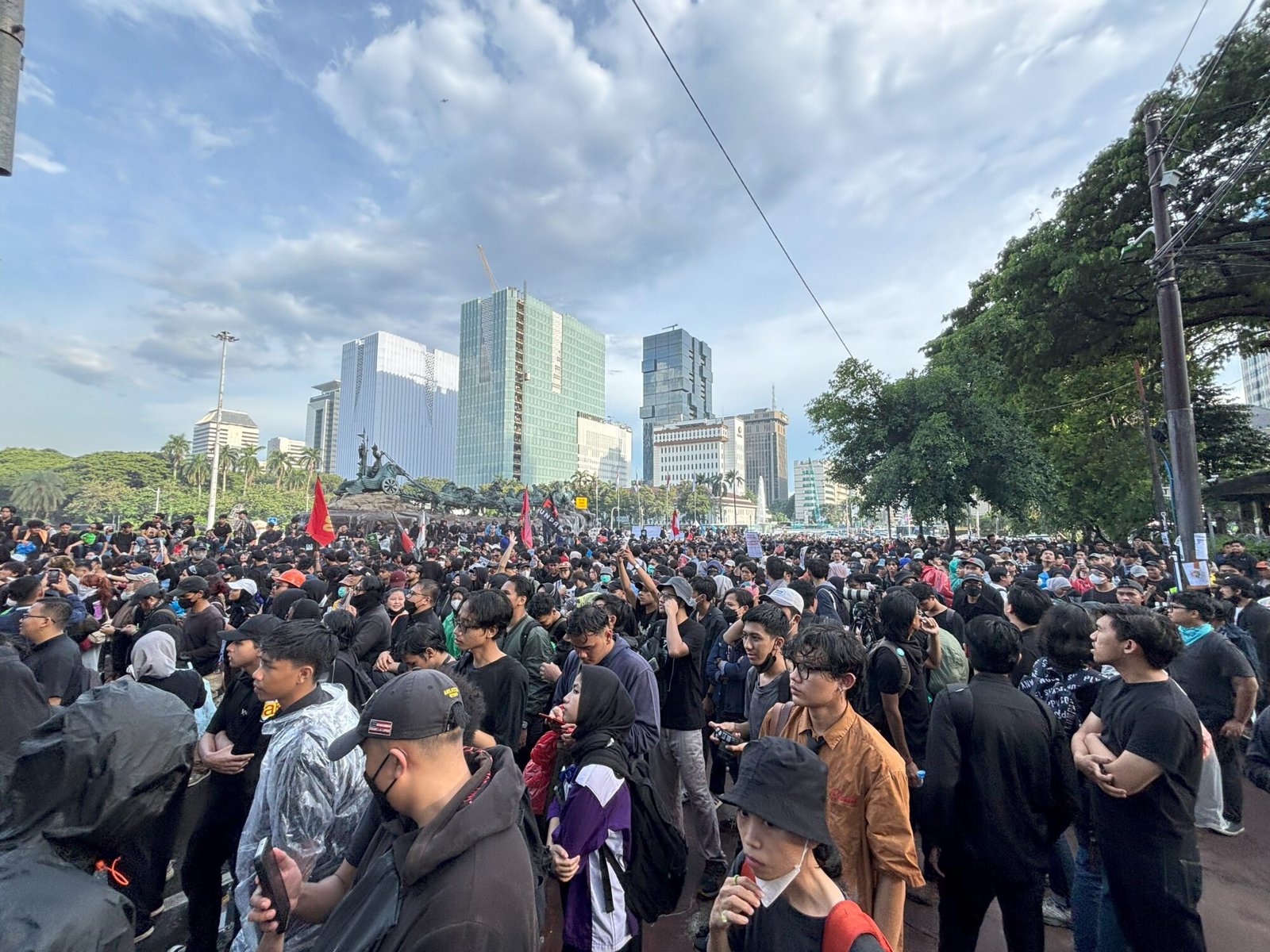
  • Social media helped unify Indonesian protest grievances

    Social media helped unify Indonesian protest grievances

    What the study found

    The study found that social media facilitated decentralized mobilization during the Indonesian demonstrations of August 2025. It also helped turn fragmented grievances into more cohesive reform agendas and pushed mainstream media and government institutions to respond.

    Why the authors say this matters

    The authors conclude that the study offers a novel theoretical lens for understanding how framing and agenda-setting interact within hybrid media ecologies, meaning the combined online and offline media environment. They also say it helps explain the interplay between digital platforms and political contention in emerging democracies.

    What the researchers tested

    The researchers used content analysis and cross-media comparison. They examined how activists, labor unions, religious organizations, and citizens used diagnostic, prognostic, and motivational frames, and how hashtags such as #BubarkanDPR, #PotongPrivilege, #JusticeForAffan, and #SaveDemocracy functioned as agenda-setting devices.

    What worked and what didn't

    According to the findings, social media worked as a tool for decentralized mobilization and for turning separate grievances into a shared reform agenda. The study also reports that it pressured mainstream media and government institutions to respond, while the abstract does not describe any counterexamples or failed cases.

    What to keep in mind

    The abstract does not provide detailed limitations beyond the study’s focus on the August 2025 Indonesian demonstrations. It also does not give information about sample size, platform coverage, or how broadly the findings can be generalized.

    • Social media facilitated decentralized mobilization during the August 2025 Indonesian demonstrations.
    • Online activity helped transform fragmented grievances into cohesive reform agendas.
    • Hashtags were used as agenda-setting devices in the protests.
    • Mainstream media and government institutions were pressured to respond.
    • The authors present the study as a novel way to combine framing theory and agenda-setting theory.
  • Light triggers reversible CO2 binding and reduction in a cerium MOF

    What the study found

    The study found that light can induce reversible binding of carbon dioxide in a cerium-based metal–organic framework, called Ce-UiO-66-NH2, and that this system can reduce carbon dioxide to carbon monoxide in water without sacrificial agents. The reported carbon monoxide production rate was 126 μmol·g−1·h−1 with 100% selectivity.

    Why the authors say this matters

    The authors conclude that this work will promote the design of photocatalysts, meaning light-activated catalysts, capable of synthesizing fuels from carbon dioxide. They also present the system as outperforming the non-amine analogue Ce-UiO-66 and benchmark catalysts reported to date.

    What the researchers tested

    The researchers tested a cerium-based metal–organic framework, Ce-UiO-66-NH2, which contains an amino-functionalized linker. They used in situ infrared, X-ray absorption, electron paramagnetic resonance, and transient absorption spectroscopy to examine what happens after photoexcitation.

    What worked and what didn't

    Photoexcitation was found to induce a ligand-to-metal charge transfer, generating transient open Ce(III) sites that bind carbon dioxide in a μ-(η1-O)(η1-C) binding mode. This binding was reversible and activated carbon dioxide for subsequent photoreduction to carbon monoxide. The amino-functionalized material outperformed the non-amine analogue Ce-UiO-66, while no sacrificial agents were used.

    What to keep in mind

    The abstract does not describe experimental limitations, so only the reported summary can be stated here. The findings are specific to the cerium-based metal–organic framework studied and the conditions reported in the abstract.

    • Light triggered reversible carbon dioxide binding in Ce-UiO-66-NH2.
    • The material reduced carbon dioxide to carbon monoxide in water without sacrificial agents.
    • Reported carbon monoxide production was 126 μmol·g−1·h−1 with 100% selectivity.
    • Spectroscopy indicated transient open Ce(III) sites formed after photoexcitation.
    • The amino-functionalized framework outperformed the non-amine analogue Ce-UiO-66.
  • Visible-light TAPP aggregates achieved near-complete PFAS defluorination

    What the study found

    The study found that 5,10,15,20-tetraphenyl (4-aminophenyl) porphyrin, or TAPP, aggregates can act as visible-light-driven photocatalysts and achieve almost complete defluorination of per- and polyfluoroalkyl substances (PFASs), a group of persistent fluorinated chemicals. The authors report that this works without chemical additives.

    Why the authors say this matters

    The authors say the environmental persistence of PFASs makes remediation difficult because of the stability of their carbon-fluorine bonds. They conclude that their steady radical strategy, which uses charge delocalization to engineer strongly reducing photocatalysts, offers an approach to address persistent environmental contaminants.

    What the researchers tested

    The researchers tested TAPP aggregates as photocatalysts under visible light in water. They examined the role of an ultra-stable TAPP radical species, called TAPP•, and how it generates highly reductive electrons under irradiation.

    What worked and what didn't

    Under visible-light irradiation, TAPP• generated electrons with a reported potential of −2.68 V versus NHE, which the authors say was sufficient to inject into carbon-fluorine antibonding orbitals and start defluorination. The abstract says the system achieved almost-100% defluorination of PFASs and did so without chemical additives.

    What to keep in mind

    The available summary does not provide detailed experimental conditions, PFAS types tested, or quantitative comparison with other remediation methods. It also does not describe any limitations beyond the need to rely on visible-light-driven photocatalysis in water.

    • TAPP aggregates were reported as visible-light-driven photocatalysts for PFAS defluorination.
    • The abstract says PFAS defluorination was almost complete and occurred without chemical additives.
    • The key reactive species was an ultra-stable TAPP radical, TAPP•, with a lifetime exceeding 7 days under ambient conditions.
    • The authors report a reductive electron potential of −2.68 V versus NHE.
    • The study attributes the radical’s stability to intramolecular charge delocalization involving amino-group lone-pair electrons and the highest occupied molecular orbital.
  • Technologies supported audit capabilities during COVID-19 turbulence

    What the study found

    The study found that technologies acted as catalysts for dynamic audit capabilities during turbulence. It also found that audit firm size and perceived relevance affected how efficient the technology was considered to be.

    Why the authors say this matters

    The authors conclude that audit firms need to develop and anchor their operations through dynamic capabilities made possible by technologies in order to navigate a crisis. They also say the results may be useful for audit regulators, auditors, and audit firms in understanding technology use during turbulent times.

    What the researchers tested

    The researchers studied auditors in Sweden during the COVID-19 pandemic, a setting where no regulatory exemptions were granted. They analyzed data from 237 auditors using descriptive statistics, regression analysis, and the Mann–Whitney U test.

    What worked and what didn't

    Technologies were reported as helping dynamic audit capabilities during turbulence. The perceived efficiency of technology was associated with audit firm size and with whether the technology was seen as relevant. The abstract does not report any specific technology that did not work.

    What to keep in mind

    The authors note that the study is based on the COVID-19 pandemic and may not apply to other events, such as a financial crisis. The abstract does not describe additional limitations.

    • Technologies were found to act as catalysts for dynamic audit capabilities during turbulence.
    • Audit firm size influenced the perceived efficiency of technology.
    • Perceived relevance also affected how efficient technology was seen to be.
    • The study used data from 237 auditors in Sweden during the COVID-19 pandemic.
    • The authors say the findings may not apply to events other than the pandemic.
  • Brexit sentiment was linked to weaker UK markets

    What the study found

    The study found that Brexit-related social media sentiment had a significant negative impact on the UK stock market and exchange rate performance. It also found only a minor gap between opponents and proponents of Brexit, which matched the 2016 referendum results.

    Why the authors say this matters

    The authors conclude that sentiment analysis, meaning the study of opinions expressed on social media, can be used to understand public opinion and market performance. They say the research adds to the literature by examining the long-term relationship between Twitter/X sentiment and market performance.

    What the researchers tested

    The researchers used time-series analysis to study the relationship between Brexit sentiments and UK market outcomes after the decision. They examined GBP exchange rates against the U.S. dollar and the euro, the FTSE-100 Index, and overall social media sentiment.

    What worked and what didn't

    The analysis showed a minor difference between Brexit opponents and proponents, but this was associated with a significant negative impact on UK stock market performance and exchange rates. The abstract does not report any results that worked positively or any null findings beyond this comparison.

    What to keep in mind

    The available summary does not describe detailed limitations, sample size, or the specific social media data used beyond Twitter/X. It also does not provide the underlying statistical results or explain the size of the negative impact in numerical terms.

    • Brexit-related social media sentiment was associated with worse UK stock market and currency exchange performance.
    • The study found only a minor gap between Brexit opponents and proponents, matching the 2016 referendum result.
    • The researchers analyzed GBP exchange rates against the U.S. dollar and euro, plus the FTSE-100 Index.
    • The authors frame sentiment analysis as a way to study public opinion and market performance.
    • The abstract does not report detailed limitations or numerical effect sizes.
  • Early European dogs shared ancestry with later worldwide dogs

    What the study found

    The study found that the oldest dog DNA recovered here, from a 14,200-year-old dog in Switzerland, shares ancestry with later dogs around the world. The authors also report that dog genetic diversification had already started before that time.

    Why the authors say this matters

    The study suggests that European Upper Palaeolithic dogs were not wholly the result of a separate domestication process. The authors conclude that Mesolithic dogs likely contributed substantially to later European dogs, including probably modern ones.

    What the researchers tested

    The researchers analyzed 216 canid remains, including 181 from Palaeolithic and Mesolithic Europe. They used a genome-wide capture approach that enriched endogenous DNA by 10-100-fold and helped distinguish dog from wolf ancestry in 141 of the 216 remains.

    What worked and what didn't

    The genome-wide method successfully recovered dog data from ancient remains, including the 14,200-year-old Kesslerloch specimen. The Kesslerloch dog showed more affinity to Mesolithic, Neolithic, and present-day European dogs than to Asian dogs, and the study found a Neolithic influx of Southwest Asian ancestry into Europe that was smaller than the comparable human influx.

    What to keep in mind

    The abstract does not describe detailed limitations beyond the available genetic sampling and the ancestry comparisons reported here. The summary is limited to the remains and populations named in the abstract.

    • The oldest dog data recovered came from a 14,200-year-old dog in Switzerland.
    • That dog shared ancestry with later dogs worldwide.
    • The Kesslerloch dog was more similar to European dogs than to Asian dogs.
    • The study found evidence for Southwest Asian ancestry entering Europe in the Neolithic.
    • The authors suggest Mesolithic dogs contributed substantially to later European dogs.
  • AI may support public health only with strong governance

    What the study found

    The article argues that artificial intelligence (AI) can become a foundational shift for public health only if it is explicitly aligned with public health values such as prevention, equity, transparency, and accountability. If used uncritically, the authors say it risks becoming a technocratic distraction that emphasizes data-driven efficiency over social context.

    Why the authors say this matters

    The authors conclude that public health decisions affect whole populations and require ethical judgment, political legitimacy, and community trust. They suggest that AI should support, rather than weaken, these commitments by staying tied to democratic deliberation and social accountability.

    What the researchers tested

    This is an opinion article, not an empirical study. The author examines methodological tensions, normative conflicts, and governance challenges around AI in public health, drawing on existing scholarship and examples such as machine learning, large multimodal models (AI systems that combine multiple kinds of data), and precision public health.

    What worked and what didn't

    The article says AI can be useful for pattern recognition, speed, and scale, especially in real-time disease monitoring, outbreak forecasting, and system optimization. It also notes that AI is more aligned with public health when used for collective risk assessment and structural intervention, rather than only individual-level risk prediction. At the same time, the authors highlight problems with black-box models, biased training data, weak generalizability, high infrastructure costs, and the lack of standardized validation and oversight.

    What to keep in mind

    The available text does not describe new original data or a formal evaluation of a specific AI system. The article’s claims are conceptual and based on cited literature, so its limitations are those of an opinion piece rather than a measured intervention study.

    • The article says AI could be a foundational shift for public health only if it fits public health principles.
    • It warns that uncritical AI adoption may privilege efficiency over social context and equity.
    • The authors emphasize transparency, explainability, and human oversight as necessary for legitimacy.
    • The article notes that biased or incomplete data can reproduce or worsen health inequities.
    • It highlights benefits for outbreak monitoring and other population-level uses, but also limits from opacity, data quality, and infrastructure needs.
  • Indonesian Doomscrolling Scale showed a 15-item structure

    What the study found

    The Indonesian version of the Doomscrolling Scale showed a single-factor, or unidimensional, structure with 15 items. It also showed excellent internal consistency, meaning the items were highly consistent with one another.

    Why the authors say this matters

    The authors conclude that the scale is a viable initial instrument for future research and digital literacy initiatives. The study suggests this is important because there had not been a validated instrument to assess doomscrolling in Indonesia.

    What the researchers tested

    The researchers examined the structural validity and internal reliability of the Indonesian version of the Doomscrolling Scale. They surveyed 502 social media users aged 18–40 years in 2025 through an online Google Forms questionnaire and analyzed the data with confirmatory factor analysis using JASP software.

    What worked and what didn't

    The results supported a unidimensional factor structure made up of 15 items. The scale also had excellent internal consistency, with Cronbach’s alpha reported as 0.939.

    What to keep in mind

    The abstract describes validation and reliability testing only; it does not report other psychometric properties or longer-term testing. The findings are based on one sample of Indonesian social media users aged 18–40 years.

    • The Indonesian Doomscrolling Scale was supported as a 15-item, single-factor measure.
    • Internal consistency was excellent, with Cronbach’s alpha of 0.939.
    • The study surveyed 502 Indonesian social media users aged 18–40 years.
    • Data were collected in 2025 through an online Google Forms questionnaire.
    • The authors say the scale is a viable initial instrument for future research and digital literacy initiatives.
  • Most implant particles did not activate glial cells

    What the study found

    The study found that silicon nitride, cobalt oxide, and chromium oxide particles did not cause visible inflammatory activation in two types of central nervous system support cells: astrocytes and microglia. An exception was that high concentrations of silicon nitride reduced microglial viability.

    Why the authors say this matters

    The authors conclude that the release of these particles from a spinal implant would not induce an inflammatory response in surrounding glial cells. They also say the findings highlight the importance of studying silicon nitride particles further to understand safety aspects of using silicon nitride in spinal implants.

    What the researchers tested

    The researchers exposed astrocytes and microglia to particles made of silicon nitride, cobalt oxide, or chromium oxide at a range of relevant concentrations. They then assessed cell viability, astrocyte reactivity markers, microglial phagocytic activity, and the release of inflammatory cytokines.

    What worked and what didn't

    Astrocyte viability was not impaired, and the astrocyte reactivity markers GFAP and vimentin were unchanged after 24 hours of exposure. The particles also did not alter microglial phagocytic activity or stimulate release of TNF-α or IL-6. High concentrations of silicon nitride reduced microglial cell viability, which the abstract says may be related to particle agglomeration and/or dissolution rate.

    What to keep in mind

    The abstract does not describe study limitations in detail. The findings are based on cell exposures under the tested conditions and time frame, so the summary does not provide information beyond those experiments.

    • Astrocytes were not impaired by silicon nitride, cobalt oxide, or chromium oxide particles.
    • GFAP and vimentin, two astrocyte reactivity markers, were unchanged after 24 hours.
    • Microglial phagocytic activity and release of TNF-α and IL-6 were not increased by the particles.
    • High concentrations of silicon nitride reduced microglial viability.
    • The authors conclude that released particles would not induce an inflammatory response in surrounding glial cells.