What the study found
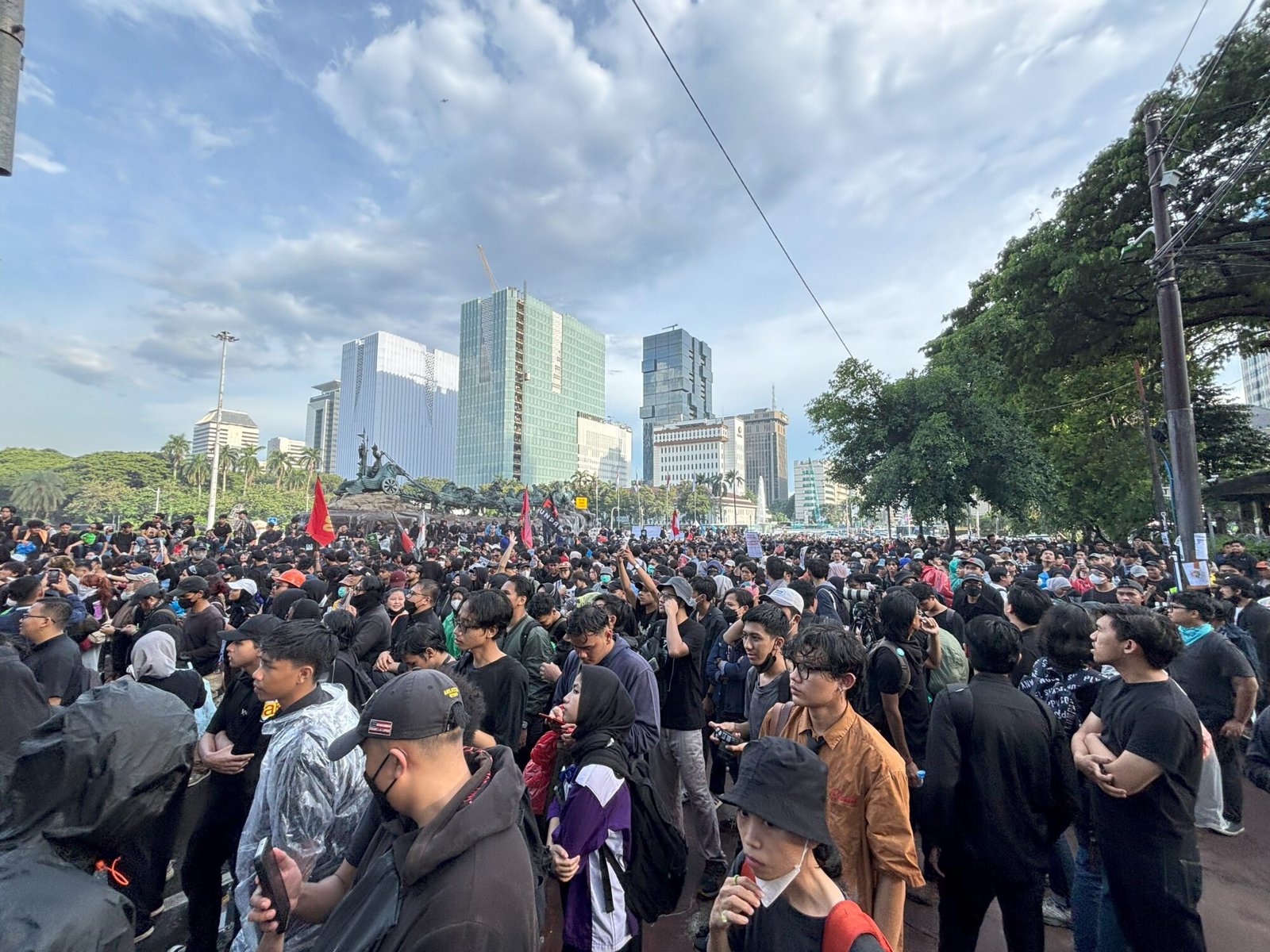
The study found that social media facilitated decentralized mobilization during the Indonesian demonstrations of August 2025. It also helped turn fragmented grievances into more cohesive reform agendas and pushed mainstream media and government institutions to respond.
Why the authors say this matters
The authors conclude that the study offers a novel theoretical lens for understanding how framing and agenda-setting interact within hybrid media ecologies, meaning the combined online and offline media environment. They also say it helps explain the interplay between digital platforms and political contention in emerging democracies.
What the researchers tested
The researchers used content analysis and cross-media comparison. They examined how activists, labor unions, religious organizations, and citizens used diagnostic, prognostic, and motivational frames, and how hashtags such as #BubarkanDPR, #PotongPrivilege, #JusticeForAffan, and #SaveDemocracy functioned as agenda-setting devices.
What worked and what didn't
According to the findings, social media worked as a tool for decentralized mobilization and for turning separate grievances into a shared reform agenda. The study also reports that it pressured mainstream media and government institutions to respond, while the abstract does not describe any counterexamples or failed cases.
What to keep in mind
The abstract does not provide detailed limitations beyond the study’s focus on the August 2025 Indonesian demonstrations. It also does not give information about sample size, platform coverage, or how broadly the findings can be generalized.
Key points
- Social media facilitated decentralized mobilization during the August 2025 Indonesian demonstrations.
- Online activity helped transform fragmented grievances into cohesive reform agendas.
- Hashtags were used as agenda-setting devices in the protests.
- Mainstream media and government institutions were pressured to respond.
- The authors present the study as a novel way to combine framing theory and agenda-setting theory.
Disclosure
- Research title:
- Social media helped unify Indonesian protest grievances
- Authors:
- Abdurrahman Abdurrahman
- Institutions:
- Bandung Institute of Technology
- Publication date:
- 2026-03-06
- OpenAlex record:
- View
- Image credit:
- David Wadie Fisher-Freberg, Wikimedia Commons, CC BY-SA 4.0
Get the weekly research newsletter
Stay current with scholarly research without reading academic papers — one filtered digest, every Friday.