Author: editor@focalinterest.com

  • Interlocking miniplates showed higher bone density near the mental foramen

    Interlocking miniplates showed higher bone density near the mental foramen

    What the study found

    Three-dimensional interlocking miniplates (a plate design that locks across a fracture) performed as an effective alternative to conventional miniplates for mandibular parasymphyseal fractures near the mental foramen. The study reported better bone healing and neurosensory outcomes on the 3D-interlocking side.

    Why the authors say this matters

    The authors conclude that 3D interlocking miniplates may be a useful alternative to conventional miniplates for fractures near the mental foramen. They describe the findings as showing enhanced bone healing and better neurosensory outcomes.

    What the researchers tested

    The researchers ran a split-mouth randomized clinical trial in 12 patients with recent bilateral mandibular fractures in the mental foramen zone. One side was fixed with a 3D-interlocking miniplate and the other with conventional miniplates, and patients were followed for 6 weeks clinically and 12 weeks radiographically.

    What worked and what didn't

    By the end of follow-up, all cases had no intra-fragmentary mobility, proper occlusion, reduced pain, and proper wound healing. Objective nerve testing improved on both sides, but one patient had Level C sensation on the conventional miniplate side at 6 weeks; both sides increased in mean bone density, and the 3D-interlocking side was higher than the conventional side (1107.4 ± 142.2 HU vs 960.9 ± 97.58 HU).

    What to keep in mind

    The study included only 12 patients, so the available summary describes a small trial. It was retrospectively registered, and the abstract does not provide additional limitations beyond the short follow-up periods.

    • Twelve patients with bilateral mandibular fractures near the mental foramen were treated on both sides with different fixation methods.
    • The 3D-interlocking side showed higher mean bone density at 12 weeks than the conventional miniplate side.
    • Both treatment sides improved in pain, occlusion, wound healing, and nerve testing over follow-up.
    • One patient had Level C sensation on the conventional miniplate side at 6 weeks.
    • The abstract states that 3D interlocking miniplates were an effective alternative to conventional miniplates.

  • Artichoke pâtés contain oleic acid, linoleic acid, and chlorogenic acid isomers

    What the study found

    The study found that both commercial and freshly prepared homemade artichoke pâté products contained mainly oleic acid and linoleic acid, which are fatty acids. It also found that chlorogenic acid isomers, which are phenolic compounds, were abundant in the homemade samples.

    Why the authors say this matters

    The authors note that plant-derived novel functional foods, such as vegetable pastes, have gained popularity, and they present this work as an extensive profile of artichoke pâté products. The study suggests that artichoke pâtés have not been previously explored in this way.

    What the researchers tested

    The researchers analyzed commercial and freshly prepared homemade artichoke pâté samples that contained different types of oils. They used liquid chromatography-high resolution mass spectrometry and gas chromatography-mass spectrometry to determine free fatty acids and total fatty acid composition, and they used UHPLC-Orbitrap MS to identify phenolic compounds.

    What worked and what didn't

    Oleic acid and linoleic acid were the major free fatty acids, with reported ranges of 3.08–43.44 μg/g and 2.22–49.17 μg/g, respectively. In total fatty acids, they were also the main components, at 25.85–52.36% and 9.04–47.96%, respectively, and chlorogenic acid isomers were found in abundance at 34.41–252.1 μg/g.

    What to keep in mind

    The abstract does not provide detailed limitations or broader conclusions beyond the sampled artichoke pâté products. It also does not specify how many samples were tested.

    • Oleic acid and linoleic acid were the main fatty acids in artichoke pâté samples.
    • Chlorogenic acid isomers were abundant phenolic compounds, especially in homemade samples.
    • Commercial and homemade artichoke pâtés were analyzed with mass spectrometry-based methods.
    • The samples contained different types of oils.
    • The abstract does not state the number of samples analyzed.
  • Green celebration practices were linked to higher green values

    Green celebration practices were linked to higher green values

    What the study found

    The study found that participating in green practices during family celebrations was associated with higher perceived green value. Green food practices and waste management showed a strong positive influence, while green environment and activity-related practices were not significantly related to green values.

    Why the authors say this matters

    The authors conclude that visible, practical green actions during family celebrations may help nurture environmentally responsible values. They suggest this could support a more sustainable lifestyle in everyday social settings.

    What the researchers tested

    The researchers used a cross-sectional survey of 354 people in Lucknow and Kanpur districts who had recently helped organize or attend family celebrations. They examined green festival involvement in three areas: green food practices, green design and waste management, and green environment and activities, and tested the hypothesis using structural equation modelling (SEM).

    What worked and what didn't

    Participation in green celebration practices significantly enhanced individuals’ perceived green value. Green food practices and effective waste management were strongly and positively associated with green values. Green environment and activity-related practices did not show a significant effect.

    What to keep in mind

    The study used a cross-sectional design, so the abstract does not describe changes over time. The available summary does not report additional limitations beyond the sampled districts and respondents.

    • The study focused on family celebrations such as weddings, birthdays, and religious ceremonies.
    • A survey of 354 respondents from Lucknow and Kanpur was analyzed.
    • Green food practices and waste management were linked to stronger green values.
    • Green environment and activity-related practices were not significantly related to green values.
    • The authors say practical green actions during celebrations may encourage a sustainable lifestyle.
  • Hydrogen contrails may form ice crystals under a near-independent regime

    What the study found

    The study found that, for contrails from hydrogen combustion, ice crystal formation can become nearly independent of ambient relative humidity, aerosol size, and hygroscopicity in a certain regime. It also found that the total number of entrained particles mainly controls water vapor depletion during the jet phase.

    Why the authors say this matters

    The authors say this matters because the number of ice crystals formed early in a contrail affects the contrail's life cycle and radiative forcing, meaning its effect on Earth’s energy balance. They conclude that their results provide a basis for a data-driven parameterization of ice crystal number in contrails from hydrogen combustion.

    What the researchers tested

    The researchers ran more than 20,000 contrail formation simulations using the particle-based Lagrangian Cloud Module in a box-model setup. They examined hydrogen combustion, where no soot particles are emitted and ice crystals are assumed to form on ambient aerosols entrained into the exhaust plume.

    What worked and what didn't

    The abstract does not report any failed approach or negative result beyond noting where certain effects are negligible or can be neglected.

    What to keep in mind

    This summary is limited to the abstract, so details about uncertainty, validation, or broader applicability are not provided here. The paper says the parameterization is to be presented in a companion paper, so the current article provides the simulation basis rather than the final parameterization.

    • Hydrogen-combustion contrails lack a parameterization for early ice crystal number in the abstracted summary.
    • More than 20,000 box-model simulations were used to study contrail formation.
    • The total number of entrained particles mainly controls water vapor depletion in the jet phase.
    • Coarse-mode particles have negligible impact because they are too scarce.
    • A near-independent regime was identified for relative humidity, aerosol size, and hygroscopicity.
    • The authors say the results support a data-driven parameterization to be presented in a companion paper.
  • Ordinary Germans embraced ritual democracy after World War II

    What the study found

    The article argues that ordinary Germans engaged with postwar democratization as a kind of “fake it ‘til you make it” process. The authors say Germans developed democratic habits, but those habits were not yet filled with democratic meaning.

    Why the authors say this matters

    The study suggests that democratization should be understood as a paradox: it is meant to create democracy, yet it is itself an undemocratic policy. The authors conclude that looking at ordinary Germans, not just elites, changes how the postwar building of democracy is understood.

    What the researchers tested

    The author used a range of sources, including Allied polling, oral histories, and German government memoranda. These materials were used to examine how and why ordinary Germans engaged with democratization in the years after the Second World War.

    What worked and what didn't

    The article finds that democratic habits did develop among ordinary Germans. However, the abstract says those habits were not yet matched by democratic meaning, which the author says would take much longer to develop.

    What to keep in mind

    The abstract presents the article's interpretation, but it does not give detailed limitations or counterarguments. It also focuses on West Germany in the postwar years, so the claims are limited to that setting.

    • The article says ordinary Germans treated democratization as a set of political rituals.
    • It argues that democratic habits developed before those habits carried full democratic meaning.
    • The study uses Allied polling, oral histories, and German government memoranda.
    • The author frames democratization as a paradox because it is an undemocratic policy aimed at producing democracy.
    • The abstract focuses on West Germany after the Second World War.
  • NFL Sunday Ticket antitrust case may affect broadcasting rights

    What the study found

    The note argues that if the plaintiffs win the NFL Sunday Ticket antitrust case, the market for broadcasting rights could become more competitive. It also argues that Congress should repeal the Sports Broadcasting Act to better align the legal landscape with the goals of the Sherman Antitrust Act.

    Why the authors say this matters

    The study suggests that the outcome of the litigation could substantially affect the American sports broadcasting landscape. The author concludes that repealing the Sports Broadcasting Act would create a legal framework that better accomplishes the goals of the Sherman Antitrust Act.

    What the researchers tested

    This is a legal note examining the consequences of two possible outcomes in In re National Football League’s Sunday Ticket Antitrust Litigation. It focuses on the NFL’s contract with NFL Sunday Ticket, the Sports Broadcasting Act, and how antitrust law applies to telecasting contracts.

    What worked and what didn't

    The abstract states that some NFL telecasting contracts may fall outside the Sports Broadcasting Act’s protection, while others have long been protected. It does not report empirical test results, only the note’s argument that a ruling for the plaintiffs would likely produce a more competitive market and that the current legal structure should be changed.

    What to keep in mind

    This summary is based only on the abstract, which provides the note’s argument rather than detailed evidence or case outcomes. The litigation is described as still working through the appeals process, and the abstract does not give the court’s final decision.

    • The note argues that a plaintiffs' الفوز could make the broadcasting-rights market more competitive.
    • It says some NFL telecasting contracts may not be covered by the Sports Broadcasting Act.
    • The author argues Congress should repeal the Sports Broadcasting Act.
    • The abstract says the case could alter the American sports broadcasting landscape.
    • No final ruling or empirical findings are reported in the abstract.
  • Climate extremes are raising electricity use in Alberta

    Climate extremes are raising electricity use in Alberta

    What the study found

    The study found that electricity consumption in Alberta rises during both extreme cold and extreme hot weather, with cold days generally producing the highest demand. It also found that hot days have become more frequent, especially since 1991, while cold days have declined across the province.

    Why the authors say this matters

    The authors conclude that the growing influence of climate extremes on electricity use underscores the need for adaptive, climate-resilient energy strategies. The findings indicate that electricity planning may need to account for stronger weather-related demand patterns over time.

    What the researchers tested

    The researchers studied eight major population centers in Alberta, Canada. They used daily maximum and minimum temperature data to identify extreme hot and cold days using percentile-based thresholds, then examined trends from 1961 to 2023 and compared those temperature extremes with daily electricity use.

    What worked and what didn't

    The analysis showed a U-shaped relationship between temperature and electricity consumption: usage increased during both hot and cold extremes. With the exception of Lethbridge, where demand peaked on hot days, all other locations had higher loads on cold days, followed by hot days, and the lowest on normal days. The temperature-demand relationship also became stronger over time, including a larger increase in Calgary's electricity demand per degree Celsius on hot days in later years than in earlier years.

    What to keep in mind

    The summary does not describe detailed limitations beyond the study's focus on eight population centers in Alberta. The findings are based on the specific temperature thresholds and time period used in the analysis.

    • Electricity demand increased during both extreme cold and extreme hot days.
    • Cold days generally produced the highest electricity loads across the study sites.
    • Hot days became more frequent over time, especially after 1991.
    • Cold days declined significantly across all locations studied.
    • The temperature-demand relationship strengthened in more recent years.
  • Pemba Island reserve shows previously unrecognized plant diversity

    Pemba Island reserve shows previously unrecognized plant diversity

    What the study found

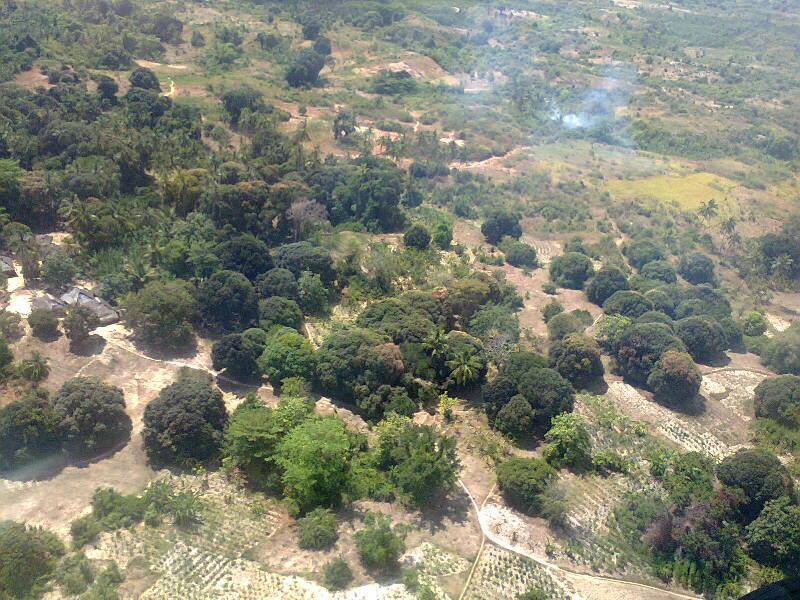
    The study found previously unrecognized plant diversity in the Ngezi–Vumawimbi Forest Reserve on Pemba Island, including species that may be new to science. It also confirmed endemic and threatened plant species, plus plant populations not previously reported from Pemba Island.

    Why the authors say this matters

    The authors indicate that the reserve contains important biodiversity, including a unique forest type in continental Africa dominated by Intsia bijuga. They also note that one of the most plant-rich areas is designated for development of a new tourist resort, which would replace much of the Vumawimbi evergreen coastal forest.

    What the researchers tested

    In 2024, the researchers carried out a baseline biodiversity survey of animal and plant communities in collaboration with the Department of Forestry, Ministry of Agriculture, Zanzibar. The abstract reports preliminary results from this survey.

    What worked and what didn't

    The survey confirmed endemic and threatened plant species, as well as populations of species not previously recorded on Pemba Island. It also confirmed a small population of blue duiker (Philantomba monticola), which the abstract says is currently under threat from poaching.

    What to keep in mind

    The abstract describes preliminary results, and it says some species are only likely new to science and are still under study. It does not provide detailed survey methods, sample sizes, or full limitations in the available summary.

    • The reserve contains previously unrecognized plant diversity.
    • Some recorded species are likely new to science and are still under study.
    • Endemic and threatened plant species were confirmed.
    • Species not previously reported on Pemba Island were also recorded.
    • A small blue duiker population was found and is under threat from poaching.
    • A plant-rich area is designated for a new tourist resort.
  • COMT inhibitors alter microbiome-linked L-DOPA metabolism

    What the study found

    The study found that catechol-O-methyltransferase inhibitors, or COMT inhibitors, used with levodopa for Parkinson's disease symptoms can act as antibiotics and alter gut microbiome-related levodopa metabolism. The effects depended on iron availability and varied across human fecal microbial communities.

    Why the authors say this matters

    The authors conclude that the gut microbiome may help mediate drug-drug interactions. The study suggests that microbial features could help predict individual responses to co-prescribed drugs.

    What the researchers tested

    The researchers examined the antibiotic properties of COMT inhibitor drugs in vitro, ex vivo, and in vivo. They also studied how these interactions changed microbiome-mediated levodopa metabolism in vitro and ex vivo, including tests in human fecal microbial communities.

    What worked and what didn't

    In vitro, extracellular iron could drive non-enzymatic inactivation of COMT inhibitors, which rescued COMT inhibitor-mediated bacterial iron starvation responses. At the same time, limiting intracellular iron could protect sensitive bacteria from COMT inhibitor antibiotic activity. When COMT inhibitors and levodopa were co-administered to human fecal microbial communities ex vivo, COMT inhibitor-dependent changes in levodopa metabolism were seen in an individual-specific manner.

    What to keep in mind

    The abstract does not give detailed effect sizes, sample sizes, or clinical outcome data. It also does not describe limitations beyond the scope of the experiments summarized here.

    • COMT inhibitors used with levodopa can alter gut microbiome composition.
    • Iron availability changes COMT inhibitor antibiotic activity in vitro.
    • Extracellular iron can inactivate COMT inhibitors non-enzymatically.
    • Intracellular iron limitation can protect sensitive bacteria from COMT inhibitor activity.
    • Co-administration with levodopa changed microbial levodopa metabolism in an individual-specific way ex vivo.
  • DOM forms PFAS nanoclusters that reduce plant uptake

    What the study found

    The study reports that per- and polyfluoroalkyl substances, or PFAS, do not only exist as single molecules in the tested conditions but can also form nanoscale clusters with dissolved organic matter, or DOM. The authors say this nanocluster formation is linked to lower plant toxicity in rice seedlings.

    Why the authors say this matters

    The authors conclude that DOM-induced nanoclustering is a critical interface process for understanding the bioaccessibility and risks of PFAS. They suggest this offers a different perspective for environmental assessment and remediation of PFAS.

    What the researchers tested

    The researchers used a newly established set of in situ atomic force microscope, or AFM, techniques to visualize PFAS behavior at interfaces with naturally extracted DOM. They also probed intermolecular interactions and carried out plant exposure experiments in rice seedlings.

    What worked and what didn't

    The AFM observations showed dynamic formation of PFAS nanoclusters at the DOM interface. Strong binding forces between PFAS molecules and specific DOM functional groups were associated with numerous small nanoclusters, while weaker interactions were associated with larger, sparser clusters; the abstract reports a strong negative correlation between nanocluster size and abundance across PFAS structures.

    What to keep in mind

    The summary provided here is limited to the abstract, so details of experimental conditions, sample sizes, and broader environmental scope are not described. The phytotoxicity results are reported for rice seedlings, so the abstract does not state whether the same pattern was tested in other plants.

    • PFAS were observed forming nanoclusters with naturally extracted dissolved organic matter.
    • Strong PFAS-DOM interactions were linked to many small nanoclusters; weaker interactions to fewer larger ones.
    • The abstract reports a strong negative correlation between nanocluster size and abundance across multiple PFAS structures.
    • In rice seedlings, nanoclustered PFAS showed reduced uptake and lower phytotoxicity than molecularly dispersed PFAS.
    • The authors describe DOM-induced nanoclustering as important for PFAS bioaccessibility and risk assessment.