Author: editor@focalinterest.com

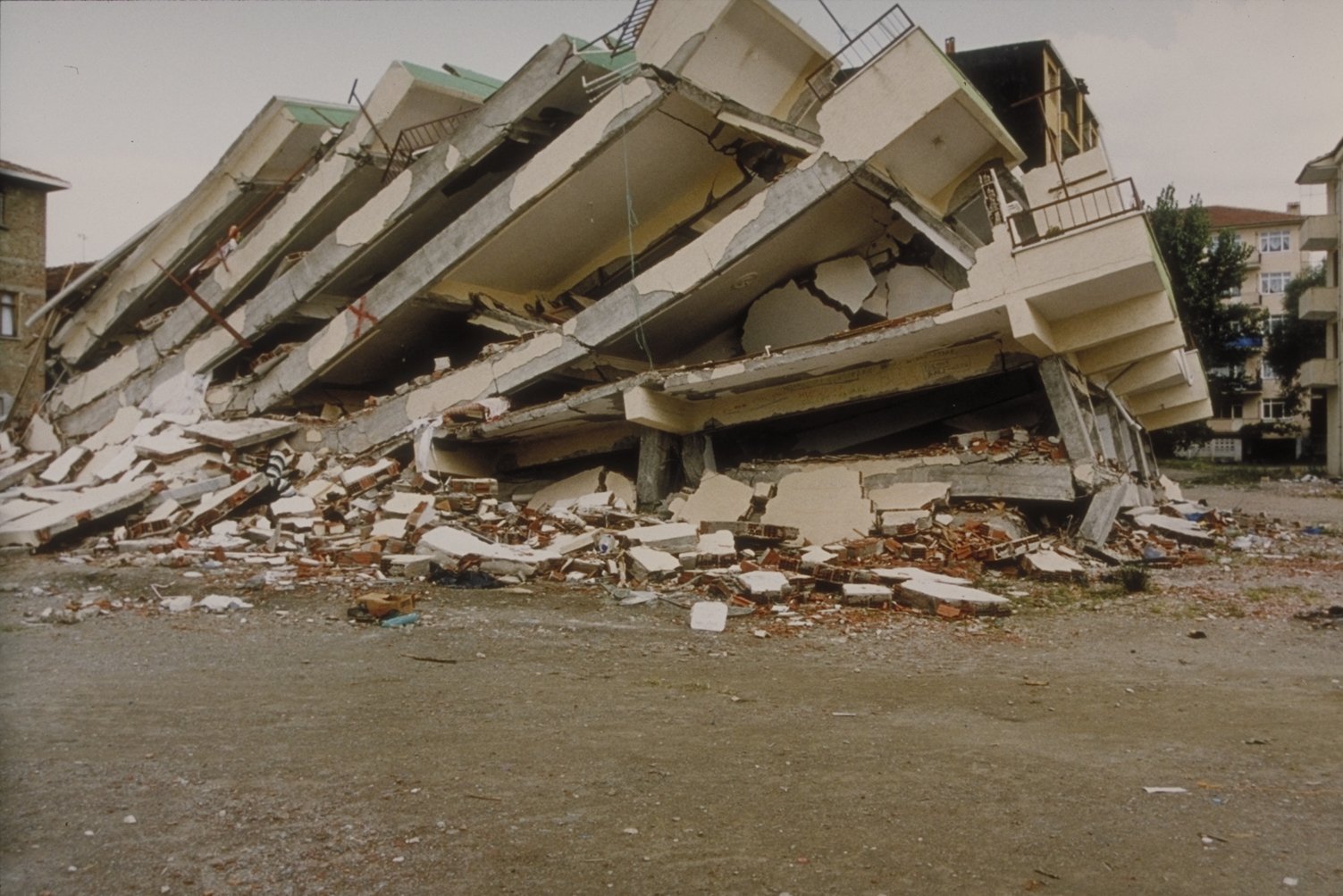
  • AAC infill improved ductility more than clay infill in RC frames

    AAC infill improved ductility more than clay infill in RC frames

    What the study found

    The study found that both autoclaved aerated concrete (AAC) blocks and traditional clay masonry infill increased the lateral strength of reinforced concrete (RC) frames by about 60%. AAC infill, however, was better than clay infill at improving ductility, meaning the frames could deform more before failing.

    Why the authors say this matters

    The authors describe AAC as a novel and environmentally friendly material, and they conclude that it performed better than clay infill in ductility enhancement. They also indicate that the reinforced steel used in the frames was intended to enhance seismic resistance.

    What the researchers tested

    The researchers experimentally tested three two-thirds-scale RC frames under cyclic lateral loading, comparing frames infilled with clay bricks and with AAC blocks. They also developed trilinear and quadlinear backbone curves for the clay and AAC infills, respectively, and used numerical macromodels in SeismoStruct and SAP2000 with concentrated and distributed plasticity approaches.

    What worked and what didn't

    Both infill types contributed approximately equally to increasing lateral strength, with about a 60% improvement. AAC infill significantly outperformed brittle clay infill in ductility enhancement. For the numerical work, the multi-strut macromodel captured the hysteresis behavior of the infilled RC frames more accurately than the single-strut model.

    What to keep in mind

    The abstract describes tests on only three two-thirds-scale frames, so the results are based on a small experimental set. It also notes that the accuracy of the more complex multi-strut model depended on parameters such as strut width, post-cracking degradation rate, shear-to-axial stiffness ratio, and strain at peak stress.

    • Both AAC and clay infills increased RC frame lateral strength by about 60%.
    • AAC infill improved ductility more than traditional clay infill.
    • Three two-thirds-scale RC frames were tested under cyclic lateral loading.
    • The multi-strut macromodel matched hysteresis behavior better than the single-strut model.
    • Model accuracy depended on strut width, degradation rate, stiffness ratio, and peak-stress strain.

  • Hydrogen measurement supports Standard Model predictions

    Hydrogen measurement supports Standard Model predictions

    What the study found

    The study reports a highly precise measurement of the 2S–6P transition in atomic hydrogen, where 2S and 6P are electron energy states. The measured frequency agrees closely with the Standard Model prediction, and the derived proton charge radius is consistent with the value from muonic hydrogen.

    Why the authors say this matters

    The authors say this enables a rigorous test of quantum electrodynamics, or QED, which is a fundamental theory of light–matter interactions and a pillar of the Standard Model. They conclude that the result tests the Standard Model to 0.7 parts per trillion and bound-state QED corrections to 0.5 parts per million.

    What the researchers tested

    The researchers measured the 2S–6P transition frequency in atomic hydrogen with enough precision to distinguish between previously discrepant proton charge radius values. They then compared the measured frequency with the Standard Model prediction and used the result to extract the proton charge radius.

    What worked and what didn't

    The measured transition frequency was 730,690,248,610.79(48) kHz, and the Standard Model prediction was 730,690,248,610.79(23) kHz. The derived proton charge radius was 0.8406(15) fm, at least 2.5 times more precise than other atomic hydrogen determinations and in excellent agreement with the muonic value.

    What to keep in mind

    The abstract does not describe experimental limitations in detail. It also notes that earlier atomic hydrogen measurements gave partly discrepant proton charge radius values, which motivated this work.

    • A precise 2S–6P transition measurement in atomic hydrogen was reported.
    • The measured frequency matched the Standard Model prediction closely.
    • The inferred proton charge radius was 0.8406(15) fm.
    • That radius was at least 2.5 times more precise than other atomic hydrogen determinations.
    • The result agreed with the muonic hydrogen value and tested bound-state QED corrections to 0.5 ppm.
  • Intersectional stigma shaped experiences among Black and Latino gay men

    What the study found

    The study found three recurring themes in the experiences of Black and Latino gay men: Spiritual and Sexual Identity Collisions, Intragroup Fractures, and Survival and Strength. The authors report that these themes reflect complex ways in which race/ethnicity and sexual orientation intersect to shape marginalisation.

    Why the authors say this matters

    The authors conclude that the findings add to research on intersectional stigma, which is stigma tied to multiple marginalised identities. They suggest this work may help point toward intervention pathways that address these intersecting stigmas and support intersectional resilience and well-being among Black and Latino gay men.

    What the researchers tested

    The researchers conducted in-depth qualitative interviews with eight Black and Latino gay men in southcentral Florida, U.S. They used Interpretive Phenomenological Analysis, a qualitative method for examining how people make sense of lived experience, to review, code, and analyse the transcripts for themes.

    What worked and what didn't

    The analysis identified three overarching themes across the interviews. The abstract does not describe a comparison condition, quantitative measure, or an intervention, so no effectiveness findings are reported.

    What to keep in mind

    The study is based on a small sample of eight participants from one region, so the abstract does not support broad generalization. The available summary does not describe other limitations beyond the call for further research.

    • Three themes emerged: Spiritual and Sexual Identity Collisions, Intragroup Fractures, and Survival and Strength.
    • The study focused on Black and Latino gay men in southcentral Florida, U.S.
    • The researchers used in-depth interviews and Interpretive Phenomenological Analysis.
    • The authors link the findings to intersectional stigma involving race/ethnicity and sexual orientation.
    • The abstract calls for further research on intervention pathways and intersectional resilience.
  • Italian FICA tool was clear and reflected patients’ spirituality

    What the study found

    The Italian version of the FICA© Spiritual History Tool was reported as clear, understandable, and focused on exploring spirituality in end-of-life conversations. The findings also indicated that spirituality was an important source of support for many Italian patients with terminal cancer.

    Why the authors say this matters

    The authors conclude that healthcare providers should be informed about and encouraged to use this tool to gather information about patients' spiritual history and perspectives. They suggest this may support personalized care beyond physical illness.

    What the researchers tested

    The researchers translated and culturally adapted the FICA© Spiritual History Tool into Italian using forward-backward translation. They then applied it in in-person conversations with 80 of 95 eligible terminally ill cancer patients and analyzed the responses thematically.

    What worked and what didn't

    The study found that spirituality was most often reflected through the Catholic faith. Some participants reported no specific religious community and said they relied mainly on support from family and friends. The tool appeared suitable for eliciting spirituality-related themes in this sample.

    What to keep in mind

    This was a preliminary assessment in a sample of Italian end-of-life cancer patients, so the abstract does not describe broader generalization. The available summary does not report detailed limitations beyond the study scope.

    • The Italian FICA© Spiritual History Tool was described as clear and understandable.
    • Spirituality was reported as a source of support for many terminal cancer patients in the study.
    • Catholic faith was the most frequently mentioned spiritual reference.
    • Some participants said they did not belong to a religious community and relied on family and friends.
    • The tool was translated, culturally adapted, and used in in-person conversations with 80 patients.
  • Energy prices and fertilizer costs affect agricultural prices

    What the study found

    The study found that agricultural prices are affected both directly by energy prices and indirectly through fertilizer prices. The authors also report that nonlinear Fourier trends were used to remove a unit root problem, which is a statistical issue that can make time-series data harder to analyze.

    Why the authors say this matters

    The authors suggest that the links between energy, fertilizer, and agricultural markets matter because they show how price changes in one market can affect the others. The findings indicate that these relationships should be considered when examining agricultural price behavior.

    What the researchers tested

    The researchers studied monthly data from January 1990 to February 2021, and extended the analysis up to 2024. They examined the direct impact of crude oil and natural gas prices on wheat, maize, and soybean markets, as well as the indirect effect through fertilizer prices, using a Fourier-based time-series analysis.

    What worked and what didn't

    The conditional covariances of energy and fertilizer prices captured the spikes during the 2008 crisis and the volatile period afterward. The deterministic nonlinear Fourier trends eliminated the unit root problem, and the results showed both direct and indirect effects on agricultural prices.

    What to keep in mind

    The abstract does not provide detailed limitations, effect sizes, or statistical significance levels. It also does not describe the full set of results for the extension through 2024 beyond noting that the analysis was extended to that year.

    • Agricultural prices were affected directly by energy prices.
    • Agricultural prices were also affected indirectly through fertilizer prices.
    • The study used monthly data from January 1990 to February 2021, with analysis extended to 2024.
    • The conditional covariances of energy and fertilizer prices captured spikes during the 2008 crisis and the volatile period afterward.
    • Nonlinear Fourier trends were used to address a unit root problem.
  • Isolated coronary ectasia was linked to more recurrent heart attacks

    What the study found

    Patients whose first myocardial infarction was caused by isolated coronary artery ectasia, a widening of the coronary arteries, had more recurrent heart attacks and more stent thrombosis than patients without ectasia. The study also found a higher combined rate of death or recurrent myocardial infarction in the ectasia group.

    Why the authors say this matters

    The authors conclude that isolated coronary artery ectasia may be clinically important in patients with myocardial infarction. The findings indicate that these patients had worse long-term outcomes than similar patients without ectasia.

    What the researchers tested

    The researchers retrospectively studied patients who had coronary angiography after a first myocardial infarction caused by isolated coronary artery ectasia. They compared them with a control group of patients with myocardial infarction without coronary artery ectasia, excluding people with more than 20% narrowing in vessels other than the infarct-related lesion.

    What worked and what didn't

    A total of 404 patients were included, and 63.9% of the infarctions were ST-elevation myocardial infarctions. Death or recurrent myocardial infarction occurred in 26.7% of patients in the isolated ectasia group versus 16.3% in the control group, and recurrent myocardial infarction was 22.8% versus 13.4%, respectively. Stent thrombosis was also more common in the ectasia group, while death alone was similar between groups.

    What to keep in mind

    This was a retrospective study, so the available summary does not show randomized comparison. The abstract does not describe all potential limitations, and the results apply to patients with first myocardial infarction and isolated coronary artery ectasia as defined in this study.

    • Patients with myocardial infarction caused by isolated coronary artery ectasia had more recurrent myocardial infarction than controls.
    • The combined outcome of death or recurrent myocardial infarction was higher in the ectasia group.
    • Stent thrombosis occurred more often in patients with isolated coronary artery ectasia.
    • In multiple variable analysis, coronary artery ectasia was associated with death/recurrent myocardial infarction and with recurrent myocardial infarction.
    • Most ectasia cases were multivessel diffuse ectasia, classified mainly as Markis I or Markis II.
  • AIoT smart elderly care in Beijing faces multiple implementation barriers

    AIoT smart elderly care in Beijing faces multiple implementation barriers

    What the study found

    The study found five major barriers to implementing artificial intelligence of things (AIoT, which means connected artificial intelligence systems) in elderly care in Beijing’s Xicheng District. These barriers were systemic fragmentation and a lack of unified standards, a mismatch between services and older adults’ needs, low adoption due to digital literacy and trust issues, a shortage of interdisciplinary caregivers, and heavy reliance on government subsidies with limited market participation.

    Why the authors say this matters

    The authors conclude that coordinated action across multiple stakeholders is needed to use AIoT to build sustainable, responsive, and human-centered elderly care ecosystems. They also propose that standardizing systems, improving digital inclusion, and strengthening caregiving capacity could help support this goal.

    What the researchers tested

    The researchers used a qualitative study design grounded in socio-technical systems theory, the Unified Theory of Acceptance and Use of Technology (a model of technology adoption), and welfare pluralism theory. They conducted semi-structured interviews and field observations in Beijing’s Xicheng District, which they describe as an urban area with a high aging rate and active smart elderly care initiatives.

    What worked and what didn't

    The study reports that AIoT-related elderly care efforts were constrained by five recurring problems rather than by a single issue. The proposed policy framework emphasizes standardizing AIoT systems, tailoring services to older adults’ needs, increasing financial investment, empowering communities, improving digital inclusion, and professionalizing the caregiving workforce.

    What to keep in mind

    The abstract describes a qualitative study in one district of Beijing, so the findings are limited to that setting in the available summary. It does not provide outcome measurements or indicate whether the proposed policy framework was tested.

    • The study identified five major barriers to AIoT-based smart elderly care in Beijing’s Xicheng District.
    • Older adults’ low technology adoption was linked to digital literacy and trust issues.
    • The researchers reported a mismatch between elderly care services and older adults’ needs.
    • There was a shortage of interdisciplinary professional caregivers.
    • The authors proposed a policy framework focused on standardization, digital inclusion, and workforce professionalization.
  • Hypodermoclysis was generally safe in advanced cancer care

    What the study found

    The review found that hypodermoclysis, which means giving fluids under the skin, appears to be a feasible and generally safe way to provide hydration in advanced cancer care. The authors also found that evidence for routine clinically assisted hydration remains limited.

    Why the authors say this matters

    The authors state that clinically assisted hydration near the end of life is controversial because potential benefits and harms are uncertain. They suggest their findings can help individualize decisions based on patient goals and symptom burden.

    What the researchers tested

    The researchers conducted a systematic review and meta-analysis following PRISMA 2020 guidelines. They included randomized and observational studies in adults with advanced cancer receiving palliative or hospice care, and pooled data on local infusion-site complications and treatment discontinuation when the data were comparable.

    What worked and what didn't

    Five studies met the inclusion criteria, including cohort studies and randomized trials, and three were suitable for quantitative synthesis. The pooled estimate suggested about 17% of patients experienced local infusion-site complications, but these events were mostly mild and rarely led to stopping treatment. Randomized trials did not consistently show improvements in symptoms or survival with clinically assisted hydration.

    What to keep in mind

    The evidence base was small, with only five studies included and three used in the pooled analysis. The abstract does not describe other limitations beyond the limited evidence for routine hydration.

    • Hypodermoclysis appeared feasible and generally safe in advanced cancer care.
    • About 17% of patients had local infusion-site complications in the pooled analysis.
    • The reported complications were mostly mild and rarely caused treatment discontinuation.
    • Randomized trials did not consistently show symptom or survival benefits from clinically assisted hydration.
    • The authors say decisions should be individualized to patient goals and symptom burden.
  • AOH1996 analogs showed varied anticancer activity in cancer cell cultures

    What the study found

    Several new analogs of AOH1996, a small-molecule inhibitor of proliferating cell nuclear antigen (PCNA, a protein involved in DNA replication and repair), showed antiproliferative activity in cancer cell cultures. The parent compound AOH1996 was still the most potent in the tests reported.

    Why the authors say this matters

    The authors conclude that some of these analogs, especially 2b and 3b, can serve as useful lead scaffolds for further optimization and experimental validation. They also note that several active compounds were predicted to inhibit P-glycoprotein, suggesting potential relevance for overcoming multidrug resistance.

    What the researchers tested

    The researchers synthesized a series of AOH1996-based structural analogs using structure-activity relationship (SAR) and scaffold-hopping strategies. They tested the compounds in MCF-7 breast cancer and U87 glioblastoma cell lines with the MTT assay, and they also used ADMET predictions to estimate drug-likeness, absorption, and other properties.

    What worked and what didn't

    AOH1996 reduced cell viability below 30% at 10 μM and showed the strongest cytotoxicity. Compounds 1f, 2b, 3b, 3c, and 3d were also active, reducing MCF-7 viability by 60–70% and U87 viability to 30–40% at 10 μM. The SAR analysis reported that electron-withdrawing or moderately lipophilic substituents on the amide side chain and aromatic extensions on the triazole ring improved potency, while bulky or strongly electron-donating groups reduced activity.

    What to keep in mind

    The available summary is limited to cell-culture testing and computational predictions, so it does not describe in vivo results or clinical testing. The abstract also notes predicted limitations for many derivatives, including high plasma protein binding, short predicted half-lives, and potential cardiotoxicity.

    • AOH1996 was the most potent compound in the reported cell-culture tests.
    • Five analogs, including 2b and 3b, showed significant antiproliferative activity.
    • The study tested compounds in MCF-7 breast cancer and U87 glioblastoma cells using the MTT assay.
    • SAR findings linked higher potency to electron-withdrawing or moderately lipophilic substituents and aromatic extensions on the triazole ring.
    • ADMET predictions suggested favorable drug-likeness for most derivatives but also possible limits such as short half-life and cardiotoxicity.
  • Chat option increased collaboration in social virtual reality

    Chat option increased collaboration in social virtual reality

    What the study found

    The study found that collaboration rates were higher when a chat option was available, especially in social virtual reality (SVR), which is a virtual environment for social interaction, than without chat. The authors also report that this pattern fits with anthropomorphism theory, which is about people attributing human-like qualities to nonhuman systems.

    Why the authors say this matters

    The authors conclude that the design of new virtual worlds should include a mix of real-life and virtual features. They also state that using a chat option in SVR systems for ride-sharing and other similar social situations should be encouraged.

    What the researchers tested

    The researchers ran a 2-by-2 between-participants experiment with 120 participants. Four groups of 30 used a ride-sharing simulation based on the repeated prisoner’s dilemma paradigm, comparing system type (SVR or video-mediated communication, meaning communication through video) and whether chat was available or not.

    What worked and what didn't

    Collaboration rates were higher with chat than without it. The effect was strongest in the SVR condition.

    What to keep in mind

    The abstract does not provide detailed limitations beyond saying that the theoretical idea of mixing real-life and virtual features requires additional investigation. No other caveats are described in the available summary.

    • The study compared social virtual reality with video-mediated communication.
    • A chat option increased collaboration rates overall.
    • The chat effect was especially strong in social virtual reality.
    • The experiment used 120 participants in four groups.
    • The authors say the design of virtual worlds should mix real-life and virtual features.