Author: editor@focalinterest.com

  • Implant safety and implementation problems remain a concern

    What the study found

    The authors argue that surgical implants can bring serious risks, including complications with potentially devastating consequences. They also say that problems can arise not only from the implant itself, but from how new devices are tested, introduced, trained for, and monitored in everyday healthcare systems.

    Why the authors say this matters

    The authors suggest that better system-wide handling of implantable devices is needed if they are to achieve their intended clinical impact. They say that standardized early studies, whole-team training, funding support, and post-implementation reporting are important parts of that process.

    What the researchers tested

    This is an opinion paper based on the reflections of two surgical technologists. It discusses challenges in safety, efficacy, and broad implementation of medical implants, and it uses the IDEAL-D framework, which stands for Idea, Development, Exploration, Assessment, and Long-term study, as a reference point.

    What worked and what didn't

    The abstract says the IDEAL-D framework is an important step toward structuring medical-device studies. However, it also says that first-in-human use is not sufficiently standardized or regulated, and that once devices are approved for mainstream use, problems remain with adoption, funding, training, patient selection, and accurate reporting of complications.

    What to keep in mind

    This paper is an opinion piece rather than a study reporting new experimental data. Its scope is limited to the authors' reflections and the issues they describe in the abstract, and it does not provide detailed results from a specific implant trial.

    • The authors say surgical implants can cause serious complications.
    • They argue that first-in-human testing of new implants is not sufficiently standardized or regulated.
    • They identify implementation problems after approval, including training, funding, patient selection, and complication reporting.
    • The IDEAL-D framework is described as an important step for medical-device studies.
    • The authors say additional system-wide changes are needed beyond IDEAL-D.
  • Scalar leptoquarks can help a vector-like lepton dark matter model fit constraints

    What the study found

    The study found that adding scalar leptoquarks to a vector-like lepton dark matter model can modify the dark matter candidate in a way that helps it evade current direct detection constraints. The authors also report that the added particles can split the dark matter state into two non-degenerate pseudo-Dirac states, which is a pair of closely related fermions with slightly different masses.

    Why the authors say this matters

    The authors suggest this extension matters because the minimal model, with a neutral component of a pure SU(2) doublet vector-like lepton, cannot both match the observed relic abundance and satisfy direct detection limits. They conclude that the extended setup opens a larger parameter space that can accommodate the correct relic density.

    What the researchers tested

    The researchers studied an extension of a vector-like lepton dark matter model by introducing scalar leptoquarks. They examined how these additions affect the dark matter candidate's mass, its direct detection behavior, and the range of model parameters consistent with the relic density of dark matter left over from the early universe.

    What worked and what didn't

    In the minimal setup, the neutral component of a pure SU(2) doublet vector-like lepton was said to fail to satisfy both the observed relic abundance and current direct detection limits. With scalar leptoquarks included, the model can receive corrections to the dark matter mass, producing two non-degenerate pseudo-Dirac states and helping it evade direct detection bounds naturally. The extended model also appears to allow a larger region of parameter space that can fit the correct relic density.

    What to keep in mind

    The summary does not give numerical results, benchmark points, or detailed limits. It also does not describe any experimental test of the model; the abstract only reports a theoretical study of model behavior.

    • Scalar leptoquarks are added to a vector-like lepton dark matter model.
    • The added particles can split the dark matter candidate into two non-degenerate pseudo-Dirac states.
    • This mass splitting can help the model evade direct detection bounds.
    • The extended setup may allow a larger parameter space compatible with the correct relic density.
    • The minimal model is described as unable to satisfy both relic abundance and direct detection constraints at once.
  • SSTICS complaints are higher in schizophrenia but weakly tied to cognition

    What the study found

    The study found that people with schizophrenia reported more cognitive complaints than healthy controls, but these complaints were not meaningfully linked to objective cognition. The authors also found that the complaints were more closely associated with depressive symptoms and only weakly with illness insight.

    Why the authors say this matters

    The authors conclude that these findings suggest SSTICS-based complaints may reflect emotional distress rather than actual cognitive deficits. They also suggest the results support refining SSTICS subscales and extending study of this tool to other psychiatric populations.

    What the researchers tested

    The researchers conducted a meta-analysis following PRISMA guidelines, using systematic searches of PubMed, Web of Science, and Google Scholar. They included studies that used the Subjective Scale to Investigate Cognition in Schizophrenia, compared patients with healthy controls, examined correlations with cognition, symptoms, or illness insight, or analyzed the scale's factor structure.

    What worked and what didn't

    Twenty-five studies with 3,205 participants met the criteria. Schizophrenia patients reported more cognitive complaints than controls (d = 0.746), but there was no significant correlation with global objective cognition (r = 0.105), and complaints were unrelated to positive, negative, or general symptoms. There was a moderate association with depressive symptoms (r = 0.300), a small association with illness insight (r = 0.155), and factor analyses consistently identified three domains: memory, attention, and daily living.

    What to keep in mind

    The abstract does not describe detailed limitations beyond the scope of the included studies. The findings are specific to studies using the SSTICS in psychiatric populations, so the summary cannot be generalized beyond what the authors explicitly report.

    • Twenty-five studies with 3,205 participants were included in the meta-analysis.
    • People with schizophrenia reported more cognitive complaints than healthy controls.
    • Cognitive complaints were not significantly related to global objective cognition.
    • Complaints were moderately associated with depressive symptoms and weakly associated with illness insight.
    • Factor analyses consistently showed three SSTICS domains: memory, attention, and daily living.
  • Dynamic rank aggregation can be updated efficiently

    What the study found

    The study found that dynamic rank aggregation, the problem of combining multiple rankings into one when new rankings keep arriving, can be updated efficiently. The authors report a framework that combines two approaches and returns the better candidate aggregation at each step.

    Why the authors say this matters

    The authors say this matters because dynamic rank aggregation needs fast updating as rankings arrive over time. The study suggests their framework provides both theoretical guarantees and practical efficiency.

    What the researchers tested

    The researchers developed left right, or LR, aggregation based on the LR tree data structure. They also analyzed the classical Pick-A-Perm algorithm under Spearman’s footrule distance, which is a ranking-distance measure, and combined both methods into a unified dynamic rank aggregation framework.

    What worked and what didn't

    Experimental evaluations showed that LR aggregation produced solutions close to optimal in practice. The authors also proved that Pick-A-Perm yields an expected 2-approximation under Spearman’s footrule distance, and they state that LR aggregation, Pick-A-Perm, and their combination can all be implemented with O(n log n) update time and O(n2) space, independent of the number of rankings received.

    What to keep in mind

    The abstract does not describe the data sets, application domains, or detailed experimental conditions. It also does not provide limitations beyond the stated time and space bounds.

    • The paper addresses dynamic rank aggregation, where new rankings arrive over time.
    • LR aggregation is built on an LR tree and is designed for incremental updates.
    • Pick-A-Perm was shown to have an expected 2-approximation under Spearman’s footrule distance.
    • The combined framework returns the better of two candidate aggregations at each step.
    • The authors report O(n log n) update time and O(n2) space, independent of how many rankings are received.
  • Macaque insular cortex contains specialized von Economo neuron subtypes

    What the study found

    The study identified 78 detailed cell types in the macaque anterior insular cortex, showing that this brain region is diverse in cell type, connectivity profile, signal-processing strategy, and metabolic characteristics. It also found two von Economo neuron subtypes, which are specialized large neurons found in some primates.

    Why the authors say this matters

    The authors conclude that their multimodal atlas provides a molecular and functional framework for studying the circuit principles underlying cognitive processes in the primate anterior insular cortex. They present this as relevant because the anterior insular cortex is described as a critical hub that integrates exteroceptive information from the outside world and interoceptive information from the body into high-order cognition.

    What the researchers tested

    The researchers combined whole-cell-based single-cell transcriptomics, which measures gene activity in individual cells, with Patch-seq recordings, which pair electrical recordings with gene expression data. Using these methods in the macaque anterior insular cortex, they resolved and characterized cell types and examined their transcriptomic, morphoelectric, connectivity, and metabolic features.

    What worked and what didn't

    The approach successfully resolved 78 detailed cell types and identified two von Economo neuron subtypes: DSG2-expressing VEN-L and POC5-expressing VEN-S. The study also found that von Economo neurons use a signal-processing strategy in which the geometry of the dendrite-originating axon reshapes action potential dynamics and enhances somatic responsiveness to deep-layer synaptic inputs.

    What to keep in mind

    The abstract does not describe experimental limitations or caveats beyond the focus on the macaque anterior insular cortex. The findings are based on the provided multimodal atlas and are specific to the cell types and properties examined in this study.

    • The macaque anterior insular cortex was resolved into 78 detailed cell types.
    • Two von Economo neuron subtypes were identified: DSG2-expressing VEN-L and POC5-expressing VEN-S.
    • The study linked VEN-L and VEN-S transcriptomically to extratelencephalic and corticothalamic projection neurons, respectively.
    • Von Economo neuron axon geometry was reported to reshape action potential dynamics and increase responsiveness to deep-layer synaptic inputs.
    • The abstract describes the anterior insular cortex as a hub integrating exteroceptive and interoceptive information.
  • Basal ganglia PVSs linked to worse cognitive decline over time

    Basal ganglia PVSs linked to worse cognitive decline over time

    What the study found

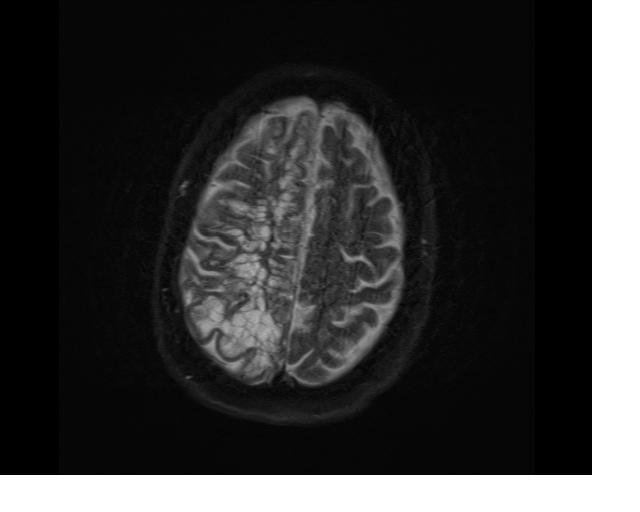
    Higher MRI-visible perivascular spaces, or PVSs, in the basal ganglia were associated with worse cognitive performance over time. The association remained for executive function and visuospatial skills even after accounting for other cerebral small vessel disease markers.

    Why the authors say this matters

    The authors conclude that basal ganglia PVS burden may be an emerging marker of domain-specific cognitive decline in aging. They also say the findings support PVS as a vascular contributor to deep brain structure damage underlying cognitive decline over time.

    What the researchers tested

    PVS volumes were segmented with a deep learning algorithm. The researchers used linear mixed-effects models adjusted for age, sex, race/ethnicity, education, baseline cognitive status, apolipoprotein E-ε4 presence, Framingham Stroke Risk Profile, and intracranial volume, and they also ran head-to-head comparisons among statistically significant SVD markers.

    What worked and what didn't

    The abstract does not report the same independent result for the other cognitive measures after head-to-head comparison. The study also states that causation cannot be established.

    What to keep in mind

    This was an observational study, so it cannot show that PVS caused the cognitive decline. The abstract does not describe additional limitations beyond that point, and the findings come from one cohort of participants without stroke or dementia.

    • Higher basal ganglia MRI-visible perivascular spaces were linked to worse cognitive performance over time.
    • The strongest independent associations were with executive function and visuospatial skills.
    • The study included 750 participants without stroke or dementia from a longitudinal cohort.
    • MRI measures also included white matter hyperintensities, lacunes, and cerebral microbleeds.
    • The authors say the findings support PVS as an emerging marker of domain-specific cognitive decline.
  • Electrode electronic structure affects interfacial electron-transfer reorganization energy

    What the study found

    The study found that the electronic density of states of the electrode, not just the electrolyte, plays a central role in governing reorganization energy in interfacial electron transfer. The authors report that changes in graphene's electronic structure were linked to changes in electron-transfer rate through modulation of reorganization energy.

    Why the authors say this matters

    The authors conclude that this redefines the traditional view of heterogeneous electron-transfer kinetics, in which electrode electronic structure was thought to mainly affect the number of thermally accessible transfer channels. The findings indicate a deeper role for electrode electronic structure in interfacial reactivity.

    What the researchers tested

    The researchers used atomically layered heterostructures to tune the density of states of graphene. They then measured outer-sphere electron-transfer kinetics, a type of electron transfer between a molecule and an electrode without direct chemical bonding.

    What worked and what didn't

    Tuning graphene's density of states produced a corresponding change in electron-transfer rate. The authors state that this variation arose from strong modulation in a reorganization energy associated with image-potential localization in the electrode, rather than only from the conventionally assumed effect on accessible transfer channels.

    What to keep in mind

    The abstract does not provide detailed experimental limits, uncertainty values, or information about how broadly the findings apply beyond the studied graphene heterostructures. It also does not describe any negative results or alternative explanations in detail.

    • The electrode's electronic density of states was found to strongly affect reorganization energy.
    • The study used atomically layered heterostructures to tune graphene's density of states.
    • Measured outer-sphere electron-transfer kinetics changed as graphene's electronic structure changed.
    • The authors link the rate variation to image-potential localization in the electrode.
    • The findings challenge the conventional view that only electrolyte-phase factors set reorganization energy.
  • Khamis-Roche estimates agreed well with biological maturity status

    What the study found

    The study found that the Khamis-Roche method, which estimates predicted adult height and percentage of predicted adult height, showed good agreement with bone-age-based estimates of maturity status in this sample. The authors conclude that it may be a valid estimate of biological maturity status in average maturing children and adolescents.

    Why the authors say this matters

    The study suggests that a simpler estimate based on percentage of predicted adult height can be used to assess biological maturity status relative to skeletal age, with agreement shown in Portuguese children and adolescents. The authors conclude this may be useful for average maturing youths.

    What the researchers tested

    The researchers studied 371 Portuguese children and adolescents, including 171 girls, aged 11 to 15 years. Bone age was measured with the Tanner-Whitehouse-3 method, and predicted adult height and percentage of predicted adult height were estimated using both the Tanner-Whitehouse-3-based approach and the Khamis-Roche method. They compared the methods using intraclass correlation coefficients, Bland-Altman plots, and two-way analysis of variance.

    What worked and what didn't

    The average differences between bone-age-based and Khamis-Roche predicted adult height were small and not statistically significant: 0.2 ± 4.2 cm in boys and 0.6 ± 3.1 cm in girls. For percentage of predicted adult height, the differences were also small and not statistically significant: -0.1 ± 2.1% in boys and 0.4 ± 1.8% in girls. The intraclass correlation coefficient for percentage of predicted adult height was above 0.91, and early maturity status was associated with negative differences between bone-age-based and Khamis-Roche predicted adult height.

    What to keep in mind

    The abstract describes agreement in this sample, but it does not report broader validation beyond Portuguese children and adolescents aged 11 to 15 years. It also notes that early maturity status affected the differences, and the conclusion is limited to average maturing children and adolescents.

    • Khamis-Roche percentage of predicted adult height showed good agreement with bone-age-based estimates.
    • The study included 371 Portuguese children and adolescents aged 11 to 15 years.
    • Differences between methods were small and not statistically significant for boys and girls.
    • Intraclass correlation for percentage of predicted adult height was higher than 0.91.
    • Early maturity status was linked to negative differences between the two predicted adult height methods.
  • Hybrid sandwich metastructure improves impact and thermal performance

    What the study found

    The study found that a proposed lattice-honeycomb hybrid sandwich metastructure can balance impact resistance and thermal management better than the basic corrugated structure described in the abstract. Its performance depended on the arch ratio, and some configurations scored highest in the authors' overall evaluation.

    Why the authors say this matters

    The authors say the work addresses a key bottleneck in advanced metastructure design: improving impact resistance and heat dissipation at the same time. They conclude that the design offers a new paradigm for multifunctional design.

    What the researchers tested

    The researchers developed two sandwich metastructure configurations: Honeycomb-Arch Lattice-Honeycomb (HAH) and Honeycomb-Symmetry Arch Lattice-Honeycomb (HSAH). They evaluated impact resistance and heat dissipation across different arch ratios using experiments, numerical methods, and the Complex Proportional Assessment (COPRAS) method, which combines several performance measures into one score.

    What worked and what didn't

    Configurations with a/b = 1.5 and c/d = 1.1 or 1.3 produced the highest comprehensive evaluation scores (Qi). When applied to the equipment compartment floor of high-speed trains, the maximum impact stress fell from over 500 MPa in the original corrugated structure to below 300 MPa, and the steel sphere's residual velocity after impact dropped sharply. The design also reduced equipment surface temperature by 25% to 31%.

    What to keep in mind

    The abstract does not describe detailed experimental limitations or uncertainties beyond noting that performance was evaluated across different arch ratios. The reported application result is specific to the equipment compartment floor of high-speed trains, so the scope described in the abstract is limited to that context.

    • A hybrid sandwich metastructure was proposed for both impact resistance and thermal dissipation.
    • Two designs were tested: HAH and HSAH.
    • Performance varied with arch ratio, and a/b = 1.5 with c/d = 1.1 or 1.3 gave the highest COPRAS scores.
    • In a high-speed train floor application, impact stress dropped from above 500 MPa to below 300 MPa.
    • The design reduced equipment surface temperature by 25% to 31%.
  • Hybrid bladder phantom matches in vivo pressure responses

    What the study found

    The study reports the first closed-loop artificial bladder system driven by a spiking neural model of sacral micturition reflexes. The system reproduced bladder pressure responses observed in living tissue and closely matched ewe cystometry data.

    Why the authors say this matters

    The authors say the platform is significant because it can generate synthetic data, support neuromodulation testing, and provide a foundation for implantable bladder control systems. They also note that bladder dysfunction after spinal cord injury is common and that current intermittent catheterization carries a high risk of urinary tract infections.

    What the researchers tested

    The researchers developed a hybrid physical-neural phantom of the urinary bladder that combines mechanical and neurophysiological aspects of the lower urinary tract. They validated the system against biological recordings, including sacral root electroneurogram data and ewe cystometry.

    What worked and what didn't

    The artificial bladder system successfully reproduced the bladder pressure response observed in vivo. The abstract does not describe specific failures, comparisons that did not work, or quantitative error measures.

    What to keep in mind

    The available summary does not provide detailed limitations, performance metrics, or information about how broadly the results apply beyond the tested ewe data. It also does not describe any shortcomings of the model or platform.

    • The paper describes a closed-loop artificial bladder system for studying bladder control.
    • The system uses a spiking neural model of sacral micturition reflexes.
    • The model was validated against biological recordings and ewe cystometry data.
    • The system reproduced bladder pressure responses observed in vivo.
    • The authors say the platform may support synthetic data generation and neuromodulation testing.