Author: editor@focalinterest.com

  • DBSCAN estimates DNA damage yields from proton and carbon ion beams

    What the study found

    The study found that a DBSCAN (density-based spatial clustering of applications with noise) clustering approach can be used to estimate DNA damage yields and assess ion beam quality. For protons, the normalized beam-quality measure showed a strong linear relationship with double-strand break yields, and a similar relationship was seen for carbon ions up to 200 keV µm⁻¹, after which an overkill effect appeared.

    Why the authors say this matters

    The authors conclude that the normalized Quality of Beam (QoB) measure, defined as clusters per keV of deposited energy, offers a biologically meaningful alternative to conventional metrics such as linear energy transfer (LET, a measure of how much energy radiation deposits per distance). They also state that the DBSCAN framework is computationally efficient compared with full water radiolysis modeling.

    What the researchers tested

    The researchers used simulated physical track structures to model DNA damage from 0.5-200 MeV protons. They assumed that energy deposition of at least 17.5 eV caused DNA damage, that at least two damage points within a distance ε formed a cluster, that isolated points were noise, and that the cluster-to-noise ratio matched the double-strand break-to-single-strand break yield ratio. They then applied the same framework and parameters to carbon ions.

    What worked and what didn't

    For protons, normalized QoB showed a strong linear correlation with double-strand break yields, allowing direct estimation of double-strand break and single-strand break yields using a single conversion factor. For carbon ions, the same linear relationship held up to LET values of 200 keV µm⁻¹, but beyond that the overkill effect emerged. The normalized QoB also qualitatively reproduced RBE-LET trends.

    What to keep in mind

    The abstract describes a simplified framework based on simulation and specific modeling assumptions, so the results are tied to those conditions. It also notes that the carbon-ion relationship changes beyond 200 keV µm⁻¹ because of overkill, so the reported linear behavior is not universal across all LET values.

    • A DBSCAN clustering framework was used to estimate DNA damage yields from simulated radiation tracks.
    • For protons, normalized QoB had a strong linear correlation with double-strand break yields.
    • The same framework showed a similar linear relationship for carbon ions up to 200 keV µm⁻¹.
    • Beyond 200 keV µm⁻¹ for carbon ions, the overkill effect appeared.
    • The authors say the method is computationally efficient compared with full water radiolysis modeling.
  • Plate design altered radiation dose and cell growth

    Plate design altered radiation dose and cell growth

    What the study found

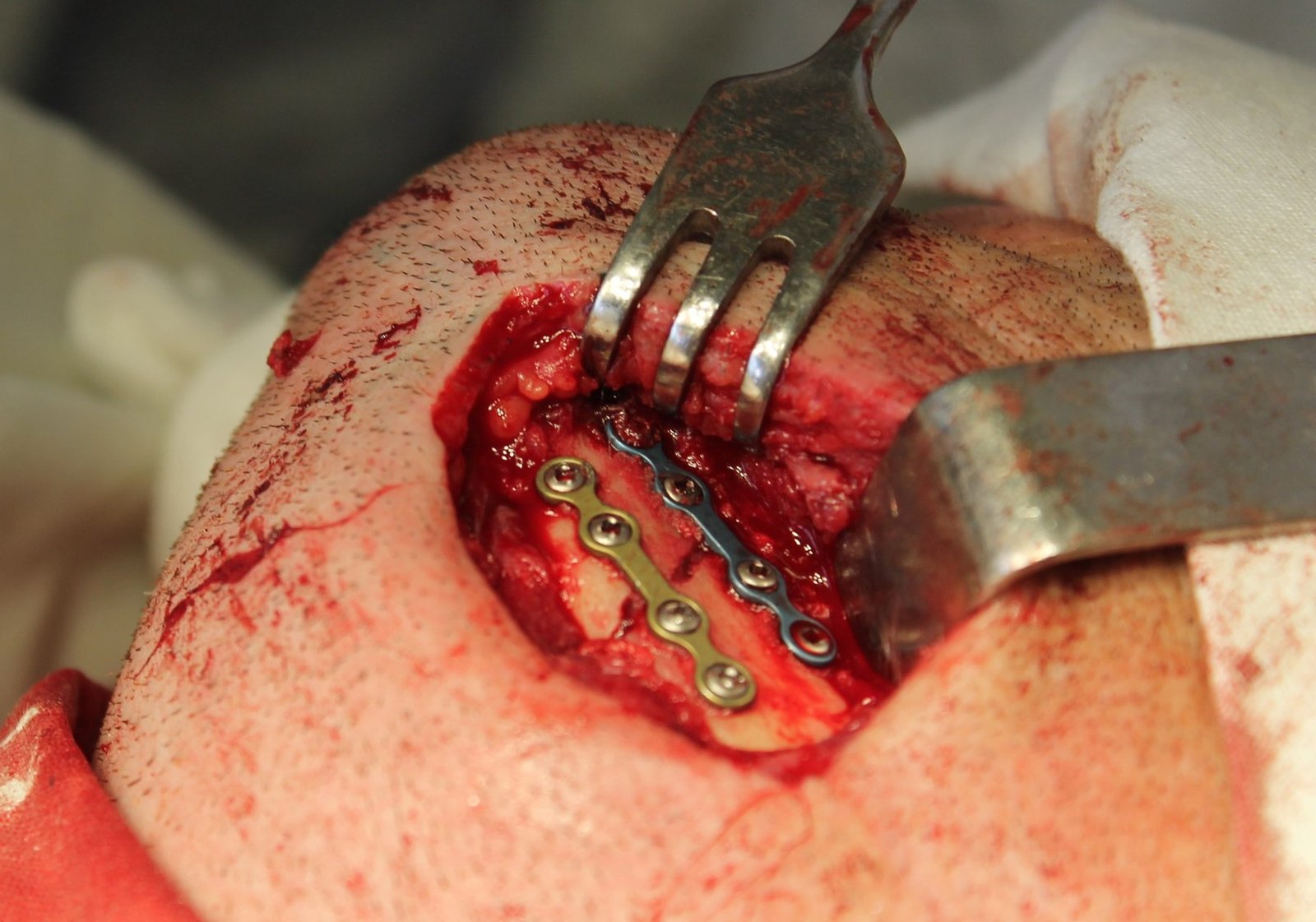
    The study found that titanium osteosynthesis plate design affected both how radiation was distributed near the plates and how two human cell types grew after exposure. In particular, plate geometry and diameter were associated with dose increases in front of the plates and dose reductions behind them.

    Why the authors say this matters

    The authors conclude that these findings matter because metallic fixation hardware may influence dose distribution during adjuvant radiotherapy, which is radiotherapy given after surgery. They suggest that reduced metal volume and specific plate geometries should be considered in reconstructive planning for patients undergoing this treatment.

    What the researchers tested

    The researchers used a three-dimensional printed mandibular phantom based on patient CT data, together with a water phantom, to simulate clinical irradiation conditions. They irradiated the setup with an Ethos linear accelerator and analyzed dose changes near different plate designs. They also irradiated human mesenchymal stromal cells and human umbilical vein endothelial cells under the same conditions and measured proliferation with MTS assays.

    What worked and what didn't

    Distinct dose increases were detected anterior to the plates, and dose reductions were seen in the shadowing region. These physical changes were associated with significant differences in proliferation for both human mesenchymal stromal cells and human umbilical vein endothelial cells. The effects varied depending on plate diameter and geometry.

    What to keep in mind

    This was an experimental study using a printed phantom and cell culture models, so the summary does not provide direct clinical outcome data from patients. The abstract does not describe additional limitations beyond the experimental setup.

    • Titanium osteosynthesis plate geometry changed local radiation dose patterns.
    • Dose increases occurred in front of the plates, with dose reductions behind them.
    • Cell proliferation of human mesenchymal stromal cells and human umbilical vein endothelial cells differed after irradiation.
    • The effects depended on plate diameter and geometry.
    • The authors suggest considering reduced metal volume and specific plate shapes in reconstructive planning.
  • Dengue’s economic burden in Puerto Rico was far higher during epidemics

    Dengue’s economic burden in Puerto Rico was far higher during epidemics

    What the study found

    The study found that dengue in Puerto Rico carried a substantial economic burden, especially in epidemic years. Estimated total costs were much higher during an epidemic year than during a median-incidence year.

    Why the authors say this matters

    The authors conclude that the financial strain of dengue is considerable, particularly during epidemics. They say the findings underscore the need for greater resource allocation, prevention strategies, and policy interventions to reduce the economic impact of future outbreaks.

    What the researchers tested

    The researchers updated estimates of dengue’s economic burden in Puerto Rico using data from patients, hospitals, and insurance companies. They used island-wide passive surveillance linked to sentinel acute febrile illness surveillance, interviewed 101 people diagnosed with dengue, and analyzed costs with Bayesian multiplier methods and a bottom-up costing approach.

    What worked and what didn't

    In the median-incidence year of 2014, 597 reported dengue cases were estimated to correspond to 4,500 outpatient cases and 3,900 hospitalized cases. In the epidemic year of 2010, 10,359 reported cases were estimated to correspond to 77,300 outpatient cases and 67,300 hospitalized cases; total economic burden was estimated at 1.1 billion USD, compared with 62.7 million USD in the median year. Median costs per case were 5,200 USD for hospitalized children, 6,800 USD for hospitalized adults, 2,300 USD for outpatient children, and 2,700 USD for outpatient adults, and direct medical plus indirect costs made up the largest share of total costs.

    What to keep in mind

    The abstract does not describe detailed limitations beyond the study’s use of estimates adjusted for underreporting. The findings are specific to Puerto Rico and to the years analyzed, 2010–2023.

    • Dengue’s economic burden in Puerto Rico was much higher in an epidemic year than in a median-incidence year.
    • The estimated total burden was 1.1 billion USD in 2010 versus 62.7 million USD in 2014.
    • Direct medical costs and indirect costs accounted for the largest share of total costs.
    • Underreporting adjustment substantially increased estimated case counts beyond reported cases.
    • Median per-case costs were higher for hospitalized cases than outpatient cases, for both children and adults.
  • Emotion regulation success tracks brain-wide gradient reconfiguration

    What the study found

    The study found that individual differences in emotion regulation success were associated with systematic reconfiguration along Gradient 1, a principal axis of large-scale brain organization that differentiates unimodal and heteromodal brain areas. The authors also report that this gradient-based pattern was associated with lower negative affect in daily life in a smaller subset of participants.

    Why the authors say this matters

    The authors suggest this provides a biologically grounded, gradient-based perspective on emotion regulation success. They conclude that these dynamics may serve as predictive biomarkers of regulatory success and could inform targeted interventions in clinical populations.

    What the researchers tested

    The researchers analyzed two large functional magnetic resonance imaging (fMRI) datasets, with 358 and 263 participants. They projected global activation patterns from a laboratory emotion regulation task onto principal gradients derived from independent resting-state fMRI data from the Human Connectome Project, and they also used smartphone-based experience sampling in a subset of 55 participants.

    What worked and what didn't

    In both datasets, regulation success was associated with reconfiguration along Gradient 1. This same gradient-based neural reconfiguration was associated with lower negative affect in daily life in the subset studied, and meta-analytic decoding linked Gradient 1 and regulation success with social cognition, memory, attention, and negative emotion. The abstract does not describe null results or failed analyses.

    What to keep in mind

    The daily-life affect finding was based on a smaller subset of participants, not the full samples. The abstract does not describe additional limitations, and it does not claim that the findings establish causation.

    • Emotion regulation success was linked to systematic reconfiguration along Gradient 1 in two fMRI datasets.
    • Gradient 1 is described as a principal axis separating unimodal and heteromodal brain areas.
    • A similar gradient-based pattern was associated with lower negative affect in daily life in a subset of 55 participants.
    • Meta-analytic decoding connected the gradient and regulation success with social cognition, memory, attention, and negative emotion.
    • The authors suggest the pattern may be useful as a predictive biomarker and for clinical interventions.
  • Rising markups drove income inequality in France

    What the study found

    The study finds that rising markups were the main driver of income inequality in France. It also finds that taxation, markups, and asset prices all contributed to wealth inequality.

    Why the authors say this matters

    The authors conclude that the findings help explain how income and wealth inequality have evolved in France since 1984. They also say the results highlight the role of differential asset price movements and endogenous saving responses in shaping wealth inequality over time, where endogenous saving means households change how much they save in response to economic conditions.

    What the researchers tested

    The researchers used a heterogeneous-agent model, meaning a model that allows different households to behave differently. The model combined endogenous portfolio choice, a detailed representation of the tax-and-transfer system, and a reduced-form link between markups and top incomes through entrepreneurial risk. They paired this with counterfactual simulations and a simple accounting decomposition of wealth accumulation.

    What worked and what didn't

    The model accounted for the observed trends in income and wealth inequality in France since 1984, including the top 1% income and wealth shares. The analysis identified rising markups as the primary driver of income inequality, while taxation, markups, and asset prices all made significant contributions to wealth inequality.

    What to keep in mind

    The abstract does not report limitations beyond the study's focus on France since 1984. It also does not provide details on model uncertainty, alternative explanations, or how strongly each mechanism contributed beyond the qualitative ranking described.

    • Rising markups were identified as the main driver of income inequality.
    • Taxation, markups, and asset prices all contributed to wealth inequality.
    • The model matched observed inequality trends in France since 1984, including top 1% shares.
    • The study used counterfactual simulations and an accounting decomposition of wealth accumulation.
    • The authors highlight differential asset price movements and endogenous saving responses in wealth inequality.
  • Gran Alpin balanced cooperative ideals with market pressures over time

    Gran Alpin balanced cooperative ideals with market pressures over time

    What the study found

    The study found that Gran Alpin, a cereal producer cooperative in Switzerland, initially strongly embodied cooperative commoning, but this was later challenged by internal and external pressures. Over time, the cooperative maintained some core shared values while also changing in response to market and policy conditions.

    Why the authors say this matters

    The authors conclude that sustaining cooperative principles and values requires ongoing institutional adaptation. They suggest that this involves selective engagement with market mechanisms and public policy processes, and they frame their case as showing both the contradictions and possibilities of pursuing cooperative commoning within capitalist agri-food systems.

    What the researchers tested

    The researchers used an in-depth qualitative case study of Gran Alpin in the mountain region of Grisons, Switzerland. They analyzed how cooperative ideals were established, maintained, and transformed over time using the idea of cooperative commoning and institutional bricolage, meaning the piecing together and reshaping of institutions through practices such as articulation, alteration, aggregation, and re-articulation.

    What worked and what didn't

    Early on, the cooperative's practices and institutions strongly reflected cooperative commoning, shaped by weak state support, market exclusion, ecological risks, economic vulnerability, cultural references, and strong social ties. Later, that founding model was challenged, and the cooperative strategically hybridized its approach by adding market logics and altering public policies, while also trying to re-articulate collective identity and responsibility. The abstract says managerial leadership and profitability concerns became more prominent, but ongoing efforts helped partially renew cooperative commoning.

    What to keep in mind

    This is a single case study, so the findings are specific to Gran Alpin and its context. The abstract does not provide quantitative measures or compare this cooperative with others in a systematic way.

    • Gran Alpin began with a strong form of cooperative commoning.
    • Later internal dynamics and external pressures challenged the original cooperative model.
    • The cooperative selectively adopted market logics to maintain legitimacy.
    • It also worked to shape public policies supporting ecological and cultural values.
    • Managerial leadership and profitability concerns became more prominent over time.
  • Macassan Muslim contact shaped limited Aboriginal Islamic adoption

    What the study found

    The article argues that Macassan Muslims from Makassar, Sulawesi, were among the earliest traders to interact with Aboriginal peoples in northern Australia and helped introduce Islam to the region. It says that among the Yolŋu of Arnhem Land, some people adopted Islamic practices, but many did so only in part, while a minority fully embraced Islam, especially through intermarriage.

    Why the authors say this matters

    The authors conclude that these encounters help fill a gap in scholarship about Islam at the edge of its historical reach in Australia. The study suggests this history is important for understanding the cultural and spiritual encounters between Islam and Aboriginal communities.

    What the researchers tested

    The article provides a comprehensive analysis of interactions between Macassan Muslims and Aboriginal Australians, with particular attention to the Yolŋu. It examines the introduction of Islam, syncretism, Sufi influence, and what the author calls "incomplete" Islamic conversion, drawing on interdisciplinary sources and empirical data.

    What worked and what didn't

    The analysis finds evidence of syncretism, meaning the blending of religious traditions, and notes Sufi influence in these encounters. It also reports that northern Aboriginal peoples often adopted only certain Islamic practices, while a smaller number fully converted, especially those who intermarried.

    What to keep in mind

    The abstract does not give detailed information about the specific sources, data, or analytical steps used. It also focuses mainly on the Yolŋu and northern Aboriginal peoples, so the summary should not be taken as describing all Aboriginal communities equally.

    • Macassan Muslims from Makassar were early traders who interacted with Aboriginal peoples in northern Australia.
    • The article says Islam was introduced to the region through these encounters, especially among the Yolŋu.
    • Many Aboriginal adopters are described as practicing only part of Islam rather than converting fully.
    • A minority fully embraced Islam, particularly in cases of intermarriage.
    • The authors frame the study as addressing a gap in scholarship about Islam in Australia.
  • Odd isotope selectivity in calcium was enhanced by polarization control

    What the study found

    The study found that odd-even isotope selectivity in calcium could be controlled with linearly polarized light in a resonance ionization scheme. In this setup, calcium-40, the abundant even isotope, was suppressed while calcium-43, a rare odd isotope, was selected.

    Why the authors say this matters

    The authors conclude that this relatively simple method may have application in separating rare odd calcium isotopes. They note possible relevance for quantum information via ion trapping for calcium-43, and for cosmology and biomedicine for calcium-41.

    What the researchers tested

    The researchers investigated odd-even isotope selectivity in calcium using a laser resonance ionization transition scheme with a J=0-1-0 transition. They used linearly polarized light and changed the polarization angle with a half-waveplate to apply angular momentum selection rules.

    What worked and what didn't

    Suppression of calcium-40 and selection of calcium-43 were confirmed as the linear polarization angle changed. The abstract says that setting transition polarizations to be linearly orthogonal forbids excitation of the even isotopes while allowing excitation of the odd isotope in the electric dipole basis. Spectroscopy in the Rydberg level transition also showed selectivity, with a reported maximum separation coefficient of 9e3, depending on the hyperfine transition.

    What to keep in mind

    The reported selectivity depends on the specific hyperfine transition. The abstract does not describe experimental limits beyond this dependence, and it does not give details on broader performance outside the tested calcium isotope transitions.

    • Linearly polarized light was used to control calcium isotope selectivity in resonance ionization.
    • Calcium-40 was suppressed while calcium-43 was selected.
    • Orthogonal transition polarizations were described as forbidding even-isotope excitation in the electric dipole basis.
    • A maximum separation coefficient of 9e3 was reported, depending on the hyperfine transition.
    • The authors say the method may be useful for separating rare odd calcium isotopes.
  • AI processing improved some low-dose CBCT images

    AI processing improved some low-dose CBCT images

    What the study found

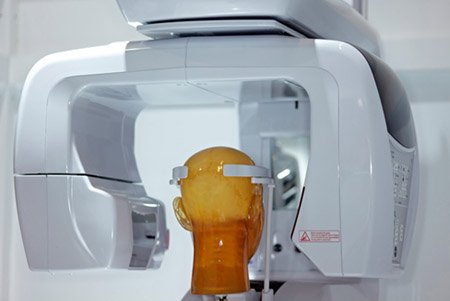
    The study found that AI-based image processing may partly preserve image quality in low-dose cone-beam computed tomography (CBCT, a dental 3D imaging method) when the dose is moderately reduced. The 20% dose images processed with AI were not significantly different in quality from the 100% raw dose images, while the 10% dose images were worse.

    Why the authors say this matters

    The authors suggest this may help reduce the image-quality loss that comes with lowering CBCT radiation dose. They also conclude that larger studies in more diverse patient groups and clinical settings are needed to confirm the findings.

    What the researchers tested

    The researchers acquired CBCT scans from one healthy adult male at three dose levels: 10%, 20%, and 100% of standard dose. Each dataset was then processed with an AI-based image enhancement model, and five dental specialists rated the images using a 6-point scale across 12 anatomical and diagnostic criteria.

    What worked and what didn't

    AI-processed 20% dose images received image-quality scores that did not differ significantly from 100% raw dose images (median 4.45 vs. 5.05; p > 0.05). AI-processed 10% dose images scored significantly lower (p = 0.0074), and AI-processed 100% dose images were rated lower than the corresponding raw images.

    What to keep in mind

    This was a preliminary study based on scans from a single healthy adult male, so the results are limited in scope. The abstract also notes that further large-scale studies in diverse patient populations and clinical settings are required.

    • AI image processing was tested as a way to improve low-dose dental CBCT image quality.
    • At 20% of standard dose, AI-processed images were not significantly different from 100% raw dose images.
    • At 10% of standard dose, AI-processed images had significantly lower quality scores.
    • AI-processed 100% dose images were rated lower than the corresponding raw images.
    • The study used scans from one healthy adult male and five dental specialists as raters.
  • Parents reported long, uncertain waits for ADHD assessment

    What the study found

    Parents described the wait for an attention-deficit/hyperactivity disorder (ADHD) assessment as a period of uncertainty and stress. The study identified concerns about communication from services, access to support, and the impact of waiting on children and families.

    Why the authors say this matters

    The authors conclude that parents' well-being could be improved by clearer information about wait times and more effective signposting and support during the assessment process. They suggest this may help reduce stressors such as feeling responsible for a child's difficulties and managing educational needs.

    What the researchers tested

    The researchers carried out semi-structured interviews with 41 parents of children aged 5 to 11 years. The study was nested within a large randomised controlled trial and used reflexive thematic analysis to examine parents' experiences while waiting after being accepted onto a Child and Adolescent Mental Health Services (CAMHS) waitlist.

    What worked and what didn't

    Around 30% of parents had waited 18 to 24 months, and 10% had waited more than 2 years. About half of the children were still waiting for an initial assessment at the time of interview. Six themes emerged, including uncertainty about the assessment process, lack of communication, the importance of diagnosis, difficulty accessing support, negative effects on mental health and education, and recommendations for better communication between services and families.

    What to keep in mind

    The findings come from interviews with parents in the U.K. and may not apply beyond this setting. The abstract does not describe detailed child outcomes, and it does not provide a comparison group for the interview findings.

    • Parents described the waiting period for ADHD assessment as uncertain and stressful.
    • Lack of communication from services was one of the main themes reported.
    • About half of the children were still waiting for an initial assessment at interview.
    • Thirty percent of parents had waited 18 to 24 months, and 10% had waited more than 2 years.
    • The authors say clearer wait-time information and better signposting could improve parent well-being.