What the study found
The study found that integrating beams into cross-laminated-timber (CLT) floors reduced low-frequency impact noise, and that the event maximum level, or LAFmax, was strongly associated with perceived loudness. The authors report that this relationship held for both magnitude estimation and paired-comparison listening tests.
Why the authors say this matters
The authors conclude that beam integration is an effective structural lever for sub-100 Hz impact noise. They also say that LAFmax, assessed on simulation or rubber-ball tests, provides a perceptually grounded design metric that complements conventional ratings.
What the researchers tested
The researchers coupled a validated plate-beam finite-element model of a two-story CLT test building with a rectangular room-acoustic model. They generated 12 auralized stimuli from three slab thicknesses (150, 210, and 270 mm), with and without mid-span and quarter-span beams, using jump-type and run-type force inputs, and then played them to 20 normal-hearing adults in a semi-anechoic room.
What worked and what didn't
Beam integration lowered LAFmax by 1.9 dB, 1.3 dB, and 5.9 dB for the 150, 210, and 270 mm slabs, respectively, with a mean reduction of 3.1 dB. Thicker slabs were consistently quieter than thinner ones, and the listening results showed strong correlations between perceived loudness and LAFmax (r = 0.88 for magnitude estimation and r = 0.85 for paired comparison).
What to keep in mind
The abstract does not describe limitations beyond the specific simulation-and-listening setup used here. The findings are based on one modeled two-story CLT test building, 20 normal-hearing adults, and the tested slab and beam configurations.
Key points
- Low-frequency floor-impact noise was identified as the main acoustic weakness of CLT construction.
- Beam integration reduced LAFmax for all three slab thicknesses tested.
- The largest LAFmax reduction was reported for the 270 mm slab.
- Perceived loudness was strongly correlated with LAFmax in both listening methods.
- The authors say LAFmax can serve as a perceptually grounded design metric.
Disclosure
- Research title:
- Beam integration reduced low-frequency impact noise in CLT floors
- Authors:
- Toshimitsu Asakura, Haruki Mizunuma, Atsuo Hiramitsu
- Institutions:
- Building Research Institute, Tokyo University of Science, Tokyo University of Science
- Publication date:
- 2026-02-23
- OpenAlex record:
- View
- Image credit:
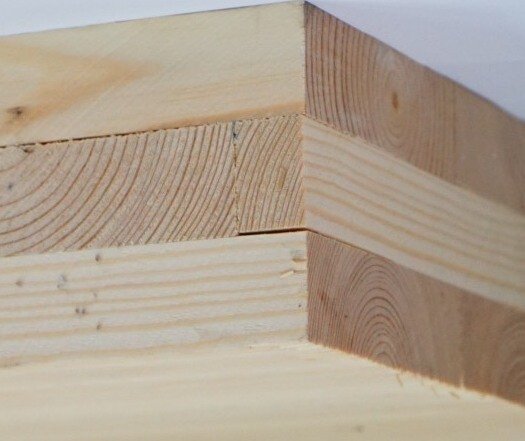
- Райн Александр Дмитриевич, Wikimedia Commons, CC BY-SA 4.0
Get the weekly research newsletter
Stay current with scholarly research without reading academic papers — one filtered digest, every Friday.