Tag: Manufacturing & Industrial Engineering

  • Entrywise transforms preserving sign regularity are characterized

    What the study found

    The paper provides complete characterizations of entrywise transforms that preserve sign regularity and strict sign regularity for rectangular matrices. It also covers the same preservation problem when a given sign pattern is required.

    Why the authors say this matters

    The authors place their results in the context of a long line of work on entrywise preservers, noting that sign regular and strictly sign regular matrices include totally positive and totally non-negative matrices as special cases. The study suggests this extends earlier classification results in a broader matrix setting.

    What the researchers tested

    The researchers studied entrywise functions acting on rectangular matrices. They focused on whether these functions preserve sign regularity and strict sign regularity, and on the same question under a prescribed sign pattern.

    What worked and what didn't

    The abstract states that the authors obtained complete characterizations for both preservation settings they considered. It does not list specific functions in the abstract, so no finer distinctions can be given here.

    What to keep in mind

    The available summary does not describe the detailed characterizations, proofs, or any limitations beyond the scope of rectangular matrices and the stated preservation classes. The abstract also does not report applications or examples.

    • The paper characterizes entrywise transforms that preserve sign regularity and strict sign regularity.
    • The results apply to rectangular matrices.
    • The authors also treat preservation with a given sign pattern.
    • Sign regular and strictly sign regular matrices include totally positive and totally non-negative matrices as special cases.
    • The abstract presents the results as complete characterizations.
  • Framework proposed for adaptive remanufacturing facility layout

    What the study found

    The paper proposes a framework for adaptive facility layout in remanufacturing that combines Bayesian inference, genetic algorithms, and discrete event modeling. The abstract presents this as a way to help manufacturing systems respond to uncertainty in market demand and supply.

    Why the authors say this matters

    The authors say the approach matters because manufacturing faces greater complexity from diverse demand, globalization, environmental concerns, and uncertainty in markets. They suggest the framework can support more sustainable practice while accommodating stakeholder requirements.

    What the researchers tested

    The researchers developed a production model for remanufacturing, which is manufacturing that extends product service life through reuse or refurbishment. The model uses Bayesian inferential, data-driven capability to account for uncertainty, genetic algorithms for adaptability, and discrete modeling to simulate shop floor behavior through sample paths.

    What worked and what didn't

    The abstract says the proposed model is designed to account for uncertainty in market demand and supply. It also states that the modeling approach uses heuristic methods and discrete simulation, but it does not report performance results, comparisons, or failures.

    What to keep in mind

    The available summary describes a proposed framework, not a tested outcome. No quantitative results, validation details, or limitations are given in the abstract.

    • The paper proposes an adaptive facility layout framework for remanufacturing.
    • It combines Bayesian inference, genetic algorithms, and discrete event modeling.
    • The approach is aimed at handling uncertainty in market demand and supply.
    • The authors connect the work to sustainability and extended product service life.
    • The abstract does not report measured results or validation details.
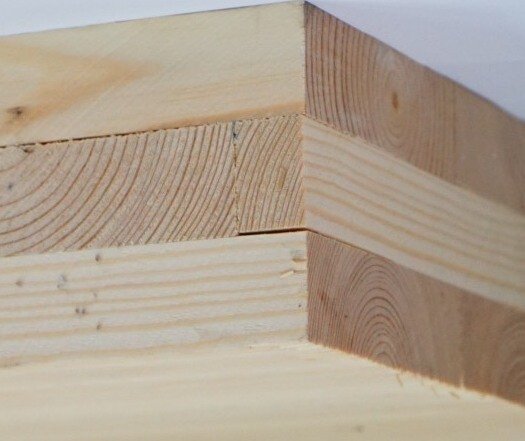
  • Beam integration reduced low-frequency impact noise in CLT floors

    Beam integration reduced low-frequency impact noise in CLT floors

    What the study found

    The study found that integrating beams into cross-laminated-timber (CLT) floors reduced low-frequency impact noise, and that the event maximum level, or LAFmax, was strongly associated with perceived loudness. The authors report that this relationship held for both magnitude estimation and paired-comparison listening tests.

    Why the authors say this matters

    The authors conclude that beam integration is an effective structural lever for sub-100 Hz impact noise. They also say that LAFmax, assessed on simulation or rubber-ball tests, provides a perceptually grounded design metric that complements conventional ratings.

    What the researchers tested

    The researchers coupled a validated plate-beam finite-element model of a two-story CLT test building with a rectangular room-acoustic model. They generated 12 auralized stimuli from three slab thicknesses (150, 210, and 270 mm), with and without mid-span and quarter-span beams, using jump-type and run-type force inputs, and then played them to 20 normal-hearing adults in a semi-anechoic room.

    What worked and what didn't

    Beam integration lowered LAFmax by 1.9 dB, 1.3 dB, and 5.9 dB for the 150, 210, and 270 mm slabs, respectively, with a mean reduction of 3.1 dB. Thicker slabs were consistently quieter than thinner ones, and the listening results showed strong correlations between perceived loudness and LAFmax (r = 0.88 for magnitude estimation and r = 0.85 for paired comparison).

    What to keep in mind

    The abstract does not describe limitations beyond the specific simulation-and-listening setup used here. The findings are based on one modeled two-story CLT test building, 20 normal-hearing adults, and the tested slab and beam configurations.

    • Low-frequency floor-impact noise was identified as the main acoustic weakness of CLT construction.
    • Beam integration reduced LAFmax for all three slab thicknesses tested.
    • The largest LAFmax reduction was reported for the 270 mm slab.
    • Perceived loudness was strongly correlated with LAFmax in both listening methods.
    • The authors say LAFmax can serve as a perceptually grounded design metric.
  • Simulation-based layout optimization improved throughput in CNC machining

    Simulation-based layout optimization improved throughput in CNC machining

    What the study found

    The study found that a simulation-based layout optimization approach using a digital twin, a virtual model of the production system, improved performance in a CNC machining environment. The optimized layout increased throughput and reduced material travel time, workstation idle time, and required personnel.

    Why the authors say this matters

    The authors conclude that the method provides a practical and replicable framework for simulation-driven layout optimization. The study suggests it can support managerial decision-making in small and medium-sized manufacturing enterprises pursuing Industry 4.0 principles.

    What the researchers tested

    The researchers built a detailed simulation model of the current production system using real operational data in Tecnomatix Plant Simulation. They then used the model to evaluate alternative layout scenarios focused on reducing transport distances, eliminating collision points, and improving labor utilization without additional investment in machinery.

    What worked and what didn't

    The simulation results showed a 23% increase in system throughput, a 31% reduction in material travel time, and a 17% decrease in workstation idle time. The optimized layout also allowed one operator to manage three CNC machines instead of two, which the abstract says led to a 40% reduction in required personnel and capacity for an additional production machine.

    What to keep in mind

    The abstract does not describe limitations, and the findings are reported for a CNC machining environment. The summary provided does not include details on implementation outside the simulated scenarios.

    • A digital twin-based simulation was used to optimize material flows and workstation layout.
    • Throughput increased by 23% in the simulation results.
    • Material travel time fell by 31%, and workstation idle time dropped by 17%.
    • One operator could manage three CNC machines instead of two after the layout change.
    • Required personnel decreased by 40%, with capacity created for an additional machine.
  • Explainable machine learning predicted lattice response under impact tests

    What the study found

    The study found that several machine learning models could predict high-strain-rate responses of additively manufactured A286 steel lattices with high accuracy. The best model depended on the response being predicted, and explainable AI methods showed that impact pressure and lattice topology interacted in a nonlinear way.

    Why the authors say this matters

    The authors conclude that the framework can support data-driven lattice design for impact-resistant applications in aerospace and defence. They also say the explainable model architecture can provide transparent design guidance and reduce reliance on exhaustive physical prototyping.

    What the researchers tested

    The researchers tested three lattice topologies: body-centred cubic (a repeating 3D structure with a cube and a center point), honeycomb, and gyroid. These LPBF-fabricated A286 steel structures were subjected to split Hopkinson pressure bar (SHPB, a standard high-strain-rate impact test) loading at dynamic pressures from 2 to 7 bar, and the models used impact pressure and lattice type to predict peak stress, maximum strain, maximum strain rate, and energy absorbed.

    What worked and what didn't

    CatBoost gave the highest accuracy for peak stress prediction (R² = 0.9848), XGBoost for maximum strain (R² = 0.9877), Gradient Boosting for strain rate (R² = 0.9659), and Random Forest for energy absorption (R² = 0.9839). Explainable AI analysis found nonlinear interactions between pressure and lattice type, especially above 6 bar, and surrogate rules suggested that body-centred cubic lattices at 6 bar or higher were associated with optimal energy absorption.

    What to keep in mind

    The study notes that the dataset was relatively small because SHPB testing and LPBF fabrication cycles are experimentally constrained. The authors also state that generalization to other alloys, lattice types, or loading conditions has not yet been validated, and the framework did not include temperature effects, anisotropy, or microstructural evolution during impact.

    • Several machine learning models predicted dynamic lattice responses with high R² values.
    • Different models performed best for different outputs, including peak stress, strain, strain rate, and energy absorption.
    • Explainable AI showed nonlinear interactions between impact pressure and lattice type, especially beyond 6 bar.
    • Surrogate rules suggested body-centred cubic lattices at 6 bar or higher were associated with optimal energy absorption.
    • The authors note limits from the small dataset and from untested generalization to other materials and loading regimes.
  • Hybrid scheduling reduced pharmaceutical production costs

    What the study found

    The study found that a hybrid particle swarm optimization algorithm improved scheduling performance in a pharmaceutical intelligent manufacturing workshop. It also found reductions in production costs, including indirect costs, when the method was tested on actual enterprise data.

    Why the authors say this matters

    The authors say the study provides theoretical support and practical guidance for pharmaceutical enterprises implementing intelligent manufacturing. They also state that it has value for promoting digital transformation in the pharmaceutical industry.

    What the researchers tested

    The researchers proposed a workshop scheduling method based on a hybrid particle swarm optimization algorithm, which is a search method that uses a population of candidate solutions. They combined elite learning, dynamic inertia weight adjustment, and spiral contraction search, and built a multi-objective model that included batch tracing, cleaning validation, and quality inspection constraints.

    What worked and what didn't

    Validation with actual production data from a large pharmaceutical enterprise showed higher equipment utilization, shorter average flow time, a high on-time delivery rate, and lower total production costs. The abstract reports decreases in energy costs and inventory costs, and says indirect costs fell more than direct costs. Statistical significance tests, ablation studies, and sensitivity analysis were used to support the algorithm's effectiveness and robustness.

    What to keep in mind

    The summary does not describe detailed limitations beyond the fact that the validation was based on one large pharmaceutical enterprise's production data. It also does not provide the full statistical results or the exact setup of the sensitivity analysis.

    • A hybrid particle swarm optimization scheduling method was developed for pharmaceutical workshops.
    • The model included pharmaceutical constraints such as batch tracing, cleaning validation, and quality inspection.
    • Equipment utilization increased by 20.1% and average flow time dropped by 18.1% in the validation test.
    • Total production costs fell by 6.3%, while energy costs and inventory costs also decreased.
    • The abstract says indirect costs were reduced more than direct costs, with a 42.3% comprehensive indirect cost reduction rate.
  • BIM- and IFC-based planning optimized AGV hospital routes

    What the study found

    The study found that automated guided vehicle routes in hospitals can be analyzed and optimized using building information modeling (BIM), the open Industry Foundation Classes (IFC) standard, and graph-based pathfinding. The authors report that this approach produces distance-optimized trajectories for multi-level healthcare environments.

    Why the authors say this matters

    The authors conclude that the approach can help with logistical planning, simulation, and proactive management of automated guided vehicles in complex buildings. They also say it supports the development of smart buildings and more sustainable, technologically advanced management of healthcare facilities.

    What the researchers tested

    The researchers presented a methodology for analyzing and optimizing automated guided vehicle paths within healthcare facilities. They used BIM and IFC data to build an accurate geometric and semantic representation of the building, converted that information into a graph model, and applied pathfinding algorithms such as A* while considering operational and collision constraints.

    What worked and what didn't

    The approach provided distance-optimized automated guided vehicle paths. The abstract states that integrating BIM, IFC, and graph theory was effective for logistical planning, simulation, and management in multi-level environments. It does not report any failed tests or comparative performance results.

    What to keep in mind

    The available summary does not describe study limitations, sample size, or direct validation against other route-planning methods. It also does not provide numerical performance measures or details on implementation in a live hospital setting.

    • The study proposes a way to optimize automated guided vehicle routes in hospitals.
    • BIM and IFC were used to represent the building’s geometry and semantics.
    • The building data were converted into a graph model for pathfinding.
    • The A* algorithm was used with operational and collision constraints.
    • The abstract says the approach produced distance-optimized routes in multi-level environments.
  • Thermally programmable acoustic metastructure enables direction-dependent absorption

    What the study found

    The study found that a thermally programmable two-port non-Hermitian acoustic metastructure can produce broadband, direction-dependent sound absorption. The authors report that temperature changes in air properties, such as density, viscosity, and speed of sound, can tune the system's absorption behavior.

    Why the authors say this matters

    The authors conclude that this provides a compact route for broadband sound control in extreme or variable-temperature environments. They also suggest it offers fundamental guidance for designing programmable acoustic absorbers and a foundation for future material and high-temperature implementations.

    What the researchers tested

    The researchers used a unified transfer-matrix and electro-acoustic circuit modeling framework to examine how thermal variation affects the metastructure. They studied how changes in air density, viscosity, and speed of sound influence impedance matching, loss-leakage coupling, and scattering-matrix eigenvalues.

    What worked and what didn't

    Numerical analyses showed an effective bandwidth of 321 Hz at a deep subwavelength scale, along with robust one-sided suppression of reflection. The model also showed temperature-driven transitions between under-damped, critically damped, and over-damped states, and linked thermal modulation to asymmetric absorption associated with exceptional point behavior.

    What to keep in mind

    The abstract reports modeling and numerical prediction, not experimental validation. It does not describe specific limitations beyond noting the framework is intended for variable-temperature environments.

    • Temperature was used as a non-geometric tuning variable for a two-port acoustic metastructure.
    • The study reports broadband and direction-dependent sound absorption.
    • Thermal changes in air density, viscosity, and speed of sound were modeled as affecting impedance matching and loss-leakage coupling.
    • Numerical results showed an effective bandwidth of 321 Hz at a deep subwavelength scale.
    • The model showed temperature-driven transitions among under-damped, critically damped, and over-damped states.
  • Low-temperature bioprinting produced aligned porous GelMA constructs

    What the study found

    The study found that a low-temperature embedded 3D bioprinting strategy could produce porous, aligned GelMA bioinks by using phase separation and shear alignment. The printed cell-loaded patches showed aligned microstructures, directional cell elongation, and higher Myogenin expression than isotropic controls.

    Why the authors say this matters

    The authors suggest this approach matters because structural anisotropy, meaning direction-dependent structure, is important for tissue function and directional biological processes such as contraction and mechano-transduction. They conclude that the method may help fabricate anisotropic constructs for functional artificial tissue engineering.

    What the researchers tested

    The researchers tested a cooling-based anisotropic embedded 3D bioprinting platform using a temperature-inert support bath. Their approach leveraged the viscosity difference between polyethylene oxide (PEO) and GelMA to induce phase separation and shear alignment, followed by photo-crosslinking and removal of PEO and the support bath.

    What worked and what didn't

    The strategy produced microstructures with controlled porosity and orientation, and the low-temperature conditions helped stabilize the aligned structures through reversible hydrogen-bond networks. After printing, the support bath gradually dissolved upon warming above 37 °C, and photo-crosslinking permanently stabilized the anisotropic microstructures. The C2C12-encapsulated patch showed pronounced directional elongation and more than a 3-fold increase in Myogenin expression compared with isotropic controls.

    What to keep in mind

    The abstract does not describe detailed study limitations or broader testing beyond the reported patch and cell model. The findings are presented for this specific low-temperature embedded bioprinting strategy and the C2C12-encapsulated patch described in the summary.

    • A low-temperature embedded 3D bioprinting strategy was used to create porous, aligned GelMA bioinks.
    • The method relied on phase separation and shear alignment between PEO and GelMA.
    • A temperature-inert support bath stabilized printing below 37 °C and dissolved above 37 °C.
    • Printed C2C12-loaded patches showed directional elongation and over a 3-fold increase in Myogenin expression versus isotropic controls.
    • The abstract says the approach enables microstructural anisotropy without external fields or specialized ink formulations.
  • Optimized acoustic switch improves transmission contrast

    What the study found

    The study found that a tunable acoustic switch can be designed using multiresonant asymmetric scatterers in a periodic sonic crystal. By rotating the scatterers by 90 degrees, the system changes which frequency ranges transmit sound and which are insulated.

    Why the authors say this matters

    The authors conclude that this approach offers a simple, robust, and cost-effective solution for tunable acoustic filtering. The study suggests it may help advance adaptive acoustic devices for noise control and acoustic wave manipulation.

    What the researchers tested

    The researchers developed a multiobjective optimization framework for a sonic crystal with Helmholtz resonators, which are cavity-based resonators that create local resonance bandgaps. They used the epsilon-variable multiobjective genetic algorithm to optimize geometric parameters under 3D-printability constraints and tested the design with numerical simulations and a 3D-printed prototype.

    What worked and what didn't

    The optimized design showed enhanced tunable acoustic wave transmission, with complementary bandgaps in the two perpendicular orientations of the scatterers. The results also indicate improved switching performance compared with the initial design. The abstract does not report which design elements failed or any negative outcomes beyond the need for optimization.

    What to keep in mind

    The summary describes performance in the low to mid-frequency range of 500 to 2500 Hz. The available abstract does not provide detailed numerical values for the performance metrics beyond stating that contrast ratio and transmission difference were optimized.

    • A tunable acoustic switch was designed using multiresonant asymmetric scatterers in a periodic sonic crystal.
    • Rotating the scatterers by 90 degrees changed the system's acoustic insulation and transmission ranges.
    • The optimization targeted contrast ratio and absolute transmission difference.
    • Numerical simulations and a 3D-printed prototype were used to validate the design.
    • The optimized design showed complementary bandgaps and improved switching performance over the initial design.