What the study found
The study found that collaborative authoring of virtual reality environments is feasible, but it adds coordination overhead and does not improve overall efficiency. Participants preferred PC-based authoring over VR-based authoring and preferred working with another human over working with an AI assistant.
Why the authors say this matters
The authors conclude that collaborative VR end-user development tools are technically feasible, but they are not yet perceived as suitable alternatives to PC-based authoring, especially for VR-based authoring. The study suggests this has implications for designing collaborative VR authoring systems and for future research on combining human and AI collaborators in immersive authoring environments.
What the researchers tested
The researchers presented Co-VREUD, a web-based end-user development tool for co-creating VR environments. Co-VREUD supported real-time collaboration between two users or between a human user and an AI assistant, and it allowed authoring from both PC-based and VR-based interfaces.
What worked and what didn't
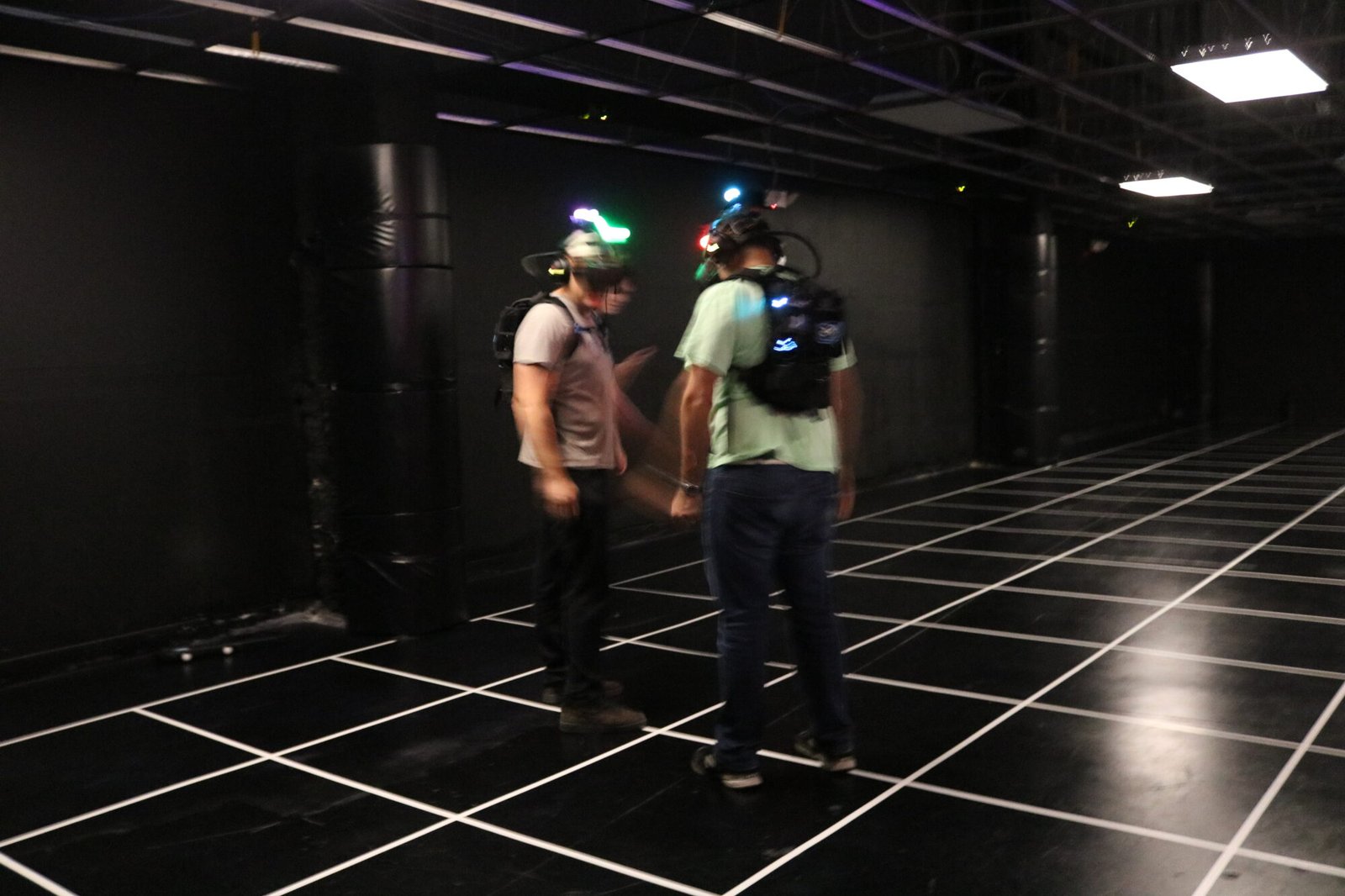
In a controlled 2 × 2 between-subject study with 32 participants, the researchers compared collaboration type (human-human vs. human-AI) and device type (PC vs. VR). The results showed additional coordination overhead in collaboration without overall efficiency gains, and participants consistently preferred PC over VR and human collaborators over AI assistants. Qualitative observations also showed distinct collaboration behavior patterns during human-human collaboration.
What to keep in mind
The summary does not describe detailed limitations beyond the study setting and sample size. The findings come from a controlled study with 32 participants, so the results are limited to the conditions tested.
Key points
- Co-VREUD was designed for real-time collaborative authoring of VR environments.
- The study compared human-human collaboration with human-AI collaboration.
- Participants preferred PC-based authoring over VR-based authoring.
- Participants favored collaborating with another human over collaborating with an AI assistant.
- Collaboration added coordination overhead without improving overall efficiency.
Disclosure
- Research title:
- Collaborative VR authoring adds coordination overhead
- Authors:
- Enes Yigitbas, Alessio Dell’Aquila
- Institutions:
- Paderborn University, Paderborn University
- Publication date:
- 2026-06-29
- DOI:
- 10.1145/3816766
- OpenAlex record:
- View
- Image credit:
- Almostnow, Wikimedia Commons, CC BY-SA 4.0
Get the weekly research newsletter
Stay current with scholarly research without reading academic papers — one filtered digest, every Friday.