Blog

  • Pneumococcal pneumonia cases rose again after 2020 in children

    What the study found

    Pneumococcal pneumonia in hospitalized children changed over time during the COVID-19 period, with fewer cases in 2020 and more cases in 2022 and 2023. The study also found shifts in the types of Streptococcus pneumoniae (the bacteria that cause pneumococcal disease) and in antibiotic susceptibility.

    Why the authors say this matters

    The authors conclude that Streptococcus pneumoniae remains an important cause of pneumonia in children and can be associated with severe infection. They suggest that PCV15 and PCV20, which are pneumococcal conjugate vaccines covering additional serotypes (bacterial subtypes), may modestly reduce pneumococcal pneumonia incidence further.
    What the researchers tested

    The researchers retrospectively identified patients aged 18 years or younger admitted with culture-positive pneumonia at 8 children's hospitals in the U.S. from 2017 to 2023. They performed serotyping at a central research laboratory and collected clinical and laboratory data using a standardized case report form.

    What worked and what didn't

    A total of 190 patients with pneumococcal pneumonia were identified. Cases decreased significantly in 2020 and then surged in 2022 and 2023; serotype 3 was most common, especially after 2021, and was associated with higher rates of empyema and necrotizing parenchyma. Penicillin susceptibility was common overall, but all 11 isolates with higher minimum inhibitory concentration values were serotype 19A; among viral coinfections, only influenza was associated with more pneumonia complications than no influenza.

    What to keep in mind

    The abstract does not describe detailed study limitations. The data come from hospitalized children at 8 U.S. children's hospitals, so the findings are limited to that setting and to the cases identified in this retrospective study.

    • Pneumococcal pneumonia cases in hospitalized children dropped in 2020 and then increased in 2022 and 2023.
    • Serotype 3 was the most common type and was linked to more empyema and necrotizing parenchyma.
    • Most isolates were penicillin-susceptible, while all isolates with higher resistance were serotype 19A.
    • Influenza was the only viral coinfection associated with more pneumonia complications than no influenza.
    • The authors say PCV15 and PCV20 may modestly reduce pneumococcal pneumonia incidence further.
  • Longer-lived C. elegans show expanded decrepitude, not slower ageing

    What the study found

    The study found that in Caenorhabditis elegans, lower beta values in the Gompertz equation do not mean ageing has slowed. Instead, they appear to reflect an expansion of decrepitude, meaning a longer period in poor health among longer-lived animals.

    Why the authors say this matters

    The authors conclude that their findings provide a new empirical understanding of the Gompertz parameters and invert their traditional interpretations. They suggest that alpha is the parameter that better reflects healthspan expansion, which they associate with slowed biological ageing.

    What the researchers tested

    The researchers studied the nematode Caenorhabditis elegans using both population-level and individual-level analyses. They examined how life-extending interventions affected mortality and age-related changes in health, focusing on the Gompertz equation parameters alpha and beta.

    What worked and what didn't

    Interventions that extended lifespan could reduce alpha, beta, or both, consistent with the abstract's description of Gompertz mortality changes. Reductions in beta were found not to indicate slowed biological ageing, but rather an expansion of decrepitude in longer-lived members of the population. Reductions in alpha were reported to better reflect increased healthspan.

    What to keep in mind

    The abstract does not describe specific interventions, detailed experimental conditions, or effect sizes. The work was done in Caenorhabditis elegans, so the summary does not state whether the same interpretation applies to other species.

    • Reduced beta values were linked to expanded decrepitude, not slower biological ageing.
    • Reduced alpha values were described as a better indicator of healthspan expansion.
    • The study examined mortality and health changes in Caenorhabditis elegans.
    • Life-extending interventions could reduce alpha, beta, or both.
    • The authors say their findings invert traditional interpretations of the Gompertz parameters.
  • Blue light TURBT may reduce recurrence and progression

    What the study found

    Blue light-enhanced transurethral resection of bladder cancer, or TURBT, may lower the chance that non-muscle invasive bladder cancer comes back or progresses in some patients. The effect appears to depend on baseline risk, with little or no effect in low-risk groups and more benefit in intermediate- and high-risk groups.

    Why the authors say this matters

    The authors conclude that blue light TURBT may help reduce recurrence and progression over time in non-muscle invasive bladder cancer, depending on risk level. They also note that the certainty of the evidence was mostly low, so future studies are likely to change the estimates.

    What the researchers tested

    The review assessed randomized controlled trials comparing blue light versus white light TURBT in adults with suspected or visible urothelial carcinoma of the bladder. It searched major medical databases and trial registers through March 2026 and focused on recurrence, progression, serious surgical complications, death from bladder cancer, and adverse events.

    What worked and what didn't

    Blue light TURBT may reduce recurrence in intermediate- and high-risk patients, but may have little to no effect in low-risk patients. It may reduce progression in high-risk patients, while having little to no effect in low- and intermediate-risk patients; it may have little or no effect on serious surgical complications, death from bladder cancer, adverse events of any grade, or non-serious surgical complications.

    What to keep in mind

    Most of the evidence was rated low certainty, and the authors say study limitations, inconsistency, and imprecision led to downgrading. The review included 17 randomized trials with 4,890 participants, and blue light was not studied in a surveillance setting.

    • Blue light TURBT may reduce recurrence in intermediate- and high-risk non-muscle invasive bladder cancer.
    • Blue light TURBT may reduce progression in high-risk patients, but not clearly in low- or intermediate-risk patients.
    • The review found little or no effect on serious surgical complications, bladder-cancer death, or adverse events overall.
    • The evidence was mostly low certainty, so future studies may change these estimates.
    • The review included 17 randomized controlled trials with 4,890 participants.
  • Covariance decomposition distinguishes coalescent and substitution noise in species-tree estimation

    What the study found

    The study found that pairwise distance estimates used in distance-based species-tree methods can be split into two sources of variance: stochastic gene-tree variation under the multispecies coalescent model and finite-sequence substitutional noise. It also found that which source dominates depends on mutation rate and species-tree height.

    Why the authors say this matters

    The authors suggest that knowing when one source of variance is much larger than the other can help in method design and data collection. They also conclude that, in some settings, a weaker noise source may legitimately be ignored.

    What the researchers tested

    The researchers derived the exact covariance matrix of pairwise distance estimates under a joint multispecies coalescent-plus-substitution model. They used this theory to support confidence estimation and implemented a Gaussian-sampling procedure for generating split support values for METAL trees.

    What worked and what didn't

    The derived covariance matrix allowed the authors to decompose variance into coalescent and sequence-level components. They found that substitutional noise dominates at very low and very high mutation rates, while coalescent variance is the primary contributor at intermediate mutation rates; the interval where coalescent variance dominates becomes narrower as species-tree height increases. They also report that the Gaussian-sampling approach produced more reliable confidence estimates than traditional bootstrapping.

    What to keep in mind

    The abstract does not provide detailed numerical results or a full description of the data used for the empirical demonstration. It also does not list specific limitations beyond the stated dependence on mutation rate and species-tree height.

    • Pairwise distances in species-tree estimation were decomposed into coalescent and substitution noise components.
    • Substitutional noise dominated at very low and very high mutation rates.
    • Coalescent variance dominated at intermediate mutation rates, with a narrower dominance range for taller species trees.
    • The authors suggest that sometimes the weaker noise source can be ignored when designing methods or collecting data.
    • A Gaussian-sampling procedure for METAL trees gave more reliable confidence estimates than traditional bootstrapping.
  • EAC-Net predicts charge density with accurate atomic contributions

    What the study found

    The study found that EAC-Net, short for Equivariant Atomic Contribution Network, can predict real-space charge density by breaking it into symmetry-consistent, atom-centered contributions. The authors report high accuracy, efficient training, and atomic charges that align with chemical intuition.

    Why the authors say this matters

    The authors conclude that this framework bridges two existing approaches to charge-density prediction: basis-function methods, which use strong physical priors but are less flexible, and grid-based methods, which are more expressive but less structured and efficient. The study suggests this provides an accurate, efficient, and physically grounded way to predict charge density.

    What the researchers tested

    The researchers introduced EAC-Net, a deep learning model for charge-density prediction in density functional theory, where charge density is a quantity used in electronic-structure calculations. They tested a design that decomposes the total charge density into atom-centered contributions coupled to real space rather than predicting the full density directly on a grid or from a predefined basis.

    What worked and what didn't

    According to the abstract, the model achieved errors typically below 1% across the periodic table and showed strong generalization to diverse chemical environments. The abstract does not describe specific failures or cases where performance was weaker.

    What to keep in mind

    The summary provided here is limited to the abstract, so details about datasets, baselines, and experimental setup are not available. The abstract does not describe limitations or caveats beyond the general comparison to prior approaches.

    • EAC-Net predicts real-space charge density using atom-centered contributions.
    • The model is described as symmetry-consistent and physically grounded.
    • The authors report errors typically below 1% across the periodic table.
    • The abstract says the model generalizes well to diverse chemical environments.
    • Atomic charges from the model align with chemical intuition, according to the authors.
  • NDVI trends differed between Brazil’s Cerrado regions

    What the study found

    The study found a "remote-sensing paradox" in which the established agricultural region was more stable than the agricultural frontier, despite having more long-standing land conversion. The main common driver of Normalized Difference Vegetation Index (NDVI, a satellite-based measure of greenness) decline was conversion of native savanna to croplands and pastures.

    Why the authors say this matters

    The authors conclude that NDVI-based assessments of land degradation in the Cerrado must consider early land-use history and agricultural management relative to the satellite observation period. The findings indicate that the meaning of NDVI trends can depend on how long land has been used agriculturally.

    What the researchers tested

    The researchers analyzed NDVI trajectories from MODIS satellite data from 2000 to 2022 in two contrasting regions of the Brazilian Cerrado: an established agricultural region and an expanding frontier. They derived NDVI trajectories using Trends.Earth, correlated them with MODIS Gross Primary Production (GPP, a measure of plant carbon uptake), and tested common and region-specific drivers with binary logistic regression and Wald-type Z tests.

    What worked and what didn't

    The established agricultural region showed the smallest share of NDVI decrease, at 7%, and the highest share of increase, at 52%. The agricultural frontier showed greater NDVI decline, at 16%, and smaller increases, at 37%; positive NDVI-GPP relationships were weaker in the established region. Region-specific drivers included precipitation, soil sand content, and fire frequency, and longer agricultural use duration was associated with NDVI increases, which the authors say likely reflects management practices that mask underlying degradation.

    What to keep in mind

    The abstract does not describe all possible limitations, so only the stated scope can be reported. The analysis is limited to two regions in the Brazilian Cerrado and to the 2000-2022 MODIS observation period.

    • The study reported a remote-sensing paradox between an established agricultural region and an expanding frontier in the Brazilian Cerrado.
    • The main shared driver of NDVI decline was conversion of native savanna to croplands and pastures.
    • The established agricultural region had 7% NDVI decrease and 52% NDVI increase, while the frontier had 16% decrease and 37% increase.
    • Positive NDVI-GPP relationships were weaker in the established region.
    • Precipitation, soil sand content, and fire frequency were region-specific drivers.
    • The authors say early land-use history and agricultural management should be considered when interpreting NDVI-based land degradation assessments.
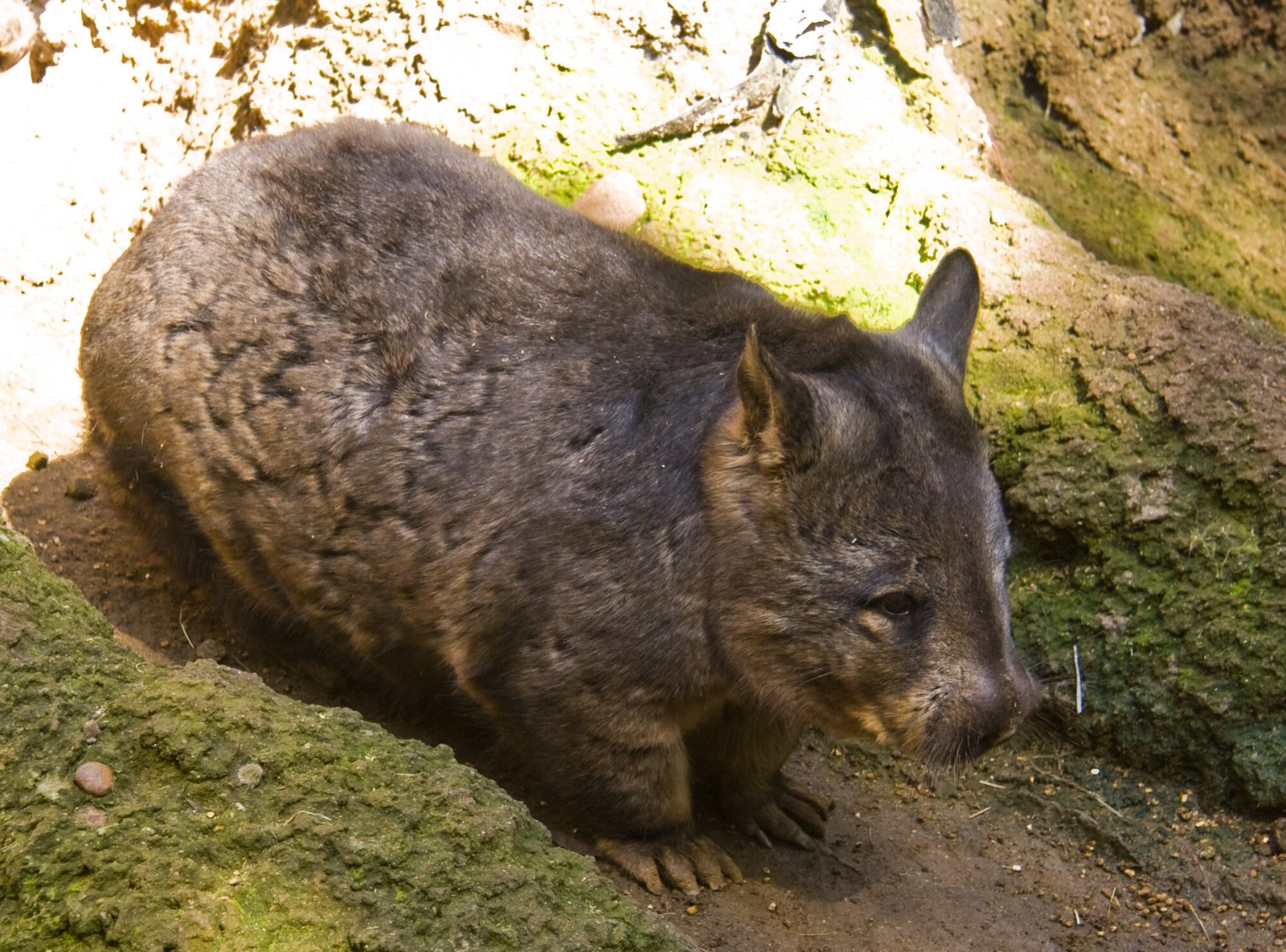
  • Dingo-exposed wombats investigated scent cues more often

    Dingo-exposed wombats investigated scent cues more often

    What the study found

    Southern hairy-nosed wombats showed similar overall response patterns in both study locations, but wombats from dingo-exposed areas were significantly more likely to investigate scent cues in general. Both groups were more likely to investigate dingo scent than rabbit scent.

    Why the authors say this matters

    The authors conclude that investigating novel scent cues is the first step in assessing whether a threat is present and whether a behavioral response is needed. The study suggests this provides foundational insight into experience-based predator responses in southern hairy-nosed wombats and helps improve understanding of prey naivety.

    What the researchers tested

    The researchers studied southern hairy-nosed wombats in areas that had been exposed to dingoes for over 80 years and in areas where dingoes were absent. Camera traps were placed at wombat burrows and paired with one of three olfactory treatments: dingo faeces, rabbit faeces, or no scent, and wombat behaviors were recorded and analyzed with statistical models.

    What worked and what didn't

    Dingo scent was investigated more often than rabbit scent in both locations. Dingo-exposed wombats were significantly more likely to investigate scent overall than dingo-absent wombats, but the abstract does not report a direct anti-predator behavioral response beyond scent investigation.

    What to keep in mind

    The abstract does not describe detailed limitations, sample sizes, or how strongly the findings can be generalized beyond the study locations. The reported behavior is investigation of scent cues, not a direct measure of escape or defensive response.

    • Southern hairy-nosed wombats in both locations investigated dingo scent more than rabbit scent.
    • Wombats from dingo-exposed areas were more likely to investigate scent overall than those from dingo-absent areas.
    • The study used camera traps at burrows and three scent treatments: dingo faeces, rabbit faeces, and no scent.
    • The authors describe scent investigation as an initial step in assessing potential threat.
    • The abstract presents foundational insight into experience-based predator responses in this species.
  • Pruned moment tensor potentials run faster with minimal accuracy loss

    What the study found

    The study found that a post-training, cost-aware pruning method can remove expensive basis functions from Moment Tensor Potentials (MTPs) with minimal loss of accuracy. The authors report that, in nickel and silicon-oxygen systems, the resulting models can be up to seven times faster than standard MTPs.

    Why the authors say this matters

    The authors say the method matters because it speeds up MTPs without requiring new data. They also state that it remains fully compatible with current MTP implementations.

    What the researchers tested

    The researchers tested a post-training pruning strategy for MTPs, which are machine-learning interatomic potentials. These models usually use basis functions chosen by a level-based scheme that does not depend on the data.

    What worked and what didn't

    The pruning strategy worked by removing expensive basis functions while keeping accuracy loss small. In the systems studied, it produced models up to seven times faster than standard MTPs. The abstract does not describe any specific cases where the method did not work.

    What to keep in mind

    The abstract only reports results for nickel and silicon-oxygen systems, so the scope beyond those examples is not described here. Limitations are not otherwise described in the available summary.

    • A post-training pruning method was introduced for Moment Tensor Potentials.
    • The method removes expensive basis functions with minimal loss of accuracy.
    • Models for nickel and silicon-oxygen systems were reported to be up to seven times faster.
    • No new data are required for the pruning approach.
    • The method is described as fully compatible with current MTP implementations.
  • D-type mesoporous silica improved celecoxib delivery and anti-inflammatory effect

    What the study found

    The study found that D-type chiral mesoporous silica carriers performed best for delivering celecoxib, a poorly water-soluble anti-inflammatory drug. The authors report that these carriers improved drug dissolution and showed the strongest anti-inflammatory effect among the tested systems.

    Why the authors say this matters

    The authors conclude that the D-type carriers may offer a double benefit: better drug delivery and stronger anti-inflammatory action. They state that this combination could significantly change anti-inflammatory drug treatment.

    What the researchers tested

    The researchers built two kinds of chiral mesoporous silica systems: xerogels made by a biomimetic method and nanoparticles made by chiral grafting. They loaded celecoxib into these carriers and compared them with a control carrier, then examined carrier-drug interactions, drug crystal form, dissolution, pharmacokinetics, and pharmacodynamics.

    What worked and what didn't

    All of the chiral carriers formed hydrogen bonds with celecoxib and converted it from a crystalline state to an amorphous state, which improved dissolution compared with the raw drug. D-SX and D-MSNs were reported to be the best carriers, possibly because of their chiral grafted groups, and they showed the best in vivo pharmacokinetic and pharmacodynamic results.

    What to keep in mind

    The abstract does not describe detailed study limitations or the size of the effects. It also does not provide the full experimental conditions or enough information to judge how broadly the findings apply beyond celecoxib and the carriers tested.

    • D-type chiral mesoporous silica was reported to be the best celecoxib carrier.
    • All tested chiral carriers formed hydrogen bonds with the drug.
    • The carriers converted celecoxib from crystalline to amorphous form.
    • D-SX and D-MSNs showed improved drug dissolution compared with raw celecoxib.
    • D-SX and D-MSNs had the strongest in vivo pharmacokinetic and anti-inflammatory results.
  • Wavefunction collapse yields emergent time and damped extra modes

    What the study found

    The paper argues that a theory of time based on wavefunction collapse in general relativity can produce emergent time and physical excitations. It also says the scale factor, a measure of cosmic expansion, increases monotonically and can act as a clock.

    Why the authors say this matters

    The authors suggest this framework may help explain how time, an arrow of time, and different graviton modes arise from the underlying theory. They also conclude that the scalar mode may be a viable candidate for dark matter.

    What the researchers tested

    The study develops a theory in which quantum states that violate the momentum and Hamiltonian constraints represent instances of time. It uses stochastic fluctuations of the lapse and shift, together with semi-classical and adiabatic approximations, to examine a cosmological constant-dominated universe in the limit of large space dimension.

    What worked and what didn't

    Under wavefunction collapse, the authors report that scalar, vector, and tensor gravitons arise as physical excitations, and that tensor gravitons show emergent unitary dynamics in the long-time limit. They also report that the vector mode is uniformly suppressed, while the scalar mode decays at a rate proportional to its wave vector; large-wavelength scalar excitations survive longer, whereas short-wavelength ones decay quickly.

    What to keep in mind

    The abstract says these results are demonstrated for a cosmological constant-dominated universe, so the scope is limited to that setting. It also notes that the approximations are controlled only in the limit of large space dimension.

    • The paper proposes that wavefunction collapse can generate emergent time in general relativity.
    • The scale factor is described as increasing monotonically and serving as a clock.
    • Tensor gravitons are reported to show emergent unitary dynamics at long times.
    • The vector mode is said to be uniformly suppressed at all length scales.
    • The scalar mode decays at a rate proportional to wave vector and is described as a possible dark matter candidate.