Blog

  • Hydrology controlled nitrate cycling in a tidal freshwater river

    What the study found

    The study found that nitrate cycling in the Hawkesbury River tidal freshwater zone was strongly shaped by hydrology, especially discharge and residence time. Internal nitrate cycling played a major role, and the balance between external nitrate inputs and in-stream processing changed between wet and dry conditions.

    Why the authors say this matters

    The authors conclude that combining high-resolution sampling with isotope-based mixing models helps resolve nitrogen transformation processes in tidal freshwater zones, where internal cycling strongly influences nitrate form, isotope composition, and downstream export. The study suggests this approach is useful for understanding dynamic environments with multiple nutrient sources.

    What the researchers tested

    The researchers studied nitrate sources and cycling along the Hawkesbury River tidal freshwater zone in Eastern Australia under different hydrological conditions. They used high-resolution stable isotope analysis of nitrate (δ15N-NO3 and δ18O-NO3) together with conservative mixing models, based on more than 650 isotope measurements.

    What worked and what didn't

    δ15N-NO3 values were significantly enriched beyond levels typical of agricultural and urban catchments, which indicated widespread non-conservative nitrate behavior. Mixing-model results showed deviations from conservative nitrate mixing in both wet and dry conditions; during wet periods, hydrological connectivity increased external dissolved inorganic nitrogen inputs, while high discharge and short residence times limited nitrate accumulation and isotopic enrichment.

    What to keep in mind

    The abstract does not describe detailed methodological limits beyond the fact that the work focused on one tidal freshwater zone and compared wet and dry hydrological conditions. The findings are specific to the Hawkesbury River system and the conditions sampled.

    • Nitrate cycling in the tidal freshwater zone was strongly controlled by discharge and residence time.
    • Internal nitrate cycling played a crucial role in regulating nitrate dynamics.
    • Wet conditions increased external dissolved inorganic nitrogen inputs through greater hydrological connectivity.
    • Dry conditions strengthened in-stream processing and isotope–concentration relationships, especially in the upper tidal freshwater zone.
    • Denitrification was an important nitrate removal pathway during dry-period low-flow conditions.
    • Negative Δ(15,18) values during wet periods were consistent with nitrification of groundwater-derived ammonium.
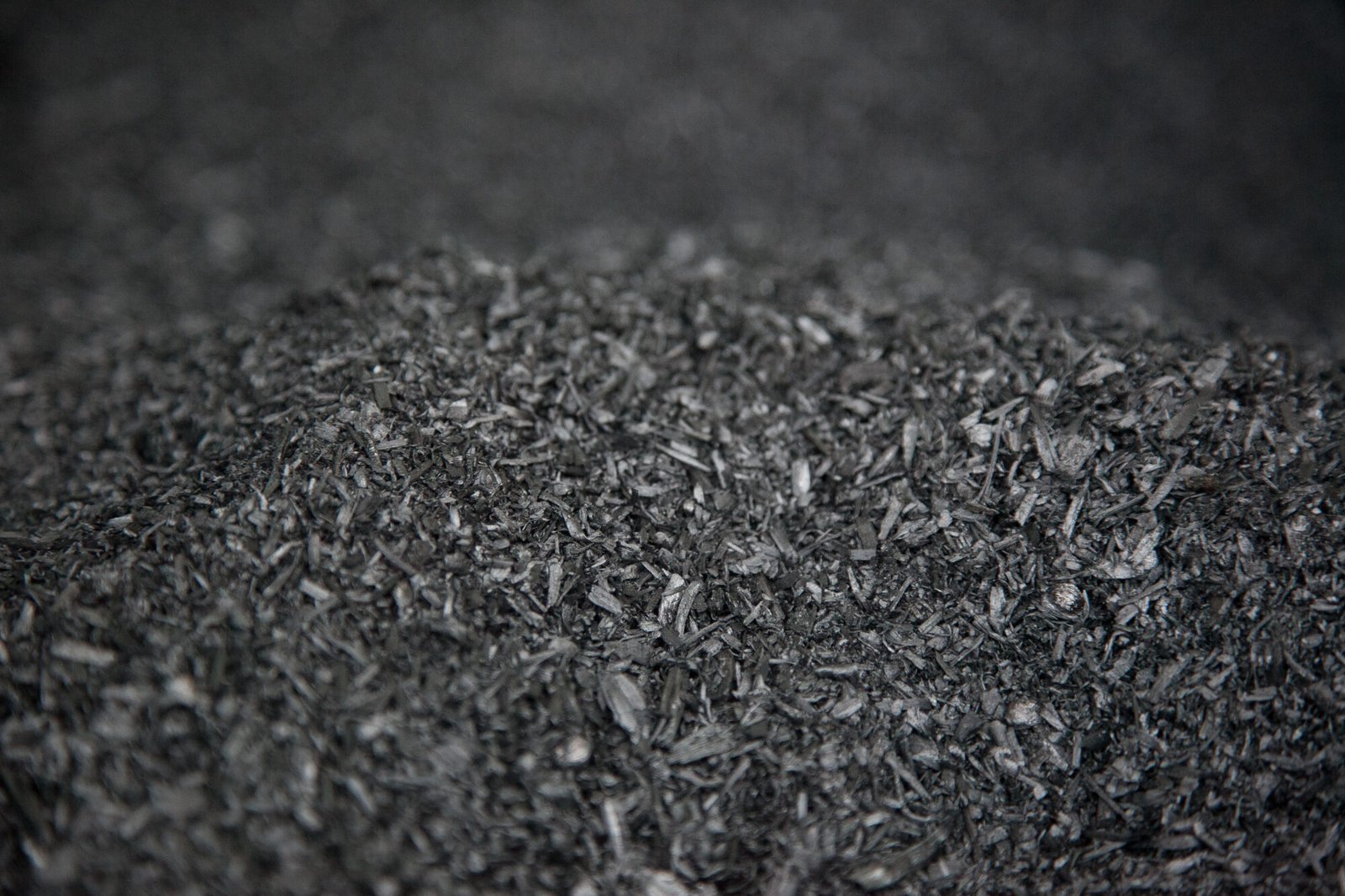
  • Spent coffee ground biochar removed phenolic compounds from hydrolysates

    Spent coffee ground biochar removed phenolic compounds from hydrolysates

    What the study found

    Biochar made from spent coffee grounds removed phenolic compounds from sugarcane bagasse hydrolysates, and its performance depended on how it was produced. The best-performing samples reached an average removal efficiency of 49.5% in the 3.0-fold concentrated hydrolysate.

    Why the authors say this matters

    The authors present spent coffee grounds as an abundant, sustainable, low-cost residue and suggest the resulting biochar may be useful for removing fermentation inhibitors from lignocellulosic hydrolysates. They conclude that this approach offers a promising strategy for hydrolysate detoxification and waste valorization.

    What the researchers tested

    The researchers produced six biochar samples, labeled E1 to E6, from spent coffee grounds by pyrolysis under nitrogen, followed by a final thermal treatment in air at 300 °C. They varied pyrolysis temperature and pyrolizer inclination, then characterized the biochars with nitrogen adsorption/desorption measurements, thermogravimetric analysis, and Fourier-transform infrared spectroscopy. They tested adsorption using hydrolysates at five concentration levels, from 1.0- to 3.0-fold, and at different contact times.

    What worked and what didn't

    Pyrolysis temperature and pyrolizer inclination significantly influenced adsorption performance. Biochars E5 and E6, made under the central point condition of 500 °C and 4.4°, showed the highest phenolic compound removal, and post-pyrolysis calcination improved capacity and early-time adsorption in non-concentrated hydrolysate. The Temkin isotherm fit the equilibrium data best, while pseudo-first-order and Elovich models showed strong correlations, especially at higher hydrolysate concentrations.

    What to keep in mind

    The abstract does not describe limitations beyond the tested conditions. The reported results are specific to the biochars, hydrolysates, and concentration levels studied here.

    • Biochar from spent coffee grounds removed phenolic compounds from sugarcane bagasse hydrolysates.
    • The best samples, E5 and E6, were produced at 500 °C and 4.4° inclination.
    • Maximum average removal efficiency reached 49.5% in 3.0-fold concentrated hydrolysate.
    • Post-pyrolysis calcination improved capacity and early-time adsorption in non-concentrated hydrolysate.
    • Temkin was the best equilibrium model; pseudo-first-order and Elovich fit the kinetics well.
  • Border cell migration is shaped by tangential contact forces and tissue geometry

    What the study found

    The study found that a biophysically informed phase-field model can reproduce key features of border cell cluster migration in the Drosophila melanogaster egg chamber. The authors report a Tangential Interface Migration (TIM) force, which they describe as contact-mediated propulsion along interfaces with surrounding nurse cells.

    Why the authors say this matters

    The authors conclude that the results show how spatial constraints and interfacial forces shape collective cell movement. They also state that the model highlights the utility of phase-field models for capturing the interplay between tissue geometry, contact forces, and chemical signaling.

    What the researchers tested

    The researchers developed a phase-field model of the Drosophila egg chamber, including the oocyte, nurse cells, and surrounding epithelium. The model incorporated mechanical forces, biochemical cues, and the TIM force to study border cell cluster migration.

    What worked and what didn't

    The simulations showed three features of TIM-driven migration: border cells required overlap with a nurse cell substrate to initiate movement, motion was tangential to border cell-nurse cell interfaces, and migration could persist even when the spatial slope of a chemoattractant, a chemical that attracts cells, was decreasing. The authors also report that migration pauses could be varied with or without geometry-mediated changes in chemoattractant distribution, and that a transition to dorsal migration at the oocyte was captured with a sustained medio-lateral chemical cue of small amplitude.

    What to keep in mind

    The abstract does not describe experimental validation beyond the simulations. It also does not provide quantitative performance measures, so the extent of agreement with data is not fully detailed in the available summary.

    • A phase-field model was developed for border cell cluster migration in the Drosophila egg chamber.
    • The model included mechanical forces, biochemical cues, and the Tangential Interface Migration force.
    • TIM-driven migration depended on overlap with nurse cells, moved tangentially to interfaces, and could continue as chemoattractant slope decreased.
    • The simulations captured a transition to dorsal migration at the oocyte with a small sustained medio-lateral chemical cue.
    • The authors state that spatial constraints and interfacial forces shape collective cell movement.
  • Reduced-order data assimilation improved temperature estimation in a PCM solar chimney

    What the study found

    The study found that a reduced-order data assimilation framework could reconstruct dynamic temperature fields in both the airflow and phase change material domains of a solar chimney. The authors also report that it improved estimation of local outlet velocity when the reconstructed fields were used in the forward solver.

    Why the authors say this matters

    The authors conclude that this framework may improve performance estimation from scarce measurements in a coupled solar chimney with phase change material integration. They also say this is the first application of a reduced-order data assimilation framework to this kind of multiphysics system.

    What the researchers tested

    The researchers tested a variational data assimilation framework based on a regularized least-squares formulation. It combined a reduced-order model built from high-fidelity finite-volume simulations of unsteady conjugate heat transfer, liquid-solid phase change, and surface radiation with three measurement data sets of 22, 135, and 203 spatial points, expanded using boundary-layer and bi-cubic interpolation.

    What worked and what didn't

    Using synthetic measurements, the framework reconstructed temperature fields with relative errors below 10% for the initial sensor set and below 3% for the expanded sensor sets. With real measurements, it improved the fidelity of local temperature evolution in both the airflow and phase change material domains. Increasing the number of sensors did not significantly improve local temperature accuracy, but it reduced the root-mean-square error of local outlet velocity by 20%.

    What to keep in mind

    The abstract does not describe broader limitations beyond the measurement conditions tested. The reported error values are tied to the specific solar chimney configuration, the synthetic and real data sets used, and the data-filling strategy applied in this study.

    • A reduced-order data assimilation framework reconstructed temperature fields in both airflow and phase change material domains.
    • The study used three measurement sets with 22, 135, and 203 spatial points, expanded by boundary-layer and bi-cubic interpolation.
    • Synthetic-measurement tests produced relative errors below 10% for the initial sensor set and below 3% for the expanded sets.
    • With real measurements, the method improved local temperature evolution in both domains.
    • More sensors did not significantly improve local temperature accuracy, but they reduced outlet-velocity root-mean-square error by 20%.
  • Machine learning improved early diagnosis of placenta accreta spectrum

    What the study found

    The review found that machine learning (ML) methods performed better than traditional approaches for early diagnosis of placenta accreta spectrum (PAS), a condition where the placenta attaches and invades the uterine wall. The strongest results were reported for ultrasound- and magnetic resonance imaging (MRI)-based models.

    Why the authors say this matters

    The authors say early and accurate prenatal diagnosis of PAS is important because it is linked to lower morbidity, mortality, severe hemorrhage, and cesarean hysterectomy. The study suggests ML could improve diagnostic accuracy, consistency, and reduce human error.

    What the researchers tested

    The authors reviewed 14 studies on ML for early PAS diagnosis using ultrasound and MRI. They examined several model types, including linear, ensemble, deep learning, and hybrid approaches.

    What worked and what didn't

    Ultrasound-based models reached reported accuracy rates of 84.6% to 92.3%, with particularly strong performance from ensemble methods and deep dictionary learning. MRI-based approaches showed even higher performance, with texture analysis using k-nearest neighbors reaching up to 98.1% accuracy. The main challenges described were limited generalizability across populations and variation in imaging quality due to differences in equipment and patient demographics.

    What to keep in mind

    This is a review of 14 studies, not a single clinical trial. The abstract notes that further research is needed to address generalizability and standardization before widespread clinical use.

    • The review found ML methods outperformed traditional approaches for early PAS diagnosis.
    • Ultrasound-based models reported accuracy from 84.6% to 92.3%.
    • MRI-based models reported accuracy up to 98.1% in one texture-analysis approach using k-nearest neighbors.
    • The review included 14 studies and several ML model types, including ensemble and deep learning methods.
    • Generalizability and imaging-quality differences were identified as major challenges.
  • DynamoDB and MongoDB were compared for efficiency

    What the study found

    The article compares Amazon DynamoDB and MongoDB and reports that the study aimed to identify the more efficient system. It also examined which database system better optimizes queries in one of the test scenarios.

    Why the authors say this matters

    The authors suggest the comparison is relevant because it helps determine which non-relational database system performs more efficiently. The study indicates this could be useful for understanding how the two systems behave across different deployment environments.

    What the researchers tested

    The researchers prepared identical databases in four environments: MongoDB Local, DynamoDB Local, MongoDB Atlas, and DynamoDB AWS. They used JMeter, a tool for testing and measuring software performance, to run scripts that measured the execution time of searching, adding, editing, and deleting data.

    What worked and what didn't

    The abstract says the study measured how long database operations took and checked query optimization in one scenario, but it does not state which system performed better. No specific operation-level results are provided in the available summary.

    What to keep in mind

    The available abstract does not include the actual performance results or the final comparison outcome. It also does not describe any limitations beyond the tested environments and scenarios.

    • The article compares Amazon DynamoDB with MongoDB.
    • Identical databases were tested in four environments: local and cloud versions of both systems.
    • JMeter scripts were used to measure the time for searching, adding, editing, and deleting data.
    • One scenario was used to check which system better optimizes queries.
    • The abstract does not state which database was more efficient.
  • New quantum bit thread prescriptions match the quantum extremal surface formula

    What the study found

    The study found several new quantum bit thread prescriptions for holographic entanglement entropy, a way of describing entanglement in holography. The authors say these prescriptions are equivalent, for static states, to the quantum extremal surface formula, a standard rule used in this area.

    Why the authors say this matters

    The authors say their prescriptions provide new ways to describe holographic entanglement entropy, including in settings with entanglement islands and baby universes. They also report that the prescriptions inspire new measures of entanglement called entanglement distribution functions, which can be organized into a convex polytope called the entropohedron.

    What the researchers tested

    The researchers derived multiple quantum bit thread prescriptions, including versions based on vector fields and on measures over bulk curves. They also considered prescriptions that are dependent or independent of the bulk ultraviolet regulator, and both loose and strict versions of constraints.

    What worked and what didn't

    The new prescriptions were found to be equivalent, for static states, to the quantum extremal surface formula. The abstract does not say that any of the proposed varieties failed, but it does note that they come in different forms and constraint types.

    What to keep in mind

    The abstract only states equivalence for static states, so it does not describe results for nonstatic situations. It also does not provide detailed limits, quantitative comparisons, or examples beyond mentioning entanglement islands, baby universes, entanglement distribution functions, and the entropohedron.

    • Several new quantum bit thread prescriptions were derived for holographic entanglement entropy.
    • For static states, the prescriptions are equivalent to the quantum extremal surface formula.
    • The work includes vector field-based and bulk-curve-based formulations.
    • The authors also discuss entanglement islands and baby universes.
    • The prescriptions lead to entanglement distribution functions and the entropohedron.
  • TestPrune reuses regression tests for bug reproduction and validation

    What the study found

    The study found that regression tests, which are usually used to check that earlier behavior still works, can also help debug the current version of software. The authors present TestPrune, an automated technique that reuses these tests for reproducing bugs and validating patches while reducing the test suite to a smaller relevant subset.

    Why the authors say this matters

    The authors say this matters because large test suites can exceed the context limits of large language model (LLM) debugging systems, add noise, and increase inference costs. They also conclude that TestPrune can be plugged into agentic bug repair pipelines and improve overall performance.

    What the researchers tested

    The researchers tested TestPrune, a fully automated technique that uses issue tracker reports and regression tests. The abstract says it is designed to support both bug reproduction and patch validation, and to automatically minimize the regression suite.

    What worked and what didn't

    The abstract reports that TestPrune leads to a 6.2 result, but the provided text cuts off before giving the full measure or context. It also states that the technique can reduce the regression suite to a small, highly relevant subset of tests.

    What to keep in mind

    The available summary is incomplete because the abstract ends mid-sentence after "6.2". No further limitations, study setting details, or evaluation specifics are described in the provided text.

    • Regression tests can be reused for more than checking old behavior.
    • TestPrune is an automated technique for bug reproduction and patch validation.
    • The method automatically minimizes large regression suites to a smaller relevant subset.
    • The authors say this is useful because LLM-based debugging tools face context limits and higher costs with large test suites.
    • The abstract’s reported result is incomplete in the provided text, ending at "6.2".
  • Boundary layer transition follows symmetry-breaking energy pathways

    Boundary layer transition follows symmetry-breaking energy pathways

    What the study found

    The study found that canonical K-type boundary layer transition can be described as an organized sequence of temporal and spatial symmetry breaking, rather than as unstructured noise. The authors identify a periodic, spanwise-symmetric fundamental harmonic response to the Tollmien–Schlichting wave before the skin-friction maximum, followed later by quasi-periodic, aperiodic, and anti-symmetric structures.

    Why the authors say this matters

    The authors conclude that this supports viewing laminar-to-turbulent transition as a sequence of symmetry-breaking events. They suggest the dominant space-time modes route energy from harmonic flow into broadband turbulence.

    What the researchers tested

    The researchers analyzed canonical K-type boundary layer transition and used symmetry-decomposed spectral and space-time proper orthogonal modes. They also derived inter-modal and inter-symmetry energy budgets from symmetry-decomposed Navier–Stokes equations.

    What worked and what didn't

    Before the skin-friction maximum, the fundamental harmonic response was spatially compact, produced hairpin packets, and remained fully harmonic despite a turbulence-like appearance. After that point, a regime change occurred: quasi-periodic and aperiodic structures emerged, then anti-symmetric structures developed even without anti-symmetric inputs, and broadband dynamics grew only once inter-modal transfer became active.

    What to keep in mind

    The abstract describes one canonical K-type boundary layer transition case, so the scope is specific. It does not provide additional limitations beyond the stated analysis framework.

    • Boundary layer transition is described as organized temporal and spatial symmetry breaking.
    • Before the skin-friction maximum, the flow followed a periodic, spanwise-symmetric fundamental harmonic response.
    • The fundamental harmonic response produced hairpin packets but stayed fully harmonic.
    • After a regime change, quasi-periodic, aperiodic, and then anti-symmetric structures appeared.
    • Energy budgets showed directed transfer from harmonic flow into broadband fluctuations.
  • Lexical richness showed only a small link to essay quality

    What the study found

    The study found that lexical richness, meaning the variety and frequency profile of words used in writing, had only a small and not significant relationship with the overall quality of the students' argumentative essays. The authors describe diction as contributing little to essay quality.

    Why the authors say this matters

    The authors suggest that another factor related to diction may help support written text quality. They conclude that further research is needed.

    What the researchers tested

    The researcher examined 42 English as a foreign language (EFL) students' argumentative essays. Lexical richness was measured with the Lexical Frequency Profile (LFP), and overall essay quality was scored with an analytical rubric.

    What worked and what didn't

    The comparison showed a small correlation between lexical richness and overall essay quality, reported as ñ=.18 with sig.=.23. This was not significant, so the study did not find strong evidence that lexical richness was linked to higher essay quality.

    What to keep in mind

    The study is based on a small sample of 42 students. The abstract does not describe other limitations beyond noting that further research is needed.

    • The study examined argumentative essays written by 42 EFL students.
    • Lexical richness was measured using the Lexical Frequency Profile.
    • Overall essay quality was scored with an analytical rubric.
    • The reported correlation between lexical richness and essay quality was small and not significant (ñ=.18, sig.=.23).
    • The authors state that further research is needed.