Blog

  • Probiotics improved antioxidant status after open-heart surgery

    What the study found

    The study found that probiotic supplementation may improve postoperative antioxidant status in patients undergoing open-heart surgery. It did not find a significant change in malondialdehyde, a marker of oxidative stress.

    Why the authors say this matters

    The authors conclude that probiotics may serve as an adjunctive therapy, meaning an added treatment, to enhance antioxidant defenses and mitigate postoperative oxidative stress. The study suggests this may be relevant for patients recovering from open-heart surgery.

    What the researchers tested

    This was a randomized controlled trial in 37 patients with cardiovascular disease scheduled for open-heart surgery. Eighteen patients received probiotic supplementation and 19 received placebo, starting 1 day before surgery and continuing for 2 weeks. The researchers measured plasma malondialdehyde (MDA) and total antioxidant capacity (TAC) at baseline and at the end of the intervention using ELISA and colorimetric methods.

    What worked and what didn't

    Probiotic supplementation was associated with an improvement in total antioxidant capacity (TAC), a measure of the body’s overall antioxidant capacity. No significant change was found for malondialdehyde (MDA).

    What to keep in mind

    The abstract reports a small study with 37 participants. Further large-scale studies are warranted, and no additional limitations are described in the available summary.

    • Probiotic supplementation may improve postoperative antioxidant status after open-heart surgery.
    • The trial compared probiotics with placebo in 37 patients with cardiovascular disease.
    • Total antioxidant capacity improved, while malondialdehyde did not change significantly.
    • The intervention began 1 day before surgery and continued for 2 weeks.
    • The authors say larger studies are still needed.
  • Hybrid agri-food practices support rural producer resilience

    Hybrid agri-food practices support rural producer resilience

    What the study found

    The review found that hybrid practices combining social innovation and sustainable entrepreneurship in agri-food systems were associated with socio-environmental resilience for rural producers. The abstract says these practices worked best when they were embedded in favorable institutional environments and supported by public policies and legal frameworks.

    Why the authors say this matters

    The authors conclude that the findings offer practical guidance for policymakers and practitioners designing integrated rural development strategies. The study suggests that cross-sector collaboration and enabling institutional conditions matter for long-term sustainability of hybrid agri-food initiatives.

    What the researchers tested

    The researchers carried out a systematic review using PRISMA 2020 methodology. They characterized social innovation and sustainable entrepreneurship practices, assessed their effects across sustainability dimensions, and identified success factors and barriers in agri-food initiatives.

    What worked and what didn't

    The review found more studies on social innovation than on sustainable entrepreneurship, with cases from Europe, Africa, Asia, Oceania, and the Americas. Reported benefits included social inclusion, community empowerment, market access, income diversification, and improved environmental practices; facilitating factors included collaborative governance, local leadership, and the ability to combine different resources. Barriers included regulatory frameworks that did not fit the initiatives, reliance on external funding, and tensions between economic and socio-environmental goals.

    What to keep in mind

    The abstract does not describe study-level quality limits or detailed evaluation criteria beyond the review approach. It also notes that the evidence base was more developed for social innovation than for sustainable entrepreneurship.

    • The review linked hybrid social innovation and sustainable entrepreneurship practices to socio-environmental resilience in rural agri-food settings.
    • Reported benefits included social inclusion, community empowerment, market access, income diversification, and better environmental practices.
    • Key facilitators were collaborative governance, local leadership, and the ability to combine heterogeneous resources.
    • Main barriers included poorly adapted regulations, dependence on external funding, and tensions between economic and socio-environmental goals.
    • The evidence base was larger for social innovation than for sustainable entrepreneurship.
  • Mass Observation offers access to British public opinion and feeling

    What the study found

    The authors argue that Mass Observation (MO) is a useful resource for studying British politics. They say it gives distinctive access to public opinion, feeling, and behaviour in biographical, historical, and everyday-life context.

    Why the authors say this matters

    The authors suggest MO could help political studies research the current British political moment, which they describe as shaped by disaffection, affective polarisation, and populist mobilisation of these feelings. They also say the archive is a 'rare resource' of 'exceptional quality.'

    What the researchers tested

    This article introduces Mass Observation, an independent research organisation that has collected observations, diaries, and responses to open-ended questions and tasks called 'directives.' The archive covers two periods: 1937 to 1949, and 1981 to the present. The authors also review how scholars of British politics have used MO and offer a guide for new users of the archive.

    What worked and what didn't

    The abstract does not report new empirical results from a single study. Instead, it presents an argument that MO has been underused in political studies and highlights its usefulness for studying public opinion, feeling, and behaviour.

    What to keep in mind

    The abstract is a framing and methods-oriented overview rather than a report of original findings. It does not describe limitations of MO or of the authors' review in the available summary.

    • The authors argue that Mass Observation is useful for studying British politics.
    • Mass Observation includes observations, diaries, and responses to open-ended 'directives.'
    • The archive covers 1937 to 1949 and 1981 to the present.
    • The authors say MO offers distinctive access to public opinion, feeling, and behaviour in context.
    • They describe the archive as a 'rare resource' of 'exceptional quality.'
  • Difluoroketene rearrangement succeeds with electron-withdrawing substituents

    What the study found

    The study reports a thio-Belluš–Claisen rearrangement using difluoroketene, a very unstable molecule that contains two fluorine atoms and a reactive carbonyl-related group. The authors found that an electron-withdrawing group on the internal alkene site of the allyl thioether was vital for the reaction.

    Why the authors say this matters

    The authors conclude that their protocol enables controlled release of difluoroketene and efficient capture by allyl thioether for the rearrangement. They also say the electron-withdrawing group promotes the rearrangement by stabilizing charge in the transition state, which the study suggests is important for the reaction to work.

    What the researchers tested

    The researchers developed a fluoride-initiated desilylative beta-elimination of difluorobromoacetylsilane to generate difluoroketene in a controlled way. They then tested whether the generated difluoroketene could be captured by allyl thioether in a thio-Belluš–Claisen rearrangement.

    What worked and what didn't

    The protocol was successfully developed for controlled release of difluoroketene and its efficient capture by allyl thioether. The abstract says the presence of an electron-withdrawing group on the internal alkene site was proven to be vital; it does not describe successful outcomes without that group.

    What to keep in mind

    The abstract does not provide yield values, substrate scope, or detailed experimental limitations. It also does not describe how broadly the method works beyond the specific rearrangement reported.

    • A thio-Belluš–Claisen rearrangement with difluoroketene is reported.
    • Difluoroketene was generated by fluoride-initiated desilylative beta-elimination of difluorobromoacetylsilane.
    • The protocol was described as enabling controlled release of the unstable difluoroketene.
    • An electron-withdrawing group on the internal alkene site of allyl thioether was vital for the reaction.
    • The authors attribute this effect to charge stabilization in the transition state.
  • Neanderthal and modern human interbreeding was sex biased

    Neanderthal and modern human interbreeding was sex biased

    What the study found

    The study found evidence that interbreeding between Neanderthals and anatomically modern humans was strongly sex biased. The authors characterize this pattern as predominantly male Neanderthals with female anatomically modern humans.

    Why the authors say this matters

    The authors say the findings help explain the relative lack of Neanderthal ancestry in modern human X chromosomes compared with autosomes, which are the non-sex chromosomes. They also conclude that mate preference may be a more parsimonious explanation than purely demographic processes with different male and female migration patterns.

    What the researchers tested

    The researchers examined Neanderthal and anatomically modern human ancestry patterns, including a comparison between X chromosomes and autosomes. They used analytic and numerical modeling to evaluate possible explanations for the observed sex bias.

    What worked and what didn't

    They observed a 62% relative excess of anatomically modern human ancestry in Neanderthal X chromosomes. Based on this pattern, they inferred a sex bias in interbreeding, and their modeling pointed to mate preference as a more parsimonious explanation than purely demographic processes with differential male and female migration.

    What to keep in mind

    The abstract does not describe specific limitations, and the summary provided here is limited to the stated ancestry patterns and modeling results. No additional scope or caveats are given in the abstract.

    • The study reports strongly sex-biased interbreeding between Neanderthals and anatomically modern humans.
    • The pattern is described as predominantly male Neanderthals and female anatomically modern humans.
    • A 62% relative excess of anatomically modern human ancestry was observed in Neanderthal X chromosomes.
    • The authors say this pattern may help explain the lower Neanderthal ancestry in modern human X chromosomes than in autosomes.
    • Analytic and numerical modeling suggests mate preference may fit the pattern better than demographic migration differences.
  • PbPc-based fiber laser produced femtosecond pulses and near-infrared supercontinuum

    What the study found

    The study found that lead phthalocyanine (PbPc), an organic macrocyclic compound, can be used as a saturable absorber, meaning a material whose absorption drops at high light intensity, in an erbium-doped fiber laser to produce stable mode-locked pulses. These pulses were then amplified and used to generate broad near-infrared supercontinuum light.

    Why the authors say this matters

    The authors conclude that PbPc offers an alternative organic saturable absorber platform for generating stable femtosecond pulses and broadband near-infrared supercontinuum. The study suggests this approach may be useful for near-infrared light generation.

    What the researchers tested

    The researchers fabricated a PbPc-based saturable absorber film by embedding PbPc in a polymer host matrix. They inserted the film into an erbium-doped fiber laser cavity, amplified the output, and launched the amplified pulses into a highly nonlinear photonic crystal fiber with near-zero dispersion at 1550 nm.

    What worked and what didn't

    The PbPc-based laser operated stably in a pump power range of 141.38–210.62 mW and produced pulses centered at 1530.5 nm with a duration of 910 fs. At 210.6 mW, the system reached a repetition rate of 1.821 MHz and a peak power of 5.20 kW; after amplification, the seed laser intensity increased to 25.12 mW, and the amplified pulses generated supercontinuum spanning from 1300 nm to beyond 2100 nm at about −30 dBm output power. The abstract does not report any failed configurations or negative comparisons.

    What to keep in mind

    The available summary does not provide detailed comparisons with other saturable absorbers or quantify how PbPc performs relative to alternatives. It also does not describe practical limitations beyond the stated operating range and experimental setup.

    • PbPc was used as a saturable absorber in an erbium-doped fiber laser.
    • Stable mode-locked pulses were produced at 1530.5 nm with a 910 fs duration.
    • The laser operated stably between 141.38 and 210.62 mW pump power.
    • At 210.6 mW, the system reached 1.821 MHz repetition rate and 5.20 kW peak power.
    • Amplified pulses generated near-infrared supercontinuum from 1300 nm to beyond 2100 nm.
  • RaaS reduced tail latency in storage-disaggregated databases

    What the study found

    The study found that Replay-as-a-Service, or RaaS, reduced long tail latency in storage-disaggregated databases. It also improved overall throughput in the tested system.

    Why the authors say this matters

    The authors say storage-disaggregated databases are widely used in the cloud because they can improve resource utilization, reduce fragmentation, and allow compute and storage to scale independently. The study suggests RaaS matters because it addresses the long tail latency problem that the authors identify as a significant limitation of this database design.

    What the researchers tested

    The researchers focused on online transaction processing (OLTP) databases, including systems such as Amazon Aurora, Microsoft Socrates, and Neon. They implemented RaaS in OpenAurora, an open-source storage-disaggregated database based on PostgreSQL, and evaluated it with SysBench.

    What worked and what didn't

    RaaS reduced P95 tail latency by 40.1% in the experiments reported in the abstract. It also improved overall throughput by 75.9%. The abstract says the approach works by decoupling log replay from the storage engine and using idle or dedicated servers for replay.

    What to keep in mind

    The available summary does not describe detailed limitations, trade-offs, or conditions under which the results may change. The reported results are from OpenAurora and SysBench, so the abstract does not state whether the same gains would appear in other systems or workloads.

    • The paper addresses long tail latency in storage-disaggregated databases.
    • RaaS separates log replay from the storage engine and treats it as an independent service.
    • The implementation was tested in OpenAurora, an open-source PostgreSQL-based system.
    • SysBench experiments reported a 40.1% reduction in P95 tail latency.
    • The abstract reports a 75.9% improvement in overall throughput.
  • Sumhuram bead matches north-western Indian production

    Sumhuram bead matches north-western Indian production

    What the study found

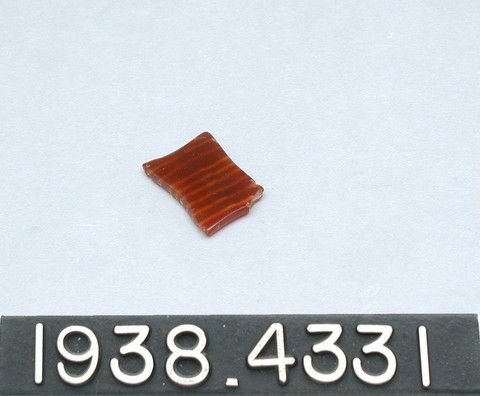
    The study found that a bleach-decorated carnelian bead from Sumhuram is consistent with production in north-western India. It is described as the first securely identified bead of this type in South-western Arabia.

    Why the authors say this matters

    The authors suggest the find is relevant because it sheds light on material culture, mobility, and identity in a cosmopolitan port city. They also conclude that it provides insight into personal histories and cross-cultural interactions across the Western Indian Ocean during the Late Iron Age.

    What the researchers tested

    The researchers carried out an integrated study of a carnelian bead discovered at Sumhuram, a Hadrami trading outpost active between 100 BCE and 400 CE. They used stylistic comparisons and scanning electron microscopy, or SEM, drilling diagnostics to assess its likely origin and context.

    What worked and what didn't

    Stylistic comparisons and SEM-based drilling diagnostics pointed to north-western India as the bead's likely production area. The bead was found in an urban context rather than a funerary assemblage, and the authors say this leaves two plausible explanations: structured trade flows linking Gujarat with South-eastern Arabia, or the personal possession of a South Asian individual temporarily living in Sumhuram.

    What to keep in mind

    The abstract does not give a single definitive explanation for how the bead arrived at Sumhuram. It presents two possibilities and does not state that one is proven over the other.

    • A bleach-decorated carnelian bead from Sumhuram was identified as the first securely identified example of its type in South-western Arabia.
    • Stylistic comparisons and SEM drilling diagnostics suggest production in north-western India.
    • The bead was found in an urban context at a Hadrami port active in regional and transoceanic trade.
    • The authors say the find may reflect either trade connections or the personal possession of a South Asian resident.
    • The study links the bead to broader questions of mobility, identity, and cross-cultural interaction in the Western Indian Ocean.
  • Mycobacterial gyrase inhibition varies with DNA topology

    What the study found

    The study found that antibacterial drugs inhibited one gyrase function, intermolecular DNA decatenation, at lower concentrations than they inhibited intramolecular DNA relaxation or negative supercoiling. The results suggest that inhibition of mycobacterial gyrase is influenced by the DNA’s topological state and by how the DNA interacts with gyrase.

    Why the authors say this matters

    The authors conclude that the study provides mechanistic insight into how antibacterials rob replicating cells of essential gyrase functions. The study suggests this is relevant because, in some mycobacterial species, gyrase is the only type II topoisomerase target available to these drugs.

    What the researchers tested

    The researchers examined the effects of moxifloxacin and ciprofloxacin, both fluoroquinolones, and zoliflodacin, a spiropyrimidinetrione, on three catalytic activities of mycobacterial gyrase. These activities were decatenation of tangled DNA, negative supercoiling of relaxed DNA, and relaxation of positive supercoils.

    What worked and what didn't

    Under all tested conditions, lower antibacterial concentrations were needed to inhibit DNA decatenation than to inhibit DNA relaxation or supercoiling. The abstract says that differences in potency could not be explained only by the rates of the individual reactions or by the DNA substrates used.

    What to keep in mind

    The abstract does not describe experimental limitations in detail. It also focuses on in vitro gyrase activities and does not provide direct clinical outcomes or cell-based comparisons beyond the general statement that gyrase functions are essential in replicating cells.

    • Mycobacterial gyrase was inhibited more easily during DNA decatenation than during DNA relaxation or supercoiling.
    • Moxifloxacin, ciprofloxacin, and zoliflodacin were tested against three gyrase activities.
    • The findings suggest that DNA topology and DNA-gyrase interactions affect antibacterial potency.
    • The abstract says reaction rates and DNA substrate choice alone did not explain the potency differences.
    • The authors frame the work as mechanistic insight into loss of essential gyrase function.
  • Residual stones and urine culture predict early stone recurrence

    Residual stones and urine culture predict early stone recurrence

    What the study found

    The study found that three factors were independently associated with 6-month recurrence after surgery for infection-related upper urinary tract stones: residual stones, a positive urine culture during follow-up, and higher CT attenuation values. A nomogram is a risk-prediction chart was built from these factors and showed acceptable internal performance.

    Why the authors say this matters

    The authors say the findings may help support individualized follow-up after surgery for infection-related stones. They conclude that the nomogram could be useful in practice, but note that it still needs external validation.

    What the researchers tested

    The researchers did a retrospective single-center study of 148 patients with infection-related upper urinary tract stones confirmed by infrared spectroscopy. They split the patients into a modeling cohort and a validation cohort, then used multivariable logistic regression to identify predictors and build a nomogram, which they evaluated with discrimination, calibration, and decision curve analysis.

    What worked and what didn't

    Recurrence within 6 months was common in both cohorts, with rates of 44.2% in the modeling group and 70.5% in the validation group. Patients with recurrence more often had residual stones, renal atrophy, and positive urine cultures at follow-up, and they had higher median CT values. Residual stones, positive follow-up urine culture, and CT value remained independent predictors, and the nomogram had an area under the curve of 0.86 in the modeling group and 0.75 in the validation group.

    What to keep in mind

    This was a retrospective study from one center, and the validation was internal only. The authors state that the nomogram requires external validation before broader use.

    • Residual stones were an independent predictor of 6-month recurrence.
    • Positive urine culture during follow-up was also independently linked to recurrence.
    • Higher CT attenuation values were associated with recurrence.
    • The nomogram reached an AUC of 0.86 in the modeling group and 0.75 in the validation group.
    • The study used a retrospective single-center sample of 148 patients.