Blog

  • Nature-inclusive urban development showed mixed social effects

    What the study found

    The study found that nature-inclusive urban development (urban development designed to include ecological features) had mixed social effects in Qunli New Town, Harbin. Original residents’ well-being changes were tied to how they adapted to the new setting, and fairness perceptions differed sharply between original residents and newcomers.

    Why the authors say this matters

    The authors conclude that social impact assessments should explicitly manage the trade-off between new green infrastructure and the loss of cultural landscapes. They suggest this is needed to promote justice for different waves of settlement.

    What the researchers tested

    The researchers used a sequential mixed-methods design, combining semi-structured interviews with a representative survey. They examined social impacts of nature-inclusive urban development in Qunli New Town, Harbin, China, a case involving landscape-level ecological mitigation and compensation.

    What worked and what didn't

    Among original residents, former agriculturalists reported a sharper happiness decline than non-agriculturalists, relative to the pre-urbanization era. Original residents who perceived increases in social and esthetic values of green spaces reported happiness gains. Original residents perceived ecological fairness as lower than newcomers did, but economic fairness as higher.

    What to keep in mind

    The abstract does not provide detailed limitations beyond the specific case studied in Qunli New Town. The findings are based on one urban development context and may not describe other settings.

    • The study examined social impacts of nature-inclusive urban development in Qunli New Town, Harbin, China.
    • Original residents’ well-being changes were linked to adaptation to the new urban context.
    • Former agriculturalists reported a sharper happiness decline than non-agriculturalists.
    • Original residents who perceived more social and esthetic value in green spaces reported happiness gains.
    • Original residents rated ecological fairness lower than newcomers but economic fairness higher.
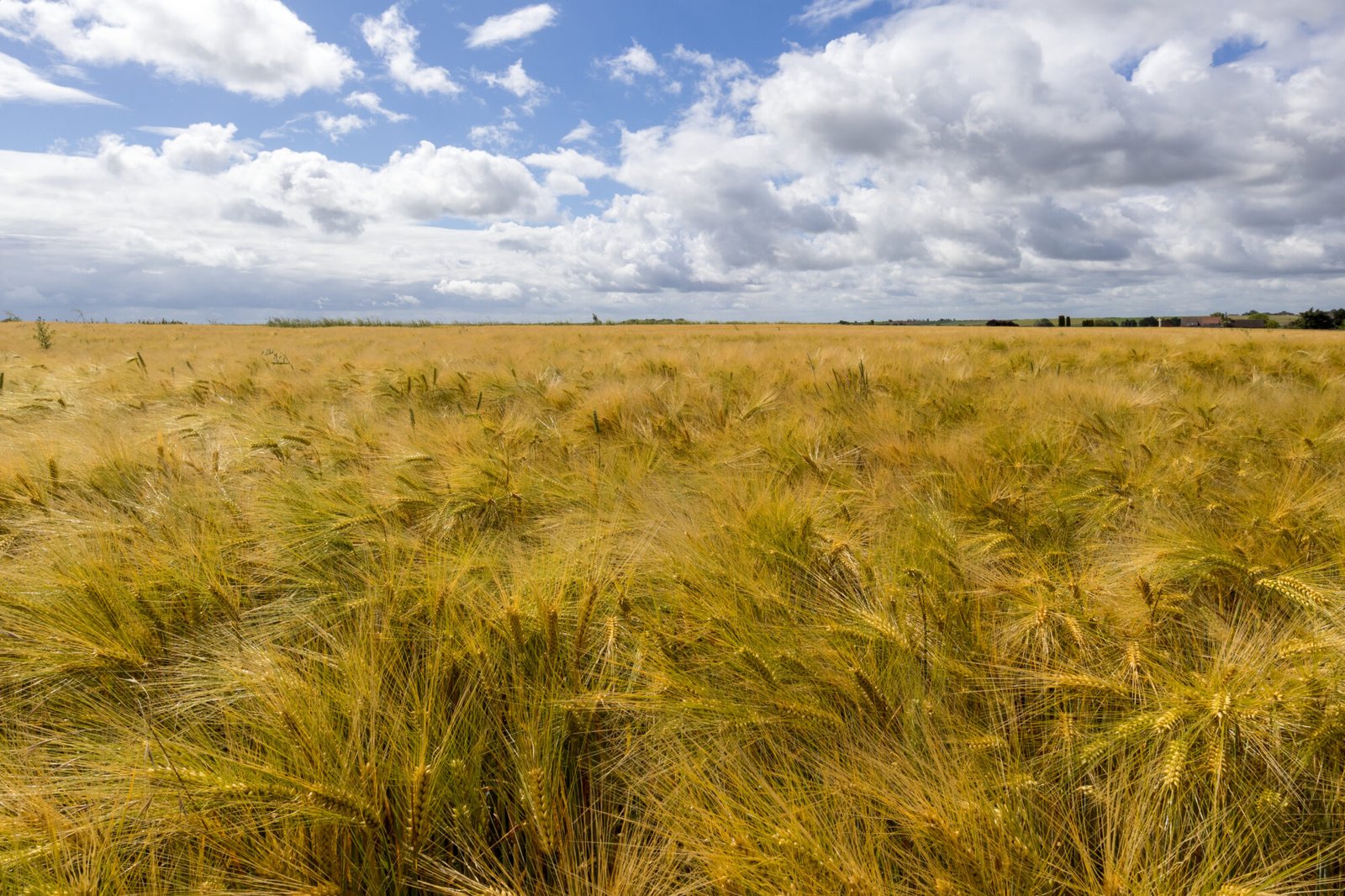
  • Barley line stability varied across traits and environments

    Barley line stability varied across traits and environments

    What the study found

    The study found that barley grain quality traits varied by genotype, environment, and genotype-by-environment interaction. Classical pedigree-derived lines showed the highest overall stability across most traits, while advanced lines were generally more stable than the local population.

    Why the authors say this matters

    The authors conclude that the findings identify barley material that may be suitable for further breeding under Mediterranean conditions. They also note that traits with stronger environmental influence need multi-environment testing, and that the observed trait relationships may help guide breeding choices.

    What the researchers tested

    The researchers evaluated 15 barley genotypes, including pedigree-derived lines, Plant Yield Index-selected lines, Yielding Coefficient-selected lines, cultivars, and a local population. They measured crude protein, fat, ash, starch, crude fiber, carbohydrate, soluble fraction, and non-starch fraction across six environments using a randomized complete block design with four replications per environment.

    What worked and what didn't

    Combined analysis of variance showed significant genotype differences for all traits, and environmental effects and genotype-by-environment interactions were also significant. Stability analysis showed the classical pedigree lines were most stable overall; Plant Yield Index- and Yielding Coefficient-selected lines were more stable than the local population, and cultivars showed intermediate, trait-dependent stability. Broad-sense heritability was high for all traits, especially crude protein, fat, ash, and crude fiber, while starch, carbohydrate, soluble fraction, and non-starch fraction were more influenced by the environment.

    What to keep in mind

    The abstract does not describe specific trial-site details beyond six environments, and it does not provide numerical values for the stability comparisons or correlations. The summary also does not state any limitations beyond the need for multi-environment testing for traits strongly affected by environmental variation.

    • Classical pedigree-derived barley lines had the highest overall stability across most measured traits.
    • Genotype, environment, and genotype-by-environment interaction all significantly affected grain quality traits.
    • Broad-sense heritability was high for all traits, above 92%.
    • Protein and fiber traits showed favorable expected response to selection.
    • Starch-related traits were more strongly influenced by environmental variation.
  • Glacial and biogenic particles create similar fjord color

    What the study found

    The study found that fjords influenced by glacial meltwater and by a coccolithophore bloom can have nearly indistinguishable apparent optical properties, including remote sensing reflectance and perceived color. Although the waters look similar from above, their inherent optical properties and scattering measurements show clear differences.

    Why the authors say this matters

    The authors conclude that standard satellite algorithms cannot separate glacial and biogenic particle regimes in fjord systems without prior knowledge. The study suggests that autonomous observations may help quantify primary production in high-latitude coastal systems.

    What the researchers tested

    The researchers made comprehensive measurements of inherent and apparent optical properties in two Norwegian fjords, Gaupnefjorden and Hardangerfjorden. They compared absorption, remote sensing reflectance, RGB chromaticity coordinates, backscattering ratios, and volume scattering functions.

    What worked and what didn't

    In both fjords, absorption spectra had minima near 532 nm, matching the green color seen in satellite imagery. Remote sensing reflectance values and RGB chromaticity coordinates were nearly indistinguishable between the two fjords, while inherent optical properties and scattering measurements did distinguish them. Both fjords had high backscattering ratios of 0.02–0.04, and Hardangerfjorden showed more pronounced forward scattering, while Gaupnefjorden had broader angular scattering patterns.

    What to keep in mind

    The findings are based on two fjords in Norway and on the specific water types studied there. The abstract does not describe additional limitations beyond the statement that standard remote sensing algorithms could not separate the two particle regimes without a priori knowledge.

    • Glacial meltwater and coccolithophore blooms produced nearly identical remote sensing reflectance spectra.
    • Both fjords showed green or turquoise color with absorption minima near 532 nm.
    • Backscattering ratios were similar in both systems, at 0.02–0.04.
    • Volume scattering functions and particulate absorption distinguished the two water types.
    • Standard satellite algorithms could not separate mineral and biogenic particle regimes without prior knowledge.
  • GloMarGridding supports uncertainty assessment in temperature interpolation

    What the study found

    The study presents GloMarGridding, a Python package for evaluating structural uncertainty from spatial interpolation in global surface temperature datasets. It supports Gaussian Process Regression Modelling, or GPRM, to generate spatially complete temperature fields and estimate uncertainty in those fields.

    Why the authors say this matters

    The authors conclude that by separating spatial interpolation from earlier processing steps, the framework allows independent assessment of upstream choices and their effects on gridded outputs. The study suggests this is useful for evaluating the part of structural uncertainty that comes specifically from interpolation.

    What the researchers tested

    The paper describes a Python toolkit designed to apply GPRM to grid-box average and point observations. It includes three spatial covariance parameterizations: fixed isotropic variograms, ellipse-based anisotropic variograms, and empirically derived covariance matrices, along with uncertainty propagation through error covariance matrices and conditional simulation from input ensembles.

    What worked and what didn't

    The toolkit provides tools for producing spatially complete temperature fields and estimating uncertainty from interpolation. It also supports decoupling interpolation from earlier steps such as homogenization, quality control, and aggregation.

    What to keep in mind

    The abstract does not report an empirical evaluation of performance, so comparative results are not described in the available summary. No specific limitations are stated beyond the tool's current support for the methods named in the abstract.

    • GloMarGridding is a Python package for spatial interpolation in climate applications.
    • It is designed to evaluate uncertainty from spatial interpolation in global temperature datasets.
    • The package supports Gaussian Process Regression Modelling for creating complete temperature fields.
    • Three covariance parameterizations are listed: fixed isotropic, ellipse-based anisotropic, and empirically derived covariance matrices.
    • The framework can propagate uncertainty using error covariance matrices and conditional simulation from input ensembles.
  • XGBoost forecasted pulmonary tuberculosis better than ARIMA or Prophet

    What the study found

    The study found that an XGBoost machine-learning model produced more accurate monthly forecasts of pulmonary tuberculosis (PTB, a form of tuberculosis that affects the lungs) than seasonal ARIMA or Facebook Prophet. On unseen data from Fuzhou, XGBoost had much lower error values and better followed the observed decline and seasonal pattern.

    Why the authors say this matters

    The authors conclude that, for cities with nonlinear waning epidemics and seasonally shrinking amplitude, XGBoost may be a better forecasting tool than traditional time-series methods. They say this could support monthly PTB early-warning, resource pre-positioning, and targeted control in comparable high-density coastal urban settings.

    What the researchers tested

    The researchers used 168 monthly PTB case reports from Fuzhou covering January 2009 to December 2022, plus a 24-month prospective validation set from 2023 to 2024. They developed and tested three forecasting frameworks: seasonal ARIMA with automatic order selection, Facebook Prophet with multiplicative seasonality and change-point detection, and XGBoost using 1- to 12-month lagged incidence, calendar variables, and linear-trend covariates.

    What worked and what didn't

    All three models fit the training data closely. On unseen data, XGBoost performed best, with lower RMSE, MAE, and MSE than ARIMA or Prophet, and its residuals remained approximately white noise. Prophet slightly overestimated seasonal amplitude, while ARIMA accumulated trend extrapolation bias.

    What to keep in mind

    The study was based on one city, Fuzhou, and the findings are presented for comparable high-density coastal urban settings rather than all places. The abstract does not describe other limitations beyond the model comparison and validation design.

    • XGBoost outperformed seasonal ARIMA and Prophet on the 2023-2024 validation data.
    • The data came from 168 monthly PTB case reports in Fuzhou, China, from 2009 to 2022.
    • XGBoost better tracked the observed 5.7% annual decline and narrowing spring-summer double peaks.
    • Prophet slightly overestimated seasonal amplitude, and ARIMA showed trend extrapolation bias.
    • The authors say the approach may support PTB early-warning and resource planning.
  • Patricia Noah’s resistance is read as black female and womanist resistance

    What the study found

    The study argues that Patricia Noah’s narrative in Trevor Noah’s Born a Crime shows black female resistance to apartheid and its legacies, along with a womanist temper toward oppressive patriarchal traditions. It presents her resistance as subtle and sometimes contradictory.

    Why the authors say this matters

    The authors conclude that Patricia’s resistance and womanist temper can empower women in other restrictive settings and promote a conciliatory approach to gender relations. The study suggests this view broadens how resistance to apartheid is understood beyond androcentric, political forms.

    What the researchers tested

    The article is a literary analysis of Trevor Noah’s autobiographical work Born a Crime, with particular attention to Patricia Noah’s narrative. The researchers used postcolonialism and womanism as their analytical frameworks.

    What worked and what didn't

    The study finds Patricia’s narrative useful for reading resistance in everyday, non-violent terms. It also identifies her refusals as contradictory, but the abstract does not give detailed examples or separate successful from unsuccessful actions.

    What to keep in mind

    The summary does not describe the full evidence base, specific scenes, or detailed textual examples. It also does not list explicit limitations in the abstract.

    • The paper centers Patricia Noah’s narrative in Born a Crime, not Trevor Noah’s alone.
    • It treats her actions as black female resistance to apartheid and its legacies.
    • The analysis uses postcolonialism and womanism.
    • The authors describe Patricia’s resistance as subtle and sometimes contradictory.
    • The study concludes that her resistance may empower other women and encourage conciliatory gender relations.
  • Dihydroquinoline sulfonyl fluorides were synthesized without transition metals

    What the study found

    The study reports a modular synthesis of trifluoromethylated and difluoromethylated dihydroquinoline sulfonyl fluorides. It also reports that these compounds can be converted into sulfonamides and sulfonates through sulfur(VI) fluoride exchange, a reaction that replaces a sulfur-bound fluoride with another group.

    Why the authors say this matters

    The authors conclude that the products hold significant potential in medicinal chemistry, chemical biology, and drug discovery. They also note that the reaction avoids transition metal catalysts.

    What the researchers tested

    The researchers tested [4 + 2] cycloadditions, a type of ring-forming reaction, between o-aminotrifluoroacetophenone derivatives or o-aminodifluoroacetophenone derivatives and 2-chloroprop-2-ene-1-sulfonyl fluoride (CESF). They then optimized sulfur(VI) fluoride exchange for nucleophiles based on nitrogen and oxygen.

    What worked and what didn't

    The cycloaddition approach produced the targeted dihydroquinoline sulfonyl fluorides under mild reaction conditions. The optimized sulfur(VI) fluoride exchange furnished sulfonamides from nitrogen-based nucleophiles and sulfonates from oxygen-based nucleophiles. The abstract does not describe any failed conditions or negative results.

    What to keep in mind

    The available summary does not provide detailed yields, comparisons with other methods, or broader testing beyond the reported reaction scope. Limitations are not described in the abstract.

    • The study reports a modular route to trifluoromethylated and difluoromethylated dihydroquinoline sulfonyl fluorides.
    • The synthesis used [4 + 2] cycloadditions with CESF under mild conditions.
    • No transition metal catalysts were used.
    • Sulfur(VI) fluoride exchange was optimized to make sulfonamides and sulfonates.
    • The authors say the products have potential in medicinal chemistry, chemical biology, and drug discovery.
  • Environmental discourse declines from primary to secondary textbooks

    What the study found

    The study found a gradual decrease in environmental discourse from primary to secondary school English as a Foreign Language (EFL) textbooks in Punjab, Pakistan. It also found that the textbooks mainly present nature through sensory and experiential descriptions.

    Why the authors say this matters

    The authors conclude that textbooks and teachers are important for building students' ecological awareness, which they link to addressing environmental degradation and the climate crisis. They suggest that including environmental challenges and matching content to students' learning levels can help foster ecological awareness and environmental preservation.

    What the researchers tested

    The researchers analyzed 10 EFL textbooks from primary through secondary levels published by the Punjab Curriculum and Textbook Board. They used Stibbe’s ecolinguistics model, which examines language patterns related to environmental meaning, and Kress and Leeuwen’s social semiotics, which analyzes how images make meaning, to study both linguistic and visual representations.

    What worked and what didn't

    The findings indicate that beneficial discourse in the textbooks promotes environmentally friendly activities through both words and visuals. The analysis also showed that the textbooks focus mainly on sensory and experiential aspects of nature, while representation of environmental discourse becomes less frequent at higher grade levels.

    What to keep in mind

    The abstract does not describe detailed limitations beyond the fact that the study examined 10 textbooks from one curriculum board in Punjab, Pakistan. It also does not provide quantitative measures for the decrease in environmental discourse.

    • Environmental discourse decreases gradually from primary to secondary EFL textbooks.
    • The textbooks mainly emphasize sensory and experiential aspects of nature.
    • Beneficial discourse promotes environmentally friendly activities in both language and visuals.
    • The study analyzed 10 textbooks from the Punjab Curriculum and Textbook Board.
    • The authors say textbooks can help foster ecological awareness if environmental challenges are included.
  • Teacher boredom and learner boredom reinforce each other over time

    Teacher boredom and learner boredom reinforce each other over time

    What the study found

    The study found that perceived teacher boredom, foreign language learning boredom, and L2 writing motivation are dynamically linked over time. Two reciprocal feedback loops were supported: perceived teacher boredom and foreign language learning boredom, and foreign language learning boredom and writing motivation.

    Why the authors say this matters

    The authors suggest this matters because boredom and motivation in L2 classrooms are dynamic and reciprocal rather than one-way. They conclude that understanding these feedback loops has pedagogical relevance.

    What the researchers tested

    The researchers studied 264 English as a foreign language learners and 21 teachers over 10 days using experience sampling, which collects repeated reports across time. They examined three feedback loops: perceived teacher boredom (teachers' boredom as perceived by learners), foreign language learning boredom, and L2 writing motivation, using dynamic structural equation modeling.

    What worked and what didn't

    Significant positive cross-lagged and feedback effects were found between perceived teacher boredom and foreign language learning boredom, and between foreign language learning boredom and writing motivation. The study also found a negative unidirectional link from perceived teacher boredom to later writing motivation, while writing motivation did not significantly predict later perceived teacher boredom.

    What to keep in mind

    The abstract does not describe detailed limitations beyond the study's 10-day sampling window and its specific EFL classroom sample. It also does not provide the pedagogical recommendations mentioned at the end.

    • Perceived teacher boredom and foreign language learning boredom reinforced each other over time.
    • Foreign language learning boredom and L2 writing motivation also formed a reciprocal feedback loop.
    • Higher perceived teacher boredom predicted lower later writing motivation.
    • Writing motivation did not significantly predict later perceived teacher boredom.
    • The study used 10 days of experience sampling with 264 learners and 21 teachers.
  • Non-obstetric SCAD showed mortality and treatment disparities

    What the study found

    Non-obstetric spontaneous coronary artery dissection, or SCAD, was associated with low but clinically significant in-hospital mortality in this U.S. hospital cohort. The study also found differences in treatment and outcomes by sex and race.

    Why the authors say this matters

    The authors conclude that the findings underscore the need for standardized management strategies and equitable cardiovascular care delivery. The study suggests that persistent sex- and race-based disparities remain important in non-pregnancy-associated SCAD.

    What the researchers tested

    The researchers conducted a retrospective cohort study using the 2022 National Inpatient Sample, a U.S. database of hospitalizations, and identified adult admissions with a primary diagnosis of SCAD using ICD-10-CM codes. They excluded pregnancy-related admissions, peripartum cardiomyopathy, obstetric complications, and patients under 18 years old, and then used weighted analyses and multivariable logistic regression in STATA 18.0.

    What worked and what didn't

    A total of 4,563 hospitalizations met the criteria, and 72.6% were female, with a mean age of 52.4 years. In-hospital mortality was 3.2%, women were less likely than men to undergo percutaneous coronary intervention (PCI, a procedure to open a narrowed coronary artery), and Black patients had higher adjusted odds of death than White patients. Cardiogenic shock, chronic kidney disease, and older age were independent predictors of mortality, while PCI was not independently associated with lower in-hospital mortality.

    What to keep in mind

    This was an observational study based on administrative hospital data, so it describes associations rather than proving causes. The abstract does not describe longer-term outcomes, and the findings apply to hospitalized adults with non-pregnancy-associated SCAD in the 2022 National Inpatient Sample.

    • The study examined 4,563 U.S. hospitalizations for non-obstetric SCAD.
    • Overall in-hospital mortality was 3.2%.
    • Women underwent PCI less often than men despite similar cardiogenic shock rates.
    • Black patients had higher adjusted odds of mortality than White patients.
    • Cardiogenic shock, chronic kidney disease, and older age predicted mortality.
    • PCI was not independently linked to lower in-hospital mortality.