Blog

  • Mothers of autistic adolescents reported greater caregiving strain during COVID-19

    What the study found

    The study found that mothers caring for autistic adolescents in Thiruvananthapuram, Kerala faced increased emotional labor, social isolation, and caregiving demands during the COVID-19 pandemic. It also reports that these mothers used adaptive routines, self-care, and online support networks to cope.

    Why the authors say this matters

    The authors conclude that systemic reforms are needed to better support these caregivers. The findings indicate that strong support networks matter for maternal well-being.

    What the researchers tested

    The researchers studied the lived experiences of seven mothers caring for autistic adolescents during the COVID-19 pandemic. They used Bronfenbrenner’s ecological systems theory, family resilience theory, and interpretative phenomenological analysis (a method for examining personal experience) to look at changes in routines, social support, and access to institutions.

    What worked and what didn't

    According to the findings, adaptive routines, self-care behavior, and online support networks helped mothers cope. The abstract also says that social stigma and insufficient formal support worsened emotional labor, social isolation, and caregiving burden.

    What to keep in mind

    The study is based on seven mothers in one location, so the findings are limited to this small group. The abstract does not describe additional limitations beyond the scope of the sample and setting.

    • Seven mothers caring for autistic adolescents were interviewed about their experiences during the COVID-19 pandemic.
    • The study reports increased emotional labor, social isolation, and caregiving demands.
    • Social stigma and insufficient formal support made these challenges worse.
    • Mothers used adaptive routines, self-care, and online support networks to cope.
    • The authors conclude that systemic reforms are needed to improve support for caregivers.

  • Decalin moiety of pyrroindomycins constructed

    What the study found

    The study reports construction of the trans-decalin moiety, a fused ring portion, of pyrroindomycins. The authors present this as knowledge that will aid further work on the compound family.

    Why the authors say this matters

    The authors say this will help determine the full structure of pyrroindomycins and support experimental reproduction of their biosynthesis. They also note that pyrroindomycins have attracted interest because of antimicrobial activity, complex structures, and their biosynthetic route.

    What the researchers tested

    The researchers worked on constructing the trans-decalin moiety of pyrroindomycins. The abstract does not provide additional experimental details.

    What worked and what didn't

    The abstract states that the trans-decalin moiety was constructed. It also notes that parts of the pyrroindomycin structures remain incompletely determined and that there have been no reports of a total synthesis to date.

    What to keep in mind

    The available summary does not describe the specific methods, conditions, or yields. It also does not claim a total synthesis or completion of the full pyrroindomycin structure.

    • The study reports construction of the trans-decalin moiety of pyrroindomycins.
    • The authors say this work will aid full structure determination.
    • The authors also say it will help with experimental reproduction of biosynthesis.
    • The abstract notes that parts of pyrroindomycin structures are still incompletely determined.
    • The abstract says there have been no reports of a total synthesis to date.
  • Women with fear of birth rated intrapartum care as both lacking and adequate

    Women with fear of birth rated intrapartum care as both lacking and adequate

    What the study found

    Women with fear of birth who received intrapartum care in a midwifery continuity of care model in rural Sweden rated some aspects of care as below their expectations and others as better than expected. The study also found few major differences in care quality between women who had a known midwife during labour and birth and those who did not.

    Why the authors say this matters

    The authors conclude that aligning care content with women’s needs and values remains essential to improve satisfaction and outcomes in intrapartum care. They also suggest that women with fear of childbirth who experienced continuity with a known midwife were exposed to more interventions within the Swedish system.

    What the researchers tested

    This was a prospective longitudinal cohort study of 142 women with fear of birth who took part in a midwifery continuity of care project. Data came from two online questionnaires, and the researchers used the instrument Quality from the Patients’ Perspective to assess perceived reality and subjective importance of intrapartum care content.

    What worked and what didn't

    Deficiencies were reported for perception of control, involvement in decision-making, access to preferred pain relief, breastfeeding support, and information about labour progress. The midwife’s presence, involvement of the partner, chances to talk through the birth, and breastfeeding support were rated better than expected. Among women with a known midwife, higher odds were reported for labour induction, use of the method Give Birth Without Fear, and epidural use compared with women without a known midwife.

    What to keep in mind

    The abstract does not describe limitations in detail. The findings come from one rural area in Sweden and from women with fear of birth who participated in a specific continuity-of-care project, so the scope is limited to that group.

    • The study examined 142 women with fear of birth in a midwifery continuity of care project in rural Sweden.
    • Women reported gaps in control, decision-making, preferred pain relief, breastfeeding support, and information about labour progress.
    • The midwife’s presence, partner involvement, and chances to talk through the birth were rated better than expected.
    • Few major differences in intrapartum care quality were found between women with and without a known midwife.
    • Women with a known midwife were more likely to have labour induced, use Give Birth Without Fear, and receive an epidural.
  • RIRS and mini-PCNL were similarly effective for pediatric high-density renal stones

    What the study found

    Both retrograde intrarenal surgery (RIRS, a stone-removal procedure using a flexible scope passed through the urinary tract) and mini-percutaneous nephrolithotomy (mini-PCNL, a smaller-keyhole kidney stone surgery) worked well and were safe in children with single renal pelvic stones under 2 cm and high density on CT. The study found comparable stone-free rates, with some recovery measures favoring RIRS.

    Why the authors say this matters

    The authors conclude that both procedures are useful for managing pediatric kidney stones in this group. They also suggest that RIRS may offer less invasiveness, shorter recovery, and lower radiation exposure, while mini-PCNL remains a valuable option in anatomically complex or lower-calyceal cases.

    What the researchers tested

    The researchers conducted a prospective randomized clinical trial at Beni-Suef University Hospitals. They enrolled 70 children aged 3–14 years with a single renal pelvic stone smaller than 2 cm and density above 1000 HU on low-dose non-contrast CT, then randomized them equally to RIRS or mini-PCNL.

    What worked and what didn't

    At one month, stone-free rates were 91.4% for RIRS and 94.3% for mini-PCNL, and this difference was not significant. RIRS had shorter operative time, hospital stay, catheterization time, and radiation exposure; mini-PCNL had a greater hemoglobin drop, while complication rates were similar between groups.

    What to keep in mind

    The abstract does not describe longer-term follow-up beyond one month. It also focuses on children with a single high-density renal pelvic stone under 2 cm, so the findings may not apply to other stone types or locations.

    • The study compared RIRS with mini-PCNL in 70 children aged 3–14 years.
    • Both treatments had high one-month stone-free rates: 91.4% for RIRS and 94.3% for mini-PCNL.
    • RIRS had shorter operative time, hospital stay, catheterization time, and lower radiation exposure.
    • Mini-PCNL produced a greater hemoglobin drop, while complication rates were similar.
    • The authors say mini-PCNL may still be useful in anatomically complex or lower-calyceal cases.
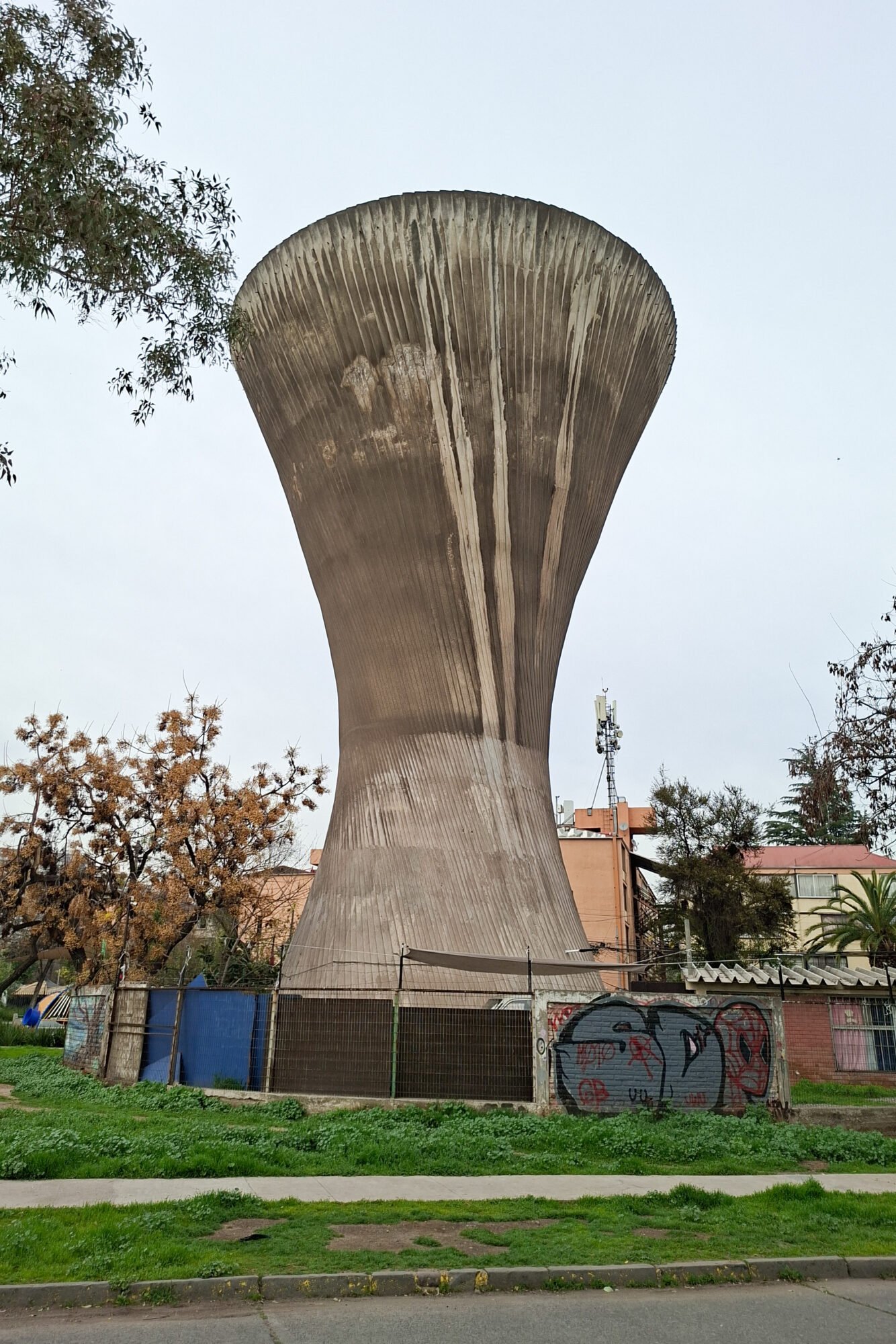
  • Sound installation creates an interior space within a water tower

    Sound installation creates an interior space within a water tower

    What the study found

    The article reports that a multichannel sound installation in a Santiago water tower created a new interior space defined by sound, which the audience experienced as aural architecture. The authors describe this as a transitional space between site-specific sound and aural architecture.

    Why the authors say this matters

    The authors conclude that this approach animates the monumentality of the water tower and intensifies the historical significance of the site in physical, sensory, political, and social terms. They also frame the outcome as creating an affective space for aesthetic experience.

    What the researchers tested

    The article examines the project Polyphono, a multichannel sound installation located inside the Copa de Agua of Quinta Bella in Santiago, Chile. It explores strategies for composing aural architecture within an existing structure with distinctive form and acoustic qualities.

    What worked and what didn't

    The installation established a dialogue between three spaces: the invisible space of the sound work, the physical space of the water tower, and the symbolic space of experience. The article says this process produced an interior space of sound within the tower's acoustic reactions and transformed the site through performative action.

    What to keep in mind

    The abstract presents this as a single site-specific project, so the summary is limited to the described water tower and installation. No detailed limitations, comparison group, or broader measurement of effects is described in the available abstract.

    • The study centers on Polyphono, a multichannel sound installation inside a Santiago water tower.
    • The authors describe a new interior space made by sound within the existing architectural structure.
    • The audience experienced the result as aural architecture.
    • The project is said to intensify the site's historical significance in physical, sensory, political, and social terms.
    • The abstract does not describe comparative methods or detailed limitations.
  • Veillonella facilitation helps Porphyromonas gingivalis persist at low levels

    What the study found

    The study found that Porphyromonas gingivalis, an oral pathogen linked to periodontitis, has a quorum threshold for growth but can still persist under some low-density conditions. The authors report that facilitation by Veillonella parvula and microenvironmental noise can help explain survival below that threshold.

    Why the authors say this matters

    The authors conclude that identifying ecological and stochastic factors in Porphyromonas gingivalis persistence may point to interventions that reduce facilitation and limit Porphyromonas gingivalis-associated inflammation. The findings indicate that understanding how early-colonizer species affect pathogen persistence could be relevant to colonization dynamics.

    What the researchers tested

    The researchers combined quantitative growth experiments with mathematical modeling. They used a cubic Allee-effect model, stochastic extensions, Fokker-Planck analysis, long-term subthreshold experiments, Porphyromonas gingivalis-Veillonella parvula co-cultures, and a two-species replicator model.

    What worked and what didn't

    The cubic Allee-effect model quantified a quorum threshold below which Porphyromonas gingivalis populations collapse. Conditioned medium from Veillonella parvula lowered this threshold, and stochastic modeling suggested that microenvironmental noise can enable persistence below the Allee barrier. Long-term subthreshold experiments showed persistent survival, while co-cultures produced replicate rescue outcomes for subcritical inocula; Veillonella parvula reliably reached capacity, with terminal outcomes within the study window limited to coexistence or Porphyromonas gingivalis extinction.

    What to keep in mind

    The abstract does not provide detailed experimental conditions, effect sizes, or statistical values. It also notes that the terminal outcomes were observed within the experimental horizon, so the summary is limited to the scope of those experiments.

    • Porphyromonas gingivalis shows Allee-type growth and needs a quorum threshold to replicate.
    • Veillonella parvula conditioned medium lowers that threshold.
    • Microenvironmental noise can allow persistence below the Allee barrier.
    • Long-term subthreshold experiments showed persistent survival.
    • In co-cultures, subcritical inocula sometimes showed rescue outcomes, while Veillonella parvula reached capacity reliably.
  • Salinity tunes multicellularity in a choanoflagellate

    What the study found

    The study found that Choanoeca flexa, a choanoflagellate, can form motile and contractile cell sheets through three routes: purely clonal, purely aggregative, or a mix of both. It also found that this species can shift reversibly between unicellular and multicellular states in its natural splash-pool habitat.

    Why the authors say this matters

    The authors conclude that clonal-aggregative multicellularity is a versatile strategy for establishing multicellularity in a variable, fast-fluctuating environment. They say the findings challenge earlier generalizations about choanoflagellates and expand the option space of choanozoan multicellularity.

    What the researchers tested

    The researchers studied the life history of C. flexa in ephemeral splash pools on Curaçao during evaporation-refilling cycles. They examined how sheets form, whether multicellularity arises clonally, aggregatively, or both, and whether genetically distinct strains from different pools recognize kin and limit aggregation.

    What worked and what didn't

    C. flexa sheets were observed to form by clonal, aggregative, and mixed mechanisms. The species also showed reversible transitions between unicellularity and multicellularity. Aggregation between genetically distinct strains was constrained by kin recognition.

    What to keep in mind

    The abstract describes findings from C. flexa in natural splash pools on Curaçao, so the scope is limited to this species and environment. No additional limitations are described in the available summary.

    • Choanoeca flexa can form multicellular sheets by clonal division, aggregation, or both.
    • The species can reversibly switch between unicellular and multicellular states.
    • In its natural splash-pool habitat, these transitions occur during evaporation-refilling cycles.
    • Different splash pools contain genetically distinct strains.
    • Kin recognition limits aggregation between strains.
  • Green HRM is linked to higher job satisfaction in logistics

    What the study found

    The study found that green human resource management, or GHRM, was positively related to employee job satisfaction in Pakistan’s logistics industry. It also found that organizational pride helped explain part of this relationship.

    Why the authors say this matters

    The authors conclude that the findings expand GHRM research beyond environmental outcomes by examining non-green outcomes such as job satisfaction. They also suggest the results may help organizations and policy makers balance sustainability goals with employee well-being.

    What the researchers tested

    The researchers collected data in three waves from 308 respondents in Pakistan’s logistics industry. They tested their hypotheses using partial least squares structural equation modeling, or PLS-SEM, with SmartPLS.

    What worked and what didn't

    GHRM showed a positive effect on job satisfaction. Organizational pride was reported as a significant mediator, while ethical leadership strengthened the GHRM-job satisfaction link by amplifying the effect of organizational pride, and psychological empowerment strengthened the pride-satisfaction relationship.

    What to keep in mind

    The available summary does not describe detailed study limitations. The findings are based on respondents from Pakistan’s logistics industry, so the scope described in the abstract is limited to that setting.

    • GHRM was positively associated with employee job satisfaction.
    • Organizational pride significantly mediated the GHRM-job satisfaction relationship.
    • Ethical leadership strengthened the link between GHRM and job satisfaction.
    • Psychological empowerment strengthened the relationship between organizational pride and job satisfaction.
    • The study used three-wave data from 308 respondents in Pakistan’s logistics industry.
  • Combination therapy produced a temporary response in metastatic DDCS

    What the study found

    The authors report a 72-year-old man with metastatic de-differentiated chondrosarcoma who had a significant clinical response to the combination of pembrolizumab, an immune checkpoint inhibitor, and pazopanib, a multi-targeted tyrosine kinase inhibitor. The response was temporary, with later disease progression.

    Why the authors say this matters

    The authors conclude that this case is a valuable example of promising emerging systemic therapies for advanced de-differentiated chondrosarcoma, a rare cancer with few proven treatment options. They note that standard care currently lacks a repertoire of effective therapies.

    What the researchers tested

    This was a single case report of one patient with metastatic de-differentiated chondrosarcoma. The report describes surgery, adjuvant radiotherapy, genetic sequencing, imaging with FDG PET-CT, and later treatment with vismodegib followed by pembrolizumab plus pazopanib.

    What worked and what didn't

    After diagnosis, lung metastases appeared and vismodegib had progressive disease as the best response. Later, pembrolizumab plus pazopanib was associated with a significant reduction in the size of the lung metastases and a progression-free period of 6 months, but the disease progressed again and treatment was stopped.

    What to keep in mind

    This is a single-patient report, so the findings cannot be generalized from this case alone. The abstract does not describe a control group, and the response was complicated by hepatotoxicity that improved after pazopanib dose reduction.

    • A 72-year-old man with metastatic de-differentiated chondrosarcoma had a significant response to pembrolizumab plus pazopanib.
    • The response lasted 6 months before later relapse and progression.
    • Vismodegib did not help; the best response was progressive disease.
    • Treatment was complicated by hepatotoxicity that resolved after lowering the pazopanib dose.
    • The authors present the case as an example of emerging systemic therapy options for advanced de-differentiated chondrosarcoma.
  • Linked environmental regulation outperformed other enforcement schemes in Texas

    What the study found

    The study found that linked environmental regulation, which lets inspectors use violations at one plant to increase future enforcement at other plants owned by the same firm, performed substantially better in Texas than unlinked regulation and untargeted regulation. The authors also found that much of this advantage came from a firm-wide moral hazard mechanism, meaning compliance behavior appears to be linked across plants within the same owner’s portfolio.

    Why the authors say this matters

    The authors suggest that linked regulation can help regulators focus limited enforcement resources on bad actors without inspecting every plant. The study indicates this may be especially useful when compliance costs are correlated across plants owned by the same firm.

    What the researchers tested

    The researchers developed an empirical framework for dynamic moral hazard under linked regulation, meaning they modeled how compliance choices can change over time and across multiple plants within a firm. They used the framework to evaluate a linked regulation scheme in Texas and tested two theoretical mechanisms: a firm-wide moral hazard mechanism and a correlated targeting mechanism.

    What worked and what didn't

    Linked regulation worked better than both unlinked regulation and untargeted regulation in the Texas setting studied. When the authors compared the two mechanisms behind this advantage, they found that a large share of the value of linked regulation came from the firm-wide moral hazard mechanism rather than the correlated targeting mechanism.

    What to keep in mind

    The abstract does not describe detailed limitations, so the scope of the findings beyond the Texas case is not specified in the available summary. The study’s conclusions are based on the linked regulation scheme and framework described in the paper.

    • Linked environmental regulation performed substantially better than unlinked and untargeted regulation in Texas.
    • The approach allows violations at one plant to affect future enforcement at other plants owned by the same firm.
    • The authors found that a large share of the benefit came from a firm-wide moral hazard mechanism.
    • The study also tested a correlated targeting mechanism as an alternative explanation.
    • The abstract does not provide specific limitations or broader generalization claims.