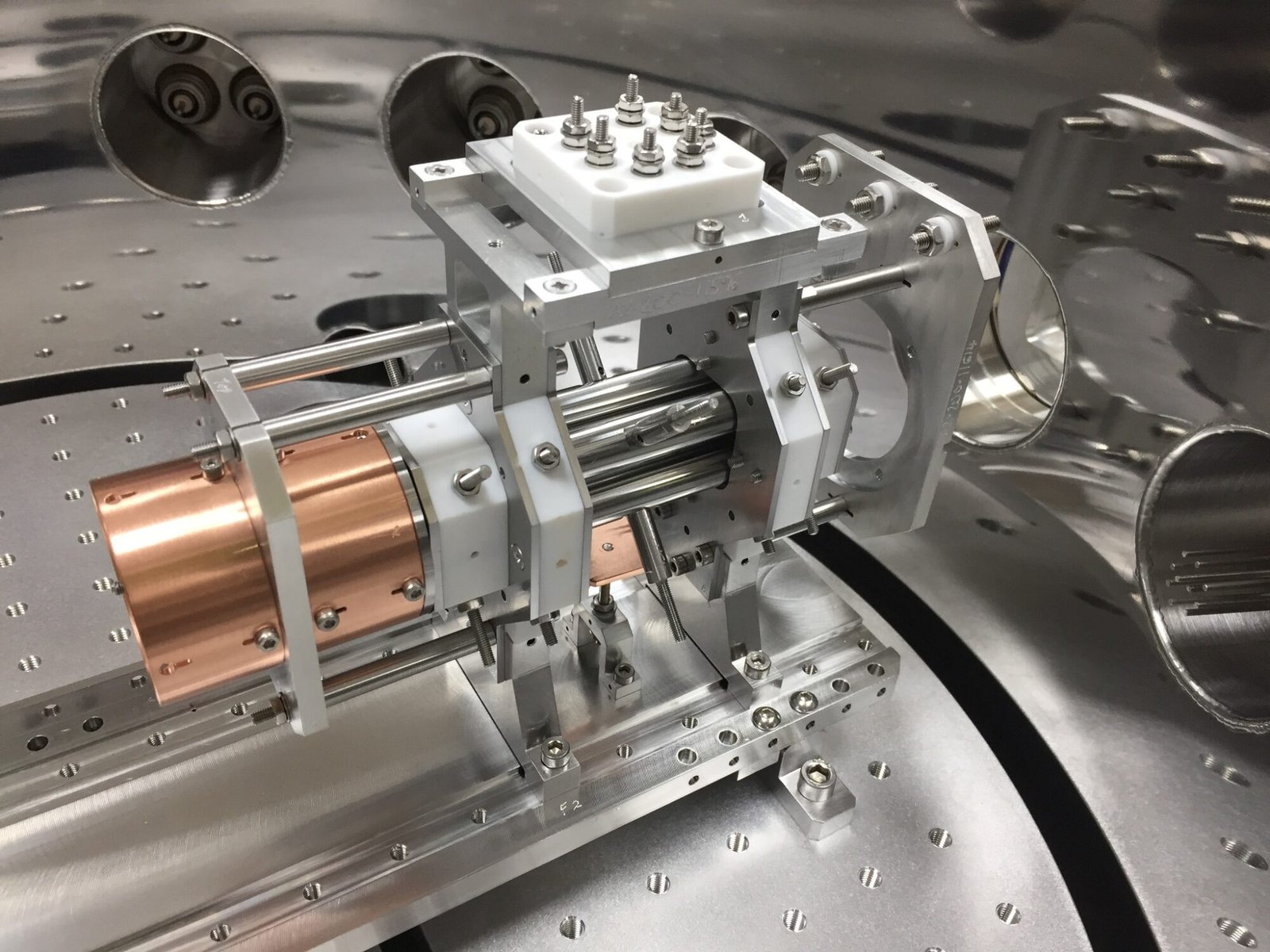
What the study found
The review concludes that radiofrequency ion traps offer a high degree of control over ion-molecule reaction dynamics. It summarizes ways to control internal quantum states, collision energies, and molecular structure in these systems.
Why the authors say this matters
The authors suggest that this control is relevant for studying quantum-state-dependent kinetics, quantum resonance effects, and structure-sensitive reactivity in ion-neutral collisions. They also conclude that it points to future work on full state-to-state reaction mapping, the ultracold quantum regime, and complex and chiral systems.
What the researchers tested
This is a review article, not an original experiment. The authors summarize prior techniques for trapping and cooling atomic and molecular ions, including Doppler and resolved-sideband laser cooling, sympathetic cooling, and cryogenic buffer-gas methods.
What worked and what didn't
The review describes several strategies that have been used to control reactions: internal cooling, optical pumping, state-selective photoionization, quantum logic spectroscopy, micromotion control, dynamic trapping, combination with molecular beams, isotopic substitution, conformational separation, and isomer-specific ion generation. It also notes applications in studies of quantum-state-dependent kinetics, quantum resonance effects, and structure-sensitive reactivity.
What to keep in mind
The article is a review, so its content depends on previously published studies rather than a single new experiment. The abstract does not describe specific quantitative results or detailed limitations beyond noting future challenges such as eliminating micromotion and reaching the ultracold quantum regime.
Key points
- Radiofrequency ion traps are presented as a platform for controlling ion-molecule reaction dynamics.
- The review covers trapping and cooling methods such as Doppler cooling, resolved-sideband laser cooling, sympathetic cooling, and cryogenic buffer-gas methods.
- The authors describe ways to control reaction parameters through internal quantum states, collision energies, and molecular structure.
- Applications discussed include quantum-state-dependent kinetics, quantum resonance effects, and structure-sensitive reactivity.
- Future challenges include full state-to-state reaction mapping and reaching the ultracold quantum regime without micromotion.
Disclosure
- Research title:
- Review of reaction control in radiofrequency ion traps
- Authors:
- Prerna Paliwal, Jutta Toscano, Stefan Willitsch
- Institutions:
- University of Basel, University of Basel, University of Basel
- Publication date:
- 2026-04-20
- OpenAlex record:
- View
- Image credit:
- Suzie Sheehy, Wikimedia Commons, CC BY-SA 4.0
Get the weekly research newsletter
Stay current with scholarly research without reading academic papers — one filtered digest, every Friday.