Tag: Conflict, Security & Extremism

  • State responses to online extremism are constrained and uneven

    What the study found

    The study finds that state-led responses to far-right extremism online in Aotearoa New Zealand face structural limits and paradoxes. It argues that these efforts are increasingly mediated by technocratic approaches and delegated to corporate actors, which can reproduce racial capitalist orders in digital form.

    Why the authors say this matters

    The authors conclude that these dynamics have implications for national security praxis, democratic accountability, social cohesion, and the future legitimacy of public power. The study suggests that the way online extremism is policed can also reproduce surveillance and targeted hostility toward racialised communities.

    What the researchers tested

    The article is based on 28 in-depth semi-structured interviews with public servants, platform insiders, and anti-fascist organisers. It examines how policy, regulation, enforcement, and private-sector involvement shape efforts to prevent and counter violent extremism online.

    What worked and what didn't

    Participants from regulatory and enforcement bodies described a growing gap between policy ambition and institutional capability. They reported conflicting mandates, limited resources, and the outsourcing of harm mitigation to the private sector, and the article says these arrangements do not enhance state capacity to respond to online extremism.

    What to keep in mind

    The abstract does not describe quantitative measures or experimental testing. The findings are based on interview accounts in Aotearoa New Zealand, so the summary reflects that specific context and the limits of the available abstract.

    • The article argues that state-led online counter-extremism efforts are structurally limited in Aotearoa New Zealand.
    • It says governance is increasingly mediated by technocratic rationalities and delegated to corporate actors.
    • Interviewees described conflicting mandates, constrained resources, and outsourcing of harm mitigation.
    • The authors say these arrangements reproduce neoliberal security logics and can expose racialised communities to surveillance and hostility.
    • The abstract links these dynamics to implications for national security, democratic accountability, and social cohesion.
  • Political offense definition remains uncertain in Jordan and Arab law

    What the study found

    The study finds that there is no precise and universally accepted definition of political offense. It argues that this uncertainty can undermine legal certainty and complicate judicial interpretation in Jordan and other Arab legal settings.

    Why the authors say this matters

    The authors say the issue matters because it may affect the effective protection of constitutional rights and freedoms, including political participation, access to public office, penal treatment, and freedom of opinion and expression. They also suggest that peaceful political dissent should not be treated the same as violent, terroristic, or ordinary criminal conduct.

    What the researchers tested

    The researchers used a doctrinal legal method. They analyzed constitutional texts, penal legislation, judicial decisions, academic literature, and selected international legal instruments, with a focus on Jordan and selected Arab legislative approaches.

    What worked and what didn't

    The study reports that recent developments in Jordan's Cybercrime Law No. 17 of 2023 have implications for freedom of expression and political dissent. It also proposes a narrow understanding of political offense as peaceful, non-violent conduct connected to political dissent, reform, or participation in public affairs, excluding violence, sabotage, incitement, and serious violations of others' rights.

    What to keep in mind

    The abstract does not provide empirical data or compare outcomes across multiple cases in detail. The summary also does not state specific limitations beyond the study's legal and doctrinal scope.

    • No precise and universally accepted definition of political offense is identified in the study.
    • The authors say definitional uncertainty can weaken legal certainty and judicial interpretation.
    • The study focuses on Jordan and selected Arab legislative approaches.
    • It examines impacts on political participation, public office access, penal treatment, and freedom of opinion and expression.
    • The authors propose a narrow definition limited to peaceful, non-violent political dissent.
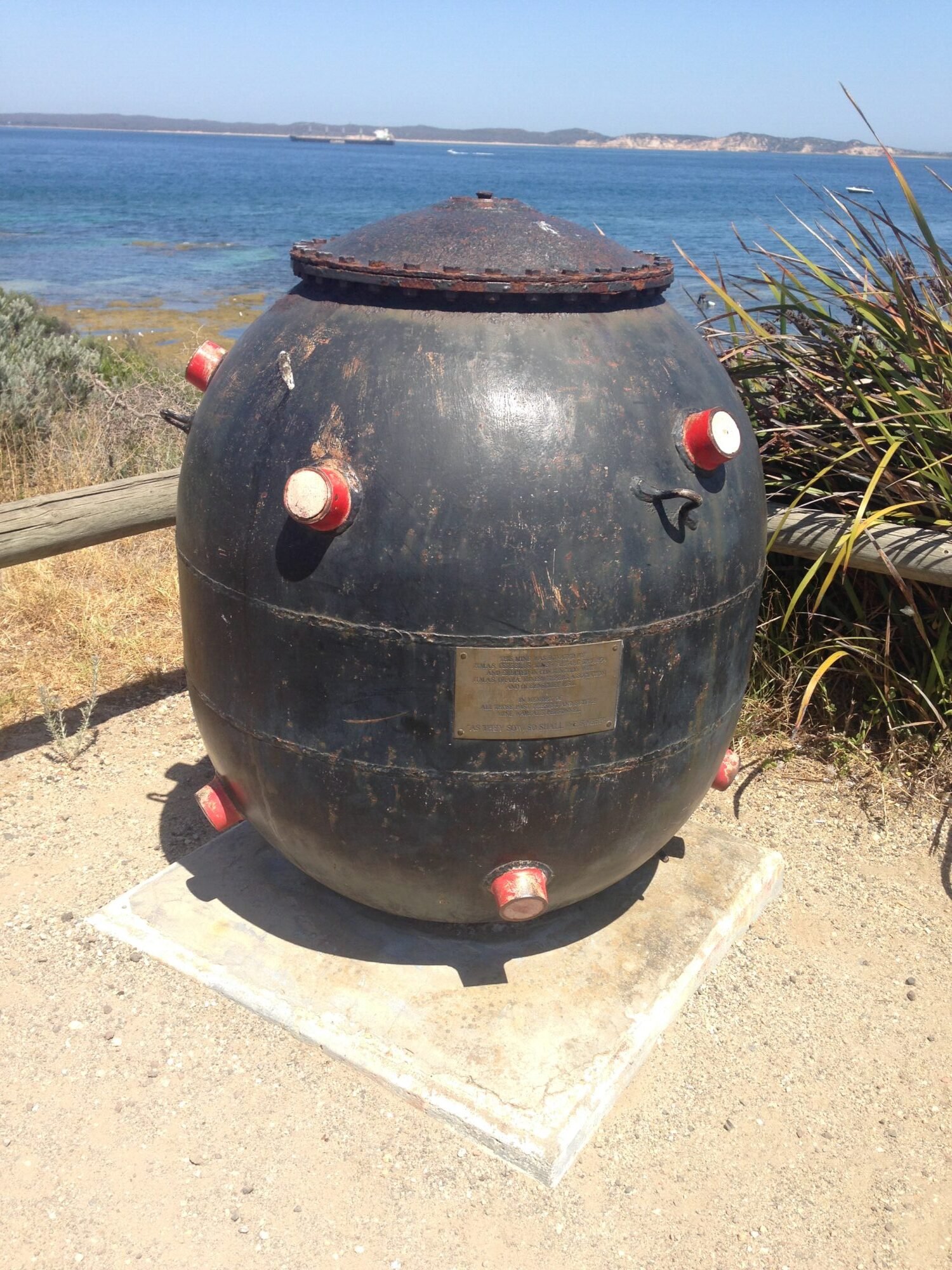
  • Black Sea naval mines create environmental and legal risks

    Black Sea naval mines create environmental and legal risks

    What the study found

    The article concludes that naval mines in the Black Sea have created significant environmental, transboundary, and legal concerns. It says drifting or uncontrolled mines can threaten marine biodiversity, coastal ecosystems, commercial fisheries, and regional maritime safety.

    Why the authors say this matters

    The authors suggest this matters because the existing legal mechanisms do not sufficiently address the environmental side of naval mine deployment, especially transboundary ecological damage and long-term marine pollution. They also connect the issue to environmental security, marine ecosystem protection, and regional cooperation in the Black Sea.

    What the researchers tested

    The article uses an interdisciplinary approach to examine the ecological effects of mine warfare in the marine environment and reviews relevant legal frameworks, including Hague Convention VIII of 1907, the UN Convention on the Law of the Sea (UNCLOS), the Bucharest Convention, and customary international humanitarian law. It also evaluates documented mine incidents from 2022 to 2024 against principles such as distinction, proportionality, notification, and the obligation to prevent marine pollution.

    What worked and what didn't

    The article reports that drifting mines, which can move with hydrodynamic currents or extreme weather, pose risks to marine biodiversity, coastal ecosystems, commercial fisheries, and maritime safety. It also finds that current legal mechanisms fail to sufficiently address environmental harm from naval mine deployment, while soft law instruments such as the San Remo Manual and IMO Guidelines are discussed as possible ways to improve environmental protection standards.

    What to keep in mind

    The abstract does not describe detailed study limitations or provide quantitative estimates of the environmental effects. The discussion is limited to the Black Sea conflict context and the legal and ecological issues named in the abstract.

    • Naval mines in the Black Sea are described as creating environmental, transboundary, and legal risks.
    • Drifting or uncontrolled mines are said to threaten biodiversity, coastal ecosystems, fisheries, and maritime safety.
    • The article reviews Hague Convention VIII, UNCLOS, the Bucharest Convention, and customary international humanitarian law.
    • Incident records from 2022 to 2024 were assessed against distinction, proportionality, notification, and anti-pollution principles.
    • The authors state that current legal mechanisms do not sufficiently address environmental damage from naval mine deployment.
  • Group-specific pathways shaped radicalization among convicted terrorists

    What the study found

    The study found that radicalization pathways varied across the groups studied, with different narratives, networks, and forms of identity fusion linked to activism and radicalism intentions. The authors report that JI, JAD, and NII participants showed distinct patterns of motivation and adherence.

    Why the authors say this matters

    The authors conclude that a nuanced understanding of these group-specific pathways can inform tailored, evidence-based counter-radicalization programs. They suggest such programs should be sensitive to differences in recruitment and ideological development across groups.

    What the researchers tested

    The researchers used a mixed-methods design guided by the 3N Model of Radicalization and Identity Fusion Theory. They studied 41 convicted terrorists in Indonesia affiliated with Negara Islam Indonesia (NII), Jemaah Islamiyah (JI), and Jamaah Ansharut Daulah (JAD), combining quantitative analysis with qualitative thematic analysis.

    What worked and what didn't

    Quantitatively, loss of significance, extremist narratives, networks, and identity fusion with group, leader, and ideology were significantly correlated with activism and radicalism intentions. Qualitative analysis added group differences: JI members were older, more educated, and motivated by collective grievances and ideology with less violent narratives, while JAD and NII members often had personal crises linked to a quest for significance and more violent Takfiri narratives.

    What to keep in mind

    The study involved 41 convicted terrorists who agreed to participate, and most were male. The abstract does not describe other limitations beyond the specific groups and participants studied.

    • Loss of significance was significantly correlated with activism and radicalism intentions.
    • Extremist narratives, networks, and identity fusion were also significantly correlated with those intentions.
    • JI participants were described as older, more educated, and less violent in their narratives.
    • JAD and NII participants were often linked to personal crises and more violent Takfiri narratives.
    • The authors say counter-radicalization programs should be tailored to group-specific dynamics.
  • Energy crisis reshaped food, transition, and poverty sectors

    What the study found

    The review found that the energy crisis triggered by the Russia–Ukraine war changed the food market, the energy transition, and energy poverty in different ways. The abstract says it accelerated the shift toward renewables, increased inflationary pressure in the global food supply chain, and worsened energy vulnerability for low-income populations.

    Why the authors say this matters

    The authors say the complexity of the energy crisis and the changing energy landscape create a need to capture what is already known and to identify future research avenues. The study suggests this is especially relevant for EU Member States, which were most affected because of their dependence on Russian fossil fuels.

    What the researchers tested

    The researchers conducted a systematic literature review on the impacts of the energy crisis after the start of the Russia–Ukraine war. They compiled knowledge across three areas: the food market sector, the energy transition sector, and the energy poverty sector.

    What worked and what didn't

    According to the review, the crisis provided impetus for a faster transition to renewables. At the same time, it triggered significant inflationary pressure in the global food supply chain and intensified energy vulnerability for low-income populations.

    What to keep in mind

    This is a review article, so it summarizes existing literature rather than reporting new primary data. The abstract does not describe specific study limitations beyond the scope of the three sectors reviewed.

    • The review covers the food market, energy transition, and energy poverty after the Russia–Ukraine war began.
    • The abstract says the crisis accelerated the move toward renewables.
    • It also says the crisis increased inflationary pressure in the global food supply chain.
    • Low-income populations faced greater energy vulnerability.
    • EU Member States were described as most affected because of dependence on Russian fossil fuels.
  • Different linguistic paths marked leaving, staying, and returning

    What the study found

    The study found that people in an incel forum showed different language trajectories depending on whether they left permanently, stayed, or left and later returned. The authors describe this as a layered model of online radicalisation and disengagement.

    Why the authors say this matters

    The authors conclude that these findings offer insights for developing targeted clinical interventions. The study suggests that tracking linguistic changes over time may help identify different patterns of disengagement and re-engagement.

    What the researchers tested

    The researchers analyzed 2,009,875 comments from an incel forum across six years. They used longitudinal linear mixed models and Linguistic Inquiry and Word Count (LIWC), a tool that measures features of language linked to psychological states, to compare Desisters, Persisters, and Returners.

    What worked and what didn't

    Overall differences between the groups were minimal. Desisters showed increasing grievances and hostility over time, while Persisters showed more stable emotions and increased social clout. Returners showed lower desperation and frustration after disengagement, but when they returned they showed a significant decline in analytic thinking and continued hate, which the authors interpret as re-radicalisation.

    What to keep in mind

    The abstract does not describe specific limitations beyond the observational nature of the analysis. The findings are based on one online community and on linguistic markers, so the summary does not provide evidence about causes or effects beyond the patterns observed.

    • The study compared forum users who permanently left, stayed active, or left and later returned.
    • Most group differences were small overall, but distinct language trajectories appeared over time.
    • Desisters showed rising grievances and hostility.
    • Persisters showed relatively stable emotions and increased social clout.
    • Returners showed lower desperation and frustration after leaving, but on return showed less analytic thinking and continued hate.
  • Wheat export stability differed by supplier under recent shocks

    What the study found

    The study found that the five major wheat suppliers did not respond to 2020–2024 shocks in the same way. The United States kept diversified destinations, Canada became more concentrated, Australia stayed moderately dispersed but had volatile outcomes, and Ukraine reconfigured after 2022 with higher concentration and large drawdowns.

    Why the authors say this matters

    The authors say this matters because wheat trade sustainability should be judged by how destination risk, competitive position, and export stability fit together. The study suggests that competitiveness alone is not enough to understand export sustainability under compounding shocks.

    What the researchers tested

    The researchers examined annual free-on-board export data from the International Trade Centre for Australia, Canada, the United States, Russia, and Ukraine. They measured destination concentration with the Herfindahl–Hirschman Index, used symmetric revealed comparative advantage to assess competitive position, and summarized export stability with volatility and maximum drawdown from annual export values.

    What worked and what didn't

    Structural diversification was maintained by the United States. Canada shifted toward higher destination concentration, while Australia kept moderate dispersion but showed pronounced volatility in export outcomes. Ukraine showed a post-2022 reconfiguration with elevated concentration and large drawdowns, and Russia was reported only through 2021 because of data availability in the extraction used.

    What to keep in mind

    The summary only covers annual export data for the countries and period described in the abstract. The authors note that Russia is interpreted as a pre-shock baseline because the extracted data available to them ended in 2021, and limitations beyond that are not described in the available summary.

    • The United States maintained structural diversification in wheat export destinations from 2020 to 2024.
    • Canada shifted toward higher destination concentration over the study period.
    • Australia kept moderate destination dispersion but had pronounced export volatility.
    • Ukraine reconfigured after 2022 and showed elevated concentration and large drawdowns.
    • The authors say export sustainability should be read from destination risk, competitive position, and observed stability together.