What the study found
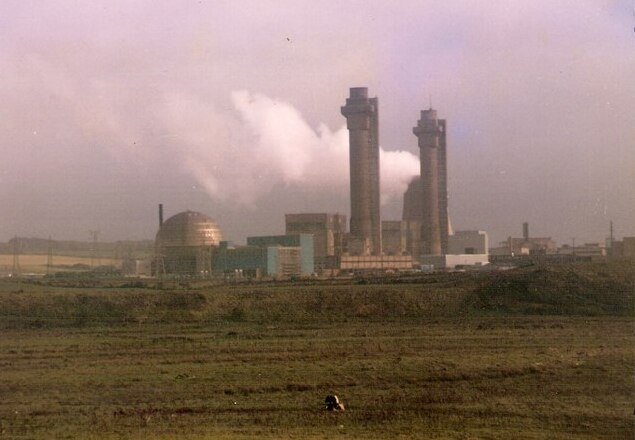
The study found that a wave-like reactivity variation may have governed the Windscale Works criticality incident. The authors report that the short-duration inrush and the stable emulsion might both have influenced the criticality, with the effective multiplication factor exceeding 1 under some conditions.
Why the authors say this matters
The authors conclude that their findings support a hypothesis about the incident's criticality mechanism. They suggest this helps clarify a previously unclear criticality scenario by linking the event to time-varying reactivity, meaning changes in how readily a nuclear chain reaction can sustain itself.
What the researchers tested
The researchers performed a multiphysics analysis, combining computational fluid dynamics (CFD, computer simulations of fluid flow) with Monte Carlo neutron transport calculations. They examined the effects of a short-duration inrush and a stable emulsion, then used simplified wave-like reactivity variations in neutronic kinetics analyses.
What worked and what didn't
According to the abstract, the CFD results produced space- and time-dependent material distributions that were used to evaluate the effective multiplication factor. The results suggest that both the inrush and the stable emulsion might have contributed to conditions where the effective multiplication factor exceeded 1, and the simplified kinetics analyses were consistent with historical records under certain conditions.
What to keep in mind
The abstract describes a possible mechanism rather than a confirmed reconstruction of the incident. It also notes that the detailed criticality scenario remains unclear, and the compatibility with historical records is stated only for certain conditions.
Key points
- The study proposes that a wave-like reactivity variation may have governed the Windscale Works criticality incident.
- The analysis considered a short-duration inrush and a stable emulsion, which were not included in the previous study.
- CFD results were used to create space- and time-dependent material distributions for neutron transport calculations.
- The results suggest the effective multiplication factor may have exceeded 1 under some conditions.
- Simplified neutronic kinetics analyses were consistent with historical records under certain conditions.
Disclosure
- Research title:
- Wave-like reactivity may explain Windscale criticality incident
- Authors:
- K. Fukuda
- Institutions:
- Nuclear and Radiation Safety Center
- Publication date:
- 2026-06-30
- OpenAlex record:
- View
- Image credit:
- Chris Eaton, Wikimedia Commons, CC BY-SA 2.0
Get the weekly research newsletter
Stay current with scholarly research without reading academic papers — one filtered digest, every Friday.