What the study found
The study found that the La Ferrassie 1 Homo neanderthalensis skeleton can be placed in a tighter chronological window than previously available. The authors report that the associated fauna and the skeleton’s context are compatible with an intrusive depositional event, but the new dates do not directly prove deliberate burial.
Why the authors say this matters
The authors conclude that the new chronology refines the framework for evaluating possible Neandertal mortuary practices during the Middle-to-Upper Paleolithic transition. They also say it reinforces La Ferrassie’s importance in discussions of this period.
What the researchers tested
The researchers combined archival research, paleoproteomics, and radiocarbon dating to reassess the age and depositional context of LF1. Paleoproteomics is the identification of ancient animal remains through preserved proteins. They examined 64 faunal bone fragments stored with LF1, identified them taxonomically, and then selected six for radiocarbon dating. They also used Bayesian modeling to estimate the deposition timing.
What worked and what didn't
Most of the bone fragments were identified as Bovidae, with smaller numbers of Cervidae and Elephantidae. The modeled start and end boundaries for the LF1-associated fauna were 43,270–39,060 cal BP, and the modeled deposition event was 42,610–39,830 cal BP, both at 95.4% probability. These estimates refine earlier broader optical stimulated luminescence (OSL) age estimates and overlap with the Châtelperronian time range at the site and in western Europe. The study did not provide direct evidence for intentional burial.
What to keep in mind
The abstract says the LF1 chronological placement remains an interpretation based on associated fauna, archival evidence, and previous taphonomic observations, not a direct dating of the skeleton itself. It also states that the new radiocarbon dates refine the context but do not by themselves demonstrate deliberate burial. No other limitations are described in the available summary.
Key points
- LF1 is placed within a narrower date range of 42,610–39,830 cal BP for deposition.
- Paleoproteomic analysis identified 50 of 64 associated bone fragments as Bovidae.
- Archival evidence indicates the dated faunal fragments were directly under the LF1 skeleton.
- The new dates overlap with the Châtelperronian time range at La Ferrassie and in western Europe.
- The study refines LF1’s context but does not directly show intentional burial.
Disclosure
- Research title:
- LF1 Neanderthal skeleton is dated more precisely to 42.6–39.8 ka cal BP
- Authors:
- Antoine Balzeau, Dorothea Mylopotamitaki, Frido Welker, Laura Tassoni, Asier Gómez-Olivencia, Tiphaine Derrey, Sahra Talamo
- Institutions:
- Centre Interdisciplinaire de Recherche en Biologie, Centre National de la Recherche Scientifique, Centre National de la Recherche Scientifique, Haute École des Arts du Rhin, Histoire Naturelle des Humanités Préhistoriques, Inserm, Royal Museum for Central Africa, Sorbonne Université, Unidades Centrales Científico-Técnicas, University of Bologna, University of Bologna, University of Copenhagen, University of the Basque Country
- Publication date:
- 2026-02-26
- OpenAlex record:
- View
- Image credit:
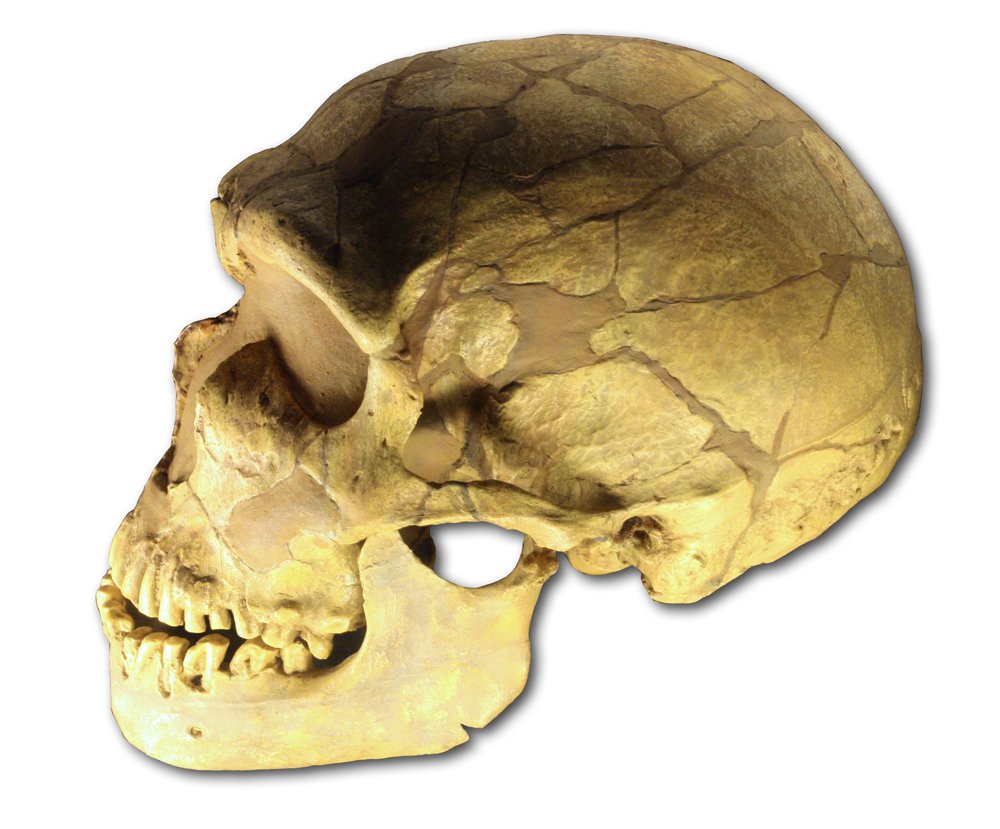
- 120, Wikimedia Commons, CC BY 2.5
Get the weekly research newsletter
Stay current with scholarly research without reading academic papers — one filtered digest, every Friday.