Author: editor@focalinterest.com

  • Late Neanderthals in northwestern Europe were closely related

    What the study found

    The study found that many late Neanderthals from Belgium and France were more closely related to each other than to other late Neanderthals elsewhere in Europe. It also found DNA from an older Neanderthal lineage in some individuals, and no evidence of recent gene flow from early modern humans.

    Why the authors say this matters

    The authors conclude that these findings help clarify whether Neanderthal groups were isolated or part of larger, connected populations. The study suggests that the lack of close-relative mating patterns seen in Altai Neanderthals points to larger or better-connected groups in northwestern Europe.

    What the researchers tested

    The researchers generated genetic data from 27 Neanderthals who lived less than about 52,500 years ago from ten archaeological sites in Belgium and France. This included a high-coverage genome from a 45,000-year-old individual from Goyet, Belgium.

    What worked and what didn't

    Most of the sampled individuals were more closely related to one another than to other contemporaneous late Neanderthals in Europe. Some individuals carried DNA from a Neanderthal lineage predating the split of late Neanderthals, and the group did not show evidence of recent gene flow from modern humans despite overlapping in time with early modern humans in northwestern Europe from around 47,000 years ago. Genetic load did not appear to increase over time, and the study did not find the inbreeding signatures reported for Altai Neanderthals.

    What to keep in mind

    The summary is limited to the abstract, so details about sample selection, analytic methods, and statistical uncertainty are not described here. The findings apply to the dated individuals from the sampled sites in Belgium and France.

    • 27 late Neanderthals from Belgium and France were genetically analyzed.
    • Most sampled individuals were closer to each other than to other late Neanderthals in Europe.
    • Some individuals carried DNA from an older Neanderthal lineage.
    • No evidence was found for recent gene flow from early modern humans.
    • The study did not find signs of close-relative mating like those seen in Altai Neanderthals.

  • Progressive hypercementosis with acquired concrescence in multiple teeth

    What the study found

    The case report describes progressive generalized hypercementosis, which is excess cementum buildup on tooth roots, with acquired concrescence, meaning two teeth became joined by cementum. The involved teeth were Nos. 25/26 and 29/30, and the authors note that this could complicate future extractions.

    Why the authors say this matters

    The authors say periodic dental examinations are important because they can identify progressive hypercementosis and rare concrescence before teeth become nonrestorable. The study suggests this may help dentists anticipate extraction challenges if the affected teeth later need removal.

    What the researchers tested

    This was a case report of one patient with generalized hypercementosis affecting multiple quadrants. The authors used full-mouth series periapical radiographs and clinical examination, including periodontal pocket measurements, and reviewed the patient's medical history.

    What worked and what didn't

    Radiographs showed that the roots of teeth Nos. 29 and 30 were grossly thickened, bulbous, and blunted, with one joint lamina dura around the concrescent teeth. Generalized wear was also noted on all occlusal and incisal surfaces, and periodontal pocket depths were recorded as 3 mm and 2 mm buccally and 3 mm and 4 mm distally for teeth Nos. 29 and 30.

    What to keep in mind

    The abstract does not describe treatment, follow-up, or outcomes beyond the diagnostic findings. Because this is a single case report, the available summary is limited to one patient's presentation and a presumptive diagnosis of hypercementosis sequela to occlusal trauma.

    • The report describes generalized hypercementosis affecting multiple quadrants.
    • Acquired concrescence was seen in teeth Nos. 25/26 and 29/30.
    • Periapical radiographs showed grossly thickened, bulbous, and blunted roots.
    • Generalized wear was noted on all occlusal and incisal surfaces.
    • The presumptive diagnosis was hypercementosis sequela to occlusal trauma.
  • Rifaximin reduced intestinal pain in a mouse IBS model

    What the study found

    The study found that microbiota dysbiosis, meaning an imbalance in the gut microbial community, and mucosal hyperinnervation, meaning extra nerve growth in the intestinal lining, contributed to intestinal hyperalgesia, or increased pain sensitivity, in a mouse model of postinfectious irritable bowel syndrome. Rifaximin reduced this pain response, and combining rifaximin with a 5-HT 7 receptor antagonist reduced intestinal nociception back to baseline.

    Why the authors say this matters

    The authors suggest that the model may help represent diverse risk factors for postinfectious irritable bowel syndrome. The findings indicate that targeting both microbial changes and nerve-related signaling may be relevant to reducing intestinal pain.

    What the researchers tested

    The researchers developed a mouse model of postinfectious irritable bowel syndrome using two triggers: Giardia postinfection and water avoidance stress. They tested rifaximin, a gut-targeted antibiotic, and also examined brain-derived neurotrophic factor (BDNF), a molecule involved in nerve growth, as well as the 5-HT 7 serotonin receptor.

    What worked and what didn't

    Rifaximin treatment reduced intestinal hyperalgesia and was associated with lower mucosal neurite outgrowth and reduced BDNF expression. BDNF activation caused nerve fiber elongation and increased 5-HT 7 expression through separate signaling pathways, and the combination of rifaximin with a 5-HT 7 receptor antagonist reduced intestinal nociception to baseline. The abstract does not report effects that clearly failed aside from these results.

    What to keep in mind

    This summary is based on a mouse model, so the findings are limited to that experimental setting. The abstract does not describe sample size, study duration, or additional limitations.

    • A mouse model of postinfectious irritable bowel syndrome was created using Giardia postinfection and water avoidance stress.
    • Microbiota dysbiosis and mucosal hyperinnervation were linked to intestinal hyperalgesia in the model.
    • Rifaximin reduced intestinal hyperalgesia and was associated with decreased mucosal neurite outgrowth and BDNF expression.
    • BDNF activation increased nerve fiber elongation and upregulated 5-HT 7 expression via separate signaling pathways.
    • Rifaximin plus a 5-HT 7 receptor antagonist reduced intestinal nociception to baseline.
  • Migrant construction workers balanced precarity with meaningful work

    Migrant construction workers balanced precarity with meaningful work

    What the study found

    The study found that decent work and meaningful work can coexist under structural vulnerability for African migrant workers in Portugal's construction sector. Workers faced temporary contracts, low wages, hazardous conditions, and limited social protection, but still built meaning through relationships and purpose.

    Why the authors say this matters

    The authors conclude that meaning at work can persist even in precarious contexts. The findings suggest the importance of integrated labour policies and organizational practices that support both decent work and meaningful work, and they say this supports migrant workers' well-being, agency, and long-term integration.

    What the researchers tested

    Guided by the Psychology of Working Theory, the researchers conducted semi-structured interviews with 18 African migrant construction workers in Portugal. They analysed the interviews using reflexive thematic analysis.

    What worked and what didn't

    Temporary contracts, low wages, hazardous conditions, and limited social protection constrained access to decent work. At the same time, workers created meaningful work through family-oriented motivations, peer solidarity, and recognition from supervisors; the study describes this as a relational, situated process shaped by structural conditions but not fully determined by them.

    What to keep in mind

    The abstract does not describe limitations beyond the small, specific sample of 18 workers in Portugal's construction sector. The findings are based on interviews and should be read within that context.

    • The study focused on African migrant workers in Portugal's construction sector.
    • Precarious conditions included temporary contracts, low wages, hazardous work, and limited social protection.
    • Workers still reported meaningful work through family motives, peer solidarity, and supervisor recognition.
    • The authors describe meaningful work as relational and shaped by structural conditions.
    • The results suggest integrated labour policies and organizational practices may support both decent and meaningful work.
  • Stratified water and tides shape basal melting at Ross Ice Shelf

    Stratified water and tides shape basal melting at Ross Ice Shelf

    What the study found

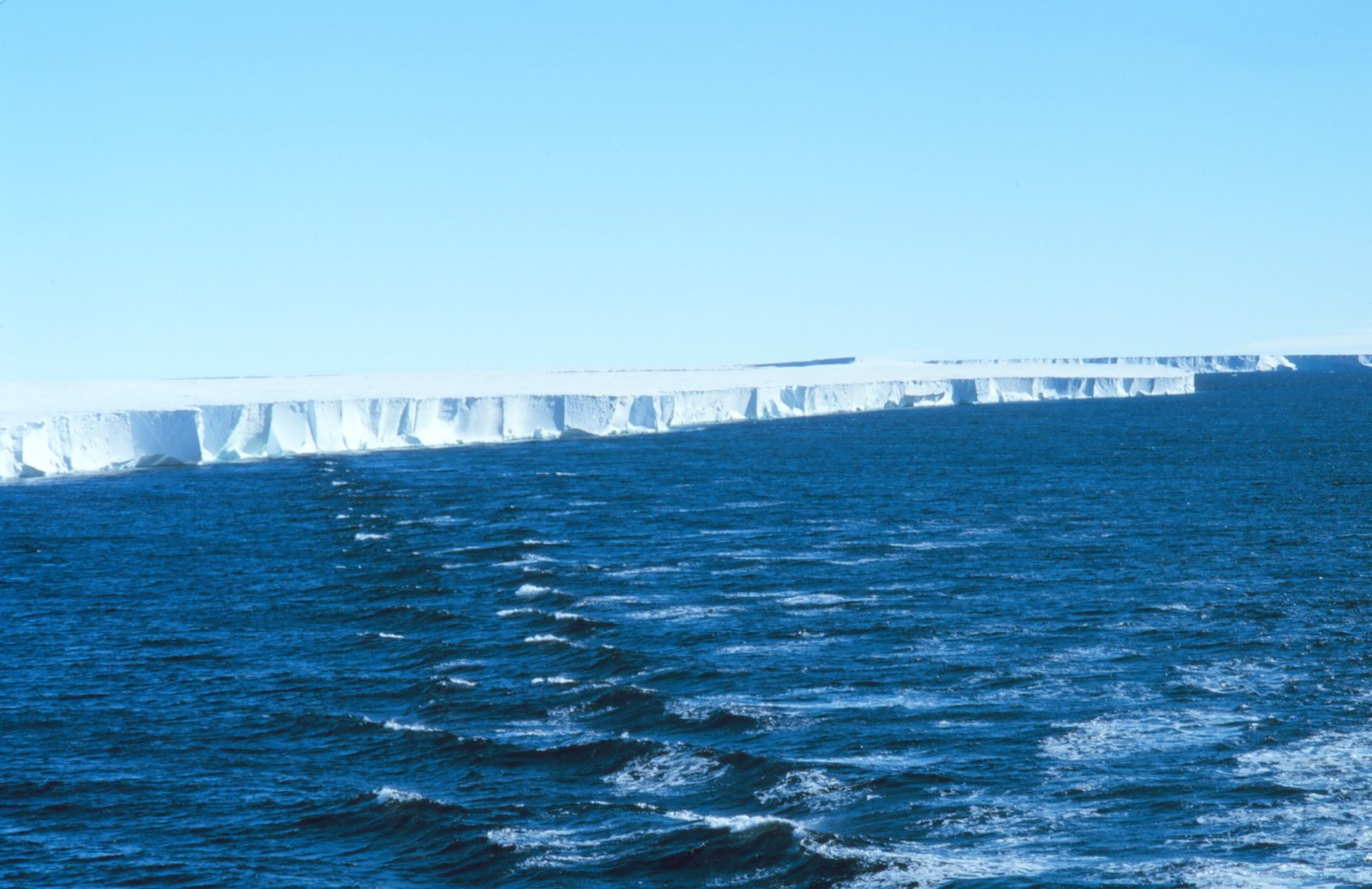
    The study found a consistently stratified, 30-meter-thick water column beneath nearly 600 meters of ice and snow at the Kamb Ice Stream grounding zone of the Ross Ice Shelf. Warm inflowing seawater was separated from a colder outflowing mixture of seawater and glacial meltwater.

    Why the authors say this matters

    The authors say these grounding zone conditions have major implications for global sea level rise over the coming century and beyond. They also conclude that the grounding zone may be a distinct region within the ice shelf cavity.

    What the researchers tested

    The researchers presented ocean data from the Kamb Ice Stream grounding zone of the Ross Ice Shelf. They also analyzed a 10-month timeseries of stratification to examine how conditions changed over time.

    What worked and what didn't

    The stratification was resilient but variable over the 10-month record. Internal wave activity caused frequent mixing between the two layers, which the authors suggest may help explain the grounding zone's behavior.

    What to keep in mind

    The abstract notes that grounding zone ocean environments are difficult to access and have been sampled only a handful of times, often as brief snapshots. The summary does not describe additional limitations beyond the specific site and time period studied.

    • A 30-meter-thick water column was found beneath nearly 600 meters of ice and snow.
    • Warm seawater entered below while colder seawater and glacial meltwater flowed above.
    • A 10-month record showed the layering was stable but not fixed.
    • Internal waves frequently mixed the two layers.
    • The authors link grounding zone conditions to broader sea level rise concerns.
  • Reformulated q-middle convolution gains additive composition

    What the study found

    The authors reformulated the q-convolution and q-middle convolution, and introduced q-analogues of the addition related to gauge transformation. They report that one merit of this reformulation is additivity when composing two q-middle convolutions.

    Why the authors say this matters

    The authors indicate that the reformulation is useful because it improves how q-middle convolutions behave under composition. They also conclude that it helps in constructing and solving third-order linear q-difference equations.

    What the researchers tested

    The study examines q-convolution and q-middle convolution introduced by Sakai and Yamaguchi, along with q-analogues of addition. The authors also studied Jackson integrals associated with q-convolution and presented examples of third-order linear q-difference equations and their solutions.

    What worked and what didn't

    The reformulation produced additivity on composition of two q-middle convolutions. The authors also obtained sufficient conditions under which the Jackson integrals converge and satisfy the q-difference equation associated with the q-convolution. The abstract does not state any failed cases or negative results.

    What to keep in mind

    The abstract gives only sufficient conditions for convergence and for satisfying the associated q-difference equation, not necessary conditions. It also does not describe limitations of the method or the scope of the examples beyond the third-order linear q-difference equations mentioned.

    • The paper reformulates q-convolution and q-middle convolution.
    • It introduces q-analogues of addition related to gauge transformation.
    • A stated benefit is additivity for composing two q-middle convolutions.
    • The authors give sufficient conditions for Jackson integrals to converge and satisfy the associated q-difference equation.
    • The paper presents several third-order linear q-difference equations and their solutions.
  • LGBTQ+ participants reworked menopause knowledge beyond biomedical limits

    LGBTQ+ participants reworked menopause knowledge beyond biomedical limits

    What the study found

    The study found that existing menopause knowledge is limited by a biomedical focus and by assumptions that the typical menopausal person is a cisgender, heterosexual, middle-aged woman. LGBTQ+ participants in the U.K. often negotiated this knowledge critically and selectively, and many created or shared their own forms of knowledge to make menopause more useful and affirming.

    Why the authors say this matters

    The authors argue that menopause should be reimagined by centering marginalized experiences, not only to fill a research gap but as a starting point for a more multidimensional, nuanced, bio-psycho-social understanding of menopause. The study suggests that this could challenge the limits of biomedicalised menopause knowledge.

    What the researchers tested

    The article applies and develops sociological ideas about expert and lay knowledge, ignorance, and biomedicalisation through a queer feminist lens. It draws on interviews or accounts from 16 LGBTQ+ participants in the U.K. and also discusses the use of creative research methods such as body mapping, a visual method for representing experiences through the body.

    What worked and what didn't

    Participants often worked with both biomedical and popular menopause knowledge, but they did so critically rather than accepting it as complete. What did not work well was the narrowness of existing knowledge, especially where it failed to address the specificities of LGBTQ+ experiences; participants responded by making their own knowledge and found body mapping helpful for processing and reimagining their experiences.

    What to keep in mind

    The abstract focuses on 16 LGBTQ+ participants in the U.K., so the findings are limited to that group and context. The summary provided does not describe other limitations in detail.

    • Existing menopause knowledge is described as limited by biomedical assumptions and a cisgender, heterosexual prototype.
    • Sixteen LGBTQ+ participants in the U.K. navigated menopause knowledge critically and selectively.
    • Participants expressed frustration with knowledge that did not fit LGBTQ+ experiences.
    • Some participants created, shared, and sourced their own menopause knowledge.
    • Creative methods such as body mapping were described as helpful for understanding menopause experiences.
  • RCV showed simpler dynamics and limited ballot exhaustion

    What the study found

    The study found that ranked choice voting (RCV, a voting system where voters rank candidates) often works in practice in ways that are simple and transparent. Across the elections studied, it was associated with greater competitiveness and only limited effects from ballot exhaustion, which is when no remaining ranked candidate is left on a ballot.

    Why the authors say this matters

    The authors conclude that these findings show RCV can deliver measurable democratic benefits while remaining resilient to ballot-addition manipulation and maintaining transparent competitive dynamics in practice. They also say the computational framework may help election administrators and researchers with immediate election-night analysis and clearer discussion of election dynamics.

    What the researchers tested

    The researchers empirically tested common criticisms of RCV using real election data from three contexts: New York City’s 2021 Democratic primaries, Alaska’s 2024 primary-infused statewide elections, and Portland’s 2024 multi-winner City Council elections. They used an algorithmic approach that reduced election instance sizes by eliminating candidates to avoid computational complexity barriers.

    What worked and what didn't

    Following RCV adoption, competitiveness increased compared with prior plurality elections, with average margins of victory declining by 9.2 percentage points in New York City and 11.4 points in Alaska. The study says complex ballot-addition strategies were not more efficient than simple ones, and ballot exhaustion altered outcomes in only 3 of 110 elections.

    What to keep in mind

    The summary reports results from 110 elections across three specific settings, so the findings are limited to those cases. The abstract does not describe additional limitations beyond the stated scope and the use of reduced election instances for analysis.

    • RCV was found to have simple and transparent dynamics in practice.
    • Competitiveness increased after RCV adoption in the studied elections.
    • Average margins of victory declined by 9.2 points in New York City and 11.4 points in Alaska.
    • Complex ballot-addition strategies were not more efficient than simple ones.
    • Ballot exhaustion changed outcomes in only 3 of 110 elections.
  • ANATAR integrates tools for multi-loop amplitude generation

    What the study found

    The study presents ANATAR, a Mathematica package for multi-loop computations, which are calculations involving more than one loop in a particle-physics process. The package integrates existing tools to generate and manipulate amplitudes and to support higher-order calculations.

    Why the authors say this matters

    The authors say ANATAR is efficient without compromising user-friendliness and flexibility. They also conclude that it is optimized for computations in effective field theories and supports large classes of BSM (beyond the Standard Model) models with the same gauge group as the SM (Standard Model).

    What the researchers tested

    The researchers introduced and reviewed the main functionalities of ANATAR. According to the abstract, the package uses QGRAF to generate Feynman diagrams, FORM to perform Dirac and color algebra, and interfaces to codes for integration-by-parts reduction to reduce expressions to master integrals.

    What worked and what didn't

    The abstract says ANATAR can manipulate generated amplitudes, extract scalar form factors, and map expressions to integral families for later reduction. It also states that the package integrates several existing tools and is equipped for phenomenological applications.

    What to keep in mind

    The abstract does not describe numerical benchmarks, comparisons with other software, or specific performance limits. It also does not provide detailed results from the phenomenological applications beyond stating that they are illustrated.

    • ANATAR is a new Mathematica package for multi-loop computations.
    • It integrates QGRAF for Feynman diagram generation and FORM for Dirac and color algebra.
    • The package can manipulate amplitudes, extract scalar form factors, and map expressions to integral families.
    • ANATAR interfaces with integration-by-parts reduction codes to reach master integrals.
    • The abstract says it is optimized for effective field theory calculations and supports many BSM models.
  • Donor ventilator duration was not linked to 1-year lung function

    What the study found

    The article reports that donor ventilation duration did not have a discernible effect on recipient lung function after lung transplantation. In the study described, recipients of lungs from donors ventilated for less than 5 days were compared with recipients of lungs from donors ventilated for more than 5 days.

    Why the authors say this matters

    The authors suggest these findings mean clinicians should not be quick to dismiss lung transplant donors because of ventilation time alone. They also note that donor ventilation time may no longer be a major selection factor in some allocation systems.

    What the researchers tested

    Fioretti et al. compared donors ventilated for less than 5 days with donors ventilated for more than 5 days. Their main outcome was lung function measured by spirometry, which is a test of how well the lungs move air, and they analyzed forced expiratory volume in 1 second at 1 year after transplant in a cohort of 588 patients.

    What worked and what didn't

    The study did not find any discernible effect on absolute or predicted forced expiratory volume in 1 second at 1 year posttransplant. The article says this is the most robust study on donor ventilation and recipient lung function to date, and it is consistent with prior data showing no association with overall survival.

    What to keep in mind

    The article notes that registry studies and single-center studies can be affected by survivorship bias, meaning they only include donors who reached organ offer and transplant. It also cautions that results from Alberta may not fully apply to more complex systems in Europe or the United States, where allocation rules and incentives differ.

    • Donor ventilation time was not associated with measurable differences in recipient lung function at 1 year.
    • The comparison was between donors ventilated for less than 5 days and more than 5 days.
    • The main lung function measure was forced expiratory volume in 1 second, assessed by spirometry.
    • The study included 588 patients.
    • The article says the findings are consistent with earlier survival data showing no effect of donor ventilation duration.