Author: editor@focalinterest.com

  • No compelling synchrotron pair echo candidates were found near KM3-230213A

    What the study found

    The study found three subthreshold gamma-ray sources within 3.5 degrees of the KM3-230213A neutrino event, but none of them appear to be compelling candidates for synchrotron pair echo emission. A subthreshold source is a gamma-ray source that is not included in existing catalogs.

    Why the authors say this matters

    The authors note that synchrotron pair echo emission is expected to peak in the GeV–TeV band and may appear as a dim, transient source. The study suggests this search could help evaluate whether gamma-ray emission is associated with the neutrino source environment.

    What the researchers tested

    The researchers developed a synchrotron pair echo model for the specific case of the KM3NeT neutrino, KM3-230213A, reported at 220 PeV. They then examined data from the Large Area Telescope on board the Fermi Gamma-ray Space Telescope for transient and subthreshold gamma-ray sources near the neutrino event.

    What worked and what didn't

    The search identified three uncataloged subthreshold sources with TS ≳ 16 within 3.5 degrees of the neutrino event. However, the authors say none of these sources seem to be compelling candidates for synchrotron pair echo emission.

    What to keep in mind

    The abstract does not provide details on follow-up confirmation, source classification beyond the brief note given, or broader limits on the model. The summary here is limited to the information stated in the title and abstract.

    • KM3NeT reported a 220 PeV ultrahigh-energy neutrino event called KM3-230213A.
    • The authors modeled synchrotron pair echo emission for this specific neutrino event.
    • They searched Fermi-LAT data for transient and subthreshold gamma-ray sources nearby.
    • Three uncataloged subthreshold sources with TS ≳ 16 were found within 3.5 degrees.
    • None of the identified sources seemed to be compelling synchrotron pair echo candidates.
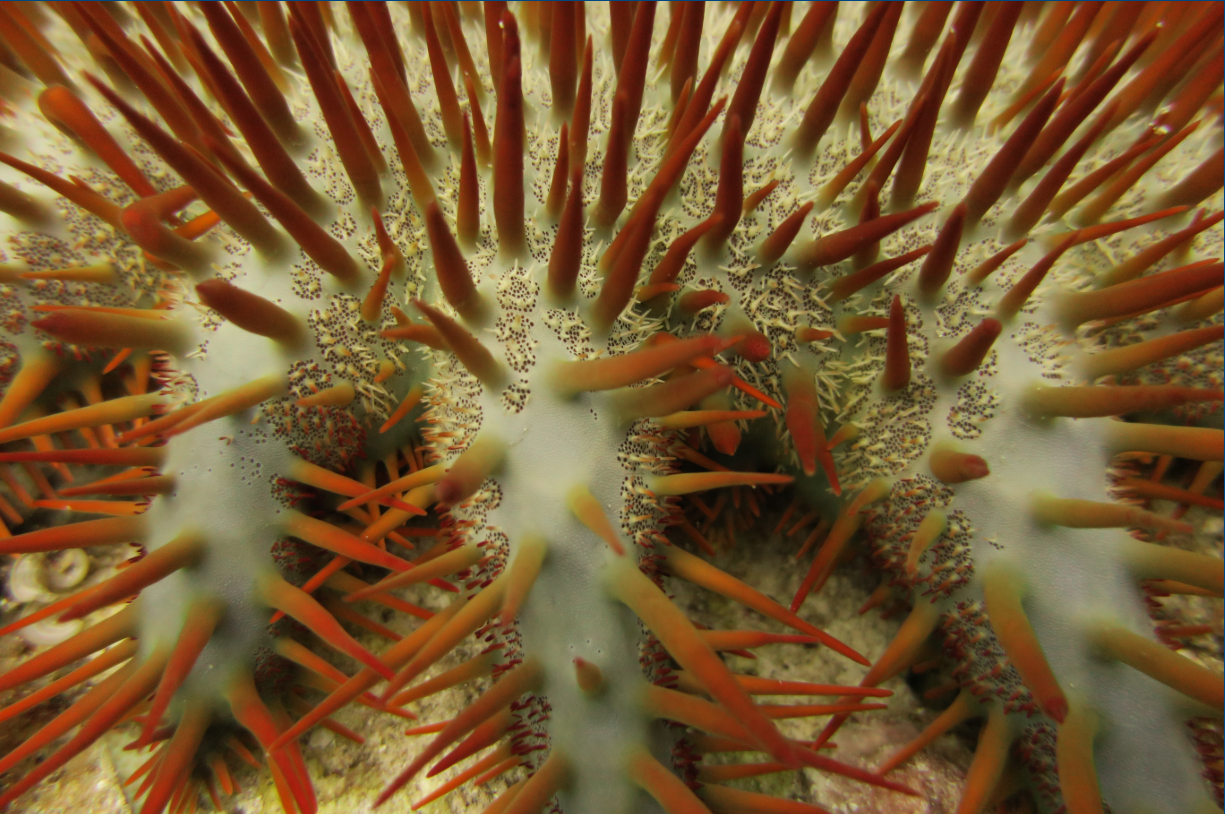
  • Australia reefs face different prickly population patterns

    Australia reefs face different prickly population patterns

    What the study found

    The study found that two overabundant echinoderms, crown-of-thorns starfish and long-spined sea urchins, affect Australian reefs in different ways. Crown-of-thorns starfish show recurrent boom-and-bust outbreaks, while long-spined sea urchins can form high-density populations that create long-lasting urchin barrens.

    Why the authors say this matters

    The authors conclude that bridging research and sharing knowledge across tropical and temperate reef systems could improve understanding of these parallel problems. They also state that spatially structured management aimed at prevention is more efficient and cost effective than reactive control efforts.

    What the researchers tested

    The researchers synthesized and compared the ecology and management of crown-of-thorns starfish and Centrostephanus rodgersii, focusing on the Great Barrier Reef and the eastern Great Southern Reef. The comparison covered population dynamics, nutritional ecology, regeneration of nutritional resources, and management by culling or harvesting.

    What worked and what didn't

    For both species, the abstract reports evidence that local top-down active management by culling or harvesting can be effective. It also reports large funding differences, with funding for Great Barrier Reef crown-of-thorns starfish management being more than 40 times higher than funding for Tasmanian urchin management.

    What to keep in mind

    This is a comparative review, so the abstract does not present new experimental results. The summary also does not describe detailed limitations beyond noting that management approaches and funding levels differ across regions.

    • Crown-of-thorns starfish have recurrent boom-and-bust outbreaks on the Great Barrier Reef.
    • Long-spined sea urchins can form stable, high-density populations that create urchin barrens lasting decades or more.
    • The two species differ in nutritional ecology: crown-of-thorns starfish are obligate corallivores, while long-spined sea urchins are omnivores.
    • The abstract reports evidence that local culling or harvesting can be effective for both species.
    • Funding for Great Barrier Reef crown-of-thorns starfish management is reported to be more than 40-fold higher than funding for Tasmanian urchin management.
  • Anxiety disorders show hyper-scanning and hyper-pursuit eye patterns

    What the study found

    The study found that people with anxiety disorders showed distinct eye movement patterns compared with people with depressive disorders and healthy controls. These patterns were called hyper-scanning, meaning increased visual scanning during free viewing, and hyper-pursuit, meaning stronger-than-usual smooth tracking of moving targets.

    Why the authors say this matters

    The authors conclude that these eye movement patterns may serve as measurable behavioural markers for distinguishing anxiety disorders from other affective disorders. The findings also suggest that eye-tracking could be a promising way to study mechanisms such as vigilance and prediction in anxiety.

    What the researchers tested

    The researchers recorded eye movements in 91 patients with anxiety disorders, 118 with depressive disorders, and 98 healthy controls. Participants completed free viewing of neutral stimuli, a smooth-pursuit task, and a fixation-stability task, and the team used principal component analysis to identify latent eye movement dimensions and machine learning models to test classification performance.

    What worked and what didn't

    Compared with both depressive disorder patients and healthy controls, the anxiety group showed increased saccade frequency and path length during free viewing, along with increased velocity gain, fewer intrusive saccades, and more catch-up saccades during smooth pursuit. Principal component analysis identified six latent components, and among them active visual exploration, pupillary arousal, and smooth-pursuit control showed robust group differences. The machine learning models achieved area under the receiver operating characteristic curve values of 0.82 for anxiety versus healthy controls, 0.83 for depression versus healthy controls, and 0.61 for anxiety versus depression.

    What to keep in mind

    The abstract does not describe detailed limitations beyond the reported study design and sample groups. The summary provided here is limited to the findings and methods stated in the abstract.

    • People with anxiety disorders showed hyper-scanning during free viewing and hyper-pursuit during smooth pursuit.
    • The anxiety group differed from both depressed patients and healthy controls on several eye movement measures.
    • Six latent eye movement components were identified, including active visual exploration, pupillary arousal, and smooth-pursuit control.
    • Classification performance was stronger for anxiety versus healthy controls and depression versus healthy controls than for anxiety versus depression.
    • The authors suggest eye-tracking may help differentiate affective disorders.
  • Professional debugging is an iterative diagnostic process

    What the study found

    The study found that professional debugging is a structured, iterative diagnostic process. Programmers update a mental model of the system, meaning an internal understanding of how the code works, to guide what information they gather next.

    Why the authors say this matters

    The authors conclude that their grounded theory surfaces the human-centered dimensions of debugging. They say this has implications for tool design and software engineering education.

    What the researchers tested

    The researchers used a grounded theory approach, which is a qualitative method for building theory from observed behavior. They observed seven professional developers and five professional live-coding streamers working on 17 debugging tasks in their own codebases.

    What worked and what didn't

    Developers gathered information by alternating between navigation and execution strategies. They used forward and backward tracing modes of reasoning, and adapted these approaches to codebase context, complexity, and familiarity. They also gathered external resources to complement code-based evidence, and their experience helped them systematically construct a mental model.

    What to keep in mind

    The abstract does not describe specific limitations of the study. The findings are based on 17 debugging tasks in participants' own codebases and on the observed participants included in the study.

    • Debugging is described as a structured, iterative diagnostic process.
    • Developers update a mental model of the system while debugging.
    • Information gathering alternates between navigation and execution strategies.
    • Reasoning includes forward and backward tracing modes.
    • External resources are used alongside code-based evidence.
  • Full-mouth rehabilitation improved esthetics and function in one open-bite case

    What the study found

    The case report describes a full-mouth rehabilitation for a 26-year-old woman with an anterior open bite and mild chronic generalized periodontitis. The authors report significant improvements in esthetics and function, with stability at 1 year of follow-up.

    Why the authors say this matters

    The authors present the case as showing the use of contemporary digital methods for diagnosis, modeling, and restoration fabrication in complex rehabilitation. They suggest the approach supported both esthetic and functional improvement.

    What the researchers tested

    This was a clinical case report of comprehensive full-mouth rehabilitation. The treatment used CAD software, a Kois deprogrammer, extraction of impacted molars, a cut-back technique, and artistic layering of ceramics on a lithium-disilicate framework.

    What worked and what didn't

    The report says the rehabilitation led to significant esthetic and functional improvement. It also states that the results remained stable after 1 year of follow-up.

    What to keep in mind

    This is a single clinical case, so the abstract does not show how the approach would perform in other patients. The available summary does not describe any failures, complications, or broader limitations beyond the case itself.

    • The article describes a full-mouth rehabilitation in a 26-year-old woman with an anterior open bite.
    • The patient also had mild chronic generalized periodontitis.
    • The treatment used digital methods, including CAD software, plus a Kois deprogrammer and ceramic fabrication on a lithium-disilicate framework.
    • The authors report significant improvements in esthetics and function.
    • The reported results were stable after 1 year of follow-up.
  • A2-typed kidneys labeled A1 by serology were transplanted safely

    What the study found

    The study found that kidneys from donors labeled as blood group A1 by serology, but confirmed as A2 by genotyping, were transplanted safely into ABO O and B recipients. The authors report favorable outcomes and no graft losses attributed to ABO incompatibility.

    Why the authors say this matters

    The authors conclude that using ABO genotyping, a genetic test that identifies blood group more precisely than serologic testing, could expand the donor pool for disadvantaged candidates. They also suggest this approach may reduce wait times by making more kidneys available for transplantation.

    What the researchers tested

    The researchers studied kidney transplants from donors labeled A1 by serology but genotyped as A2. Genotyping was done with real-time PCR or next-generation sequencing, and the team analyzed biopsy-proven rejection, anti-HLA and anti-ABO antibodies, and allograft loss.

    What worked and what didn't

    In this cohort, allograft survival was 100%. No graft losses were attributed to ABO incompatibility, and the abstract does not report graft losses from this cause.

    What to keep in mind

    The abstract does not provide detailed sample size, follow-up length, or comparative data against other donor-recipient groups. It also does not describe limitations beyond the available summary.

    • Kidneys labeled A1 by serology but confirmed as A2 by genotyping were transplanted to ABO O and B recipients.
    • The cohort had 100% allograft survival.
    • No graft losses were attributed to ABO incompatibility.
    • Genotyping was performed using real-time PCR or next-generation sequencing.
    • The authors support ABO genotyping as a routine supplement to serologic testing.
  • Trumpism politicizes international business and challenges prior assumptions

    Trumpism politicizes international business and challenges prior assumptions

    What the study found

    The paper argues that Trumpism and economic nationalism are reshaping the political context of international business. It says that legitimacy and acceptable forms of cross-border economic activity are increasingly constructed and contested through politicization.

    Why the authors say this matters

    The authors conclude that international business scholarship should treat politicization as central rather than viewing politics only as a background constraint. They also suggest that managers and policymakers need to attend to the symbolic and political dimensions of policy and strategy, not only regulatory and economic ones.

    What the researchers tested

    This is a conceptual viewpoint paper, not an empirical study. It draws on international business, international relations, political economy, and political sociology, and uses illustrative examples from Trump administration policies and related contexts.

    What worked and what didn't

    The paper reports that trade policy, foreign direct investment, and multinational enterprise operations are increasingly linked to narratives of sovereignty, national identity, and geopolitical rivalry. It also says multinational enterprises are not only adapting to these environments but helping shape them through strategic, discursive, and non-market actions.

    What to keep in mind

    The abstract describes the paper as a viewpoint with illustrative examples, so it does not present a single empirical test or dataset. The limitations section says future research is needed on how politicization unfolds across institutional contexts, how firms use discursive and non-market strategies, and how geopolitical narratives affect investment decisions and legitimacy assessments.

    • The paper argues that Trumpism and economic nationalism are changing the political setting of international business.
    • It says legitimacy and acceptable cross-border activity are increasingly shaped by politicization.
    • Multinational enterprises are described as both adapting to and shaping politicized business environments.
    • Trade policy, foreign direct investment, and firm operations are linked to sovereignty, national identity, and geopolitical rivalry.
    • The paper is conceptual and uses examples from Trump administration policies and related contexts.
  • AI-generated engineering artifacts need classification and verification

    What the study found

    The paper presents a classification and management approach for AI-generated engineering artifacts so they can be verified. It also reports a use case from the iterative development of an e-bike.

    Why the authors say this matters

    The authors say this matters because AI-supported engineering approaches are intended to reduce the challenges of developing complex interdisciplinary products by increasing automation. The study suggests that managing these AI-generated artifacts is important for traceability and auditability of engineering decisions.

    What the researchers tested

    The researchers developed a classification and management approach for AI-generated engineering artifacts. They applied it in a use case involving iterative e-bike development.

    What worked and what didn't

    The abstract says the approach allows verification of AI-generated engineering artifacts. It does not provide detailed performance results, comparative outcomes, or failures.

    What to keep in mind

    The available summary does not describe limitations, specific evaluation metrics, or the scope of the classification scheme in detail. It only states that the approach was demonstrated in a use case on iterative e-bike development.

    • AI-generated engineering artifacts need to be classified, verified, and managed.
    • The approach is intended to support traceability and auditability of engineering decisions.
    • A use case in iterative e-bike development demonstrated the approach.
    • The abstract says AI-supported engineering approaches aim to reduce challenges in complex interdisciplinary product development.
  • Fibroblast lipid cues drive site-specific epithelial cancer invasion

    What the study found

    The study found that fibroblasts, which are connective tissue cells, provide site-specific lipid cues that affect squamous cell carcinoma (SCC) growth and invasion. Oral and lung fibroblasts transfer different lipids to SCC cells, while dermal fibroblasts are described as lipid poor and associated with less invasive cutaneous SCC.

    Why the authors say this matters

    The authors conclude that these findings help explain why SCCs from different body sites can have different prognoses. They also suggest that targeting fibroblast lipid synthesis and SCC lipid uptake or breakdown could inhibit oral and lung epithelial cancer invasion.

    What the researchers tested

    The researchers examined how fibroblasts from oral, lung, and skin tissue affect SCC proliferation and invasion. They also looked at lipid metabolism, lipid transfer to cancer cells, and the signaling pathways linked to the changes they observed.

    What worked and what didn't

    Oral fibroblasts transferred sphingomyelins, which activated the ceramide-sphingosine-1-phosphate-STAT3 pathway and promoted oral SCC invasion. Lung fibroblasts transferred triglycerides to lung SCCs, which triggered cholesterol synthesis and invasion and was associated with poor survival; dermal fibroblasts were lipid poor and cutaneous SCC was less invasive.

    What to keep in mind

    The abstract does not describe detailed limitations or the size of the study. The findings are presented for squamous cell carcinomas and the specific tissue settings discussed in the abstract.

    • Fibroblasts from different tissues transfer different lipids to squamous cell carcinoma cells.
    • Oral fibroblasts transfer sphingomyelins and promote oral SCC invasion.
    • Lung fibroblasts transfer triglycerides, which trigger cholesterol synthesis and invasion in lung SCCs.
    • Dermal fibroblasts are described as lipid poor, and cutaneous SCC is less invasive.
    • The authors suggest targeting fibroblast lipid synthesis or cancer-cell lipid handling could inhibit invasion.
  • Calibration run matches registered false-REFUTE rate

    What the study found

    The calibration run produced a false-REFUTE operating characteristic of 0.046, which was consistent with the registered prediction of about 0.05. The abstract describes this as a formal clearance record for the test apparatus rather than a substantive empirical claim.

    Why the authors say this matters

    The authors say the record shows the instrument onus has been discharged for the test itself, not the underlying empirical claim. They also state that the load-bearing result is reproducible bit-for-bit by re-running the adjudication on the registered data, without trusting the multi-node pipeline.

    What the researchers tested

    The study reports a pre-registered Bayesian equivalence study of LLM factual-commitment retention on the retrieval axis, with an operating-characteristic calibration run. The apparatus was checked through a two-node adversarial pass on independent hardware, and the record includes four hash-pinned modules, a sealed golden configuration, an adversarial clearance ledger, three documentation conditions, and a stratified refusal report.

    What worked and what didn't

    The calibration run succeeded in producing a false-REFUTE operating characteristic of 0.046, with a Wilson 95% confidence interval of [0.0373, 0.0567] and a half-width of 0.0097, based on 1,803 converged replicates and a 1.21% refusal rate. The abstract says PIN-B refused-path count-identity and resume-equivalence under a mid-replicate crash were each verified, rather than assumed.

    What to keep in mind

    The abstract says this is not a substantive empirical claim and should be retired only by the registered confirmatory run on real data plus independent reproduction. It also presents verification provenance as method rather than evidence, and does not describe other limitations beyond that scope.

    • The calibration run reported a false-REFUTE operating characteristic of 0.046.
    • That value was consistent with the registered prediction of about 0.05.
    • The result was based on 1,803 converged replicates with a 1.21% refusal rate.
    • Two checks were verified on independent hardware: refused-path count-identity and resume-equivalence under a mid-replicate crash.
    • The abstract says this is a clearance record, not a substantive empirical claim.