Author: editor@focalinterest.com

  • Cardioversion and ablation were reported effective during pregnancy

    What the study found

    The authors report that electrical cardioversion and catheter ablation were both effective during pregnancy, with reported success rates of 89.7% and 97.5%, respectively. They conclude that both treatments are safe and effective options in this setting.

    Why the authors say this matters

    The authors say these treatments remain underused because of persistent but unfounded safety concerns. They suggest that delayed rhythm control may lead to hemodynamic compromise, which they describe as a risk for maternal cardiovascular instability and fetal distress.

    What the researchers tested

    The paper presents an illustrative case of recurrent pregnancy-associated arrhythmia that did not respond to standard therapies, including radiofrequency ablation and electrical cardioversion. The authors also conducted a structured narrative review using Web of Science, Embase, and PubMed, and assessed study quality with Joanna Briggs Institute appraisal tools.

    What worked and what didn't

    In the review, 19 studies involving 58 patients reported electrical cardioversion, and 44 studies involving 159 patients reported catheter ablation during pregnancy. Electrical cardioversion restored sinus rhythm in 89.7% of cases, while catheter ablation did so in 97.5% of cases; the cardioversion group included 5 preterm deliveries and 2 maternal-fetal deaths, while the ablation group included 2 preterm deliveries and no maternal-fetal mortality.

    What to keep in mind

    The available clinical evidence was described as largely coming from case reports. The abstract does not provide detailed limitations beyond that scope, so the findings should be read as based on a relatively small body of reported cases.

    • Electrical cardioversion and catheter ablation were both reported to restore sinus rhythm during pregnancy.
    • Reported success rates were 89.7% for electrical cardioversion and 97.5% for catheter ablation.
    • The cardioversion group included 5 preterm deliveries and 2 maternal-fetal deaths.
    • The catheter ablation group included 2 preterm deliveries and no maternal-fetal mortality.
    • The review covered 19 cardioversion studies and 44 catheter ablation studies.
    • The evidence base was described as largely case reports.

  • Oral prolonged-release ketamine showed minimal dissociation

    What the study found

    The study found that KET01, an oral prolonged-release racemic ketamine tablet, caused little dissociation and few cardiovascular changes, but it did not meet its main antidepressant outcome at day 21 in treatment-resistant depression. The authors also observed early reductions in depression scores after the first dose.

    Why the authors say this matters

    The authors conclude that the antidepressant properties and tolerability profile of KET01, including minimal dissociation and cardiovascular effects, support further development of the oral KET01 formulation for at-home administration. Here, dissociation means a detached or altered state of awareness, and cardiovascular refers to heart and blood vessel effects.

    What the researchers tested

    The researchers ran two randomized clinical trials. KET01-03 was a phase 1 crossover study in healthy adult men comparing a single 240 mg dose of KET01 with intranasal esketamine, and KET01-02 was a phase 2 placebo-controlled study in adults with treatment-resistant depression testing 120 mg/day or 240 mg/day of KET01 added to standard therapy for 3 weeks.

    What worked and what didn't

    In KET01-03, intranasal esketamine produced significant dissociation within 24 hours, while KET01 did not. In KET01-02, the primary day 21 depression outcome was not met for 240 mg/day KET01 versus placebo, although lower depression scores were seen 7 hours after the first 240 mg dose and at days 4 and 7; the day 4 and day 7 differences were reported as nominally significant.

    What to keep in mind

    KET01-03 included only 26 healthy adult males at one site, so its findings are limited to that group. KET01-02 did not meet its primary endpoint, and the abstract does not describe other limitations beyond the study designs and sample sizes.

    • KET01 is an oral prolonged-release racemic ketamine tablet studied for treatment-resistant depression.
    • Intranasal esketamine caused significant dissociation in the phase 1 trial, while KET01 did not.
    • Pulse and blood pressure did not change markedly with KET01, unlike the rapid increases seen with intranasal esketamine in KET01-03.
    • The main depression outcome at day 21 was not met in the phase 2 trial.
    • Early reductions in MADRS depression scores were observed after the first 240 mg dose of KET01.
    • The authors say the findings support further development of oral KET01 for at-home administration.
  • Low-multipole CMB temperature power is lower than Planck prediction

    What the study found

    The study found that the cosmic microwave background (CMB, the afterglow radiation from the early universe) temperature power spectrum at large angular scales is lower than the best-fit Planck 2018 Lambda cold dark matter (Lambda CDM, the standard cosmological model) prediction. The authors report a low quadrupole, a dip between multipoles 20 and 27, and an overall low power level below multipole 30.

    Why the authors say this matters

    The authors conclude that these features do not plausibly arise from foreground contamination, systematic errors, masking, or mode mixing, given the nearly full-sky solution and different methodology used here. They also present a new low-multipole likelihood for use with the Cobaya package, and report that joint fits with higher-multipole Planck data are consistent with published Planck results.

    What the researchers tested

    The researchers measured the CMB temperature power spectrum at large angular scales using WMAP and Planck maps cleaned of foregrounds with a template-based approach described in the first paper of the series. They recovered nearly full-sky information for multipoles less than 30 with only 1% of pixels near the Galactic plane masked and without inpainting.

    What worked and what didn't

    The analysis recovered essentially the full-sky CMB information at multipoles below 30. It found a low quadrupole at 2.2 sigma compared with the best-fit Planck 2018 Lambda CDM spectrum, a dip over multipoles 20 to 27, and an overall low power level relative to the Lambda CDM prediction from higher multipoles. The overall multipole-below-30 amplitude constraint was consistent with published WMAP and Planck results at 1.2 sigma and 0.6 sigma, respectively, when statistical precision is taken into account.

    What to keep in mind

    The summary available here does not describe limitations beyond the stated masking and no-inpainting approach. The abstract reports consistency with published WMAP and Planck results and does not claim a discrepancy beyond the noted low-power features.

    • The study reports low CMB temperature power at multipoles below 30.
    • A low quadrupole is found at 2.2 sigma relative to the best-fit Planck 2018 Lambda CDM spectrum.
    • A dip appears between multipoles 20 and 27.
    • The authors say the features are unlikely to be caused by foregrounds, systematics, masking, or mode mixing.
    • A new low-multipole likelihood is provided for the Cobaya package.
    • A joint Lambda CDM fit with higher-multipole Planck data gives H0 = 67.35 ± 0.54 km s−1 Mpc−1.
  • Reciprocating swimmer moves in viscoelastic granular hydrogel

    What the study found

    The study found that a scallop-like swimmer with reciprocally flapping wings can move in a nearly frictionless, cohesive granular medium made of hydrogel spheres when the flapping frequency matches the material’s inverse relaxation time. The swimmer moved in the opposite direction from its motion in a cohesion-free granular material of hard plastic spheres.

    Why the authors say this matters

    The findings indicate that time-dependent interactions in the medium can produce locomotion even for reciprocal swimming motions, which the authors present as relevant to understanding movement in viscoelastic granular materials. The study suggests that drag and propulsion can depend on the material’s relaxation behavior and the swimmer’s inertia.

    What the researchers tested

    The researchers experimentally studied a scallop-like swimmer with reciprocally flapping wings in a nearly frictionless, cohesive granular medium consisting of hydrogel spheres. They varied the flapping frequency and used X-ray radiograms to observe how the wing motions affected the surrounding material.

    What worked and what didn't

    Significant locomotion was observed only at intermediate frequencies, when the flapping frequency matched the inverse relaxation time of the material. At higher or lower frequencies, the swimmer showed no motion except for a short initial transient phase. X-ray radiograms showed that the wing motions created low-density zones, which produced a hysteresis in drag and propulsion forces; together with the swimmer’s inertia, this accounted for locomotion at intermediate frequencies.

    What to keep in mind

    The abstract describes one experimental swimmer in one type of cohesive granular hydrogel, so the scope is limited to that system. Limitations beyond this are not described in the available summary.

    • A scallop-like swimmer moved in a cohesive granular hydrogel only at intermediate flapping frequencies.
    • The best motion occurred when the flapping frequency matched the material’s inverse relaxation time.
    • The swimmer moved in the opposite direction from the same swimmer in cohesion-free hard plastic spheres.
    • At higher or lower frequencies, the swimmer did not move beyond a short initial transient phase.
    • X-ray radiograms showed low-density zones and force hysteresis linked to the motion.
  • Spanish-language adaptation supported for traumatic brain injury intervention

    What the study found

    The study found that the BETTER traumatic brain injury transitional care intervention and its participant workbook could be culturally and linguistically adapted for Spanish-speaking patients with traumatic brain injury and their families. The authors report that the adaptation process supported use of the materials in this group.

    Why the authors say this matters

    The authors say the work may help researchers better enroll Hispanic or Latino people, a group that makes up under 8% of U.S. clinical trial samples. They conclude that the steps used in this study can serve as a model for adapting interventions to engage non-English speaking and minoritized participants in research.

    What the researchers tested

    The researchers described cultural and linguistic adaptation of the BETTER traumatic brain injury transitional care intervention and its workbook. Phase I used qualitative interviews with interpreters and providers, along with rapid qualitative analysis; phase II included workbook translation, cognitive user-testing, and participant feedback.

    What worked and what didn't

    In phase I, interviews with 10 bilingual health care providers and interpreters produced two themes: centering culture to advance patient outcomes, and enhancing uptake of BETTER. In phase II, the main recommendations involved orthographic changes and limiting English idioms that did not carry meaning in Spanish. The abstract reports that these findings supported adaptation of the intervention and workbook.

    What to keep in mind

    The available summary describes a small adaptation study rather than a test of patient outcomes. It includes feedback from 10 providers and interpreters in phase I and one workbook reviewer in phase II, so the findings are limited to this adaptation process.

    • The study adapted a traumatic brain injury transitional care intervention for Spanish-speaking patients and families.
    • The authors say the work may help increase enrollment of Hispanic or Latino participants in clinical trials.
    • Phase I used interviews with bilingual providers and interpreters plus rapid qualitative analysis.
    • Phase II used workbook translation, cognitive user-testing, and participant feedback.
    • Main phase II feedback focused on spelling or writing changes and avoiding English idioms that did not translate well.
  • Adaptive dynastic politics linked to democratic decline in Indonesia

    Adaptive dynastic politics linked to democratic decline in Indonesia

    What the study found

    The study identifies "adaptive dynastic politics" as a distinct pattern in Indonesia during the Jokowi era, meaning political family rule that uses context-specific legitimacy building, mixed institutional tactics, digital coordination, and coalition management. The authors say this pattern was associated with democratic deterioration rather than open institutional collapse.

    Why the authors say this matters

    The authors conclude that this pattern shows how political dynasties can manipulate democratic institutions while keeping electoral legitimacy. They also suggest it offers insight into institutional manipulation in other developing democracies.

    What the researchers tested

    The researchers examined Indonesia from 2014 to 2024 using content analysis of 847 media articles and elite interviews. They also used process tracing, which is a way of linking events step by step to a causal pathway, to connect dynastic mechanisms with changes in democratic institutions.

    What worked and what didn't

    The abstract says constitutional engineering allowed family succession despite age requirements, and coordinated pressure produced 81% parliamentary control. It also reports that digital operations used 90-billion-rupiah government resources, while resistance from civil society, independent media, and judicial factions was real but mostly unsuccessful.

    What to keep in mind

    The available summary does not provide detailed limits beyond the scope of the Indonesia case and the Jokowi-era focus. The abstract presents the findings as evidence of causal links, but only the information given here can be summarized.

    • The study describes "adaptive dynastic politics" as a distinct form of political family rule in Indonesia.
    • Democratic indicators in Indonesia declined from 57/100 to 56/100 on Freedom House during the period discussed.
    • The abstract says constitutional engineering enabled family succession despite age requirements.
    • The authors report 81% parliamentary control and 90-billion-rupiah government resources for digital operations.
    • Resistance from civil society, independent media, and judicial factions is described as significant but mostly unsuccessful.
  • India’s constitutional rights protections outpace practice

    What the study found

    The article argues that India has a robust constitutional framework for protecting civil, political, and socio-economic rights, but that a substantial gap remains between these guarantees and how they work in practice. It says this gap persists despite significant judicial innovations, especially public interest litigation and a broader reading of Article 21, the right to life and personal liberty.

    Why the authors say this matters

    The authors conclude that strengthening institutional accountability, democratic engagement, and a broader culture of rights is essential to turn constitutional commitments into effective human rights protection. The study suggests these changes are needed to address the ongoing gap between legal promise and lived reality.

    What the researchers tested

    The study used a doctrinal and analytical approach. It examined constitutional provisions, judicial interpretations, and relevant scholarly literature on human rights in India.

    What worked and what didn't

    The abstract says the Indian Constitution, through Part III's Fundamental Rights and Part IV's Directive Principles of State Policy, provides extensive rights protections. It also says judicial developments, including public interest litigation and the expanded interpretation of Article 21, have been significant. However, custodial violence, institutional discrimination, and socio-economic inequalities continue to show implementation deficits, institutional limitations, and entrenched social hierarchies.

    What to keep in mind

    This summary is based only on the abstract, so it does not describe empirical data, sample size, or case selection. The abstract also does not provide a detailed account of the limits of the study beyond noting the gap between constitutional guarantees and practice.

    • India's Constitution is described as offering extensive protection for civil, political, and socio-economic rights.
    • The article says there is a substantial gap between constitutional guarantees and their realization in practice.
    • Public interest litigation and an expanded interpretation of Article 21 are highlighted as significant judicial innovations.
    • Custodial violence, institutional discrimination, and socio-economic inequalities are identified as persistent problems.
    • The authors say stronger accountability, democratic engagement, and a broader culture of rights are needed.
  • Biomarker-guided antidepressant assignment showed mixed benefits

    What the study found

    The study found that biomarker-guided assignment to sertraline and bupropion, two antidepressants, did not produce significant overall differences when the assigned drug matched versus did not match a person's biomarkers. It did find better symptom reduction for some biomarker-defined groups, especially people with positive markers for both drugs or for either drug compared with people with two negative markers.

    Why the authors say this matters

    The authors conclude that this is the first study using biobehavioral markers to prospectively guide assignment to two widely used antidepressants. They say the findings provide foundations for larger personalized treatment studies of major depressive disorder.

    What the researchers tested

    The researchers developed algorithms from a multisite study to predict response to sertraline and bupropion in major depressive disorder. They then tested these markers in an independent, prospective clinical trial of unmedicated people with major depressive disorder using a biomarker-guided sequential multiple-assignment design, which is a study design that assigns treatments in stages based on earlier responses or markers.

    What worked and what didn't

    In the training sample, leave-one-out cross-validation models performed well, with area under the curve values from 0.66 to 0.86. In the preregistered clinical trial, no significant differences were seen for drug assignment consistent versus inconsistent with biomarkers, but symptom reduction trajectories differed for people with positive markers for both medications or either drug compared with those with two negative markers; the abstract reports a 66.8% boost in response rate.

    What to keep in mind

    The abstract does not describe detailed limitations beyond the mixed trial results and the need for larger personalized treatment studies. The findings are reported for unmedicated individuals with major depressive disorder in a single prospective trial, so the available summary does not state how broadly they apply.

    • The trial tested biomarker-guided assignment to sertraline and bupropion for major depressive disorder.
    • Overall, matching treatment to biomarkers did not significantly change outcomes.
    • Some biomarker-defined groups showed better symptom reduction than the group with two negative markers.
    • The training models showed area under the curve values from 0.66 to 0.86.
    • The authors say this is the first prospective study using biobehavioral markers to guide these two antidepressants.
  • Checklist revises Recent Polyplacophora classification

    Checklist revises Recent Polyplacophora classification

    What the study found

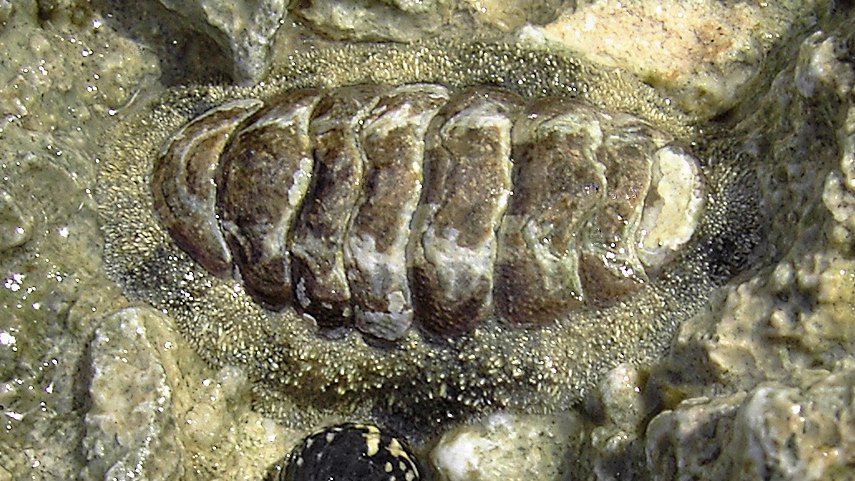
    The study presents an annotated checklist of 1,093 accepted Recent Polyplacophora, or chitons, with their classification. It also reports several taxonomic updates, including a new family, a reinstated family treated at superfamily rank, and a restored genus rank.

    Why the authors say this matters

    The authors say this annotated catalogue provides a way to document systematic changes clearly and identify areas that still need revision. They also note that the checklist includes phylogenetic systematics updates for taxa whose molecular phylogenies conflict with earlier morphological treatments.

    What the researchers tested

    The article is a checklist-based taxonomic review of Recent chitons, drawing on morphological and molecular data discussed in the field. It compiles valid species names, their classification, and comments on systematics and taxon position.

    What worked and what didn't

    The checklist corroborates the placement of Choriplax and Cryptochiton within Mopalioidea. It establishes Nuttallochitonidae fam. nov., places Plaxiphora in the reinstated Plaxiphoridae treated here as Plaxiphoroidea, restores Icoplax to genus rank, and states that Ferreiraellidae should be the accepted family name for species in Ferreiraella.

    What to keep in mind

    The abstract says progress in resolving some family- and genus-level relationships remains limited, and revisionary work is ongoing. It also notes that some molecular and morphological classifications still conflict and have not yet been formally clarified.

    • An annotated checklist of 1,093 accepted Recent chiton species is presented.
    • The study establishes Nuttallochitonidae fam. nov. for Nuttallochiton.
    • Plaxiphora is placed in Plaxiphoridae, treated here as Plaxiphoroidea.
    • Icoplax is restored to its original rank as a separate genus.
    • The authors say Ferreiraellidae should be the accepted family name for Ferreiraella species.
  • EAC-Net predicts charge density with accurate atomic contributions

    What the study found

    The study found that EAC-Net, short for Equivariant Atomic Contribution Network, can predict real-space charge density by breaking it into symmetry-consistent, atom-centered contributions. The authors report high accuracy, efficient training, and atomic charges that align with chemical intuition.

    Why the authors say this matters

    The authors conclude that this framework bridges two existing approaches to charge-density prediction: basis-function methods, which use strong physical priors but are less flexible, and grid-based methods, which are more expressive but less structured and efficient. The study suggests this provides an accurate, efficient, and physically grounded way to predict charge density.

    What the researchers tested

    The researchers introduced EAC-Net, a deep learning model for charge-density prediction in density functional theory, where charge density is a quantity used in electronic-structure calculations. They tested a design that decomposes the total charge density into atom-centered contributions coupled to real space rather than predicting the full density directly on a grid or from a predefined basis.

    What worked and what didn't

    According to the abstract, the model achieved errors typically below 1% across the periodic table and showed strong generalization to diverse chemical environments. The abstract does not describe specific failures or cases where performance was weaker.

    What to keep in mind

    The summary provided here is limited to the abstract, so details about datasets, baselines, and experimental setup are not available. The abstract does not describe limitations or caveats beyond the general comparison to prior approaches.

    • EAC-Net predicts real-space charge density using atom-centered contributions.
    • The model is described as symmetry-consistent and physically grounded.
    • The authors report errors typically below 1% across the periodic table.
    • The abstract says the model generalizes well to diverse chemical environments.
    • Atomic charges from the model align with chemical intuition, according to the authors.