Author: editor@focalinterest.com

  • Liquidity shocks spill over to related corporate bond peers

    What the study found

    The study found that liquidity shocks in downgraded corporate bonds can spill over to other bonds in the market. The spillovers were seen especially in peer bonds issued by firms with high fundamental volatility, a small number of economically related peers, and peers with a higher degree of learning, meaning a stronger correlation between trading volume and return volatility.

    Why the authors say this matters

    The authors conclude that the evidence supports the cross-asset learning hypothesis. They suggest that liquidity contagion from one asset to others arises through information learning across assets.

    What the researchers tested

    The researcher examined liquidity spillover in the corporate bond market. The study used regulation-induced selling pressure that followed rating downgrades from investment grade to high yield as the setting for the analysis.

    What worked and what didn't

    The empirical evidence showed spillovers from downgraded bonds to certain peer bonds. The study reports stronger spillovers for peers with high fundamental volatility, for a small number of economically related peers, and for peers with higher learning as indicated by the correlation between trading volume and return volatility.

    What to keep in mind

    The abstract does not describe specific limitations. The summary is limited to the corporate bond market setting and to spillovers associated with rating downgrades from investment grade to high yield.

    • Liquidity shocks in downgraded corporate bonds spilled over to some peer bonds.
    • Spillovers were stronger for peers issued by firms with high fundamental volatility.
    • Spillovers also appeared among a small number of economically related peer bonds.
    • Peer bonds with a higher degree of learning showed stronger spillover patterns.
    • The findings support the cross-asset learning hypothesis.

  • Nine-month all-oral tuberculosis regimens showed durable three-year outcomes

    What the study found

    The study found that nine-month, all-oral regimens for rifampicin-resistant tuberculosis were associated with durable outcomes three years after treatment ended. Persistent linezolid-related neuropathic or visual symptoms were also still seen in a substantial share of participants.

    Why the authors say this matters

    The authors conclude that the findings support durable three-year outcomes for these regimens. They also say the persistent neuropathy warrants proactive mitigation, including reducing cumulative linezolid exposure or using linezolid-sparing alternatives when feasible.

    What the researchers tested

    This was a multicentre, prospective cohort study in China called MDR-Chin. It included 124 adults with culture-confirmed multidrug-resistant or rifampicin-resistant tuberculosis, or pre-extensively drug-resistant tuberculosis, who received one of four nine-month all-oral regimens containing linezolid at 600 mg/day. The researchers assessed efficacy 36 months after treatment completion and tracked persistent linezolid-related neuropathic or visual symptoms lasting at least 24 months.

    What worked and what didn't

    At 36 months after treatment completion, 111 of 124 participants, or 89.5%, had a favourable outcome, defined as no failure, relapse, or death. There were no significant differences in favourable outcomes among the four regimens. Persistent linezolid-related neuropathic or visual symptoms were reported by 28 of 124 participants, or 22.6%, and foot numbness was the most frequent symptom, reported by 22 participants.

    What to keep in mind

    The study was non-randomised and observational, so it does not establish causal comparisons between regimens. The abstract does not provide further detail on the causes of symptoms beyond linezolid-related neuropathic or visual effects, and it does not describe additional limitations.

    • 111 of 124 participants had a favourable outcome 36 months after treatment ended.
    • No significant differences in favourable outcomes were seen among the four regimens.
    • 28 of 124 participants reported persistent linezolid-related neuropathic or visual symptoms.
    • Foot numbness was the most common persistent symptom.
    • The authors suggest reducing cumulative linezolid exposure or using linezolid-sparing alternatives when feasible.
  • Blockchain-secured energy trading improved V2G attack resilience

    Blockchain-secured energy trading improved V2G attack resilience

    What the study found

    The study found that the EPGA-BET framework, which combines ensemble optimization with blockchain-secured energy trading, improved performance in vehicle-to-grid networks under attack scenarios. The abstract says the system showed statistically significant gains in operational cost, resilience index, detection latency, and transaction success rate.

    Why the authors say this matters

    The authors conclude that combining ensemble intelligence, evolutionary algorithms, and blockchain can provide a strong, adaptive, and secure foundation for next-generation vehicle-to-grid networks. The study suggests this is relevant because electric vehicle vehicle-to-grid systems face planned cyber-physical attacks and fraudulent transactions.

    What the researchers tested

    The researchers tested an Ensemble Particle Swarm-Genetic Algorithm with Blockchain-Secured Energy Trading, called EPGA-BET. The framework uses Particle Swarm Optimization, Genetic Algorithm operators, and a quantum-inspired Particle Swarm Optimization formulation for optimization, plus a permissioned blockchain with Practical Byzantine Fault Tolerance consensus and Merkle-tree verification for transaction integrity, and a reinforcement learning module for anomaly-aware adaptation.

    What worked and what didn't

    Comparative experiments against established baseline strategies showed statistically significant improvements in the listed performance measures under attack scenarios. Ablation analysis indicated that the main performance gains came from the Particle Swarm Optimization–Genetic Algorithm ensemble and the adaptive reinforcement learning mechanism, while blockchain improved transactional trust without affecting optimization convergence.

    What to keep in mind

    The abstract does not describe the specific datasets, attack types, or experimental settings in detail. It also presents the results as coming from comparative experiments and ablation analysis, but broader real-world scope limits are not described in the available summary.

    • The framework is designed for vehicle-to-grid networks facing cyber-physical attacks and fraudulent transactions.
    • EPGA-BET combines Particle Swarm Optimization, Genetic Algorithm operators, a quantum-inspired Particle Swarm Optimization formulation, blockchain, and reinforcement learning.
    • Permissioned blockchain, Practical Byzantine Fault Tolerance, and Merkle-tree verification are used to support transaction integrity and fault tolerance.
    • The abstract reports statistically significant improvements in operational cost, resilience index, detection latency, and transaction success rate.
    • Ablation analysis attributed the main gains to the optimization ensemble and adaptive reinforcement learning, not to blockchain-driven changes in optimization convergence.
  • Local air pollution reduces expatriate deployment

    Local air pollution reduces expatriate deployment

    What the study found

    The study found that local air pollution is associated with lower expatriate deployment in multinational enterprises (MNEs), meaning firms place fewer expatriates in their foreign subsidiaries when air pollution is higher. The abstract also reports that this negative relationship depends on the MNE’s local experience, local talent supply, and possibly industry pollution levels.

    Why the authors say this matters

    The authors say the findings matter because they add to research on the microfoundations of internalization theory by including bounded reliability, a concept about limits in how reliably parties fulfill contracts and obligations. They also conclude that the study adds to expatriate management research by showing how local air pollution, as part of the natural environment, can affect expatriates and MNE governance.

    What the researchers tested

    The researchers used interviews with current and former expatriates to understand how air pollution affects attitudes toward international assignments. They then tested hypotheses with archival data from Japanese MNE subsidiaries in Chinese cities, using a meteorology-based instrumental variable to reduce potential endogeneity problems.

    What worked and what didn't

    The interviews indicated that expatriates perceive local air pollution as a severe stressor and that this lowers their commitment to international assignments. The quantitative analysis found that local air pollution significantly reduces expatriate deployment. The abstract further reports that the negative relationship is contingent on the MNE’s local experience and local talent supply, and may also be influenced by industry pollution levels.

    What to keep in mind

    The abstract does not provide detailed limitations beyond noting the use of an instrumental-variable approach to address potential endogeneity. The quantitative evidence described is based on Japanese MNE subsidiaries in Chinese cities, so the stated scope in the abstract is specific to that setting.

    • Local air pollution was found to significantly reduce expatriate deployment.
    • Interviews suggested expatriates view air pollution as a severe stressor that lowers commitment to overseas assignments.
    • The negative relationship varied with the MNE’s local experience and local talent supply.
    • Industry pollution levels may also influence the relationship.
    • The study used archival data from Japanese MNE subsidiaries in Chinese cities.
  • Firm characteristics linked to divestment from Russia

    What the study found

    The study found that several firm characteristics were associated with a higher likelihood of divesting from Russia. These included larger firm size, higher sales in Russia, higher cash reserves, higher leverage, high Environmental, Social, and Governance (ESG, a score reflecting environmental, social, and governance performance) scores, and, for U.S. firms only, substantial advertising expenditures.

    Why the authors say this matters

    The authors conclude that their causal evidence is economically important. They suggest that the observed elasticities show meaningful changes in these firm characteristics are linked to changes in the probability of exiting the Russian market.

    What the researchers tested

    The researchers examined determinants of corporate divestment from Russia using a unique dataset of divestment decisions from firms operating in Russia. They analyzed firm size, Russian sales, cash, leverage, ESG score, and advertising expenditures.

    What worked and what didn't

    The study reports that larger firms, firms with higher Russian sales, higher cash reserves, and higher leverage were more likely to divest. Firms with high ESG scores were also more likely to exit, and advertising expenditures were associated with divestment for U.S. firms only. The abstract reports elasticities of 2.413 for firm size, 0.468 for Russian sales, 0.352 for cash, 0.477 for leverage, and 0.962 for Social ESG score.

    What to keep in mind

    The abstract does not describe the full study design, sample size, or specific limitations. The advertising result is stated only for U.S. firms, so it is not presented as a general finding for all firms.

    • Larger firms were more likely to divest from Russia.
    • Higher sales in Russia were linked to a greater chance of exiting.
    • Higher cash reserves and higher leverage were associated with divestment.
    • High ESG scores were associated with a greater propensity to exit the Russian market.
    • Advertising expenditures were associated with divestment only for U.S. firms.
  • Qianshan villages show moderately low rural resilience

    Qianshan villages show moderately low rural resilience

    What the study found

    The study found that rural resilience in Qianshan City’s villages was generally moderately low and varied substantially from village to village. It also found clear spatial patterns, including a central agglomeration–peripheral dispersion pattern linked to urban proximity.

    Why the authors say this matters

    The authors say the study is important for navigating compounded risks and unbalanced urban–rural development. They conclude that the findings provide a scientific basis for rural resilience building and governance.

    What the researchers tested

    The researchers examined 170 villages in Qianshan City, Anhui Province, China. They built a four-dimensional rural resilience evaluation system covering economic, social, infrastructural, and ecological dimensions, and used the entropy weight method, spatial autocorrelation analysis, and the obstacle degree model.

    What worked and what didn't

    Overall rural comprehensive resilience averaged 0.133, with values ranging from 0.0604 to 0.4805. Economic resilience was generally low, infrastructural resilience varied the most, social resilience was relatively stable spatially, and ecological resilience showed a high-in-the-northwest, low-in-the-southeast pattern. Hotspots of comprehensive, economic, social, and infrastructural resilience were concentrated around central and southern urban areas, while ecological resilience hotspots were separately distributed in ecologically advantageous zones. The main constraints were deficits in public service accessibility and infrastructure conditions.

    What to keep in mind

    The summary does not describe detailed limitations beyond the study’s village-scale focus in one city. The reported obstacle factors were said to be highly consistent across villages with different geomorphic conditions, but no further caveats are given in the abstract.

    • Rural resilience in Qianshan City was assessed as moderately low overall.
    • Village-to-village differences formed a central agglomeration–peripheral dispersion pattern tied to urban proximity.
    • Economic resilience was generally low, while infrastructural resilience showed the greatest variation.
    • Ecological resilience followed a northwest-high, southeast-low spatial pattern.
    • Public service accessibility and infrastructure conditions were the main constraints.
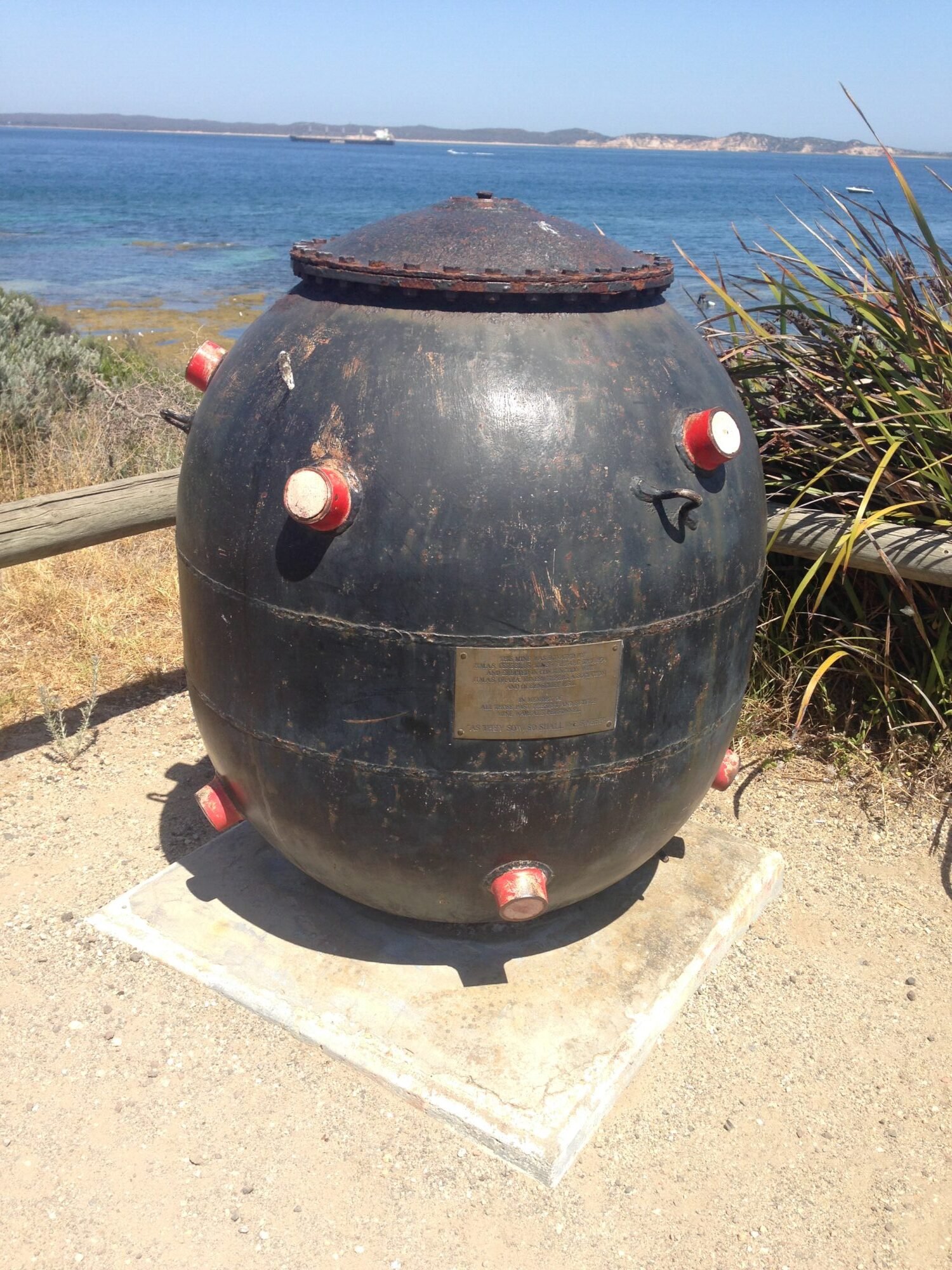
  • Black Sea naval mines create environmental and legal risks

    Black Sea naval mines create environmental and legal risks

    What the study found

    The article concludes that naval mines in the Black Sea have created significant environmental, transboundary, and legal concerns. It says drifting or uncontrolled mines can threaten marine biodiversity, coastal ecosystems, commercial fisheries, and regional maritime safety.

    Why the authors say this matters

    The authors suggest this matters because the existing legal mechanisms do not sufficiently address the environmental side of naval mine deployment, especially transboundary ecological damage and long-term marine pollution. They also connect the issue to environmental security, marine ecosystem protection, and regional cooperation in the Black Sea.

    What the researchers tested

    The article uses an interdisciplinary approach to examine the ecological effects of mine warfare in the marine environment and reviews relevant legal frameworks, including Hague Convention VIII of 1907, the UN Convention on the Law of the Sea (UNCLOS), the Bucharest Convention, and customary international humanitarian law. It also evaluates documented mine incidents from 2022 to 2024 against principles such as distinction, proportionality, notification, and the obligation to prevent marine pollution.

    What worked and what didn't

    The article reports that drifting mines, which can move with hydrodynamic currents or extreme weather, pose risks to marine biodiversity, coastal ecosystems, commercial fisheries, and maritime safety. It also finds that current legal mechanisms fail to sufficiently address environmental harm from naval mine deployment, while soft law instruments such as the San Remo Manual and IMO Guidelines are discussed as possible ways to improve environmental protection standards.

    What to keep in mind

    The abstract does not describe detailed study limitations or provide quantitative estimates of the environmental effects. The discussion is limited to the Black Sea conflict context and the legal and ecological issues named in the abstract.

    • Naval mines in the Black Sea are described as creating environmental, transboundary, and legal risks.
    • Drifting or uncontrolled mines are said to threaten biodiversity, coastal ecosystems, fisheries, and maritime safety.
    • The article reviews Hague Convention VIII, UNCLOS, the Bucharest Convention, and customary international humanitarian law.
    • Incident records from 2022 to 2024 were assessed against distinction, proportionality, notification, and anti-pollution principles.
    • The authors state that current legal mechanisms do not sufficiently address environmental damage from naval mine deployment.
  • Sea ice reference data aligned for satellite altimetry comparison

    Sea ice reference data aligned for satellite altimetry comparison

    What the study found

    The study presents a repurposed data package of sea ice reference measurements that is matched to the spatial and temporal scale of satellite altimetry products. It includes measurements of freeboard, thickness, draft, and snow depth from both the Northern Hemisphere and Southern Hemisphere.

    Why the authors say this matters

    The authors say satellite-derived sea ice thickness estimates need quality control against reference measurements, because time series of these estimates are of limited use without validation. The study suggests the new data package can support direct evaluation and intercomparison of satellite altimetry products.

    What the researchers tested

    The researchers introduced the Climate Change Initiative sea ice thickness Round Robin Data Package, a published collection of sea ice reference measurements repurposed for satellite altimetry evaluation. The data were compiled from airborne sensors, autonomous drifting buoys, moored and submarine-mounted upward-looking sonars, and visual observations, and then prepared to match conventional satellite products at 25 km monthly resolution in the Northern Hemisphere and 50 km monthly resolution in the Southern Hemisphere.

    What worked and what didn't

    The paper reports that the package was collocated with satellite-derived sea ice thickness products from CryoSat-2, Envisat, and ERS-1/2 to demonstrate overlap and intercomparison. It also presents the averaging, collocation, and uncertainty methodology, and discusses advantages and limitations, but the abstract does not give numerical performance results.

    What to keep in mind

    The abstract does not provide quantitative validation outcomes or detailed comparisons, so the strength of the evaluation cannot be judged from this summary alone. It also notes that reference measurements are sparse in polar regions and rarely match the time-space averaging of satellite products.

    • The study presents a data package for comparing sea ice reference measurements with satellite altimetry products.
    • The package includes freeboard, thickness, draft, and snow depth measurements from both hemispheres.
    • It was prepared to match satellite product scales: 25 km monthly in the Northern Hemisphere and 50 km monthly in the Southern Hemisphere.
    • The data were collocated with CryoSat-2, Envisat, and ERS-1/2 sea ice thickness products.
    • The abstract does not report numerical validation results.
  • Amazonian caimans show different thermoregulation strategies

    Amazonian caimans show different thermoregulation strategies

    What the study found

    The study found that Paleosuchus palpebrosus is a thermoconformer, meaning its body temperature tends to follow the surrounding environment, while Caiman crocodilus and Melanosuchus niger are active thermoregulators, meaning they regulate body temperature more actively. The authors also report that the two thermoregulating species appear to use the skull's extended blood-vessel network and dorsal osteoderms, the bony plates on the back, to store heat.

    Why the authors say this matters

    The authors suggest there are correlations between the habitats occupied by each species and their thermoregulatory strategies. They also conclude that their observations add to understanding how these Amazonian caimans manage body temperature.

    What the researchers tested

    The researchers investigated body temperature in three captive caiman species from the Amazonian basin: Paleosuchus palpebrosus, Caiman crocodilus, and Melanosuchus niger. They used ingested temperature sensors and thermal imaging to study thermoregulation.

    What worked and what didn't

    The measurements confirmed that P. palpebrosus was a thermoconformer. C. crocodilus and M. niger showed active thermoregulation, and the study provides some data indicating that both species may store heat in the skull and dorsal osteoderms.

    What to keep in mind

    The abstract describes work on three captive species, so the summary is limited to those animals and conditions. It does not provide details on sample size, experimental duration, or broader limitations.

    • Paleosuchus palpebrosus was identified as a thermoconformer.
    • Caiman crocodilus and Melanosuchus niger were identified as active thermoregulators.
    • The two thermoregulating species may store heat in the skull and dorsal osteoderms.
    • The authors suggest thermoregulation may relate to habitat differences among the species.
    • The study examined three captive Amazonian caiman species using temperature sensors and thermal imaging.
  • Projected land cover changes slightly increase flood discharge

    What the study found

    The study found that projected land cover change in the Cijangkelok Watershed is associated with a small rise in flood discharge. The authors report that the 2035 scenario shows land conversion mainly from dryland to rice fields, built-up areas, and forest plantations.

    Why the authors say this matters

    The findings indicate that land cover change contributes to higher flood potential. The authors conclude that the increase is still at a moderate level because much of the conversion is to rice fields, which they describe as temporary water storage that delays direct runoff.

    What the researchers tested

    The researchers analyzed land cover changes using Curve Number (a runoff-related parameter), Impervious area, and Initial Abstraction (the amount of rainfall absorbed before runoff begins). They used land cover data from 2009 and 2022, modeled a 2035 scenario with QGIS MOLUSCE using an artificial neural network (ANN), and ran HEC-HMS simulations with SCS and Snyder Unit Hydrograph methods.

    What worked and what didn't

    The 2035 land cover prediction had a minimum overall error of 0.0332 and a Kappa coefficient of 0.765, which the authors describe as good reliability. Composite Curve Number increased from 67.9 in 2009 to 68.0 in 2022 and 68.4 in 2035; Impervious area increased from 5.6 to 5.7 and 6.4; and Initial Abstraction decreased from 24.0 to 23.9 and 23.5. Flood discharge rose from 617.2 m³/s to 623.8 m³/s to 641.3 m³/s with the SCS method, and from 621.3 to 621.6 to 630.5 m³/s with the Snyder method. The statistical comparison with frequency-based design flood discharge gave PBIAS values of 0.1–0.2 and NSE of 1.0, which the abstract describes as very good.

    What to keep in mind

    The abstract provides no detailed discussion of study limitations beyond the model-based nature of the work. The reported flood increase is specific to the Cijangkelok Watershed and to the 2009, 2022, and 2035 land cover scenarios described in the study.

    • Projected 2035 land cover change is concentrated in conversions from dryland to rice fields, built-up areas, and forest plantations.
    • Composite Curve Number rose slightly across the study years, while Initial Abstraction decreased.
    • Simulated flood discharge increased under both the SCS and Snyder methods.
    • The 2035 land cover model had an overall error of 0.0332 and a Kappa coefficient of 0.765.
    • The authors state that the flood increase remains at a moderate level because rice fields can temporarily store water.