Blog

  • Review links gut microbiome metabolites to acute lymphoblastic leukemia

    Review links gut microbiome metabolites to acute lymphoblastic leukemia

    What the study found

    The review finds that evidence connecting the gastrointestinal microbiome and its short-chain fatty acids, or SCFAs, to acute lymphoblastic leukemia is emerging but still limited. The authors suggest SCFAs may be involved in treatment response, treatment-related toxicity, treatment-related morbidity, and early-life factors linked to leukemia risk.

    Why the authors say this matters

    The authors conclude that SCFAs represent a compelling and underexplored axis for microbiome-acute lymphoblastic leukemia research. They suggest this line of study could help define the therapeutic potential of microbial-derived metabolites in this disease.

    What the researchers tested

    This is a narrative review, not an original experiment. The authors critically examined the available evidence on SCFAs in acute lymphoblastic leukemia and integrated mechanistic insights from metabolic, immunological, and oncological studies.

    What worked and what didn't

    The review reports that direct acute lymphoblastic leukemia-specific evidence is sparse. At the same time, the authors propose biologically plausible pathways by which SCFAs may influence treatment response and toxicity, based on broader related studies.

    What to keep in mind

    The abstract does not describe new patient data or experimental results. It also states that direct evidence specific to acute lymphoblastic leukemia remains limited, so the proposed roles of SCFAs are not yet established.

    • The article is a narrative review about the gastrointestinal microbiome, short-chain fatty acids, and acute lymphoblastic leukemia.
    • The authors say direct acute lymphoblastic leukemia-specific evidence for short-chain fatty acids is sparse.
    • They propose that short-chain fatty acids may affect treatment response and therapy-related toxicity.
    • The review also suggests possible links to treatment-related morbidity and early-life factors associated with leukemia risk.
    • The authors call short-chain fatty acids an underexplored research area in acute lymphoblastic leukemia.
  • Modular symmetry supports quintessence and de Sitter vacua

    What the study found

    The study found that a modular-invariant scalar potential in heterotic orbifolds can produce a rich set of vacua, including anti-de Sitter minima, unstable de Sitter saddle points, and regions supporting multifield hilltop quintessence. The authors also report that all of their solutions satisfy refined swampland de Sitter bounds, where the swampland conjectures are criteria used in string theory to test whether low-energy models fit with quantum gravity.

    Why the authors say this matters

    The authors conclude that modular symmetry can help guide the construction of controlled, string-motivated quintessence scenarios within consistent effective theories. They also say the topic is relevant because modular invariance constrains effective theories and is important in the context of swampland conjectures and flavour physics.

    What the researchers tested

    The researchers examined a modular-invariant scalar potential arising from heterotic orbifolds, using a string-inspired truncation with two moduli, meaning two parameters that describe the shape or size of the compactified extra dimensions. They studied how the flavour structure and moduli dynamics are shaped by the underlying geometry.

    What worked and what didn't

    They found large regions in moduli space, the space of possible values of the moduli fields, that support multifield hilltop quintessence consistent with observations. They also found anti-de Sitter minima and unstable de Sitter saddle points, but the abstract does not describe any stable de Sitter minimum.

    What to keep in mind

    The analysis is based on a string-inspired two-moduli truncation, so it covers a simplified version of the full theory. The abstract does not give details on the specific observational tests, model parameters, or any limitations beyond this scope.

    • A modular-invariant scalar potential from heterotic orbifolds was studied.
    • The potential showed anti-de Sitter minima and unstable de Sitter saddle points.
    • Large regions in moduli space supported multifield hilltop quintessence consistent with observations.
    • All reported solutions satisfied refined swampland de Sitter bounds.
    • The authors say modular symmetry can help build controlled, string-motivated quintessence scenarios.
  • Multi-Q magnetic order found in twisted WSe2

    What the study found

    The study found previously overlooked magnetic orders in 3.65°-twisted WSe2 at moiré hole filling ν = 1. These orders vary in space with four non-zero wave vectors and can be coplanar or non-coplanar.

    Why the authors say this matters

    The authors conclude that these multi-Q states are stabilized at experimentally relevant interaction strength and displacement field. The findings indicate that the phase diagram of twisted WSe2 includes magnetic behavior not previously emphasized.

    What the researchers tested

    The researchers studied the interacting phase diagram of 3.65°-twisted WSe2 at moiré hole filling ν = 1. They examined magnetic order parameters and spin fluctuations across the moiré Brillouin zone, including the M-points and K-point.

    What worked and what didn't

    They found multi-Q orders with wave vectors corresponding to the three M-points and one K-point of the moiré Brillouin zone. These states are described as continuous deformations of the 120° spin-valley antiferromagnet, with the unit cell expanded by a factor of four, and they are accompanied by softening of spin fluctuations near the M-points.

    What to keep in mind

    The abstract does not describe experimental measurements, only a study of the interacting phase diagram. It also does not provide additional limitations beyond the stated focus on 3.65° twist and ν = 1 filling.

    • Previously overlooked magnetic orders were identified in twisted WSe2.
    • The orders appear at 3.65° twist and moiré hole filling ν = 1.
    • The multi-Q states involve four non-zero wave vectors from the moiré Brillouin zone.
    • The states can be coplanar or non-coplanar.
    • The authors report stability at experimentally relevant interaction strength and displacement field.
  • OOPrompt treats prompts as structured, editable artifacts

    What the study found

    The study found that Object-Oriented Prompting, or OOPrompt, is an interaction paradigm for handling prompts as structured, manipulable artifacts rather than only as linear text. The authors say this approach can unify and generalize several existing point systems.

    Why the authors say this matters

    The authors conclude that the OOPrompt design space may provide theoretical and empirical guidance for designing and engineering prompt-based, LLM-enabled interactive systems. Here, LLM means large language model.

    What the researchers tested

    The researchers first outlined a design space from existing work and built an early prototype. They deployed it as a probe in a formative study with 20 participants, used the feedback to expand the design space, then developed a full prototype and ran a validation study to examine added values and trade-offs.

    What worked and what didn't

    The abstract says participant feedback informed an expanded OOPrompt design space. It also says the later validation study was used to better understand OOPrompt's added values and trade-offs, but it does not give the detailed outcomes of those studies in the available summary.

    What to keep in mind

    The available summary does not provide the specific findings from the formative or validation studies. It also does not describe the detailed trade-offs, participant responses, or practical limits beyond noting that the work explored added values and trade-offs.

    • OOPrompt treats prompts as structured, manipulable artifacts instead of only linear text strings.
    • The authors say OOPrompt can unify and generalize several existing point systems.
    • An early prototype was tested in a formative study with 20 participants.
    • Feedback from that study informed an expanded OOPrompt design space.
    • A later validation study examined OOPrompt's added values and trade-offs.
    • The authors conclude the design space may guide future LLM-enabled interactive systems.
  • BIR-Adapter reduces training needs for blind image restoration

    What the study found

    The study found that BIR-Adapter, a parameter-efficient diffusion adapter, can restore degraded images with competitive performance and in some settings better performance than state-of-the-art methods. It also uses up to 36 times fewer trained parameters and can be plugged into existing models.

    Why the authors say this matters

    The authors suggest this matters because large pretrained diffusion models can keep useful information even when images are degraded, and because their adapter design reduces the amount of training needed. They also conclude that the approach can extend existing diffusion models to handle broader image restoration tasks.

    What the researchers tested

    The researchers introduced BIR-Adapter, a plug-and-play attention mechanism for blind image restoration, which means restoring images when the degradation is unknown. They also adapted a sampling guidance method to reduce hallucinations, or restored details that are not actually present in the input.

    What worked and what didn't

    Experiments on synthetic and real-world degradations showed competitive results, and in several settings BIR-Adapter performed better than state-of-the-art methods. The adapter-based design also allowed a super-resolution-only diffusion model to be extended to additional unknown degradations. The abstract does not describe any specific failures beyond noting that the guidance was added to mitigate hallucinations.

    What to keep in mind

    The abstract does not provide detailed limitations, dataset names, or quantitative performance values beyond the 36 times fewer trained parameters claim. It also does not specify which restoration settings showed superior results.

    • BIR-Adapter is presented as a parameter-efficient diffusion adapter for blind image restoration.
    • The method uses a plug-and-play attention mechanism to reduce the number of trained parameters.
    • A sampling guidance mechanism was adapted to mitigate hallucinations during restoration.
    • Experiments on synthetic and real-world degradations found competitive performance, and sometimes superior performance, versus state-of-the-art methods.
    • The adapter design allowed a super-resolution-only diffusion model to handle additional unknown degradations.
  • Conditional diffusion produced plausible low-voltage load profiles

    Conditional diffusion produced plausible low-voltage load profiles

    What the study found

    The study found that conditional diffusion models can generate plausible daily active and reactive power profiles for low-voltage distribution substations. The synthesized loads were described as plausible both on their own and as a cohort in a wider power systems context.

    Why the authors say this matters

    The authors say this matters because limited visibility of low-voltage power flows makes planning and congestion management difficult. They argue that more representative loads are needed for meaningful analysis of low-voltage substations, and that better scenario generation can support sub-regional network planning and operations.

    What the researchers tested

    The researchers proposed Conditional Diffusion models for synthesizing daily active and reactive power profiles at the low-voltage distribution substation level. They evaluated the outputs using conventional measures of temporal and statistical realism, as well as power flow modelling, and compared the approach against naive and commonly used generative models. They also tested multiple versions of the model to handle different levels of data availability, from unconditional synthesis to informed generation using metadata and daily statistics.

    What worked and what didn't

    The results showed that the synthesized load profiles were plausible both individually and collectively. The Conditional Diffusion model was benchmarked as effective compared with naive and commonly used generative models. The abstract does not report specific cases where the method failed.

    What to keep in mind

    The abstract does not provide numerical performance values, detailed limitations, or failure modes. It also frames the work around low-voltage distribution substations, so the findings are limited to that setting as described in the summary.

    • Conditional diffusion models were used to synthesize daily active and reactive power profiles.
    • The generated load profiles were described as plausible for individual substations and for groups of substations.
    • The study used temporal, statistical, and power flow-based evaluation methods.
    • The approach was compared with naive and commonly used generative models.
    • The authors say more representative loads are needed for low-voltage planning and congestion analysis.
  • Compactness result for incompressible magnetoelastic shallow shells

    What the study found

    The study found a compactness result for a thin incompressible magnetoelastic shallow shell. The result is achieved up to rigid motions, and it includes geometric effects from vanishing curvature.

    Why the authors say this matters

    The authors state that this is a generalization of earlier work by incorporating geometric effects due to vanishing curvature. They describe this as the main novelty of the analysis.

    What the researchers tested

    The researchers studied convergence for deformations and magnetizations in a thin magnetoelastic shallow shell. For deformations, they used an approximation by rigid movements; for magnetizations, they relied on a careful consideration of the geometry of the deformed domain.

    What worked and what didn't

    The compactness result was obtained up to rigid motions. The approach for deformations relied on approximation by rigid movements, while the magnetization analysis required geometric treatment of the deformed domain.

    What to keep in mind

    The abstract does not describe numerical experiments, applications, or practical performance comparisons. It also does not provide detailed limitations beyond noting the focus on thin magnetoelastic shallow shells and vanishing curvature.

    • A compactness result was proved for a thin incompressible magnetoelastic shallow shell.
    • The result holds up to rigid motions.
    • The analysis included deformations and magnetizations.
    • Deformations were treated by approximation with rigid movements.
    • Magnetizations were handled using the geometry of the deformed domain.
    • The authors say the work generalizes earlier results by adding vanishing-curvature effects.
  • Entrywise transforms preserving sign regularity are characterized

    What the study found

    The paper provides complete characterizations of entrywise transforms that preserve sign regularity and strict sign regularity for rectangular matrices. It also covers the same preservation problem when a given sign pattern is required.

    Why the authors say this matters

    The authors place their results in the context of a long line of work on entrywise preservers, noting that sign regular and strictly sign regular matrices include totally positive and totally non-negative matrices as special cases. The study suggests this extends earlier classification results in a broader matrix setting.

    What the researchers tested

    The researchers studied entrywise functions acting on rectangular matrices. They focused on whether these functions preserve sign regularity and strict sign regularity, and on the same question under a prescribed sign pattern.

    What worked and what didn't

    The abstract states that the authors obtained complete characterizations for both preservation settings they considered. It does not list specific functions in the abstract, so no finer distinctions can be given here.

    What to keep in mind

    The available summary does not describe the detailed characterizations, proofs, or any limitations beyond the scope of rectangular matrices and the stated preservation classes. The abstract also does not report applications or examples.

    • The paper characterizes entrywise transforms that preserve sign regularity and strict sign regularity.
    • The results apply to rectangular matrices.
    • The authors also treat preservation with a given sign pattern.
    • Sign regular and strictly sign regular matrices include totally positive and totally non-negative matrices as special cases.
    • The abstract presents the results as complete characterizations.
  • TAIGHA measures trust in AI-generated health advice

    What the study found

    The study found that the Trust in AI-Generated Health Advice scale (TAIGHA) and its four-item short form (TAIGHA-S) are validated questionnaires for measuring users' state trust and distrust in AI-generated health advice. The full scale and short form showed strong psychometric properties.

    Why the authors say this matters

    The authors say this matters because people increasingly use AI tools, including large language models, to get health information and support health-related decisions. The study suggests that measuring trust in AI-generated health advice is important because advice-taking can have clinical, safety, and healthcare-system consequences.

    What the researchers tested

    The researchers developed theory-based questionnaire items using a generative AI approach and then validated them in several steps. These included automated validation, content validation with 10 domain experts, face validation with 30 lay participants, and psychometric validation with 385 UK participants who received AI-generated health advice for symptom assessment.

    What worked and what didn't

    After automated item reduction, 28 items were retained and then reduced to 10 based on expert ratings. The final TAIGHA scale showed excellent content validity, face validity, and model fit, and it had high internal consistency for both trust and distrust; the short form correlated highly with the full scale and also showed high reliability. The abstract does not describe any major elements that did not work, beyond the item-reduction process that narrowed the scale.

    What to keep in mind

    The psychometric validation was conducted with 385 participants in the U.K. receiving AI-generated health advice for symptom assessment, so the reported validation is specific to that sample and context. The abstract does not describe other limitations.

    • TAIGHA and TAIGHA-S were developed to measure trust and distrust in AI-generated health advice.
    • The study used automated validation plus expert, lay, and participant testing.
    • The final TAIGHA scale showed excellent content validity, face validity, and model fit.
    • Both trust and distrust subscales showed high internal consistency.
    • The short form correlated strongly with the full scale and was also reliable.
  • Crater-based navigation achieved metre-level lunar mapping accuracy

    Crater-based navigation achieved metre-level lunar mapping accuracy

    What the study found

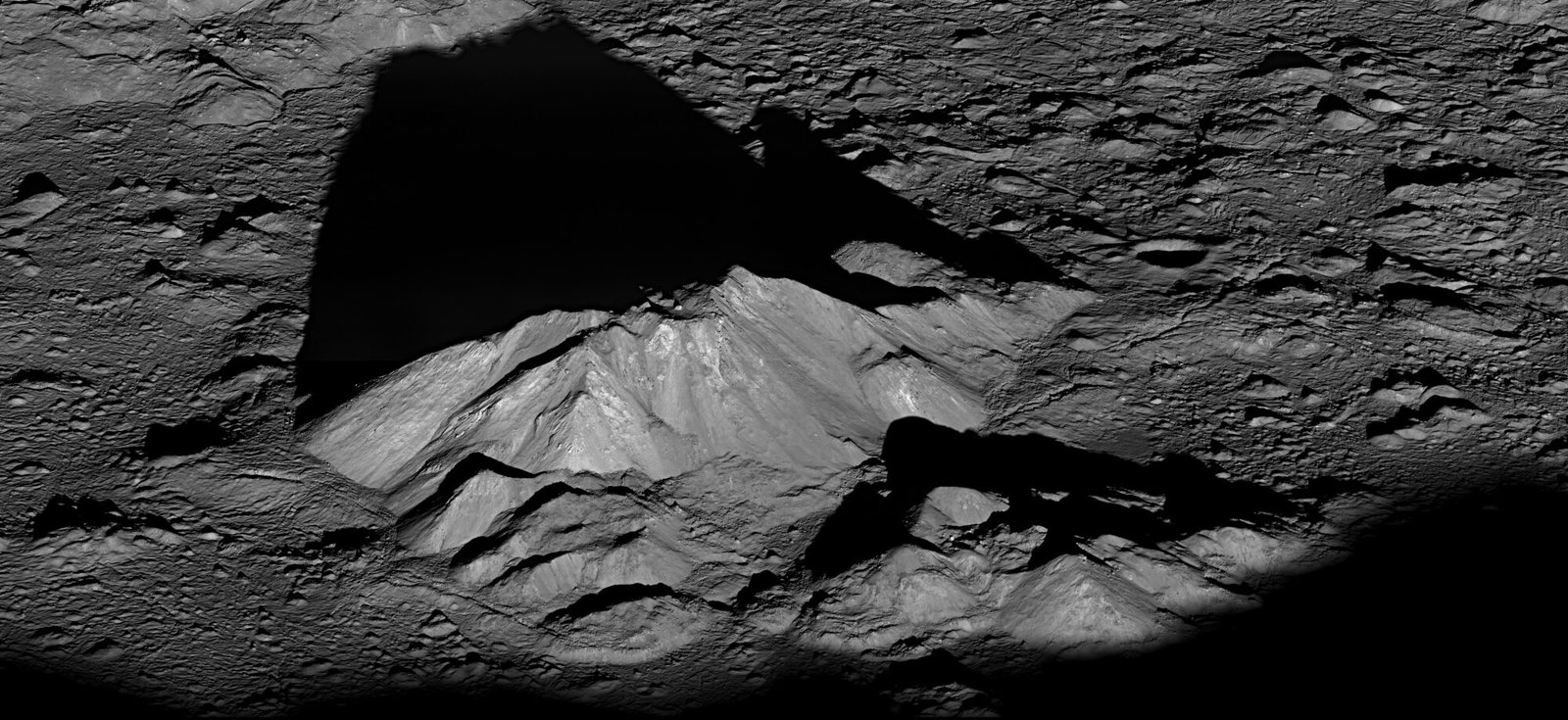
    The study found that STELLA, an end-to-end crater-based navigation pipeline, can support long-duration lunar mapping with metre-level position accuracy and sub-degree attitude accuracy on average. The results were reported across a wide range of viewing angles, illumination conditions, and lunar latitudes.

    Why the authors say this matters

    The authors conclude that these results provide the first comprehensive assessment of crater-based navigation in a true lunar mapping setting. They also say the findings inform operational conditions that should be considered for future missions.

    What the researchers tested

    The researchers developed STELLA, which combines a mask R-CNN-based crater detector, a descriptor-less crater identification module, a robust perspective-n-crater pose solver, and a batch orbit determination back-end. They tested it using CRESENT+ and CRESENT-365, including CRESENT-365, a public dataset with 15,283 images rendered from high-resolution digital elevation models with SPICE-derived Sun angles and Moon motion.

    What worked and what didn't

    STELLA maintained metre-level position accuracy and sub-degree attitude accuracy on average in experiments on CRESENT+ and CRESENT-365. The abstract does not describe specific failure cases or detailed conditions where performance worsened, beyond noting that the tests covered wide ranges of viewing angles, illumination conditions, and lunar latitudes.

    What to keep in mind

    The abstract does not provide detailed limitations beyond the scope of the tested lunar mapping conditions. It also does not report performance for individual mission scenarios or explain which parts of the pipeline contributed most to the results.

    • STELLA is presented as the first end-to-end crater-based navigation pipeline for long-duration lunar mapping.
    • The system combines crater detection, crater identification, pose solving, and orbit determination.
    • CRESENT-365 is described as the first public dataset that emulates a year-long lunar mapping mission.
    • Across the tested datasets, STELLA averaged metre-level position accuracy and sub-degree attitude accuracy.
    • The abstract says the results help identify operational conditions for future missions.