
Blog

  • Women-led firms in Kerala favored some digital tools for sustainability

    Women-led firms in Kerala favored some digital tools for sustainability

    What the study found

    The study found that women business leaders in Kerala used digital technologies to support sustainability in their enterprises. The data show that tools linked to energy efficiency and e-commerce were more widely adopted and valued for sustainability benefits than cloud computing and social media.

    Why the authors say this matters

    The authors say the study adds to discussion of sustainable entrepreneurship and gender-inclusive economic development. They conclude that digital empowerment is important for long-term economic viability and environmental responsibility in women-led enterprises.

    What the researchers tested

    The researchers examined digital tools and strategies adopted by women business leaders in Kerala. They looked at cloud-based systems, social media, online platforms, e-commerce solutions, digital marketing tools, and data analytics in relation to resource optimisation, waste reduction, energy efficiency, and cost effectiveness. They used descriptive statistics and Friedman's ranking test.

    What worked and what didn't

    According to the abstract, tools associated with energy efficiency and e-commerce were the most prominently adopted and appreciated for sustainability-related benefits. Cloud computing and social media played a relatively minor role. The abstract does not give detailed numerical results.

    What to keep in mind

    The summary provided does not describe detailed sample size, participant characteristics, or the exact ranking results. Limitations are not described in the available abstract.

    • Women business leaders in Kerala used digital technologies to support sustainable operations.
    • Energy-efficiency and e-commerce tools were the most strongly adopted for sustainability benefits.
    • Cloud computing and social media were reported as relatively minor contributors.
    • The study examined resource optimisation, waste reduction, energy efficiency, and cost effectiveness.
    • Descriptive statistics and Friedman's ranking test were used in the analysis.
  • Internal pattern matching can be queried in logarithmic time on compressed texts

    What the study found

    The study found an O(log n)-time algorithm for internal pattern matching queries, which ask for all exact occurrences of one fragment X within another fragment Y of the same text, when the text is represented in compressed or dynamic form. The authors say this works on balanced recompression-based run-length straight-line programs and can also be used with a dynamic strings data structure.

    Why the authors say this matters

    The authors say the result extends internal pattern matching to compressed and dynamic strings. They also note that their procedure does not rely on preprocessing of the underlying run-length straight-line program, which makes it directly usable with a fully persistent dynamic strings structure.

    What the researchers tested

    The researchers studied internal pattern matching queries on a length-n text T, where X and Y are fragments of T and |Y| < 2|X|. They designed a query algorithm for balanced recompression-based run-length straight-line programs and discussed how it applies on top of an existing compressed-text representation and a dynamic strings data structure.

    What worked and what didn't

    The proposed procedure achieves O(log n) query time. The abstract also states that it is applicable to the cited compressed-text representation whose size is optimal as a function of text length, alphabet size, and substring complexity, and that it can be used with fully persistent updates in logarithmic time with high probability in the dynamic setting.

    What to keep in mind

    The abstract does not report experimental evaluation, so only the stated theoretical result is available here. It also does not provide detailed constraints, comparisons, or failure cases beyond the applicability conditions described in the summary.

    • The paper presents an O(log n)-time algorithm for internal pattern matching queries.
    • The method applies to balanced recompression-based run-length straight-line programs.
    • The procedure does not require preprocessing of the underlying compressed representation.
    • The authors say it can be used with a dynamic strings data structure supporting fully persistent updates.
    • Internal pattern matching asks for all exact occurrences of fragment X within fragment Y.
  • GenAI aligned closely with human scoring of students’ scientific inquiry understanding

    What the study found

    The study found that generative AI (AI that creates text or other outputs) can be used to score and give feedback on elementary students’ understanding of scientific inquiry with high agreement with human raters. The authors also report that the AI’s feedback was generally appropriate and often supported student agency, although some Korean wording was less clear.

    Why the authors say this matters

    The authors conclude that GenAI, when properly designed and prompted, can function as a dialogic partner for facilitating students’ epistemic understanding. They also say the study offers new pathways for using GenAI in formative assessment and teacher education, especially for helping students understand the nature of scientific inquiry.

    What the researchers tested

    The researchers used the Korean version of the Views About Scientific Inquiry for Elementary school students (VASI-E) with 560 responses from 80 fourth-grade students in Korea. They built ChatGPT-4o prompts for scoring and feedback based on established epistemic frameworks, then compared AI scoring with human raters and evaluated the feedback for learner-centered quality.

    What worked and what didn't

    GenAI scoring showed high agreement with human raters, with overall kappa (a measure of agreement) of 0.825 and item-level values from 0.606 to 0.923. The feedback was rated as generally appropriate, with an average score of 2.75 out of 3, and it was especially strong in promoting student agency through personalized and reflective guidance. Some Korean phrasing created clarity problems.

    What to keep in mind

    The abstract does not describe longer-term classroom outcomes or whether the system was tested beyond this one group of fourth-grade students in Korea. It also notes language-related challenges in Korean phrasing, which affected clarity.

    • GenAI scoring matched human raters closely overall (kappa = 0.825).
    • Agreement between AI and humans varied by item, with kappa values from 0.606 to 0.923.
    • AI-generated feedback was rated generally appropriate, averaging 2.75 out of 3.
    • The feedback was especially strong in supporting student agency.
    • Some Korean phrasing in the feedback reduced clarity.
  • Blockchain is framed as usable for both operational and strategic governance in higher education

    What the study found

    The authors argue that blockchain can be adapted for both routine university services and broader governance functions in higher education. The paper presents a strategic framework and policy recommendations for its adoption.

    Why the authors say this matters

    The study suggests that blockchain may improve educational service delivery and promote accountability through openness and transparency, which the authors connect to good governance. The authors also indicate that its use may extend beyond operational tasks into areas such as governmental oversight, funding, licensure, auditing, and review.

    What the researchers tested

    This is a policy commentary, not an experimental study. It examines whether blockchain is adaptable to both operational and strategic governance in higher education and offers a guiding framework with policy recommendations.

    What worked and what didn't

    The abstract says universities have already used blockchain for credential verification, transcript management, and degree certification. It also says the paper assesses whether this use can extend from those operational services to strategic governance domains, but it does not report measured outcomes or compare what worked against what did not.

    What to keep in mind

    The available summary does not describe empirical data, study sample, or evaluation results. It is a policy commentary, so the claims are framed as guidance and recommendations rather than as tested findings.

    • Blockchain has been used by some universities for credential verification, transcript management, and degree certification.
    • The authors say blockchain may support both operational services and strategic governance in higher education.
    • The paper presents a framework and policy recommendations for adopting blockchain effectively.
    • The abstract does not report experimental results or measured outcomes.
    • The summary available here does not include specific limitations beyond the policy-commentary format.
  • Newspaper speech acts frame U.S. immigration discourse differently

    What the study found

    The study found that U.S. newspaper coverage of immigration uses speech acts, meaning kinds of communicative actions such as statements, requests, promises, and acknowledgments, to shape narratives and public opinion. It also found differences between liberal and conservative outlets in how immigrants are portrayed.

    Why the authors say this matters

    The authors conclude that media discourse has a powerful role in shaping perceptions of immigration. The study suggests that speech acts are not only descriptive language but also tools for ideological persuasion and public opinion formation.

    What the researchers tested

    The researchers analyzed 20 articles from five major U.S. newspapers: The New York Times, Washington Post, USA Today, New York Post, and New York Daily News. They used a mixed-methods approach, combining line-by-line coding with sentiment analysis, and grouped illocutionary acts into constatives, directives, commissives, and acknowledgments.

    What worked and what didn't

    Constatives were often used to establish ideological viewpoints through selective presentation of information. Directives were used to motivate or influence readers, while commissives and acknowledgments were linked to emotional connection or ideological stance; liberal outlets typically portrayed immigrants positively and encouraged inclusive conversations, whereas conservative outlets more often generated fear and urgency in support of stricter immigration measures.

    What to keep in mind

    The abstract does not describe the study's limitations in detail. The analysis is based on 20 newspaper articles, so the findings are limited to the material included in this sample.

    • The study examined immigration coverage in five major U.S. newspapers.
    • It used speech act theory and sentiment analysis to analyze 20 articles.
    • Constatives were used to present ideological viewpoints through selective information.
    • Liberal outlets tended to portray immigrants positively and encourage inclusion.
    • Conservative outlets more often emphasized fear and urgency for stricter immigration measures.
  • Quarrying along River Mutonga expanded and affected land, water, and livelihoods

    What the study found

    The study found that stone quarrying along River Mutonga was concentrated near the river and was linked to major changes in land use, environmental conditions, and local livelihoods. Quarrying was described as having both positive effects, such as household income, and negative effects, including land degradation, vegetation loss, water pollution, and safety hazards.

    Why the authors say this matters

    The authors conclude that the findings point to the need for sustainable quarry management. They specifically mention post-extraction rehabilitation, environmental monitoring, and enforcement of land use regulations.

    What the researchers tested

    The researchers examined the spatial distribution, spatiotemporal dynamics, and ecological and socio-economic impacts of stone quarrying in Imenti South, Meru County, Kenya. They used GPS coordinates, high-resolution satellite imagery, Sentinel-2 images from 2015, 2020, and 2025, a Random Forest classifier in Google Earth Engine, and household surveys.

    What worked and what didn't

    The mapping identified 20 quarry sites in total: 11 active and 9 abandoned, with site sizes ranging from about 0.15 ha to 1.20 ha. Land use and land cover analysis showed quarry areas increased by 0.18 km² (61.8%), built-up areas by 0.17 km² (100%), and bare land by 2.23 km² (56.03) between 2015 and 2025. Residents reported income and community development benefits, but also environmental degradation and safety concerns, including accidents and hazards from water-filled abandoned quarries.

    What to keep in mind

    The abstract does not describe detailed statistical uncertainty, sampling limits, or validation results for the image classification. The summary is limited to one river corridor in Meru County, Kenya, so the findings are specific to that study area.

    • Twenty quarry sites were mapped along River Mutonga, including 11 active and 9 abandoned sites.
    • Quarry areas increased by 0.18 km² between 2015 and 2025.
    • Residents reported both income benefits and negative environmental impacts from quarrying.
    • Reported harms included land degradation, vegetation loss, water pollution, and safety risks.
    • The authors call for rehabilitation, environmental monitoring, and land use regulation.
  • TPH2 genotype alters brain response to acute serotonin reduction

    What the study found

    The study found that a TPH2 genetic variant was linked to different brain responses to acute tryptophan depletion, which temporarily reduces central serotonin signaling. The findings point to a possible genetic marker of vulnerability to these serotonin-related effects in men.

    Why the authors say this matters

    The authors conclude that their results identify a potential genetic marker for increased vulnerability to the neural effects of transient serotonin variation in an anxiety- and stress-related brain circuit in men. They also suggest that serotonin helps regulate the organization of large-scale brain networks involved in emotional reactivity and regulation.

    What the researchers tested

    The researchers used a within-subject randomized placebo-controlled resting-state functional MRI design in 53 healthy men. They compared the effects of acute tryptophan depletion between two TPH2 genotypes, rs4570625 GG and TT, and analyzed spontaneous intrinsic neural activity, functional connectivity, and connectome gradients.

    What worked and what didn't

    Acute tryptophan depletion increased spontaneous neural activity in hippocampal CA1 regardless of genotype. It also increased communication between CA1 and the bilateral amygdala and ventromedial prefrontal cortex specifically in GG carriers. The depletion also sharpened intrinsic connectome gradient architecture in the salience, frontoparietal, and default mode networks.

    What to keep in mind

    The study included only healthy male participants, so the findings are limited to that group. The abstract does not describe additional limitations.

    • A TPH2 genetic variant was associated with different brain responses to acute tryptophan depletion.
    • Acute tryptophan depletion increased hippocampal CA1 activity in all participants.
    • CA1 communication with the bilateral amygdala and ventromedial prefrontal cortex increased only in GG carriers.
    • Connectome gradient architecture changed in the salience, frontoparietal, and default mode networks.
    • The study involved 53 healthy men in a randomized placebo-controlled resting-state fMRI design.
  • AQHI tracked multi-pollutant health risks better than AQI in Taiwan

    What the study found

    The study found that the Air Quality Health Index (AQHI), which combines daily levels of fine particulate matter (PM2.5), ozone (O3), and nitrogen dioxide (NO2), was more sensitive than the Air Quality Index (AQI) for short-term health-relevant risk during pandemic-altered activity patterns. It also found that high-risk AQHI levels were associated with increased respiratory and cardiovascular morbidity.

    Why the authors say this matters

    The authors conclude that their findings provide empirical evidence supporting Taiwan's adoption of AQHI for risk communication and for protecting vulnerable populations. They say AQHI better reflects multi-pollutant health impacts than conventional AQI systems.

    What the researchers tested

    The researchers analyzed PM2.5 chemical characteristics in Taichung, Taiwan, from 2020 to 2022, with a focus on polycyclic aromatic hydrocarbons (PAHs) and water-soluble ions (WSIs) in industrial and traffic areas. They also examined outpatient records from 2016 to 2022, comparing pre-pandemic, pandemic, and post-pandemic stages, and used source apportionment and lag-effect analyses.

    What worked and what didn't

    During pandemic restrictions, total water-soluble ion concentrations increased, largely because of non-sea-salt sulfate (nss-SO4 2−), especially in the industrial area. PAH concentrations declined during lockdowns, then rose during the warm season in the post-pandemic period to about two to three times the pandemic-stage levels; traffic-related emissions, especially diesel exhaust, were the dominant PAH source. High-risk AQHI levels (≥7) were associated with respiratory and cardiovascular morbidity, PM2.5 and NO2 showed acute and persistent risks, and O3 showed delayed inverse statistical associations.

    What to keep in mind

    The abstract does not describe detailed limitations beyond the study's focus on Taichung, Taiwan, and the specific pandemic period examined. The health-risk findings are based on outpatient records and statistical associations, so the summary does not state direct causation.

    • AQHI, which combines PM2.5, O3, and NO2, was described as more sensitive than AQI for short-term health risk.
    • High-risk AQHI levels (≥7) were associated with increased respiratory and cardiovascular morbidity.
    • Pandemic restrictions coincided with higher water-soluble ions, driven mainly by non-sea-salt sulfate in the industrial area.
    • PAH concentrations fell during lockdowns and later rebounded to about two to three times pandemic-stage levels in the warm season.
    • Traffic-related emissions, especially diesel exhaust, were the dominant contributors to ambient PAHs.
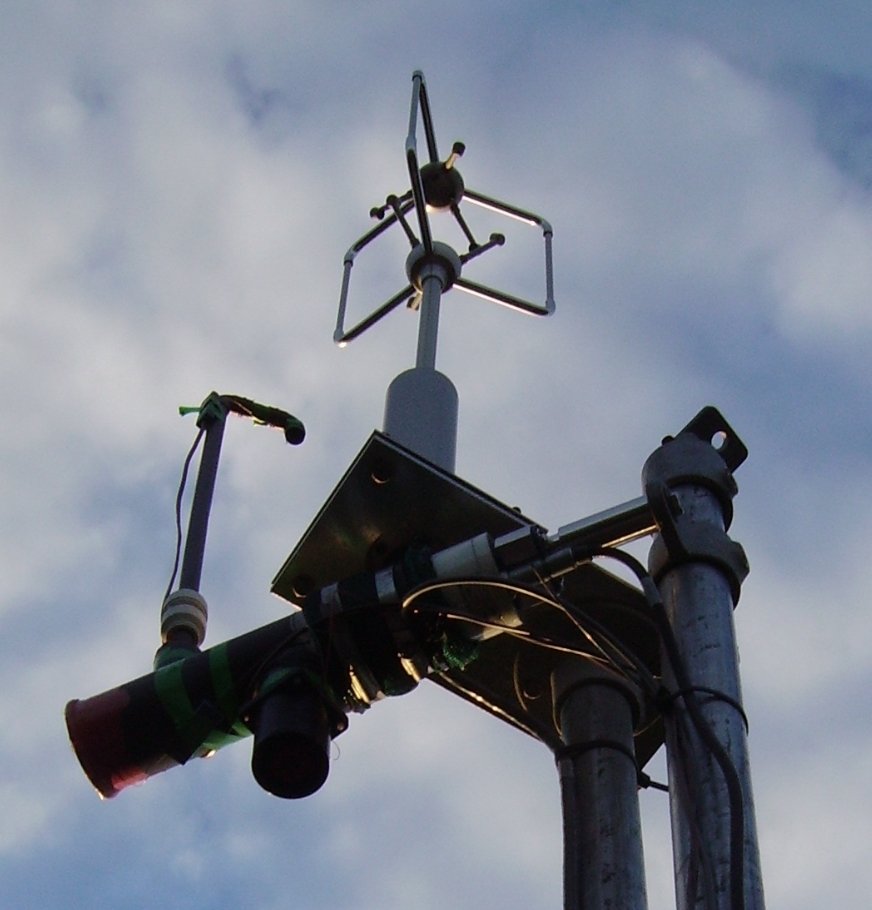
  • Global eddy covariance towers cluster in fertile soils

    Global eddy covariance towers cluster in fertile soils

    What the study found

    The study found that the global eddy covariance tower network is unevenly distributed across space and soil conditions. Among 1,233 towers, half had a nearest neighbor within 10 km, and tower locations were associated with soil pixels that were more fertile than the global average.

    Why the authors say this matters

    The authors conclude that global syntheses of eddy covariance tower data should take into account that the network captures more fertile soils than the terrestrial surface on average. They also suggest that improving global representativeness will require collaborations and investment in underrepresented regions.

    What the researchers tested

    The researchers examined 1,233 global eddy covariance towers and compared their spatial spacing and surrounding soil characteristics with global soil database pixels. They looked at nearest-neighbor distances between towers and compared tower-associated soil texture and chemistry with pixels without towers.

    What worked and what didn't

    Tower-associated soil pixels had nearly 20% more silt and 8% less sand than the global soil texture distribution. They also had more soil nitrogen (0.58 g/kg vs. 0.38 g/kg), more organic carbon (8.3 g/kg vs. 5.4 g/kg), and 10% greater cation exchange capacity in upper layers than pixels without towers.

    What to keep in mind

    The abstract does not describe specific study limitations beyond noting gaps in network representativeness. The findings are based on the towers and soil data examined here, so the summary does not provide details about causes or effects beyond those comparisons.

    • The study examined 1,233 global eddy covariance towers.
    • Half of the towers had a nearest neighbor within 10 km.
    • Tower locations were linked to soils with more silt, less sand, more nitrogen, and more organic carbon than average.
    • Upper soil layers at tower pixels had 10% greater cation exchange capacity than pixels without towers.
    • The authors say global tower syntheses should account for the network’s bias toward more fertile soils.
  • Light triggers reversible CO2 binding and reduction in a cerium MOF

    What the study found

    The study found that light can induce reversible binding of carbon dioxide in a cerium-based metal–organic framework, called Ce-UiO-66-NH2, and that this system can reduce carbon dioxide to carbon monoxide in water without sacrificial agents. The reported carbon monoxide production rate was 126 μmol·g−1·h−1 with 100% selectivity.

    Why the authors say this matters

    The authors conclude that this work will promote the design of photocatalysts, meaning light-activated catalysts, capable of synthesizing fuels from carbon dioxide. They also present the system as outperforming the non-amine analogue Ce-UiO-66 and benchmark catalysts reported to date.

    What the researchers tested

    The researchers tested a cerium-based metal–organic framework, Ce-UiO-66-NH2, which contains an amino-functionalized linker. They used in situ infrared, X-ray absorption, electron paramagnetic resonance, and transient absorption spectroscopy to examine what happens after photoexcitation.

    What worked and what didn't

    Photoexcitation was found to induce a ligand-to-metal charge transfer, generating transient open Ce(III) sites that bind carbon dioxide in a μ-(η1-O)(η1-C) binding mode. This binding was reversible and activated carbon dioxide for subsequent photoreduction to carbon monoxide. The amino-functionalized material outperformed the non-amine analogue Ce-UiO-66, while no sacrificial agents were used.

    What to keep in mind

    The abstract does not describe experimental limitations, so only the reported summary can be stated here. The findings are specific to the cerium-based metal–organic framework studied and the conditions reported in the abstract.

    • Light triggered reversible carbon dioxide binding in Ce-UiO-66-NH2.
    • The material reduced carbon dioxide to carbon monoxide in water without sacrificial agents.
    • Reported carbon monoxide production was 126 μmol·g−1·h−1 with 100% selectivity.
    • Spectroscopy indicated transient open Ce(III) sites formed after photoexcitation.
    • The amino-functionalized framework outperformed the non-amine analogue Ce-UiO-66.